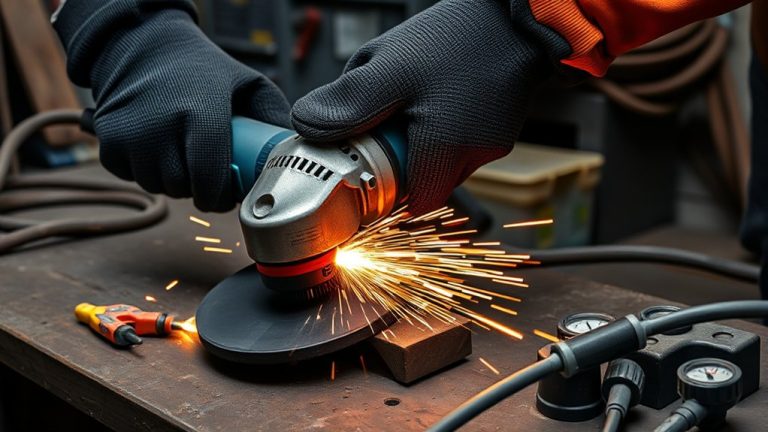
Heat greatly affects your cordless angle grinder batteries, reducing their efficiency and lifespan. Excessive temperatures can lead to irreversible damage, so aim to keep them between 15°C and 25°C (59°F to 77°F). Watch for signs of overheating like swelling, reduced runtime, or unusual noises. Implement preventive measures such as proper ventilation and regular inspections. If your battery overheats, use natural cooling techniques and avoid rapid temperature changes. Explore further for in-depth strategies to protect your batteries.
How Heat Affects Battery Performance
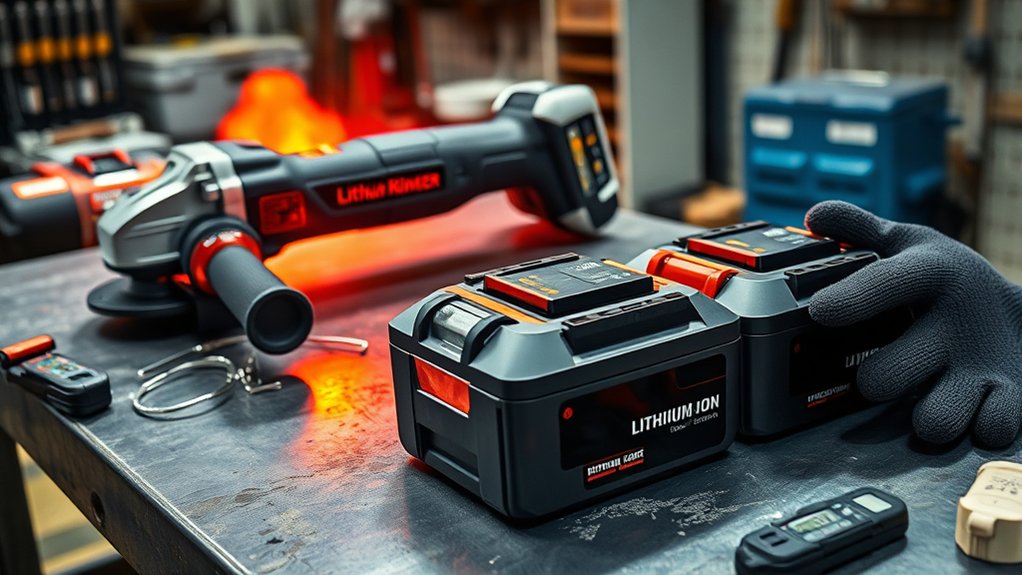
When you operate cordless angle grinders, it’s vital to understand how heat impacts battery performance. High temperatures can greatly degrade lithium-ion batteries, reducing battery life and overall efficiency. When you expose these batteries to temperatures exceeding 60°C (140°F), you risk triggering irreversible damage, including swelling and leakage. This not only compromises performance levels but also poses fire hazards.
To maintain battery performance, you must store batteries within the recommended temperature range of 15°C to 25°C (59°F to 77°F). Prolonged exposure to heat accelerates chemical reactions, increasing internal resistance and causing a decline in runtime. Regularly checking the charge level is important; a fully charged battery can suffer from heat-related issues if not managed properly. By maintaining a cool environment and adhering to storage guidelines, you can maximize the lifespan and reliability of your cordless angle grinder batteries, empowering you with enhanced performance.
Identifying Signs of Overheating in Batteries
To identify signs of overheating in your cordless angle grinder battery, watch for key indicators like swelling, reduced performance, and excessive heat. If the battery feels hot to the touch or shows visible deformation, it’s essential to act quickly. Recognizing these symptoms early can help prevent further damage and extend the lifespan of your battery.
Common Overheating Indicators
Recognizing the common overheating indicators in cordless angle grinder batteries is essential for maintaining both safety and performance. First, watch for noticeable swelling or distortion of the battery casing, which compromises functionality. If you notice a significant drop in performance, like reduced runtime or sluggish operation, that’s another red flag. A battery that feels excessively hot to the touch during use or charging signals potential overheating issues. Additionally, listen for unusual noises—hissing or popping sounds indicate that the battery may be at risk of failure. Finally, frequent tripping of thermal protection circuits in your charger or tools underscores that the battery requires immediate attention to prevent further overheating and guarantee adherence to proper charging guidelines.
Preventive Measures To Take
Overheating can considerably compromise the performance of cordless angle grinder batteries, making it essential to implement preventive measures. To avoid overheating and extend battery life, consider the following:
- Ensure Proper Ventilation: Always work in well-ventilated areas to dissipate heat effectively.
- Inspect Batteries Regularly: Check for signs like discoloration, swelling, or melting plastic components. These indicate potential overheating damage.
- Use Proper Protective Gear: Equip yourself with appropriate gear to handle batteries safely, minimizing risks associated with thermal runaway.
Safe Use of Grinders in Hot Weather
When working with cordless angle grinders in hot weather, it’s essential to take into account the ideal battery operating temperature of 15°C to 25°C (59°F to 77°F). High temperatures can lead to thermal runaway in lithium-ion batteries, risking fire or failure. To guarantee your power tool batteries last, take regular breaks to allow both the grinder and battery to cool down. This helps maintain consistent performance and extends battery life.
Before use, always check battery contacts for dirt and moisture, as these can exacerbate overheating issues. Store the battery in a cool, dry place, away from direct sunlight, to avoid exposure to extreme temperatures that degrade capacity. Charge the battery only when necessary and be mindful of safety tips to prevent overheating. By following these guidelines, you can effectively mitigate heat impacts while using your grinder in hot conditions.
Cooling Techniques for Overheated Batteries
When your battery overheats, employing effective cooling techniques is crucial. You can utilize natural methods, like placing the battery in a well-ventilated area, or opt for active solutions, such as using a cooling fan or an ice pack wrapped in cloth. Both approaches can help restore peak performance and extend your battery’s lifespan.
Natural Cooling Methods
To effectively cool an overheated cordless angle grinder battery, you should place it in a shaded, well-ventilated area, making certain it’s free from direct sunlight. This natural cooling method is essential for maintaining battery health. Follow these steps:
- Remove the battery from the tool and set it on a non-conductive surface to enhance air circulation.
- Avoid rapid temperature changes; don’t use ice or water directly, as this can cause damage or leakage.
- Wait at least 30 minutes before recharging to prevent thermal runaway, allowing the battery to return to a safe temperature range for peak performance.
Regularly monitor your battery’s temperature, aiming for 15°C to 25°C (59°F to 77°F) to prevent overheating and promote longevity.
2. Active Cooling Solutions
Natural cooling methods provide a fundamental approach to managing battery temperature, but active cooling solutions can further enhance performance during demanding tasks. Employing built-in fans or heat sinks allows you to effectively manage heat, ensuring ideal operation. Thermal management systems are essential for preventing overheating and extending charge cycles beyond the typical 300 to 500 cycles.
| Cooling Technique | Benefits | Application |
|---|---|---|
| Built-in Fans | Reduces battery temp | Continuous operation |
| Heat Sinks | Enhances heat dissipation | Prolonged use in heat |
| Cooling Jackets | Minimizes heat transfer | High-temperature tasks |
| Thermal Sensors | Monitors battery temp | Initiates cooling measures |
Integrating these active cooling solutions not only boosts performance but also enhances safety by reducing the risk of thermal runaway.
Storage Solutions for Maintaining Optimal Battery Temperature
Maintaining ideal battery temperature is essential for the longevity and performance of cordless angle grinder batteries. By implementing effective storage solutions, you can greatly enhance battery life. Here are three key practices:
- Store in a Cool, Dry Environment: Keep batteries at temperatures between 15°C to 25°C (59°F to 77°F) to prevent overheating. Avoid direct sunlight and heat sources that can lead to thermal runaway.
- Use Insulated Storage Containers: Protect your batteries from extreme temperatures and moisture by utilizing insulated containers. This guarantees they remain in optimal battery temperature conditions.
- Regularly Check Battery Storage Conditions: Verify proper ventilation and keep batteries away from damp areas to mitigate heat buildup. Additionally, maintain a 40-60% charge level during storage to improve health and minimize the risk of overheating during use.
Which Battery Types Handle Heat Best?
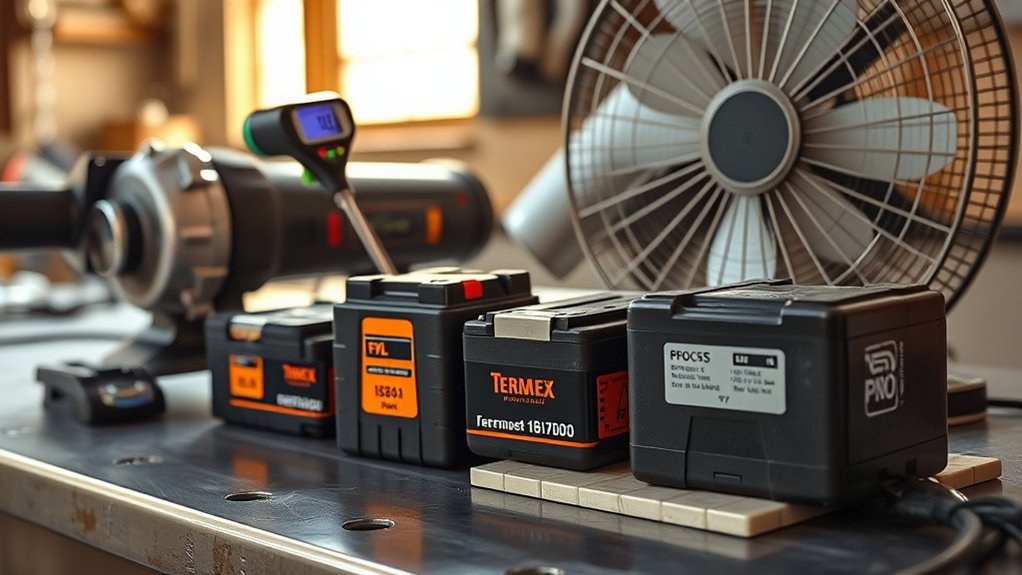
Understanding how different battery types respond to heat can help you choose the right one for your cordless angle grinder. Here’s a breakdown of how various battery packs fare against heat:
| Battery Type | Heat Handling Capability |
|---|---|
| Li-ion Batteries | Excellent; 15°C to 25°C (59°F to 77°F) |
| NiMH Batteries | Moderate; sensitive to excessive heat |
| Lead-Acid Batteries | Poor; high temps accelerate sulfation |
| Li-Po Batteries | Good; best stored at partial charge |
Li-ion batteries stand out for their performance and service life under a controlled temperature range. While NiMH batteries can tolerate some heat, they risk reduced capacity with excess warmth. Lead-acid batteries struggle considerably, with heat negatively impacting efficiency. For ideal protection, make certain your battery packs stay away from direct sunlight and high temperatures, as this can prevent thermal runaway and catastrophic failures.
How to Monitor and Maintain Battery Health Over Time
To guarantee your cordless angle grinder batteries remain efficient and reliable, regularly monitoring their health is essential. Implement these key practices:
- Monitor Charge Cycles: Track how often you charge your batteries. Avoid overcharging to prevent excessive heat, and consider using chargers with automatic shut-off features.
- Inspect Batteries: Regularly check for signs of swelling or damage, which can indicate overheating issues. Promptly replace any compromised batteries to maintain tool performance and safety.
- Store Batteries Properly: Keep batteries at a partial charge of 40-60% in a cool, dry environment. This practice helps extend their lifespan and minimizes heat-related damage.
Additionally, maintain ideal battery temperature during use, ideally between 15°C to 25°C (59°F to 77°F). Clean battery contacts frequently to guarantee effective energy transfer, as dirt and corrosion can lead to increased resistance and heat buildup.
Frequently Asked Questions About Heat and Battery Care?
How can you effectively manage heat-related issues with your cordless angle grinder batteries? Start by keeping the battery in a cool environment, ideally between 15°C to 25°C (59°F to 77°F). Overheating can lead to thermal runaway, jeopardizing your safety and tool performance. During heavy workloads, take breaks to allow the battery to cool down. Regularly inspect for signs of swelling or damage caused by excessive heat; these indicate a battery that should be replaced to maintain good condition.
Always charge batteries in cool, dry places, avoiding temperatures above 45°C (113°F) to prevent overheating. It’s also crucial to avoid leaving batteries connected to tools for long periods, as this generates heat and diminishes lifespan. By implementing these strategies, you can guarantee your batteries power your essential tools effectively and safely while extending their life.
Frequently Asked Questions
Can an Angle Grinder Overheat?
Yes, your angle grinder can overheat. Watch for overheating signs like reduced performance and excessive heat; employ cooling techniques like breaks and maintenance tips to extend battery lifespan and avoid performance degradation from high temperature thresholds.
What Are the Key Safety Precautions to Take When Using an Angle Grinder?
When using an angle grinder, prioritize protective gear essentials, follow equipment inspection checklists, maintain proper workspace organization strategies, implement heat management techniques, and guarantee user training importance to enhance safety and efficiency during operation.
Can Sparks From an Angle Grinder Start a Fire?
Yes, sparks from an angle grinder can ignite flammable materials. For instance, a workshop fire ignited from metal sparks hitting oil-soaked rags. Prioritize fire prevention, spark containment, and emergency response to mitigate workplace hazards effectively.
What Not to Do With an Angle Grinder?
Don’t neglect angle grinder maintenance; avoid improper usage and mismatched accessories. Always wear safety gear, guarantee voltage compatibility, and store your tool correctly to maximize battery lifespan and enhance heat dissipation for peak performance.
Conclusion
In summary, managing heat is essential for maximizing the lifespan and performance of your cordless angle grinder batteries. Did you know that batteries can lose up to 20% of their capacity for every 10°C increase in temperature? By recognizing the signs of overheating and employing effective cooling techniques, you can greatly enhance your battery’s health. Prioritizing proper storage and monitoring practices will guarantee your tools remain efficient and reliable, even in challenging conditions.