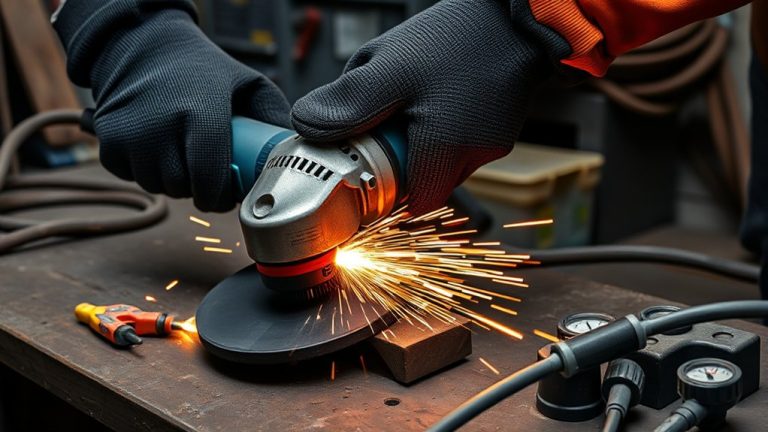
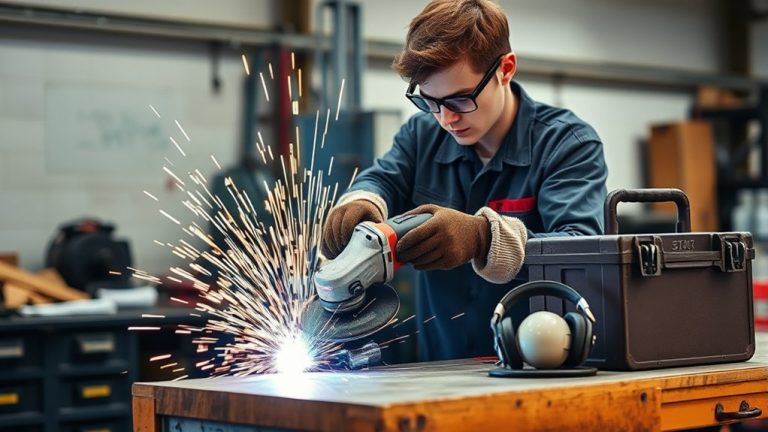
To cut bolts with an angle grinder safely, first, wear safety glasses, gloves, and an N-95 mask. Secure the bolt in a vice on a sturdy surface, and choose the right thin cut-off wheel designed for metal. Confirm your workspace is clear of flammable materials and verify the grinder’s RPM matches the disc. Clamp the bolt firmly, align the wheel for straight cuts, and maintain consistent pressure while cutting. There’s more to master for ideal results.
Why Cut Bolts? Understanding the Benefits
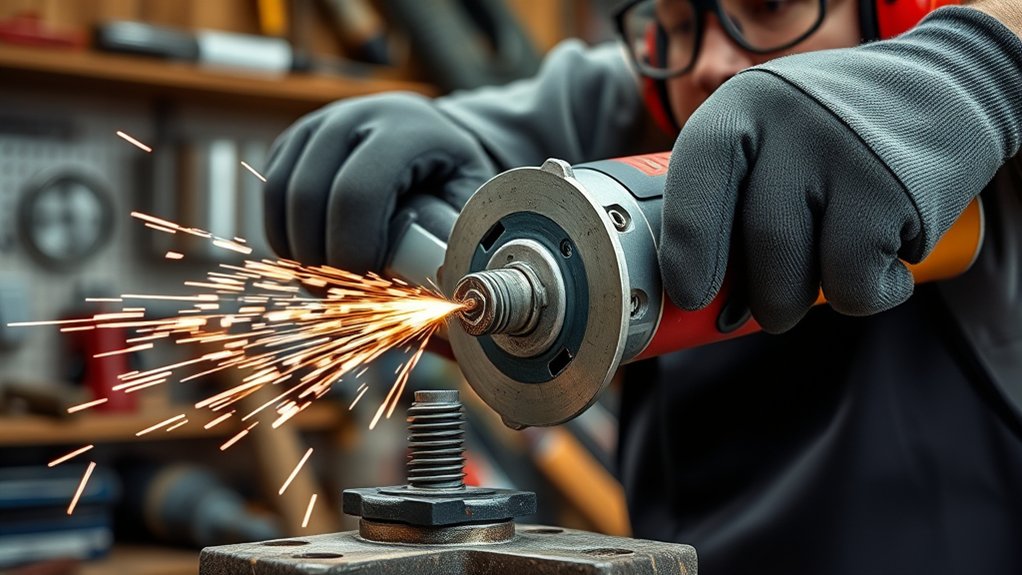
When you’re working on a project that requires specific bolt lengths, cutting bolts becomes essential to guarantee a precise fit. By trimming bolts to the necessary size, you achieve a custom fit that meets your project’s exact requirements. This not only enhances usability but also assures that you’re utilizing existing materials effectively, leading to an efficient use of resources.
Moreover, cutting bolts instead of stocking multiple sizes can greatly reduce inventory costs, minimizing waste and clutter in your workspace. With an angle grinder, you can easily cut metal bolts, allowing for precise screw lengths that improve the overall functionality of your assembly. Additionally, this practice enhances aesthetics by eliminating unsightly protrusions, giving your final product a polished, professional appearance. In short, cutting bolts is a practical solution that maximizes efficiency and elevates the quality of your work.
Essential Safety Gear for Cutting Bolts
To guarantee your safety while cutting bolts with an angle grinder, it’s vital to wear the appropriate protective gear. Start with safety glasses and a full-face shield to shield your eyes and face from flying debris and sparks. Ear protection is important, as angle grinders often exceed 85 decibels, risking long-term hearing damage. A properly fitted N-95 rated dust mask is also recommended to prevent inhaling harmful metal particles and fumes during the cutting process.
Confirm your hair is tied back and avoid wearing loose clothing, as it can get caught in the grinder, leading to severe injuries. Use gloves that fit snugly to protect your hands from sharp edges and heat, but steer clear of overly loose gloves that could entangle with the tool. Finally, make sure your angle grinder has a properly fitted safety guard for added protection. Following these steps guarantees proper safety while cutting bolts.
Get Your Workspace Ready for Safe Cutting
After verifying you’re equipped with the right safety gear, it’s time to prepare your workspace for cutting bolts. A well-organized and secure environment is essential for effective and safe cutting. Follow these steps to create an ideal workspace:
| Task | Importance |
|---|---|
| Verify good ventilation | Avoid inhaling harmful fumes and dust |
| Remove flammable materials | Prevent ignition of nearby substances |
| Use a sturdy surface | Secure the bolt firmly in a vice |
| Keep tools organized | Minimize distractions for a smooth workflow |
Also, keep a fire extinguisher nearby. This precautionary measure can safeguard against any accidental fires from sparks generated by the angle grinder. By taking these steps, you not only enhance your safety but also empower yourself to cut metal effectively and efficiently.
Choosing the Right Cutting Disc for Your Angle Grinder

When selecting a cutting disc for your angle grinder, focus on both the disc type and thickness. A thin cut-off wheel is ideal for achieving faster, cleaner cuts in metal, while ensuring the disc is specifically designed for metal cutting will enhance efficiency and reduce heat buildup. Always match the disc’s diameter to your grinder’s specifications and check its RPM rating for maximum safety and performance.
Disc Type Selection
Choosing the right cutting disc for your angle grinder is vital for achieving efficient and precise cuts on bolts. For metal cutting, select a thin cut-off wheel, ideally between 1/16″ to 1/8″ thick, guaranteeing faster and cleaner cuts. Verify that the disc’s diameter matches your grinder’s specifications, commonly 4.5, 5, or 7 inches. Opt for discs specifically designed for metal cutting, as they can withstand high speeds, preventing overheating. Additionally, check the RPM rating to confirm compatibility with your angle grinder’s maximum RPM, which helps avoid breakage and safety hazards. Finally, choose high-quality abrasive discs made from aluminum oxide or silicon carbide for superior durability and cutting performance. This careful disc type selection is vital for effective bolt cutting.
Thickness Considerations
Selecting the appropriate thickness of your cutting disc directly impacts the efficiency and effectiveness of your bolt-cutting task. For smaller diameter bolts, a thin cut-off wheel (typically 1/16 inch or 1.6 mm) is ideal, allowing you to cut steel cleanly and quickly. However, when you’re faced with thicker bolts over 1/2 inch (12.7 mm), consider a thicker cutting disc. Keep in mind that while thicker discs can handle tougher materials, they may require more time and generate additional heat. Confirm the disc is rated for the material, as using the wrong cutting disc compromises cutting efficiency. Always verify the RPM rating aligns with your angle grinder to prevent accidents and enhance performance during your project.
Step-By-Step: Cutting Bolts With an Angle Grinder
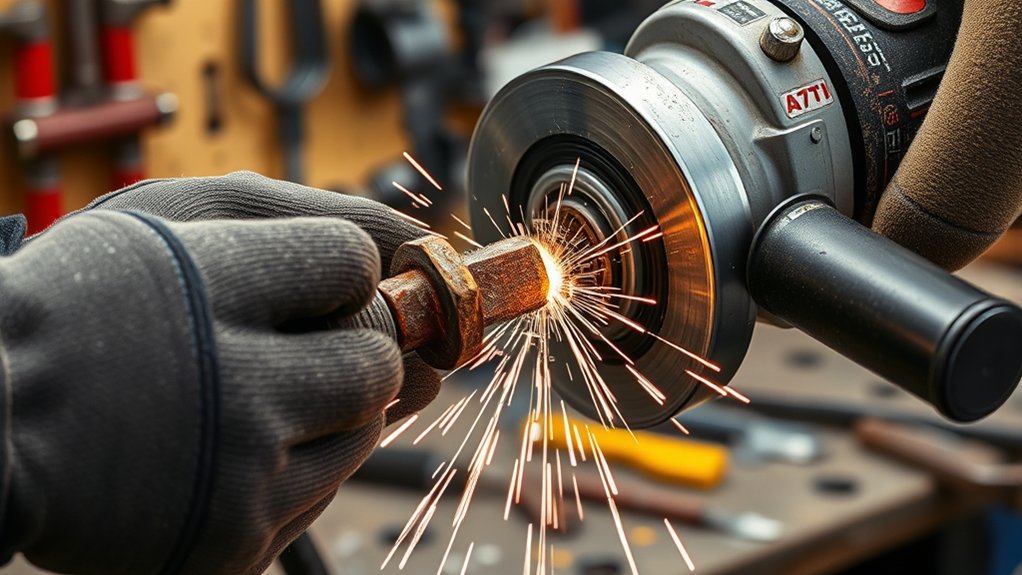
Cutting bolts with an angle grinder requires careful preparation and execution to achieve precise results. Start by securing the bolt in a vice or clamp to prevent movement. Choose a thin cutting wheel compatible with your angle grinder for clean cuts. Clearly mark the desired cut length on the bolt with a marker, guaranteeing accuracy.
| Step | Action | Explanation |
|---|---|---|
| 1. Secure Bolt | Use a vice or clamp | Stabilizes the bolt during cutting |
| 2. Select Wheel | Choose a thin cut-off wheel | Reduces damage and guarantees clean cuts |
| 3. Wear Safety Gear | Put on safety goggles and gloves | Protects against debris and noise |
After cutting, use a metal file to smooth any rough edges left on the bolt. This will provide a clean finish, enhancing the overall effectiveness of your work. Always wear safety gear while cutting to minimize risks.
Avoid These Common Mistakes When Cutting Bolts
When you overlook key safety measures and preparation steps, cutting bolts can quickly become hazardous and inefficient. To guarantee a smooth and safe process, here are some common mistakes to avoid:
- Secure the bolt properly: Use a vice or clamp to hold the bolt steady, preventing movement during cutting.
- Wear personal protective equipment (PPE): Always protect your eyes with safety goggles and wear gloves to minimize injury from flying debris.
- Use the right cutting wheel: Verify the wheel is sharp and appropriate for the bolt material to prevent overheating and tool damage.
- Mark the cut line clearly: A well-defined cut line helps you achieve straight cuts, reducing waste and the need for corrections.
Additionally, don’t forget to smooth rough edges after cutting. Taking your time will help you avoid these common mistakes when cutting bolts, guaranteeing safety and efficiency.
Troubleshooting Common Issues When Cutting Bolts
Even with proper preparation and safety measures in place, issues can still arise while cutting bolts with an angle grinder. If you notice rough edges after cutting, use a metal file or grinder disc to smooth the surfaces for a clean finish. To prevent crooked cuts, make certain that the bolt is securely clamped and that the cutting wheel aligns properly with your marked cut line. If the angle grinder slips, check the wheel’s condition and maintain consistent pressure throughout the cut. Inconsistent cutting pressure leads to uneven cuts, so keep a steady grip and force on the angle grinder.
| Issue | Solution |
|---|---|
| Rough edges | Use a metal file or grinder disc |
| Crooked cuts | Securely clamp the bolt and align wheel |
| Slipping angle grinder | Check wheel condition and maintain pressure |
Always wear appropriate safety gear, including goggles and gloves, to protect against debris and sharp edges.
Handling and Cooling Bolts Post-Cutting
After cutting bolts with an angle grinder, it’s essential to manage heat effectively to maintain their structural integrity. Here’s how to handle and cool your cut bolts safely:
After cutting bolts, manage heat effectively to ensure their structural integrity and handle them safely.
- Allow Natural Cooling: Let the cut bolts cool naturally to avoid warping.
- Apply a Cooling Method: Use water or cutting oil on the freshly cut end to dissipate heat quickly and prevent overheating.
- Use Protective Gear: Handle cut bolts with care, as sharp edges can pose a risk of injury. Always wear gloves when touching them.
- Inspect and Smooth: Check the cut surface for burrs or rough edges, and smooth them out with a metal file for safe handling and a better fit.
Finally, store cut bolts in a designated container to prevent accidental injury and keep them organized for future use. This process guarantees both safety and efficiency in your projects.
Maintaining Your Angle Grinder for Optimal Performance
To guarantee your angle grinder operates at peak performance, regular maintenance is crucial. Start by inspecting your angle grinder for signs of wear, such as frayed cords or damaged guards. Check the cutting wheels to verify they match the grinder’s RPM specifications; mismatched wheels can lead to breakage and reduced performance. Keeping the ventilation slots clean is essential for preventing overheating and verifying the grinder operates efficiently.
Additionally, lubricate the moving parts according to the manufacturer’s guidelines to minimize friction, which prolongs the tool’s lifespan. Storing your angle grinder in a dry, secure place protects it from moisture and physical damage, keeping it in ideal working condition. By maintaining your angle grinder diligently, you not only enhance its efficiency but also guarantee safety while cutting bolts and other materials. Prioritize these practices to liberate your tool’s full potential.
Frequently Asked Questions
How to Use an Angle Grinder to Cut Bolts?
To cut bolts, secure them with a vice, don safety gear, and select the right angle grinder accessories. Control cutting depth, consider bolt material, and maintain your tool for precision. Explore alternative cutting methods if needed.
How to Cut With an Angle Grinder Safely?
To cut with an angle grinder safely, you should wear protective gear, organize your workspace, maintain your tools, use proper cutting techniques, control sparks, reduce noise, and match the grinder to the bolt types.
How to Use Angle Grinder Step by Step?
Using an angle grinder efficiently involves selecting the right type, adjusting power settings, choosing the correct cutting wheel, ensuring your work area is safe, wearing safety gear, and following maintenance tips to avoid common mistakes.
Are Angle Grinders Good for Cutting Bolts?
Yes, angle grinders excel at cutting various bolt types when using appropriate specifications and cutting techniques. Make certain you wear safety gear, consider alternative tools for specific projects, and follow expert recommendations for ideal maintenance and performance.
Conclusion
In summary, cutting bolts with an angle grinder can be efficient and safe when you follow the right steps. Equip yourself with the proper safety gear, prepare your workspace meticulously, and choose the appropriate cutting disc. By adhering to the outlined procedures and avoiding common pitfalls, you’ll achieve precise cuts and maintain your tool’s longevity. Remember, a careful approach guarantees not just accuracy, but also your safety. Embrace these practices, and you’ll master bolt cutting in no time.