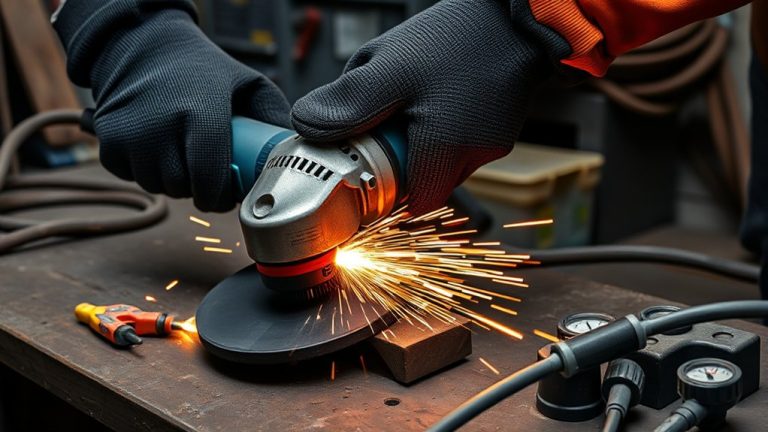
To cut rebar safely with an angle grinder, start by wearing appropriate safety gear like ANSI-rated safety glasses, cut-resistant gloves, and hearing protection. Choose a suitable angle grinder and a metal-rated cutting disc. Secure the rebar tightly in a vise or with clamps, ensuring proper support. Hold the grinder firmly and make smooth cuts at a 15–20° angle. After cutting, remove any burrs for safety. For more detailed techniques and tips, continue exploring this guide.
Essential Safety Gear for Cutting Rebar With an Angle Grinder
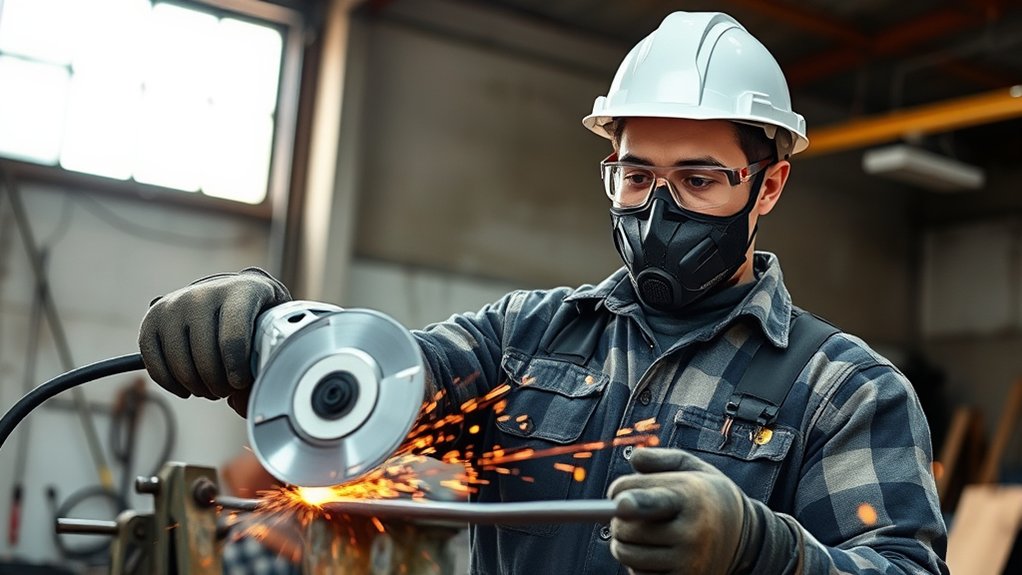
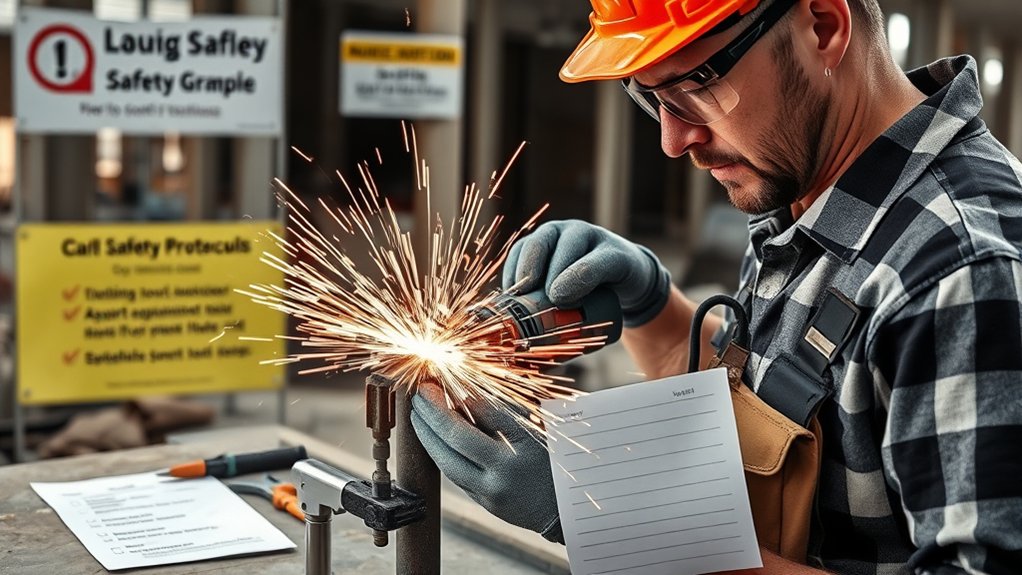
When cutting rebar with an angle grinder, safety gear is your first line of defense. Start with ANSI-rated safety glasses featuring side protection and a face shield to guard against flying debris and sparks. Next, put on cut-resistant gloves; they’ll shield your hands from sharp edges and potential burns during handling.
Wearing long sleeves made from natural fibers like cotton or wool is essential, as synthetic materials can melt from the heat. Don’t forget hearing protection—earplugs or earmuffs will help mitigate the loud noise produced by the grinder.
Ensure you keep a fire extinguisher nearby, ready for any unexpected sparks. Finally, wear protective footwear to guard against falling rebar and minimize injury risks from those pesky sparks. By equipping yourself with the right safety gear, you empower yourself to tackle this task confidently and safely.
Choosing the Right Angle Grinder and Cutting Disc
Selecting the right angle grinder and cutting disc is essential for safely and effectively cutting rebar. For rebar under 0.5 inches thick, a 4.5-inch angle grinder works well, while thicker rebar requires a 6 or 7-inch grinder. Always choose metal-rated cutting discs specifically designed for rebar; using masonry or wood wheels can shatter and compromise safety. Check that the RPM rating of your cutting disc matches or exceeds that of your angle grinder to prevent accidents and guarantee effective cutting. Thin-bonded cut-off wheels may offer speed but wear out quickly, so invest in thicker, durable discs for extended use. Opt for aluminum oxide or zirconia alumina blades, as they provide superior performance for metal materials. By making informed choices, you empower yourself to tackle rebar cutting with confidence and precision.
Set Up Your Workspace for Safe Rebar Cutting
Before you start cutting rebar, it’s essential to set up your workspace to guarantee safety and efficiency. Begin by making sure that your area is free of flammable materials and keep a fire extinguisher nearby to address any sparks. Next, establish a sturdy cutting surface like sawhorses or a workbench to securely support the rebar. Use clamps to firmly hold the rebar in place, preventing any movement that could lead to accidents. Position the rebar so that sparks fly away from you and flammable objects. Finally, make sure proper ventilation in enclosed spaces to manage dust and sparks, enhancing visibility during the cutting process.
| Task | Purpose | Tools Needed |
|---|---|---|
| Clear workspace | Reduce fire risks | None |
| Create cutting surface | Support rebar securely | Sawhorses or workbench |
| Use clamps | Prevent rebar movement | Clamps |
| Position rebar | Direct sparks away from hazards | None |
| Improve ventilation | Enhance air quality and visibility | Fans or open windows |
Step-by-Step Instructions to Cut Rebar With an Angle Grinder
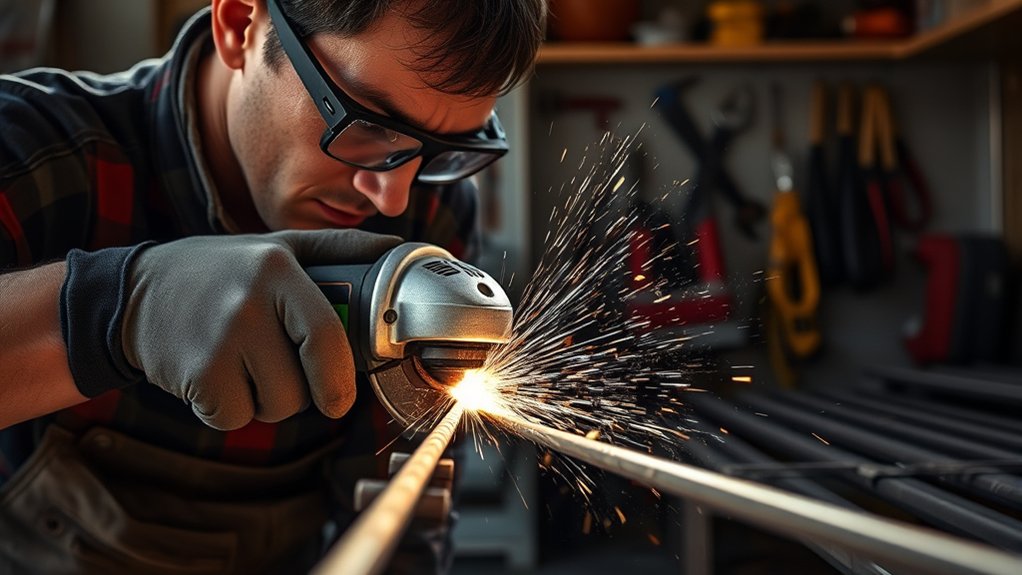
To cut rebar effectively with an angle grinder, you’ll need a few essential tools, including the grinder itself and a metal cutting disc. Start by measuring and marking your rebar for accurate cuts, then follow a step-by-step process to guarantee safety and precision. Let’s go through the instructions to get the job done right.
Essential Tools Needed
Cutting rebar efficiently requires a few essential tools to guarantee safety and precision. First, you’ll need a 4.5-inch or larger angle grinder equipped with a metal cutting disc. Don’t forget personal protective equipment: safety glasses, gloves, and hearing protection are crucial. To secure the rebar, use clamps and verify it’s stable on a workbench or sawhorses.
Here’s a quick overview of the essential tools:
| Tool | Purpose |
|---|---|
| Angle Grinder | For cutting the rebar |
| Metal Cutting Disc | Guarantees clean cuts |
| Clamps | Secures the rebar |
| Safety Glasses | Protects your eyes |
Always measure and mark your cutting line clearly, and check the disc for cracks before use. Apply steady pressure while cutting to avoid overheating.
Step-by-Step Cutting Process
Start by measuring and marking the rebar clearly with a bright marker or chalk. This guarantees your cut line is visible. Next, secure the rebar tightly in a vise or with C-clamps, supporting both ends to prevent sagging. Once secured, hold the angle grinder with both hands, maintaining a steady shoulder-width stance. Position the cutting disc at a 15–20° angle to the rebar. Allow the grinder to reach full RPM before making contact, then apply light pressure to cut through the rebar smoothly. After cutting, let the rebar cool down, as the ends will be sharp. If necessary, smooth the edges with a flap disc, while always prioritizing safety throughout the process.
Top 5 Mistakes to Avoid When Cutting Rebar
When cutting rebar, you need to watch out for common mistakes that can compromise safety and performance. Using the wrong disc type or failing to secure the rebar properly can lead to serious accidents and poor cuts. Let’s explore the top five mistakes to avoid for a safer and more efficient cutting process.
Wrong Disc Selection
Using the right disc is vital for safely cutting rebar, as selecting the wrong one can lead to dangerous consequences. Always opt for metal-rated cutting wheels specifically designed for this task. Using masonry or wood blades can result in shattering and significant safety risks. Verify the cutting disc’s RPM rating matches or exceeds your angle grinder’s RPM for peak performance. Choose a blade thickness of around 1/8 inch for durability; thinner blades wear out quickly and may not withstand the pressure. Regularly inspect your disc for cracks or chips before use. Remember, wrong disc selection can compromise cut quality and increase the risk of kickback, making proper disc selection essential for safe operations.
Insufficient Support During Cuts
Failing to provide adequate support during rebar cuts can lead to serious safety hazards and compromised cut quality. Always support both ends of long rebar pieces to prevent sagging, which can result in dangerous binding with your angle grinder. Use clamps or a vise to secure the rebar firmly, guaranteeing it won’t roll or shift during the cutting process. Position the rebar on a stable surface like sawhorses for proper weight distribution. Avoid cutting unsupported rebar, as this increases the risk of kickback and injury. Ascertain sparks fly away from you and any flaming materials for a safer cutting setup.
| Support Method | Benefits | Risks Avoided |
|---|---|---|
| Clamps or Vise | Holds rebar in place | Prevents rolling |
| Stable Surface | Guarantees stability | Minimizes kickback risk |
| Support Both Ends | Prevents sagging | Compromised cut quality |
What to Do If You Encounter Problems While Cutting?
Cutting rebar can sometimes present challenges that may disrupt your workflow. If you encounter issues, addressing them promptly is key to guaranteeing safety and efficiency. Here’s what to do:
- Blade Overheating: If the blade overheats, wait 30 seconds between cuts and apply less pressure to prolong its life.
- Uneven Cuts: Check your grip and angle. Maintain steady pressure and guarantee the rebar is properly supported throughout the cut.
- Excessive Sparks: If you see excessive sparks, adjust your cutting angle and confirm you’re using the right metal-rated disc for the job.
- Vibration or Odd Sounds: If the grinder vibrates or makes unusual noises, stop immediately. Inspect the tool for damage and guarantee all components are functioning correctly.
Essential Tips for Clean Cuts and Burr Removal
Achieving clean cuts on rebar is vital for both safety and the quality of your project. Start by verifying your angle grinder has a sharp disc designed for metal cutting, matching the RPM rating to your grinder’s specifications. Maintain a consistent angle of 15-20 degrees while cutting to avoid jagged edges and guarantee smooth, even cuts.
Before you begin, inspect the rebar thoroughly and secure it with proper clamping to prevent movement, which can lead to uneven cuts and increased burr formation. After cutting, it’s important to address any burr removal. Use a flap disc or grinding wheel to carefully smooth out sharp edges left on the rebar, enhancing safety during handling and installation. Finally, allow the cut rebar to cool before handling, as freshly cut edges can be dangerously sharp. Prioritize these steps for the best results in your project.
Best Practices for Post-Cutting Cleanup and Tool Maintenance
Once you’ve finished cutting rebar, it’s crucial to prioritize cleanup and tool maintenance to guarantee a safe and efficient workspace. Neglecting these tasks can lead to injuries or equipment failure. Follow these best practices:
- Dispose of Scraps: Carefully gather and dispose of sharp metal scraps to prevent injury and maintain a clean area.
- Inspect and Clean: Use a wire brush or flap disc on your angle grinder to smooth out any sharp burrs left on the cut ends of the rebar.
- Store Properly: Keep cut rebar in a designated area to avoid tripping hazards and protect it from rust, especially carbon steel types.
- Routine Maintenance: Regularly inspect your angle grinder and cutting wheels; replace worn parts immediately and lubricate moving components to extend their lifespan and enhance safety.
Frequently Asked Questions
How to Cut Rebar With Angle Grinder?
To cut rebar with an angle grinder, secure the rebar, wear safety gear, choose the right blade, and maintain your tool. Use proper rebar cutting techniques for efficient results while considering workspace organization and project planning essentials.
How to Cut Rebar Safely?
To cut rebar safely, wear safety gear, use appropriate angle grinder types, choose metal cutting blades, and guarantee workspace organization. Master rebar cutting techniques for accuracy, plan projects, and handle debris responsibly for a smooth experience.
What Are the Safety Precautions When Using an Angle Grinder?
When using an angle grinder, wear safety gear like protective eyewear, check equipment for damage, organize your workspace to reduce fire risks, control dust, guarantee proper ventilation, and address noise hazards for a safer experience.
How to Use Angle Grinder Step by Step?
Start by setting up your work area, then choose the right blade. Secure the rebar, wear safety gear, and maintain proper cutting speed. Avoid common mistakes by following effective rebar cutting techniques for ideal results.
Conclusion
To summarize, cutting rebar with an angle grinder can be safe and efficient if you follow the right steps. For instance, imagine you’re working on a home renovation and need to trim rebar for a concrete foundation. By wearing your safety gear, setting up your workspace properly, and avoiding common mistakes, you’ll achieve clean cuts and maintain a safe environment. Always remember, a little preparation goes a long way in ensuring a successful project.