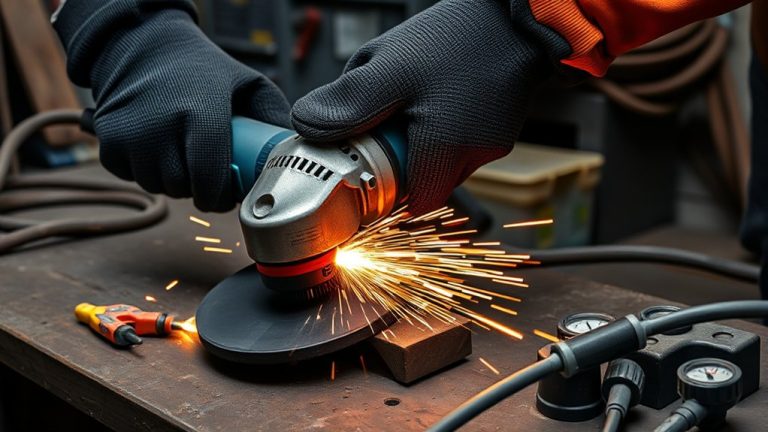
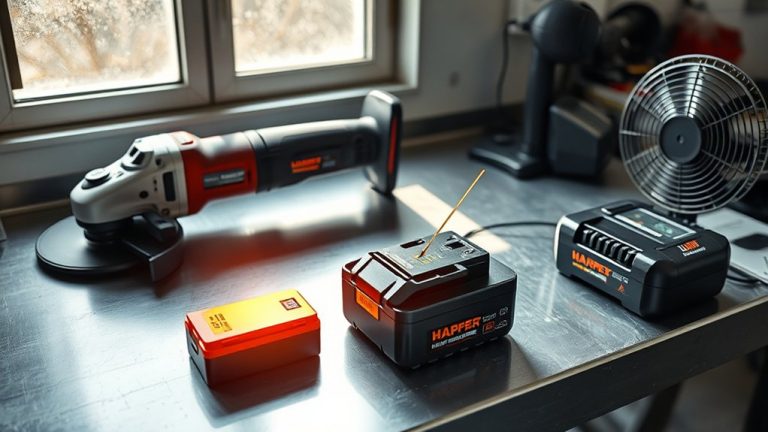
To cut sheet metal with an angle grinder straight and without warping, secure the metal in a vise and use a thin cutting disc. Clearly mark your cutting line and lightly score it to guide your cut. Maintain a steady grip and feed the grinder at a controlled speed, making multiple passes along the line. Make certain you keep your workspace organized and wear appropriate safety gear. There’s plenty more to master for the best results, so keep going.
How to Use an Angle Grinder for Cutting Sheet Metal
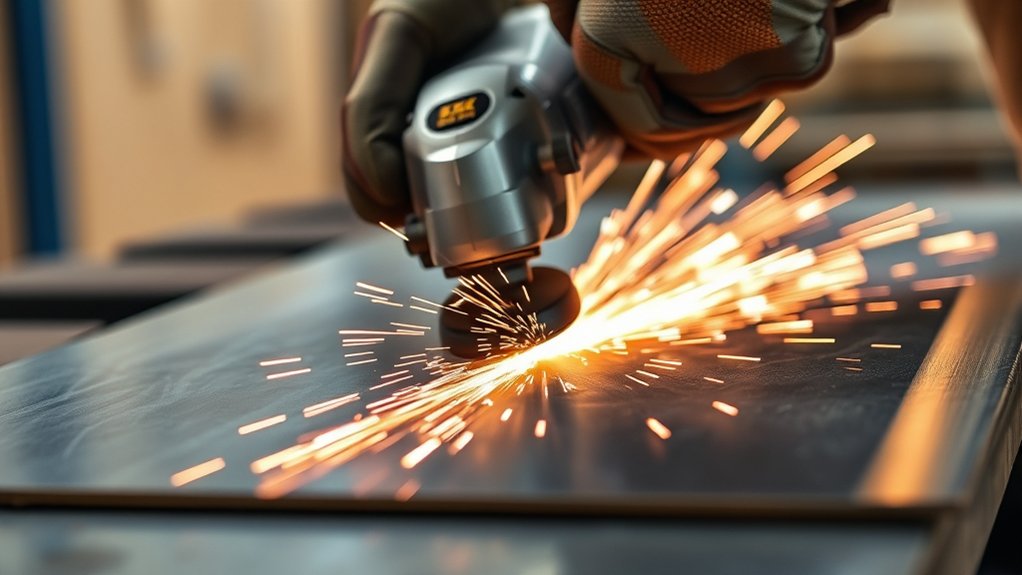
To cut sheet metal effectively with an angle grinder, you’ll want to start by securing the metal in a vise or clamp to prevent movement during the cutting process. Use a thin cutting disc, ideally 1mm or 2mm thick, to minimize heat generation and reduce the risk of warping the metal. Clearly mark the cutting line with a distinct marking tool like soapstone or chalk, and consider scoring the line to guide your cut accurately.
Hold the grinder with both hands, ensuring it’s positioned so sparks direct away from the cutting mark. This setup allows for stable and controlled cutting. Instead of attempting to cut through the metal in one pass, make multiple passes along the cutting line. This technique enhances your control over the angle grinder and improves cut quality, leading to precise results without damaging the material.
Set Up Your Workspace for Safe Cutting
Creating a safe and efficient workspace is essential for cutting sheet metal with an angle grinder. Start by ensuring your area is clean and organized; this prevents accidents and helps you keep track of parts during your cutting operation. Use a 1/8-inch stainless steel top workbench designed for precision tasks, as it withstands the rigors of cutting without damage. Proper lighting is vital—position it to eliminate shadows on your cut mark, ensuring you maintain accuracy for a clean cut. Secure the sheet metal using a vise or clamps to prevent any movement; stability is key for achieving the desired results. By setting up a well-organized workspace, you’ll enhance both safety and efficiency, allowing for better focus on your cuts and minimizing distractions. This preparation sets the stage for successful angle grinding and a satisfying project outcome.
Wear Essential Safety Gear for Angle Grinder Use
When using an angle grinder, prioritizing safety gear is essential to protect yourself from hazards. Always wear safety glasses to shield your eyes from flying sparks, and use cut-resistant gloves to safeguard your hands against sharp edges. Additionally, consider a respirator to filter out harmful metal dust and fumes while you work.
Importance Of Eye Protection
Although using an angle grinder can be an efficient way to cut sheet metal, the risk of injury from flying sparks and debris makes eye protection essential. When you’re working, wear personal protective equipment that meets ANSI Z87.1 standards to guarantee safety. Here’s what you should consider:
- Safety glasses to shield against flying debris
- Face shield for additional facial protection
- Impact-resistant eyewear for power tool use
- A respirator to filter harmful particles
Gloves For Hand Safety
Eye protection is essential, but safeguarding your hands is equally important when using an angle grinder. Wearing gloves made from cut-resistant materials, like Kevlar or steel mesh, shields your hands from sharp edges and potential injuries while handling sheet metal. Make sure your gloves fit snugly for ideal dexterity and control over the angle grinder, reducing the risk of accidental slips. Opt for heat-resistant gloves to protect against the high temperatures generated by the grinder and metal sparks. Avoid gloves with loose cuffs or long sleeves that can catch on equipment, increasing injury risk. Regularly inspect your gloves for wear and tear, replacing them as necessary to maintain effective protection while cutting sheet metal.
Respirators For Breathing Protection
To protect your lungs while cutting sheet metal with an angle grinder, wearing a respirator is crucial. Inhalation of harmful metal dust and fumes can pose serious health risks. Here’s what to keep in mind:
- Choose a respirator rated N95 or higher for effective filtration.
- Conduct a fit test to verify it seals properly against your face.
- Replace filters regularly; clogged filters can compromise your breathing protection.
- Always combine your respirator with other personal protective equipment (PPE), like safety goggles and gloves.
Mark Your Cut for Metal Cutting Accuracy

Accurate marking is essential when cutting sheet metal, as it directly affects the quality of your cut. Start by using a straight edge as a guide to define your cutting line, guaranteeing a straight cut. Choose a thin marking tool, like soapstone or a silver pencil, for clear visibility, especially when sparks fly during cutting. Once marked, lightly score the line with a sharp tool; this creates a better guide and prevents the cutting disc from wandering. If you’re working on curved surfaces, consider applying masking tape along the cut line. This not only helps maintain a straight edge but also enhances visibility. Always verify your marked line is well-defined and visible to avoid mistakes during the cutting process. With precise marking, you set the stage for clean, accurate cuts that liberate your sheet metal project from imperfections.
Use Techniques for Straight, Clean Cutting
To achieve straight, clean cuts with your angle grinder, start by selecting the right cutting disc for your specific metal type. Implement effective cutting techniques, like scoring your line and maintaining a steady grip, to guarantee precision and control. Remember, supporting the metal adequately will help you maintain stability and avoid distortion during the cut.
Proper Tool Selection
Selecting the right tools is essential for achieving straight, clean cuts when using an angle grinder on sheet metal. Here are key components to guarantee efficiency and accuracy:
- A high-quality 1mm cutting disc specifically designed for metal.
- A straight edge or angle iron to maintain alignment and guide your cuts.
- A scribing tool to score the metal along your cutting line, creating a clear path for the angle grinder.
- Secure clamps to hold the workpiece firmly in place, minimizing movement.
Effective Cutting Techniques
Achieving clean, straight cuts with an angle grinder requires precision and technique. Start by scoring your cutting line with a straight edge to create a clear guide. Use a 1mm cutting disc for better control and to reduce warping risks. Maintain a steady hand, focusing on the cut ahead rather than the disc, guaranteeing proper alignment. Support the sheet metal on both sides of the cut to prevent flexing, which can lead to uneven results. Feed the grinder at a medium rate, allowing it to do the work without forcing it, for a clean, precise cut.
| Technique | Description |
|---|---|
| Score the Line | Create a guide with a straight edge |
| Use a 1mm Cutting Disc | Enhances control, minimizes warping |
| Steady Hand | Focus on the cut ahead for alignment |
| Support the Metal | Prevents flexing and guarantees accuracy |
Fix Common Cutting Problems
Cutting sheet metal can present various challenges, but understanding how to address common problems can greatly improve your results. Here are some tips to help you overcome these issues:
Cutting sheet metal can be tricky, but knowing how to tackle challenges can significantly enhance your outcomes.
- Support the sheet metal on both sides to prevent flexing.
- Maintain a consistent cutting speed; avoid forcing the grinder to prevent uneven cuts.
- Use a thinner cutting disc (1mm) for better control and reduced heat buildup.
- Score the metal along your cutting line before cutting for accuracy.
If you notice warping, don’t panic. Cooling the metal with water or a damp cloth right after cutting can help stabilize its shape. By implementing these strategies, you’ll enhance your precision when cutting sheet metal with an angle grinder, leading to better results without the frustration of common pitfalls.
Keep Your Angle Grinder Running Smoothly
Maintaining your angle grinder is essential for peak performance and longevity. Regularly check and clean the air vents and filters to prevent overheating and guarantee ideal airflow while you hold the grinder. Using high-quality cutting discs compatible with stainless steel not only maintains cutting efficiency but also prolongs the grinder’s lifespan, especially when tackling tough materials like angle iron.
Don’t forget to lubricate the spindle and bearings as recommended by the manufacturer; this reduces wear and keeps your grinder running smoothly. Inspect the power cord and plug for any signs of damage or wear, and replace them immediately to prevent electrical hazards, guaranteeing a consistent power supply. Finally, keep your workspace clean and organized to avoid debris interfering with the grinder’s operation. A well-maintained grinder enhances your ability to cut sheet metal precisely and safely.
Essential Tools for Cutting Sheet Metal

For effective sheet metal work, having the right tools at your disposal makes all the difference. When using an angle grinder for straight cuts, make certain you gather the following essential tools:
- Angle Grinder: Equipped with a thin cutting disc (1mm or 2mm) for clean cuts.
- Personal Protective Equipment (PPE): Safety glasses, gloves, and a face shield to guard against sparks.
- Straight Edge or Angle Iron: Serves as a guide for maintaining alignment and achieving straight cuts.
- Vise or Clamps: Hold the sheet metal securely, preventing movement for enhanced safety and precision.
Additionally, marking tools like soapstone or liquid paint help to outline your cutting path clearly. With these tools, you’ll be well-prepared to tackle your sheet metal projects efficiently, making sure your cuts are both accurate and free from warping.
Frequently Asked Questions
How to Cut Steel Sheet Straight With Angle Grinder?
To cut steel sheet straight with an angle grinder, mark your line, secure the metal, use a thin disc, and maintain a steady feed rate. This guarantees precise metal cutting without warping or distortion.
How to Cut Perfectly Straight With an Angle Grinder?
To cut perfectly straight with an angle grinder, use proper cutting techniques and select the right tool. Mark your line clearly, employ a guide, and maintain steady pressure for accurate, clean cuts without warping.
How to Cut Sheet Metal in a Straight Line?
To cut sheet metal in a straight line, use metal cutting tools like an angle grinder. Apply proper cutting techniques by marking your line clearly, securing the metal, and maintaining consistent pressure for accuracy.
What Are Common Sheet Metal Cutting Mistakes?
About 40% of DIY metal projects fail due to cutting mistakes. You’re likely to encounter issues like improper cutting technique, ignoring metal thickness, and neglecting safety gear. Focus on precision for successful results.
Conclusion
In the domain of metalwork, your angle grinder is like a skilled knight, ready to conquer the battlefield of sheet metal. With the right setup, safety gear, and techniques, you wield its power to carve precise, straight lines, avoiding the dreaded warping dragon. As you refine your skills and maintain your trusty tool, you’ll transform raw metal into masterpieces. Embrace the journey, and let your angle grinder be the sword that shapes your creative vision with precision and confidence.