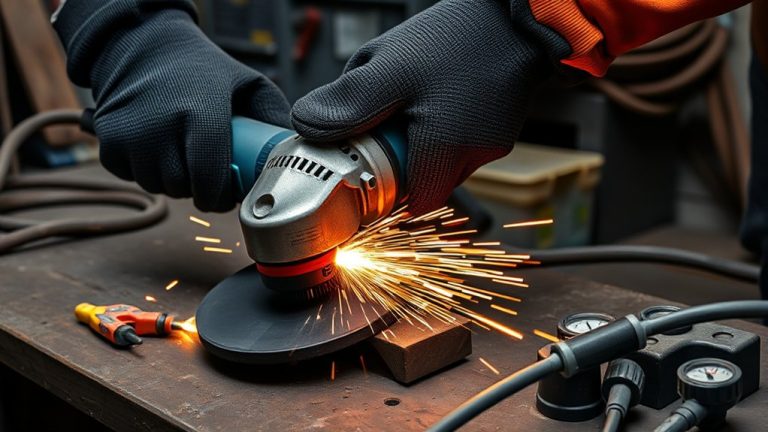
To cut stainless steel with an angle grinder while minimizing heat discoloration, use a thin “inox” cutting disc and apply steady, moderate pressure without forcing the tool. Incorporate cooling techniques like cutting fluid or damp rags to reduce heat buildup. Make certain your workspace is organized and secure the workpiece with clamps to prevent movement. Opt for multiple shallow passes over one deep cut to manage heat generation effectively. Continue exploring for more essential tips on achieving clean, quality cuts.
Benefits of Using an Angle Grinder for Cutting Stainless Steel
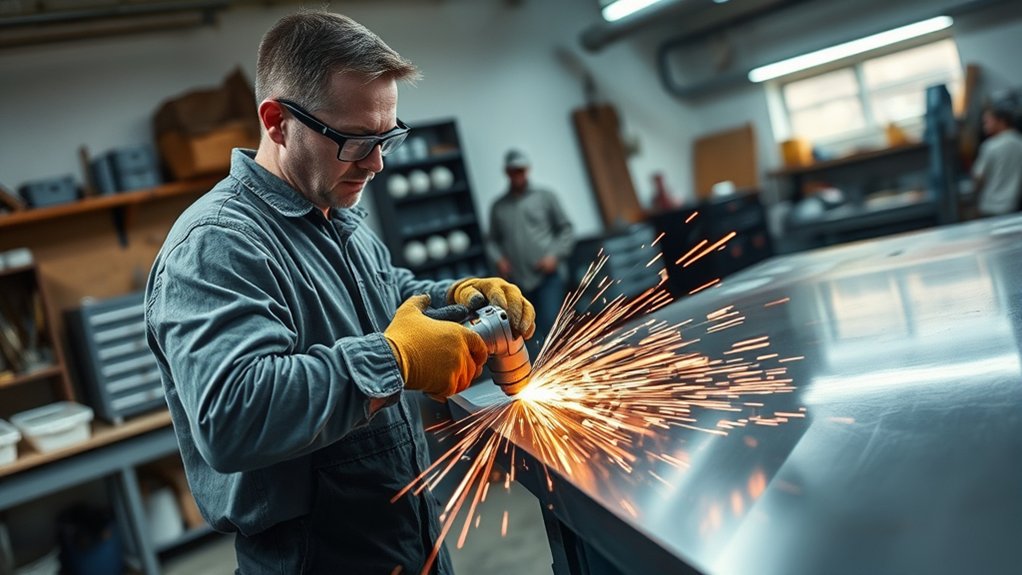
Using an angle grinder for cutting stainless steel offers numerous advantages that enhance both efficiency and precision. The ability to choose between corded and cordless models allows you to tailor your setup based on power and portability needs. Thin cutting discs specifically designed for stainless steel guarantee that your angle grinder cuts with minimal heat, which helps maintain the integrity of the metal. This is vital for stainless steel work, as excessive heat can lead to discoloration and warping.
Moreover, angle grinders excel in adapting to irregular shapes and tight spaces, allowing for intricate cuts with reduced material waste. By employing proper cooling techniques, like using cutting fluid, you can further minimize heat generation, assuring a clean finish on your stainless steel projects. These benefits make angle grinders an essential tool for anyone looking to achieve precise and efficient cuts in stainless steel.
Types of Angle Grinders for Cutting Stainless Steel
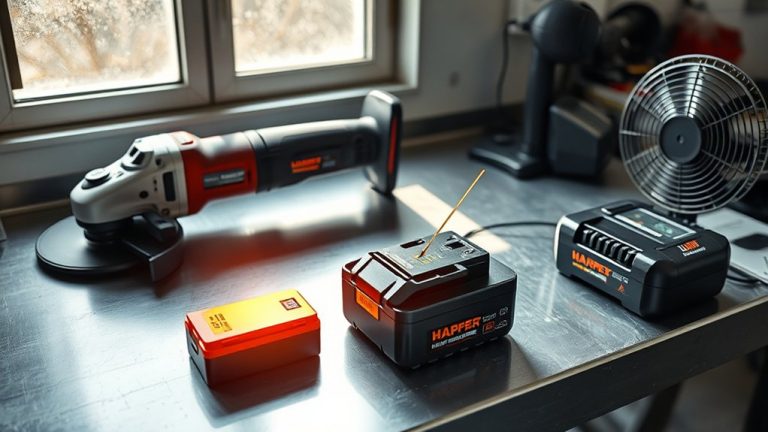
When selecting an angle grinder for cutting stainless steel, you’ll find several types tailored to specific needs. Corded angle grinders are powerful cutting tools that provide a continuous power source, making them ideal for heavy-duty tasks, as they eliminate the worry of battery charging. On the other hand, cordless angle grinders, typically operating at 18V to 20V, offer unmatched portability, perfect for cutting stainless steel in various locations.
If precision is your priority, mini angle grinders are lightweight and designed for intricate cuts on thinner stainless steel materials. For those tackling thicker stock, heavy-duty angle grinders excel at handling rigorous cutting tasks efficiently. Additionally, specialty angle grinders may come equipped with unique safety features and capabilities specifically designed for cutting stainless steel, minimizing heat marks and enhancing performance. Choosing the right angle grinder guarantees peak results and a smoother cutting experience.
Essential Tools for Cutting Stainless Steel
To effectively cut stainless steel with an angle grinder, you’ll need specific tools that guarantee precision and safety. Start with a 4.5-inch angle grinder and use cutting discs labeled “inox,” designed to handle stainless steel efficiently with their thinner profile of about 1mm. To mark your cutting line clearly, a soapstone marker is ideal, as it won’t scratch the surface.
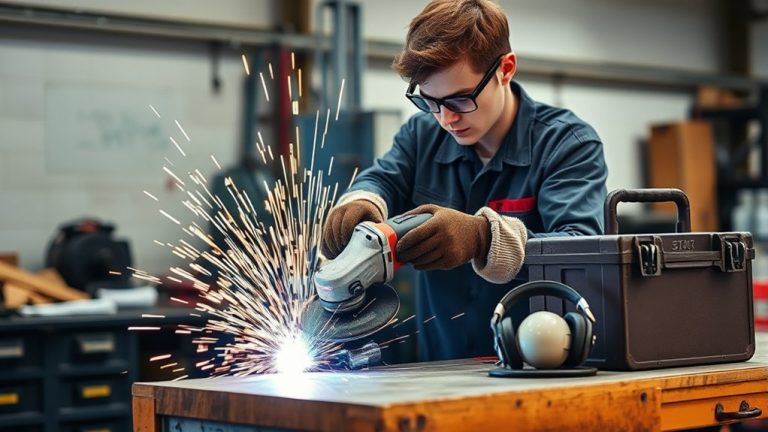
You’ll also require at least two C-clamps or quick-grip clamps to hold the workpiece steady, preventing movement during the cutting process. Don’t forget proper safety gear: safety glasses, face shield, dust mask, ear protection, gloves, and steel-toed boots are essential to protect against sparks and debris. Finally, keep a fire extinguisher nearby to address any potential fire hazards from the sparks generated while cutting. With these essential tools in hand, you’re ready to tackle your stainless steel project safely and effectively.
Preparing Your Workspace and Stainless Steel for Cutting
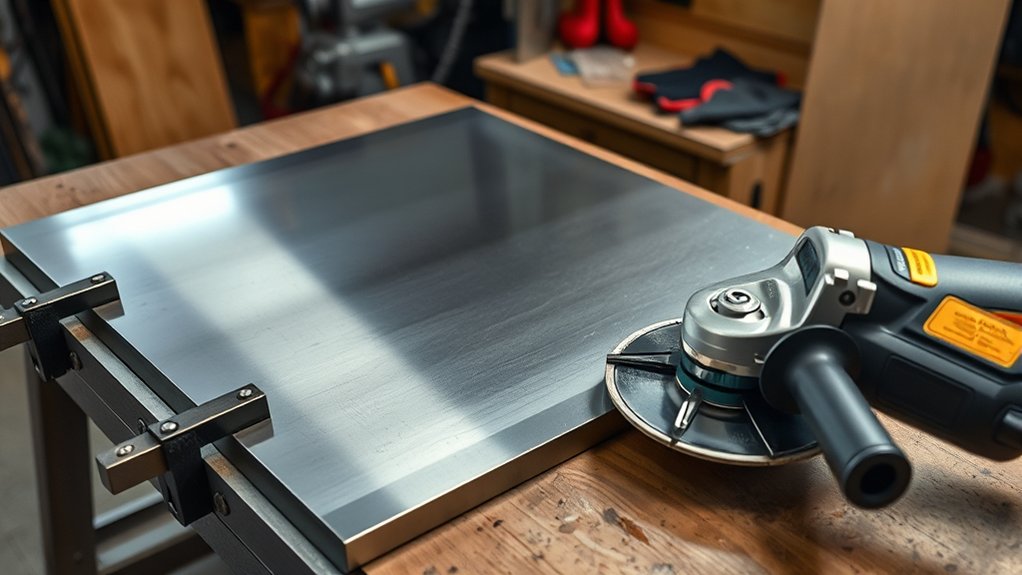
Before cutting stainless steel, it’s essential to prepare your workspace properly. Start by making sure your area is clean and well-lit, using a flat, solid workbench for stability. Mark your cutting line clearly with a soapstone marker; it won’t scratch the stainless steel sheet. To secure the workpiece, use at least two C-clamps or quick-grip clamps, preventing any movement during the cutting process. Consider applying masking tape along the cut line, as it protects the surface from scratches and aids in guiding your cuts. Before you begin, inspect the stainless steel for any dents or imperfections, as these can affect your results. Also, support long pieces adequately to avoid bending or warping. Finally, don’t forget to protect your hands with appropriate gloves to guarantee safety while handling tools and materials. Proper preparation is key to achieving clean, precise cuts.
Your Guide to Cutting Stainless Steel With an Angle Grinder
Cutting stainless steel with an angle grinder can be an efficient process if you follow the right techniques. Start with a thin cutting disc labeled “inox,” ideally around 1mm thick, designed specifically for stainless steel. Apply consistent, moderate pressure without forcing the grinder; let the cutting disc do the work. This approach minimizes heat buildup, which is essential for maintaining the integrity of your material.
Incorporate cooling techniques like cutting fluid or water-soaked rags between cuts to dissipate heat effectively. Make sure your workpiece is securely clamped to prevent movement, allowing smoother cuts and reducing the risk of overheating. For thicker materials, perform multiple shallow passes instead of one deep cut. This method not only helps manage heat generation but also preserves the quality of the stainless steel. With these techniques, you’ll enhance your cutting efficiency while minimizing the risks associated with heat.
How to Cut Stainless Steel Without Heat Discoloration
To cut stainless steel without heat discoloration, start by selecting the right tools, specifically a thin cutting disc designed for stainless steel. Incorporate effective cooling techniques, like applying lubricant and using water-soaked rags, to manage temperatures. Finally, control your cutting pressure to maintain a steady feed rate, ensuring a clean and consistent cut.
Proper Tool Selection
When tackling stainless steel, proper tool selection is crucial for achieving clean cuts without heat discoloration. Choose a thin cutting disc specifically labeled for stainless steel, ideally around 1mm thick, to reduce material contact and minimize heat generation. Opt for an angle grinder with a higher RPM, around 11,000 RPM, to enhance cutting effectiveness and decrease friction, which contributes to heat buildup. Apply cutting fluid or lubricant before and during cutting to help dissipate heat and prevent discoloration. Utilize multiple shallow passes instead of forcing the grinder through the material; this method maintains a cooler cutting temperature and avoids work hardening. Finally, verify your cutting wheel is sharp and well-maintained to prevent excessive heat creation and discoloration of the cut edges.
Effective Cooling Techniques
Although heat discoloration can compromise the aesthetic and structural integrity of stainless steel, employing effective cooling techniques guarantees clean cuts. To minimize friction and heat during the cutting process, consider the following:
- Apply cutting fluid or lubricant for reduced friction.
- Perform multiple shallow passes instead of a deep cut.
- Use a water-soaked rag to cool the stainless steel between cuts.
- Maintain a consistent feed rate and angle for better heat control.
- Choose a high-quality cut-off wheel designed specifically for stainless steel.
Controlled Cutting Pressure
Using controlled cutting pressure is essential for achieving clean cuts in stainless steel without causing heat discoloration. Apply light pressure when using your angle grinder to prevent excessive heat buildup, which can lead to discoloration and work hardening. Choose a thin cutting disc labeled “inox” for cleaner cuts and to minimize heat-affected zones. Instead of making a single deep cut, make multiple shallow passes to reduce friction and heat generation. Incorporate cooling techniques, such as cutting fluid or water-soaked rags, to dissipate heat and preserve the stainless steel’s integrity. Maintain a steady hand and avoid forcing the grinder; too much pressure increases heat, risking discoloration of the cut edges.
Avoiding Mistakes While Cutting Stainless Steel
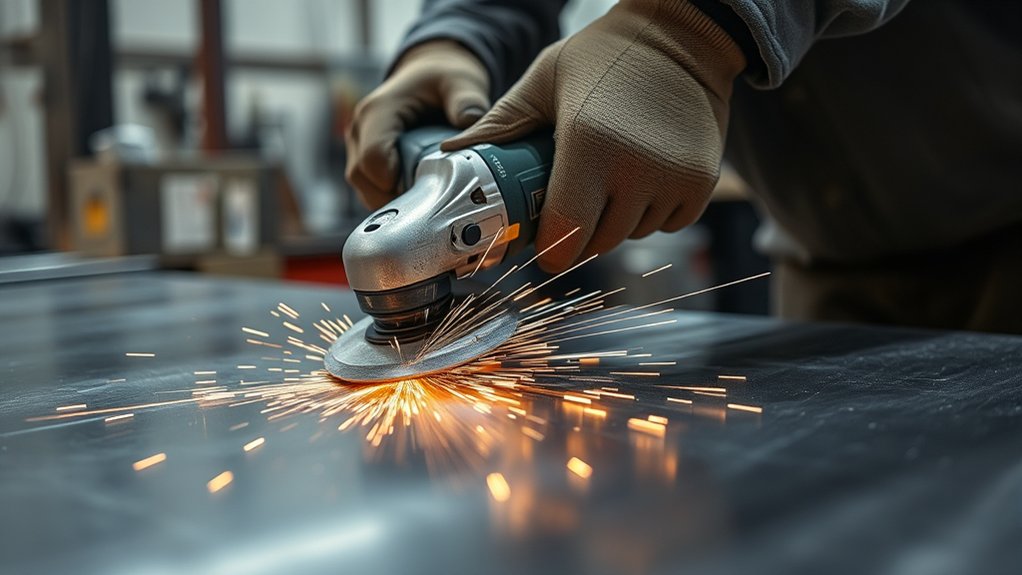
To avoid costly mistakes while cutting stainless steel, it’s essential to select the right tools and techniques. Common mistakes to avoid include:
- Using the wrong cutting disc; choose one labeled “inox” for stainless steel.
- Applying excessive pressure; instead, use light pressure to let the disc do the work.
- Skipping cutting fluid or lubricant for thicker materials to reduce friction.
- Forcing the cut; make multiple shallow passes to minimize heat buildup.
- Neglecting to securely clamp your workpiece to prevent movement.
Post-Cutting Maintenance for a Clean Finish
After cutting stainless steel, it’s essential to clean the cut edges to remove any burrs and sharp points. Inspect the cut for accuracy and any discoloration, then polish it with a fine-grit abrasive pad for a smooth finish. This attention to detail guarantees both aesthetic quality and functional integrity before moving on to further processing.
Cleaning Cut Edges
Once you’ve cut stainless steel, it’s crucial to clean the cut edges to guarantee safety and achieve a polished finish. Addressing rough edges and sharp edges reduces the risk of injury and enhances the aesthetic appeal of your work. Follow these steps for effective cleaning:
- Remove burrs with grinding discs or flap discs.
- Use files for intricate areas to guarantee a smooth finish.
- Clean loose metal particles with a wire brush.
- For a finer finish, apply abrasive pads or polishing compounds.
- Consider a protective coating to prevent corrosion, especially in moist environments.
These cleaning cut edges techniques will help you achieve a superior result, guaranteeing your cut stainless steel looks professional and remains safe for handling.
Inspecting Cut Accuracy
Inspecting cut accuracy is essential for ensuring a clean finish on your stainless steel project. Start by closely inspecting the edges against your marked lines to confirm they match the intended dimensions without any deviation. Use a wire brush or deburring tool to eliminate burrs and sharp edges left from cutting, as these can compromise the piece’s finish and safety. Check for discoloration or oxidation, indicating potential overheating; if found, apply a suitable cleaning solution. Run your hand along the cut edges—smoothness signifies proper cutting technique, while rough edges may need additional grinding or polishing. Finally, conduct a thorough visual inspection under good lighting to spot any imperfections, ensuring the final piece meets both aesthetic and functional standards.
Conclusion: Achieving Quality Cuts and Preventing Discoloration
To achieve quality cuts and prevent discoloration when working with stainless steel, it’s essential to use the right tools and techniques. Here are some key strategies:
- Use a thin “inox” cutting disc designed specifically for stainless steel.
- Apply cutting fluid or cool the material with water-soaked rags to minimize heat.
- Maintain a steady cutting speed with light pressure to let the disc do the work.
- Make multiple shallow passes instead of a single deep cut to reduce the heat-affected zone (HAZ).
- Clean cut edges immediately with a wire brush or abrasive pads to remove discoloration.
Frequently Asked Questions
How to Cut Stainless Steel Without Discoloration?
To cut stainless steel without discoloration, use appropriate stainless steel tools, choose thin grinding discs, apply effective cutting techniques, manage heat with lubricants, and consider protective coatings to maintain surface integrity during the process.
How to Fix Stainless Steel Discoloration From Heat?
To fix stainless steel discoloration from heat, employ effective heat treatment methods, utilize polishing techniques, choose the right grinding wheel, apply protective coatings, and guarantee thorough post cutting care to restore its original luster.
Can I Cut Stainless Steel With an Angle Grinder?
Yes, you can cut stainless steel with an angle grinder using appropriate grinding wheels. Focus on angle grinder safety, employ proper cutting techniques, and select the right stainless steel grades for ideal results and efficiency.
Will Stainless Steel Rust if Cut With a Grinder?
Yes, stainless steel can rust if cut with a grinder. To prevent rust, use proper cutting techniques, protective coatings, and guarantee grinder safety. Metal finishing and cooling methods also help minimize heat-related discoloration and corrosion risks.
Conclusion
To summarize, cutting stainless steel with an angle grinder can be a seamless and satisfying task when you prioritize precision and preparation. By applying proper techniques and tools, you’ll minimize heat discoloration while achieving clean, crisp cuts. Remember, a little patience goes a long way in preventing pitfalls, ensuring your project shines. So, gear up, get grinding, and enjoy the rewarding results of your meticulous metalwork!