To securely tighten your angle grinder backing nut, first verify the upper nut is firmly against the cutting disc to avoid wobbling. Apply pressure on the side nut while checking for even seating of the disc on the rear nut. After tightening, inspect for any misalignment or play. Perform a test run at low speed to confirm that everything is secure. For more detailed guidance on installation and safety, further insights are available.
Understanding the Importance of Proper Installation
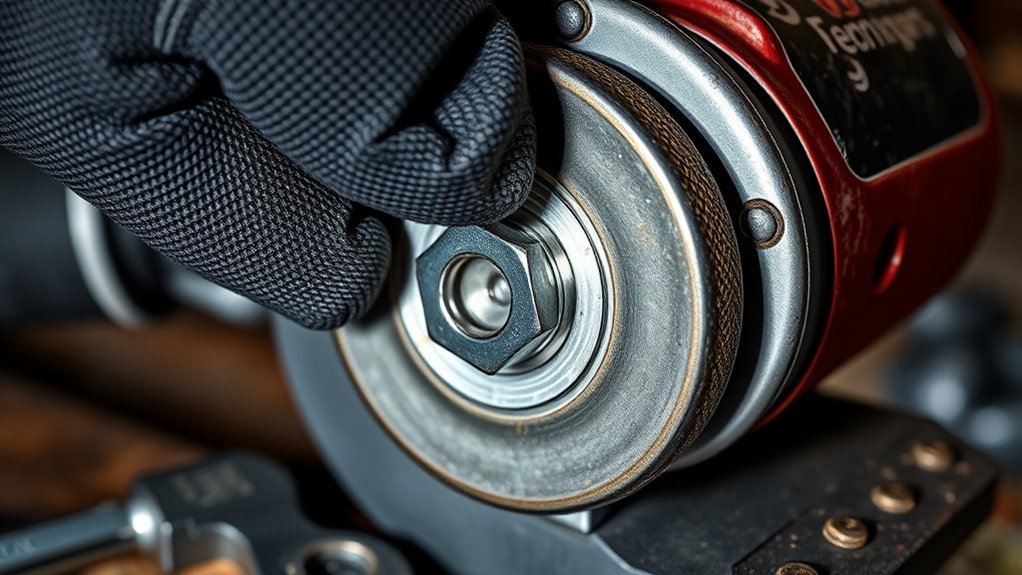
When you use an angle grinder, ensuring the proper installation of the backing nut is vital for safe and efficient operation. A securely fastened backing nut keeps the cutting disc firmly attached, preventing accidents that could arise from unexpected dislodgement. You must tighten the upper nut firmly to avoid wobbling or misalignment, which can compromise cutting efficiency and accelerate disc wear.
Pay close attention to the orientation of the upper nut; the flat side should face the machine or disc for ideal contact. Regular inspections of both the backing nut and cutting disc are essential to maintain operational readiness, as damage can lead to equipment failure. A well-installed backing nut enhances torque application, leading to superior cutting performance and minimizing the risk of disc breakage. Prioritizing proper installation empowers you to work confidently and safely, maximizing the potential of your angle grinder.
How to Securely Tighten the Backing Nut
Secure the backing nut on your angle grinder to guarantee peak performance and safety. Start by confirming the upper nut is tightly secured against the cutting disc; this is vital for safe operation. Utilize effective tightening techniques, applying additional pressure via the side nut to reinforce the grip of the upper nut. Before tightening, verify that the disc is evenly seated on the rear nut, which is essential for ideal disc alignment. After tightening, inspect for any wobbling or misalignment, as these signs indicate an improperly secured disc that could lead to safety hazards during use. Finally, perform a test run at low speed to verify that the backing nut and disc remain securely in place and function properly. By following these precise steps, you’ll guarantee your angle grinder operates smoothly, empowering you to tackle your projects with confidence.
Installing the Safety Guard
Installing the safety guard on your angle grinder is an essential step for guaranteeing user protection during operation. Proper guard alignment is significant to achieving ideal debris protection. Follow these steps to install the guard securely:
- Position the Guard: Start by placing the safety guard onto the angle grinder, confirming it aligns with the mounting points provided.
- Secure the Guard: The guard should snap into position firmly. This guarantees it will remain in place during operation, preventing accidental disengagement.
- Adjust as Needed: If necessary, adjust the guard’s position to adequately cover the cutting disc. This maximizes protection while you work.
Always double-check that the guard is firmly attached before using the grinder. Confirming these steps are followed not only enhances safety but also empowers you to work confidently, free from the risks associated with debris.
Key Safety Precautions for Operating an Angle Grinder
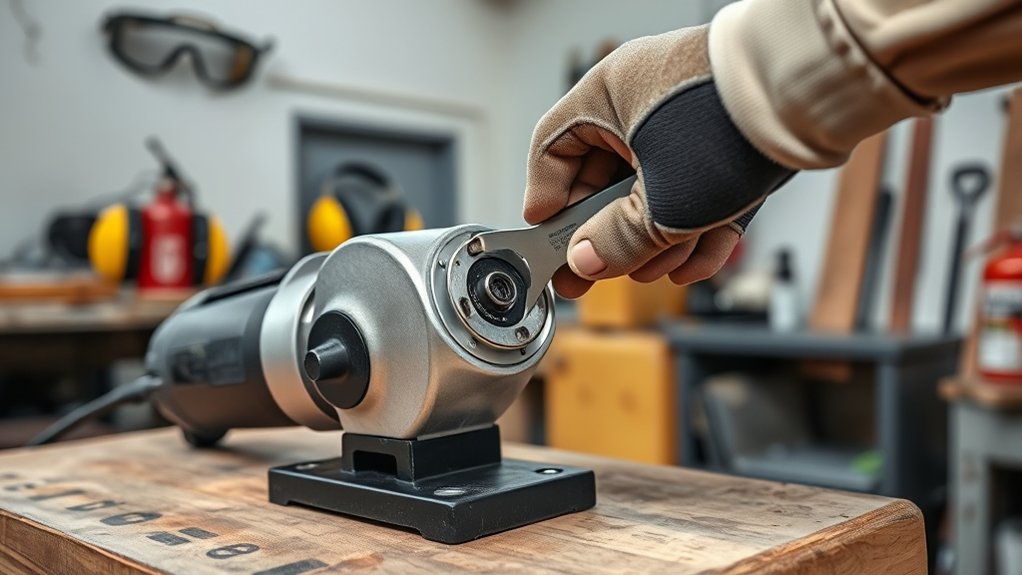
Operating an angle grinder effectively requires not just skill but also a strong commitment to safety. You must prioritize personal protective equipment: wear safety goggles, gloves, and a dust mask to shield yourself from flying debris and dust. Keep your workspace clean and clutter-free to enhance maneuverability and reduce accident risks.
Regularly inspect grinder accessories, especially cutting discs, for cracks or chips to prevent breakage during operation. Always unplug the grinder when installing or maintaining it to avoid accidental startups. Familiarize yourself with the manufacturer’s operating instructions and safety features for ideal usage.
Here’s a quick reference table for safety:
| Safety Precaution | Importance |
|---|---|
| Wear protective gear | Shields against flying debris |
| Maintain a clean workspace | Prevents accidents and enhances safety |
| Inspect accessories regularly | Reduces risk of equipment failure |
Perform a Pre-Operation Check for Optimal Functionality
Before you get started with the angle grinder, it’s crucial to perform a thorough pre-operation check to guarantee maximum functionality and safety. This process not only enhances performance but also minimizes risks of accidents. Follow these essential steps:
- Visual inspection: Check all components, including the cutting disc and guard, for secure attachment and signs of damage like cracks or chips.
- Workspace cleanliness: Confirm your workspace is clean and free of debris to reduce tripping hazards and accidental contact with the grinder.
- Test run: With the grinder unplugged, conduct a low-speed test run to confirm all parts function correctly, looking for any wobbling or misalignment.
Frequently Asked Questions
Which Way Does the Angle Grinder Nut Go?
The angle grinder nut goes with the flat side facing the machine or disc during nut installation. Guarantee this nut orientation’s secure, preventing misalignment, and always confirm the disc’s stability before operation.
How Tight Should You Tighten the Wheel on an Angle Grinder?
You should tighten the wheel firmly but with finesse, ensuring it meets torque specifications for ideal wheel safety. A snug fit prevents wobbling, granting you the freedom to work confidently without worry during operation.
What Is a Backing Flange on a Grinder?
A backing flange on a grinder secures the cutting disc, ensuring stability. There are various flange types tailored for different applications, each designed to distribute pressure evenly, enhancing performance and safety during operation.
What Are Common Angle Grinder Mistakes?
Common angle grinder mistakes include neglecting safety checks, improperly installing discs, overlooking guard placement, and failing to inspect tools for damage. These oversights can lead to improper tool usage and serious safety risks during operation.
Conclusion
By tightening the backing nut correctly, you guarantee your angle grinder operates safely and efficiently, much like a well-oiled machine humming to life. Picture the smooth rotation of the disc as it effortlessly slices through material, all thanks to proper torque and orientation. With the safety guard in place and a thorough pre-operation check completed, you’re ready to tackle your project. Remember, attention to detail now means fewer surprises later, keeping your workspace as secure as a fortress.