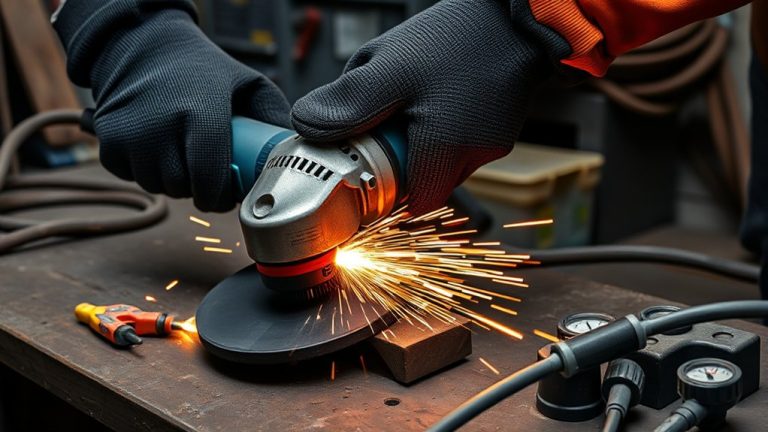
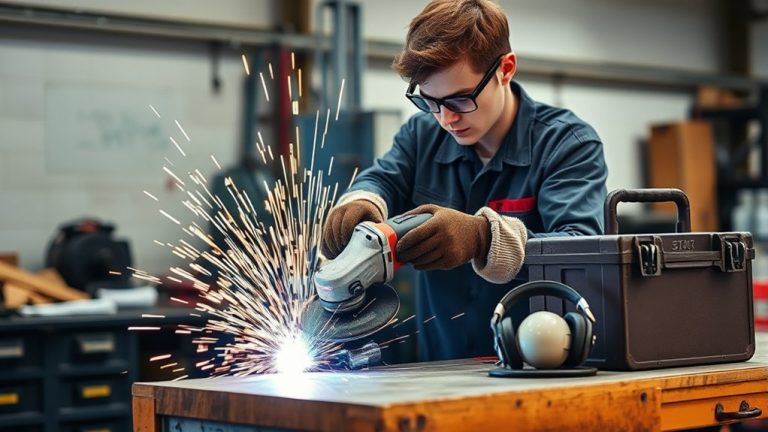
Start by wearing appropriate safety gear, including gloves, safety glasses, and a dust mask. Inspect the cutoff wheel for any damage before attaching it to your angle grinder. Securely clamp your metal workpiece in a stable position. Hold the grinder with both hands, maintaining a 90-degree angle to the cut surface. Let the wheel do the work and pause as needed to cool. Learn about common mistakes and wheel maintenance to enhance your cutting efficiency and safety.
Why Safety Gear Is Essential When Using a Cutoff Wheel
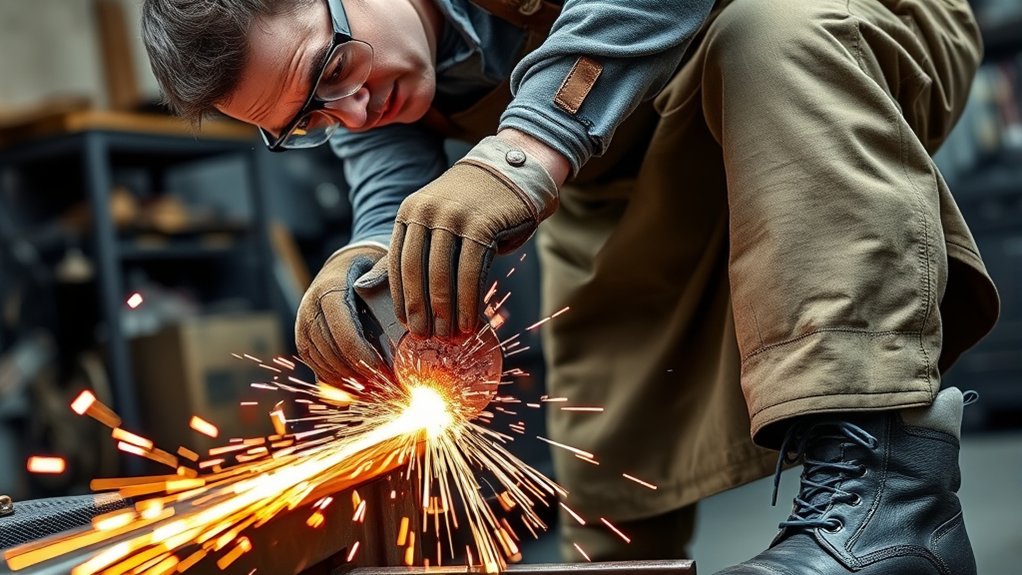
When you use a cutoff wheel to cut metal, wearing safety gear isn’t just a recommendation—it’s essential for your protection. Start with safety glasses to shield your eyes from flying debris and sparks. Pair these with a face shield for added coverage, as this combination protects against potential injuries during operation. Don’t overlook the importance of personal protective equipment (PPE); gloves and non-flammable clothing are critical to prevent burns from hot metal fragments.
Hearing protection is equally important; the noise from cutoff wheels can exceed safe decibel levels, risking hearing damage over time. Additionally, consider wearing a dust mask to filter out harmful particles generated during cutting. By adhering to OSHA and ANSI guidelines for PPE, you can considerably reduce the risk of accidents and injuries, ensuring a safer and more liberating experience while working with a cutoff wheel.
Inspecting Your Cutoff Wheel Before Use
Before cutting metal with a cutoff wheel, it’s crucial to thoroughly inspect the wheel for any damage. Start by checking for visible cracks, chips, or defects that could compromise your safety. Don’t forget to verify the expiration date marked on the disc to confirm it’s still within the safe usage period.
Next, verify compatibility with your tool by comparing the wheel’s maximum RPM rating with your machine’s operating speed. Finally, confirm the wheel size matches the specifications of your angle grinder or power tool.
Here’s a quick inspection checklist:
| Inspection Item | Action Required |
|---|---|
| Visible Damage | Inspect for cracks or chips |
| Expiration Date | Check the marked date |
| Speed Compatibility | Match RPM ratings |
Preparing Your Workspace for Safe Cutoff Wheel Metal Cutting
Before you start cutting metal with a cutoff wheel, clear your workspace of any clutter and flammable materials to reduce accident risks. Secure your metal workpiece using clamps or a vise, ensuring it won’t move during the cutting process. A well-organized and stable environment is essential for safe and precise cutting.
Clear Work Area
A clear work area is vital for safe cutoff wheel metal cutting. Start by removing any flammable materials that could ignite from sparks during the cutting process. Clear unnecessary tools and debris to minimize distractions and hazards while using your angle grinder. Position your workpiece securely on a stable surface, and use clamps or a vise to prevent any movement. This stability is essential for precision and safety. Make sure your workspace is well-ventilated to reduce exposure to harmful dust and fumes generated during cutting metal. Finally, organize your safety equipment—goggles, gloves, and face shields—within easy reach. This preparation supports the safe use of your tools and enhances your overall cutting experience.
Secure Materials Properly
With your work area cleared and organized, securing the materials properly is the next step to confirm safe and effective cutting with a cutoff wheel. Always use clamps or a vise to securely hold the metal workpiece in place, minimizing movement during cutting. This enhances both safety and accuracy. Make sure you’re working on a stable surface that can support the weight of the metal and withstand vibrations from the cutting tool. Regularly check the tightness of your clamps and vises throughout the cutting process. Additionally, confirm the area is free from flammable materials to avoid fire hazards from sparks. By taking these precautions, you’ll create a safe working environment, allowing you to focus on your liberation through metalworking.
How to Cut Metal: a Step-By-Step Guide With a Cutoff Wheel
Before you start cutting metal with a cutoff wheel, it’s essential to prioritize safety. Put on your PPE, inspect the wheel for damage, and secure your workpiece properly. Once you’re set up, you can focus on employing the correct cutting techniques for an effective and safe operation.
Safety Precautions Before Cutting
Ensuring your safety is crucial when using a cutoff wheel to cut metal. Always wear appropriate personal protective equipment (PPE), including safety glasses, gloves, and face shields, to shield yourself from debris and sparks. Before starting, inspect the cutoff wheel for cracks or chips; damaged wheels can shatter and cause serious injuries. Confirm that the wheel size matches your angle grinder and that its maximum operating speed doesn’t exceed the tool’s RPM. Secure your workpiece with clamps or a vise to minimize movement, preventing accidents and ensuring precise cuts. Finally, adhere to manufacturer guidelines and safety standards, such as OSHA and ANSI B7.1, to facilitate safe and efficient operation during your cutting tasks.
Proper Cutting Techniques
To achieve clean, precise cuts in metal using a cutoff wheel, start by securely positioning your workpiece with clamps or a vise. Always wear proper personal protective equipment (PPE) like safety glasses, gloves, and a dust mask. Check that your cutoff wheel is the correct size and free of damage. Hold the angle grinder with both hands, maintaining a 90-degree angle between the cutting wheel and the metal surface. Begin the cut gently, allowing the wheel to do the work, and pause periodically to let it cool during longer cuts.
| Action | Purpose |
|---|---|
| Secure Workpiece | Prevent movement during cutting |
| Maintain Angle | Guarantee clean, precise cuts |
| Pause to Cool | Prevent overheating |
Top 5 Mistakes to Avoid Using a Cutoff Wheel
When using a cutoff wheel, avoiding common mistakes can greatly enhance both safety and efficiency. First, verify you’re using the correct wheel size to match your tool specifications; this prevents accidents and optimizes performance. Second, always inspect your cutting wheels for cracks or chips—never use a damaged wheel, as this can lead to dangerous shattering. Third, avoid forcing the cut; excessive pressure can cause the wheel to break or the tool to overheat, increasing the risk of kickback. Fourth, always wear appropriate personal protective equipment (PPE), including safety glasses, face shields, and gloves, to safeguard against sparks and debris. Finally, verify the workpiece is securely clamped or held in place. Cutting unsupported material heightens the risk of accidents and results in poor cuts. By steering clear of these mistakes, you can work more safely and effectively.
Keeping Your Cutoff Wheel in Top Shape
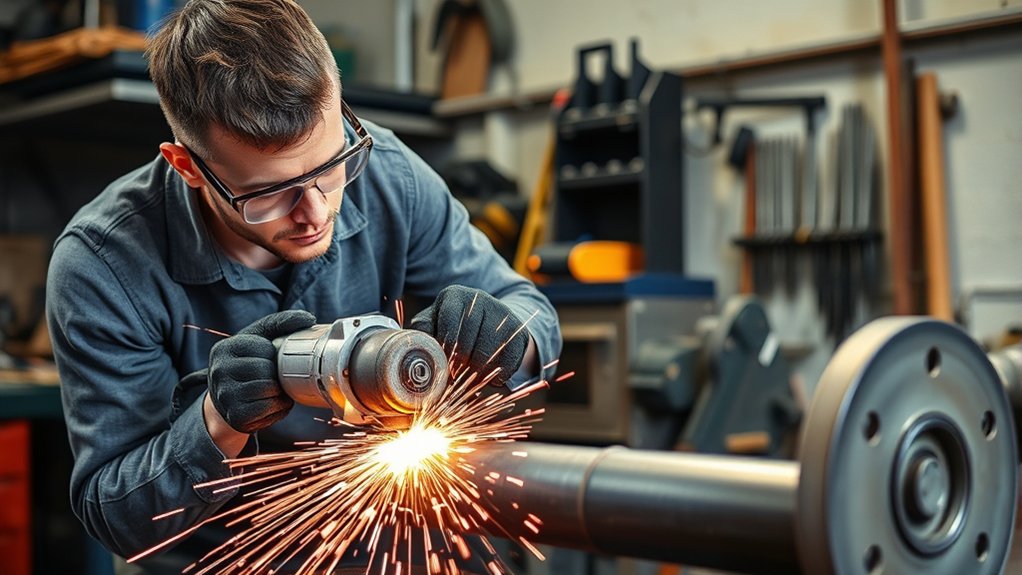
Maintaining your cutoff wheel in ideal condition is essential for safe and effective metal cutting. To guarantee your cutoff wheels perform at their best, follow these steps:
- Inspect Regularly: Check for visible signs of damage, like cracks or chips, and replace the wheel immediately if any are present.
- Store Properly: Keep your cutoff wheels flat in a clean, dry environment, away from extreme temperatures and direct sunlight to prevent deterioration.
- Conduct Safety Checks: Before each use, verify the wheel’s size and maximum RPM align with your cutting tool to avoid accidents.
- Monitor Performance: Replace the cutoff wheel if you notice a decrease in cutting performance, excessive dust, or when it reaches its expiration date.
When to Replace Your Cutoff Wheel?
Knowing when to replace your cutoff wheel is essential for guaranteeing safety and efficiency while cutting metal. Regular inspections will help you identify when it’s time to replace your cut-off wheels. Look for visible cracks, chips, or any signs of damage. If you notice a decrease in cutting performance or excessive dust, that’s a clear indicator. Additionally, warped or discolored discs, increased noise, and vibrations signal it’s time for a change. Don’t forget to check the expiration date marked on the disc.
| Signs of Damage | Action Required |
|---|---|
| Visible cracks/chips | Replace immediately |
| Decrease in performance | Replace immediately |
| Warped/discolored disc | Replace immediately |
Always inspect your wheels for shipping damage upon receipt and before each use. Prioritizing these checks will enhance your safety and guarantee peak cutting performance.
Types of Cutoff Wheels and Their Uses
Cutoff wheels come in several types, each designed for specific applications and materials. Understanding these types helps you choose the right wheel for your project, ensuring efficiency and safety. Here’s a breakdown of the most common types of cutoff wheels:
- Type-1 Cutoff Wheels: Flat wheels ideal for general metal cutting, perfect for angle grinders and chop saws.
- Type-27 Cutoff Wheels: Featuring a depressed center, these are great for tight spaces and narrow cuts.
- Right Angle Cutoff Wheels: Versatile and suitable for various materials, including concrete, aluminum, and steel.
- Small Diameter Reinforced Wheels: Specifically designed for angle grinders, they provide stability while cutting small metal surfaces.
Frequently Asked Questions
How to Safely Use a Cutoff Wheel?
To safely use a cutoff wheel, always wear your safety gear, select the right wheel, practice proper cutting techniques, and maintain your machine. Regularly inspect equipment to guarantee peak performance and prevent accidents.
What Is the Step by Step Procedure in Using a Grinding Machine?
Start by inspecting the grinding machine and settings. Secure your workpiece, wear safety gear, and check for vibrations. Maintain a consistent angle while cutting. Afterward, allow for cooling and perform regular maintenance for ideal performance.
How to Put on a Cutoff Wheel?
“Measure twice, cut once.” To put on a cutoff wheel, select the right type, wear safety gear, disengage the power, remove the old wheel, align the new one, and secure it tightly. Regular maintenance prevents mishaps.
Will a Cut-Off Wheel Cut Metal?
Yes, a cut-off wheel cuts metal effectively. Consider metal thickness when choosing cut-off wheel types, guarantee proper maintenance, and always wear safety gear essentials like gloves and goggles for maximum protection during cutting tasks.
Conclusion
In the world of metal cutting, using a cutoff wheel can feel like walking a tightrope, but with the right safety measures, you can navigate it confidently. Always wear your protective gear, inspect your tools, and maintain a clean workspace. Remember to follow the step-by-step guide carefully and avoid common mistakes. By keeping your cutoff wheel in top shape and knowing when to replace it, you’ll guarantee a safe and efficient cutting experience every time.