Disclosure: As an Amazon Associate, we earn from qualifying purchases. If you click a link on this page and make a purchase, we may receive a small commission at no extra cost to you.
Battery pack repair and small nickel-strip projects need controlled heat, steady contact, and a welder that is easy to handle. The Battery Spot Welder is a handheld, rechargeable unit built for thin metal spot welding, especially nickel-plated sheets and cylindrical lithium battery work. Its biggest strengths are portability, automatic and manual modes, and 11 adjustable power levels. Its main limitation is clear: this is not the right tool for thicker metal work or heavy fabrication.
Quick Verdict
Rating: 8/10, Recommended with caveats
Best For: DIY battery pack repair, thin nickel strip work, and portable spot welding tasks.
Bottom Line: This Battery Spot Welder makes sense if you need a compact tool with rechargeable power, dual operating modes, and fine power control. Skip it if you need to weld thicker material, run long shop sessions, or work beyond thin battery tab applications.
| Specification | Detail |
|---|---|
| Product type | Handheld battery spot welder |
| Brand | Not specified in the supplied article |
| Model | Not specified in the supplied article |
| Design | Portable all-in-one power supply and welding pen design |
| Battery | Built-in rechargeable lithium battery |
| Welds per charge | Over 200 spot welds per charge, based on the supplied article |
| Operating modes | Automatic and manual |
| Power levels | 11 adjustable options |
| Compatible materials | Nickel-plated sheets, nickel, and stainless steel |
| Battery compatibility | Various cylindrical lithium batteries, based on the supplied article |
| Thickness note | Best suited to thin sheets. The original article states it is not intended for material thicker than 0.2 mm. |
| Charging time | About 2 to 3 hours, based on the supplied article |
| Weight | Around 1.5 kg, based on the supplied article |
| Safety features | Temperature protection and short-circuit alarm or protection |
Key Takeaways
- The Battery Spot Welder is best for thin battery tab work, nickel-plated sheets, and small portable spot welding tasks.
- It offers automatic and manual modes, giving you a choice between faster operation and more direct control.
- Its 11 adjustable power levels help you fine-tune output for different thin materials and weld points.
- The built-in rechargeable lithium battery supports over 200 spot welds per charge, based on the supplied article.
- Safety features include temperature protection and short-circuit protection, but you still need careful setup and handling.
- It is not the right choice for thicker metal, structural welding, or heavy-duty shop use.
What Is the Battery Spot Welder?
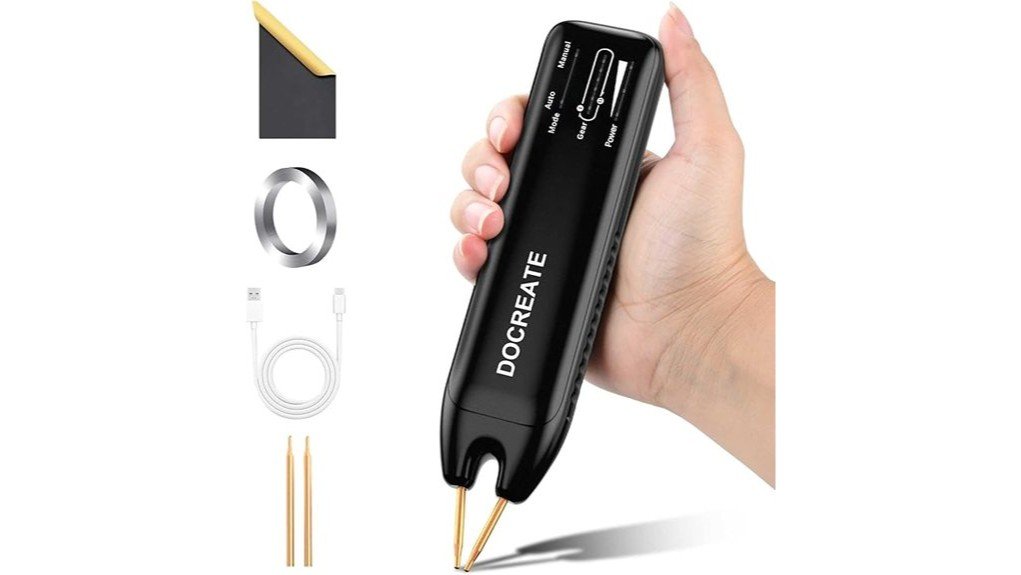
The Battery Spot Welder is a portable handheld tool designed to create small resistance welds on thin conductive materials. The supplied article describes it as a multi-functional device with a built-in rechargeable battery, a welding pen, and one-handed operation.
Its core purpose is battery-related welding, especially attaching nickel strips to cylindrical lithium batteries. That makes it more useful for battery pack repair, small electronics projects, and light DIY work than for general metal fabrication.
The main appeal is control. You get two operating modes and 11 power levels, so you can adjust the weld output instead of relying on one fixed setting for every material.
Who Should Buy It?
Best For
- DIY users working on thin nickel strip and small battery pack projects.
- Beginners who want automatic mode plus adjustable power control.
- Users who need a compact rechargeable welder instead of a larger bench unit.
Skip If
- You need to weld material thicker than 0.2 mm.
- You want a heavy-duty welder for structural metal work or long shop sessions.
- You need a verified brand, model number, or certification before buying.
Features and Functionality of the Battery Spot Welder
The Battery Spot Welder focuses on portable control. Its built-in rechargeable lithium battery lets you work without staying tied to a wall outlet, while the combined power supply and welding pen design keeps the setup compact.
The supplied article states that the welder can complete over 200 spot welds per charge. That capacity should be enough for many small battery repair jobs, though larger projects may still require recharging or breaks between batches.
Dual Operating Modes
The welder includes automatic and manual modes. Automatic mode can help when you want faster repeat welds, while manual mode gives you more control over timing and contact.
For beginners, automatic mode may feel easier at first. For more careful battery tab work, manual mode can be useful when you want to control each weld point yourself.
11 Adjustable Power Levels
The 11 power levels are one of the most useful features. Thin nickel strips, stainless steel pieces, and different contact points may need different output levels to create a clean weld without excess heat.
Start low, test on scrap material when possible, and increase the setting only when the weld does not hold. This approach helps reduce burn-through, weak welds, and overheating around battery cells.
Before You Buy: The supplied article says this welder is not suitable for materials thicker than 0.2 mm. Choose a larger spot welder if your work involves thicker strips, structural parts, or repeated heavy-duty welds.
Performance and User Experience
The Battery Spot Welder is built for small, controlled welds rather than brute force. Its best use is attaching thin nickel strips to battery cells or handling similar thin conductive materials where a soldering iron may create too much heat.
The adjustable levels improve the user experience because you can tune the output to the job. This matters with battery work, where too much heat can damage the cell, and too little heat can leave a weak connection.
One-Handed Operation
The article describes the welder as suitable for one-handed operation. That can help with small bench projects, especially when you need to position a tab and make repeated weld points.
Still, one-handed use does not replace a stable work setup. Keep the battery cell, nickel strip, and welding tips steady before you trigger the weld.
Portability and Charging
Because the unit has a built-in rechargeable battery, it is easier to move around than a corded bench-style machine. The original article lists a charging time of about 2 to 3 hours.
That works well for casual DIY use, but it may slow you down if you need continuous production. For larger jobs, charge it fully before you start and plan your weld sequence first.
How It Performs in Real Use
For DIY Battery Pack Repair
This is the strongest use case for the Battery Spot Welder. It is designed for thin nickel-plated sheets and cylindrical lithium battery work, so it fits small battery pack repair and rebuilding tasks.
The 11 power levels help when you need to match output to different strip thicknesses or contact points. You should still test carefully and avoid overheating the cell.
For Small Electronics Projects
The compact design makes sense for hobby electronics work that needs small weld points. You can keep it on a workbench, move it between projects, and use it without a large external power supply.
Its limitation is capacity and material thickness. It is not a replacement for a professional shop welder or a stronger unit made for thicker metal.
For Beginner Practice
Beginners get useful flexibility from automatic mode, manual mode, and adjustable power. These features let you learn how weld strength changes with pressure, contact, and output level.
Use scrap material before welding a real battery pack. That gives you a safer way to learn the settings and avoid common mistakes.
For Portable Repair Work
The rechargeable design is helpful when you need a tool that can move between work areas. The listed weight of around 1.5 kg keeps it portable enough for small repair kits or compact workspaces.
For long sessions, battery runtime becomes the tradeoff. A full charge is important if you plan to complete many weld points at once.
Setup Tips Before First Use
Before your first project, charge the welder fully and inspect the welding tips. Clean contact surfaces matter because dirt, oxidation, or poor alignment can create weak welds.
Set the power low for your first test weld, then increase gradually if the weld does not hold. Avoid jumping straight to a high setting, especially near lithium batteries or very thin nickel strips.
Keep the nickel strip flat against the battery terminal before firing. Uneven contact can create inconsistent welds, sparks, or poor bonding.
Pro Tip: Make two quick test welds on spare nickel strip before working on a real battery pack. A good test helps you confirm power level, tip pressure, and weld strength before the final job.
Compatibility and Safety
The Battery Spot Welder is intended for thin nickel-plated sheets, nickel, stainless steel, and cylindrical lithium battery applications, based on the supplied article. It should not be treated as a general-purpose welder for thick metal or structural parts.
The article lists temperature protection and short-circuit protection or alarms as built-in safety measures. These features help, but they do not remove the need for careful handling, eye protection, a stable work surface, and close attention to battery condition.
Do not weld damaged, swollen, leaking, or questionable battery cells. Follow the product manual, use proper protective gear, and seek qualified help if you are not confident working around lithium batteries.
Pros and Cons
Pros
- Built-in rechargeable lithium battery supports portable use.
- Over 200 spot welds per charge, based on the supplied article.
- Automatic and manual modes give you flexible control.
- 11 adjustable power levels help match output to thin materials.
- Temperature and short-circuit protection add useful safety support.
Cons
- Not suitable for material thicker than 0.2 mm, based on the original article.
- Brand and model details were not provided in the supplied article.
- Rechargeable design may not suit long continuous work sessions.
Is It Worth the Price?
The Battery Spot Welder offers strong value for the price if your main goal is small battery tab welding. You get rechargeable operation, dual modes, and 11 power levels in a compact tool, which makes it a practical buy for light DIY use.
It is worth considering if you need portability and control more than heavy-duty power. The main limitation is thickness capacity, so it is not the best fit if you need to weld thicker metal or work at a production pace.
How It Compares to Alternatives
Compared with larger bench-style spot welders, this handheld Battery Spot Welder is easier to store and move around. The tradeoff is that a larger corded unit may be better for higher-volume work or thicker materials.
Compared with basic low-control portable welders, the 11 adjustable power levels give this unit more flexibility. It makes the most sense if you want a rechargeable tool for thin nickel strip and battery projects, not a heavy shop machine.
Frequently Asked Questions
How many welds can the Battery Spot Welder make per charge?
The supplied article states that it can make over 200 spot welds per charge. Actual results can vary by power level, material, contact quality, and how long you use the welder between charges.
How long does it take to fully charge?
The original article lists a full charging time of about 2 to 3 hours. Charge it fully before longer projects so you do not lose power in the middle of a battery pack job.
Can it weld material thicker than 0.2 mm?
The supplied article says it is not suited for material thicker than 0.2 mm. Choose a more powerful spot welder if your work involves thicker strips or heavier metal.
What materials can it weld?
The article lists nickel-plated sheets, nickel, and stainless steel as compatible materials. It also describes use with various cylindrical lithium batteries, which makes it most relevant for thin battery tab work.
Is the Battery Spot Welder beginner-friendly?
Yes, it can work for beginners because it includes automatic mode and adjustable power levels. New users should practice on scrap material first and follow the product manual closely.
What is the difference between automatic and manual mode?
Automatic mode is useful for quicker repeat welds. Manual mode gives you more direct control over when each weld happens, which can help with careful placement.
What safety features does it include?
The supplied article mentions temperature protection and short-circuit protection or alarms. You should still use eye protection, stable positioning, and careful battery handling every time.
Who should skip this welder?
Skip it if you need to weld thick metal, repair structural parts, or run continuous shop-level production. It is better suited to thin nickel strip, small battery projects, and portable DIY use.
The Bottom Line
The Battery Spot Welder is a smart buy for DIY users who need a portable tool for thin nickel strip, cylindrical lithium battery work, and small electronics projects. Its rechargeable design, dual modes, and 11 power levels are useful, but the 0.2 mm thickness limitation keeps it out of heavy-duty welding territory.
Buy it if you want a compact battery spot welder for light, controlled work. Skip it if you need verified brand documentation, thicker material capacity, or a machine built for long production sessions.