Category FCAW

Learn the ins and outs of Flux-Cored Arc Welding (FCAW), one of the most versatile and efficient welding methods for both indoor and outdoor projects. This category covers everything from choosing the right flux-cored wire and machine settings to mastering techniques for thick materials, structural work, and repairs. Whether you’re tackling heavy-duty fabrication or looking for a gasless welding solution, our guides and tips will help you get strong, reliable welds with FCAW.

What Is Flux-Cored Wire Used For?

What Is Flux-Cored Wire Used For

Dirty, rusty, or thick steel can make a clean weld harder to produce with solid wire. Flux-cored wire is often a better fit because it can deliver strong penetration, high weld-metal output, and reliable performance in field conditions. Once you…

What is Flux Core Welding Used For

What-is-Flux-Core-Welding-Used-For.jpg

Flux-cored arc welding is often the process people reach for when a steel repair is too heavy for thin-sheet methods or the job must be done outdoors. I first understood its appeal on a thick trailer-frame repair: the wire fed…

What Is Dual Shield Flux Core Welding?

What Is Dual Shield Flux Core Welding

Dual shield flux core welding, formally called gas-shielded flux-cored arc welding or FCAW-G, combines a tubular flux-cored electrode with an external shielding gas. It can produce high deposition rates, good sidewall fusion, and strong all-position performance on carbon and low-alloy…

Welding 22 Gauge Steel with Flux Core Wire

Welding 22 Gauge Steel with Flux Core Wire

Welding 22-gauge steel with flux core is possible in limited situations, but it is one of the hardest ways to join sheet this thin. Twenty-two-gauge steel heats quickly, and self-shielded flux-cored wire generally produces more heat, spatter, and cleanup than…

How to Weld Thin Metal with Flux Core

How I Weld Thin Metal with Flux Core Wire

Welding thin metal with self-shielded flux-core wire is possible, but the margin for error is small. Too much heat can open a hole or warp the sheet, while settings that are too cold can leave a raised bead with little…

How to Fix Worm Tracks in Flux Core Welding

How-to-Fix-Worm-Tracks-in-Flux-Core-Welding.jpg

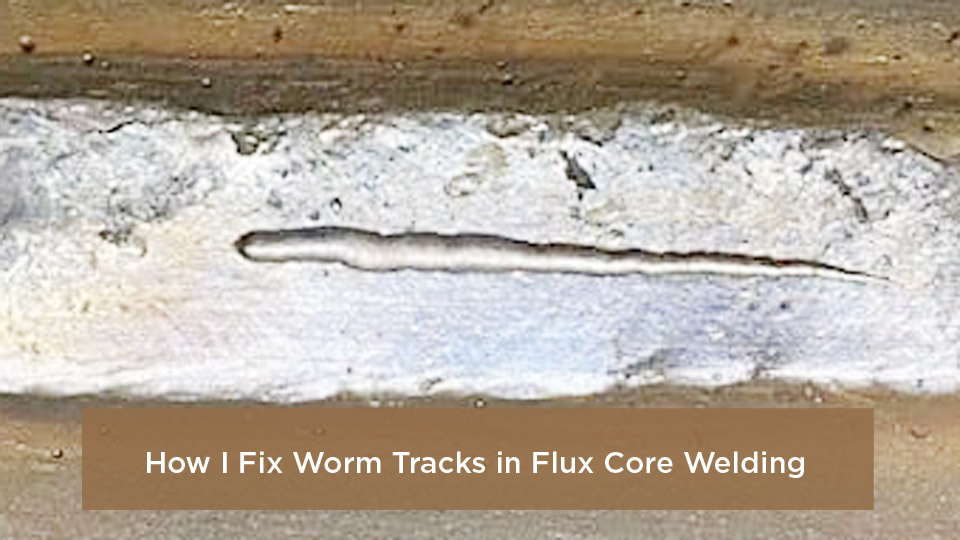
Worm tracks in a flux core weld usually show up as narrow grooves or trails after you remove the slag. The most common cause is excessive voltage for the selected wire feed speed, although damp wire, incorrect electrode extension, poor…

My Flux Core MIG Welding Settings Chart

My Flux Core MIG Welding Settings Chart

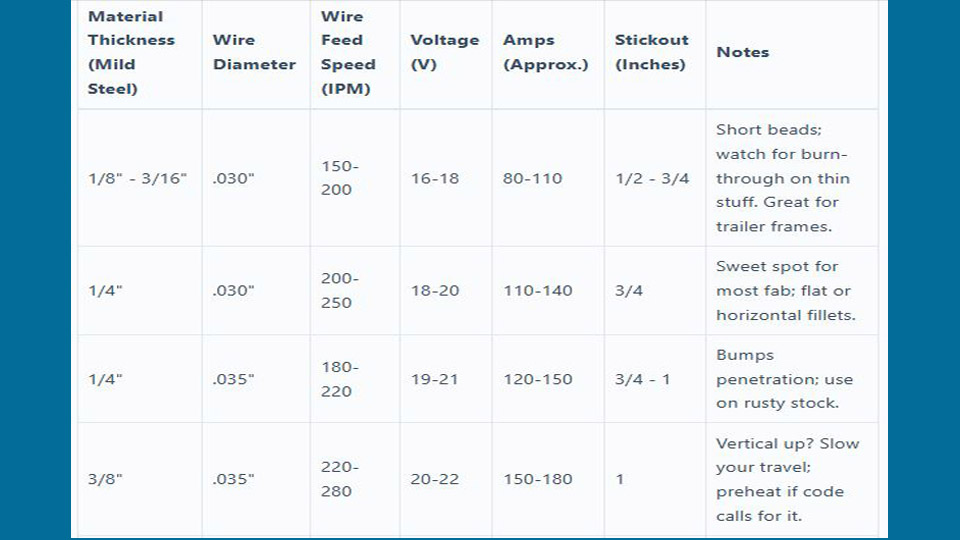
Flux core welding settings are not one-size-fits-all. Your wire classification, diameter, welder output, joint design, position, and metal thickness all change the correct voltage and wire feed speed. The safest approach is to start with the chart inside your machine…