Disclosure: As an Amazon Associate, we earn from qualifying purchases. If you click a link on this page and make a purchase, we may receive a small commission at no extra cost to you.
Choosing an oxygen acetylene hose is not just about length. You need a hose that gives you enough reach, stays flexible while you work, and helps you connect oxygen and acetylene lines without confusion. The Hromee Oxygen Acetylene Hose is a 50-foot, 1/4-inch twin hose made for welding and cutting setups that need practical reach and easy handling. This review looks at its specs, usability, safety points, and tradeoffs so you can decide if it fits your torch setup and workspace.
Quick Verdict
Rating: Recommended with caveats
Best For: welders, metalworkers, and hobby users who need a flexible 50-foot oxygen acetylene hose with color-coded connections.
Bottom Line: The Hromee Oxygen Acetylene Hose offers useful reach, a flexible rubber build, and clear red and green line identification. It is best for users who already know their regulator and torch fitting requirements because compatibility still needs to be checked before purchase.
| Specification | Detail |
|---|---|
| Brand | Hromee |
| Product type | Oxygen acetylene twin hose |
| Hose length | 50 feet |
| Hose diameter | 1/4 inch |
| Material | Acetylene rubber |
| Pressure rating | Up to 300 PSI, 20 Bar |
| Fitting specification | 9/16"-18 B fittings |
| Line identification | Green for oxygen, red for acetylene |
| Best use | Welding and cutting tasks that need extra reach and flexible hose handling |
| Safety note | Check for leaks, confirm fitting compatibility, and follow your torch and regulator instructions before use. |
What Is the Hromee Oxygen Acetylene Hose?
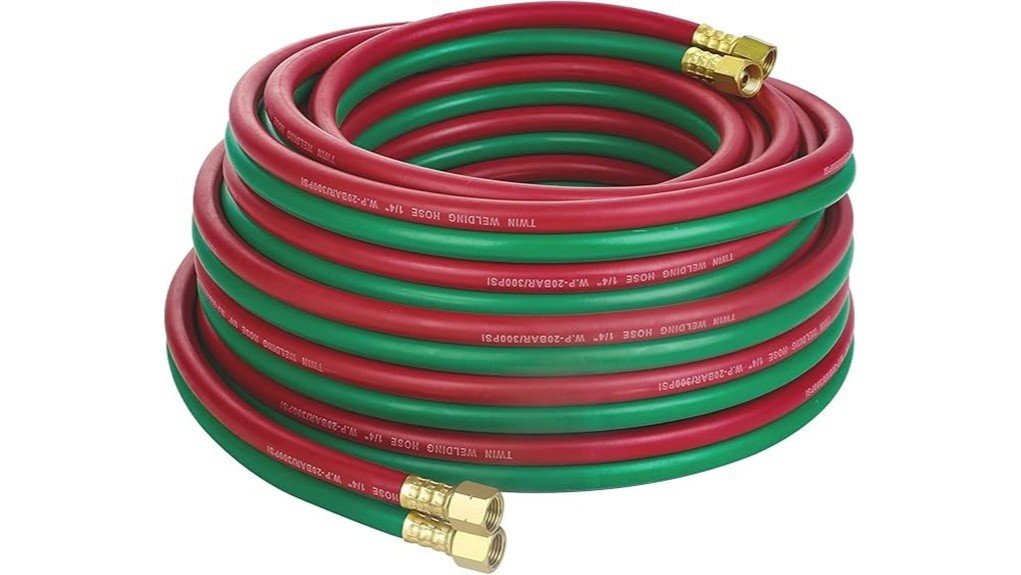
The Hromee Oxygen Acetylene Hose is a twin welding hose designed to carry oxygen and acetylene from your regulators to your torch. Its 50-foot length gives you more working range than a short shop hose, which can help when your cylinders need to stay in one safe spot while you move around a bench, frame, gate, or repair area.
The hose uses acetylene rubber, which the original product description presents as flexible and suitable for use across demanding temperature conditions. The 1/4-inch diameter keeps the hose practical for common torch work, while the red and green color coding helps you identify the fuel gas and oxygen lines quickly.
This is not a universal-fit guarantee for every torch and regulator setup. The article-supported fitting detail is 9/16"-18 B, so you should compare that with your current equipment before ordering.
Before You Buy: Confirm your regulator and torch fitting sizes before ordering. A 50-foot hose is useful only if the fittings match your oxygen acetylene setup and the hose length fits your work area safely.
Who Should Buy It?
Best For
- Users who need a 50-foot hose for better reach around a shop or work area.
- Welders who want red and green color-coded lines for easier identification.
- Hobby and light professional users who need a flexible oxygen acetylene hose for welding or cutting tasks.
Skip If
- Your torch or regulator does not use 9/16"-18 B fittings.
- You need a shorter hose to reduce floor clutter in a small workspace.
- You want verified certifications or warranty terms before purchase.
Features and Specifications
The main appeal of the Hromee Oxygen Acetylene Hose is its simple, work-focused design. You get a 50-foot hose, a 1/4-inch diameter, and a claimed pressure rating of up to 300 PSI, also listed as 20 Bar. Those details make it a practical option for users who need extra reach without stepping up to a much bulkier hose.
The hose also uses color-coded lines: green for oxygen and red for acetylene. That helps reduce connection mistakes during setup, especially when you are working around cylinders, regulators, and torch handles in a busy shop.
The fittings are described as 9/16"-18 B. That is a key buying detail because fittings are one of the easiest places to make the wrong purchase. Before you use this hose, match the fitting size and thread type against your regulator and torch setup.
Materials and Build Quality
The hose is described as being made from acetylene rubber. For a welding hose, flexibility matters because stiff lines can fight your movement, pull against the torch, or become harder to route around stands, benches, and metal stock.
A flexible hose can also help when you need to work in tighter positions. The 50-foot length gives you room to move, but it also means you need to manage the hose carefully so it does not create a trip hazard or contact hot metal.
The article-supported customer feedback points to solid construction, flexibility, and temperature resistance as common strengths. Since independent verification was not available, treat those as buyer-reported and article-supported impressions rather than certified performance claims.
Performance and Usability
For daily welding and cutting work, the Hromee hose is built around reach and handling. The 50-foot length gives you more freedom to move around a project without dragging the cylinders closer to the workpiece. That can be helpful when you are working on large metal parts, outdoor repairs, or a bench setup with limited cylinder placement options.
The 1/4-inch diameter keeps the hose manageable for typical oxygen acetylene tasks. It should be easier to route and coil than a heavier hose, while still giving you the length needed for many shop and garage uses.
The color-coded fittings improve setup clarity. Green marks the oxygen side, and red marks the acetylene side. You should still check labels, threads, and regulator instructions each time because color coding helps, but it does not replace a proper safety check.
How It Performs in Real Use
For Garage Welding and Cutting
In a garage or home shop, the 50-foot length can help you keep cylinders in a safe, stable area while you work on a bench or nearby project. This is useful when you need to move around a frame, bracket, or metal repair without constantly repositioning your gas setup.
For Tight Work Areas
The flexible rubber construction should help when you need to route the hose around corners, stands, or tools. The hose length gives you room, but you should keep extra hose organized so it does not loop under your feet or near sparks.
For Outdoor or Large-Project Use
A longer hose can be useful for gates, trailers, farm repairs, or larger metal pieces where moving cylinders is inconvenient. The main tradeoff is hose management. You need to keep the line away from sharp edges, hot surfaces, vehicle tires, and foot traffic.
For Long-Term Use
Durability depends on how you store and inspect the hose. Coiling it loosely, keeping it away from direct sunlight when not in use, and checking for cracks or leaks before each job can help preserve performance.
Setup Tips Before First Use
Before connecting the hose, inspect both lines from end to end. Look for cuts, soft spots, damaged fittings, flattened sections, or signs of heat damage. Do not use the hose if you see damage that could affect gas flow or sealing.
Match the green oxygen line to the oxygen side and the red acetylene line to the acetylene side. Then check the 9/16"-18 B fitting compatibility with your regulator and torch equipment. Tighten connections according to your equipment instructions, not by guesswork.
Pro Tip: After connecting the hose, perform a leak check before lighting the torch. A simple setup habit can prevent unsafe gas leaks and helps you catch a poor connection early.
Compatibility and Safety
Oxygen acetylene work requires careful setup. This hose is intended for oxygen and acetylene service, but you still need to confirm that your regulators, torch handle, flashback arrestors, and fittings match the hose before use.
Use proper ventilation, keep ignition sources controlled, and follow your torch manufacturer’s instructions. Flame arrestors and leak checks are important parts of a safer setup. Never use a hose that smells strongly of gas, shows cracking, has damaged fittings, or has been exposed to severe heat.
Storage also affects safety. Keep the hose in a cool, dry area, away from direct sunlight, oil, grease, sharp objects, and hot metal. Coil it loosely to reduce kinks and avoid placing heavy tools or cylinders on top of it.
Pros and Cons
Pros
- 50-foot length gives you useful reach around a shop, garage, or larger workpiece.
- 1/4-inch hose diameter keeps the line manageable for common torch work.
- Acetylene rubber construction is described as flexible for easier handling.
- Green and red color coding helps you identify oxygen and acetylene lines quickly.
- 9/16"-18 B fitting detail gives you a clear compatibility point to check before buying.
Cons
- Not ideal if your torch or regulator setup requires a different fitting type.
- The 50-foot length can create clutter if you work in a very small space.
- Warranty, certifications, and package details should be confirmed on the seller page before purchase.
Is It Worth the Price?
The Hromee Oxygen Acetylene Hose is worth considering if you want a practical, longer hose for welding and cutting work without adding unnecessary complexity. Its value comes from the 50-foot reach, flexible rubber design, color-coded lines, and clear fitting specification.
It should make the most sense for buyers who need reach and easy hose identification. It is not the best fit if your setup needs a different fitting style, if you only work at a small bench, or if you want a hose with independently verified certifications listed before purchase.
How It Compares to Alternatives
Compared with shorter oxygen acetylene hoses, the Hromee 50-foot hose gives you more room to move around larger projects. A shorter 25-foot hose may be easier to manage in a compact shop, but it will not give you the same working range.
Compared with heavier or larger-diameter hoses, this 1/4-inch hose should be easier to route and coil. The Hromee model makes the most sense if you want a balance of reach, flexibility, and clear oxygen and acetylene line identification.
Frequently Asked Questions
What size is the Hromee Oxygen Acetylene Hose?
The article-supported size is 50 feet long with a 1/4-inch diameter. That length is helpful when you need more reach around a garage, workbench, or larger metal project.
What fittings does it use?
The hose is described with 9/16"-18 B fittings. You should compare that detail with your regulator, torch handle, and any safety accessories before buying.
Is the hose color coded?
Yes. The article describes the hose as green for oxygen and red for acetylene. This helps with quick identification, but you should still verify each connection before use.
Can it handle high pressure?
The article lists the hose as rated up to 300 PSI, or 20 Bar. You should still follow the pressure limits and setup instructions for your own torch, regulator, and gas system.
How should you store this oxygen acetylene hose?
Store it in a cool, dry area away from direct sunlight, oil, grease, sparks, and sharp edges. Coil it loosely so the hose does not kink or flatten during storage.
What safety checks should you make before using it?
Inspect the hose for cracks, cuts, soft spots, damaged fittings, and signs of heat damage. After connecting it, perform a leak check and follow your torch and regulator instructions before lighting the torch.
Who should skip this hose?
Skip it if your equipment does not match the 9/16"-18 B fitting specification or if a 50-foot hose is too long for your workspace. You may also want to compare other options if you need verified certification or warranty details before buying.
The Bottom Line
The Hromee Oxygen Acetylene Hose is a practical choice if you need a 50-foot, 1/4-inch oxygen acetylene hose with flexible handling and red and green line identification. Its main strength is reach, while its main limitation is that fitting compatibility and seller-listed details should be checked before purchase.
Buy it if you need extra working range for welding or cutting tasks. Skip it if you need a shorter hose, a different fitting type, or fully verified certifications before you decide.