Disclosure: As an Amazon Associate, we earn from qualifying purchases. If you click a link on this page and make a purchase, we may receive a small commission at no extra cost to you.
A weak welding lead connection can cause heat, voltage drop, and an unstable arc when you need steady current. The LC-40 Welding Lead Connector is made for welders who use larger 1/0 to 2/0 welding cables and need a firm quick-connect setup. This review helps you decide whether its 350-amp rating, brass contact design, and cam-style locking action fit your welder, cable size, and work routine. It is a strong pick for shop and field use, but it only makes sense if your cable size and connector system match.
Quick Verdict
Rating: 8/10, Recommended with cable-fit caveats
Best For: Workshop, mobile, and fabrication welders using 1/0 to 2/0 welding leads
Bottom Line: The LC-40 Welding Lead Connector is worth considering if you need a secure 350A quick connector for larger welding cables. Its main strength is brass conductivity, while its main tradeoff is limited compatibility outside the 1/0 to 2/0 cable range.
Key Specifications
| Specification | Detail |
|---|---|
| Brand / Manufacturer | SUPENEGY on exact-ASIN marketplace listing, but confirm the current seller page before ordering |
| Model | LC-40-1 / LC-40 style connector |
| Product Type | Welding lead quick connector set |
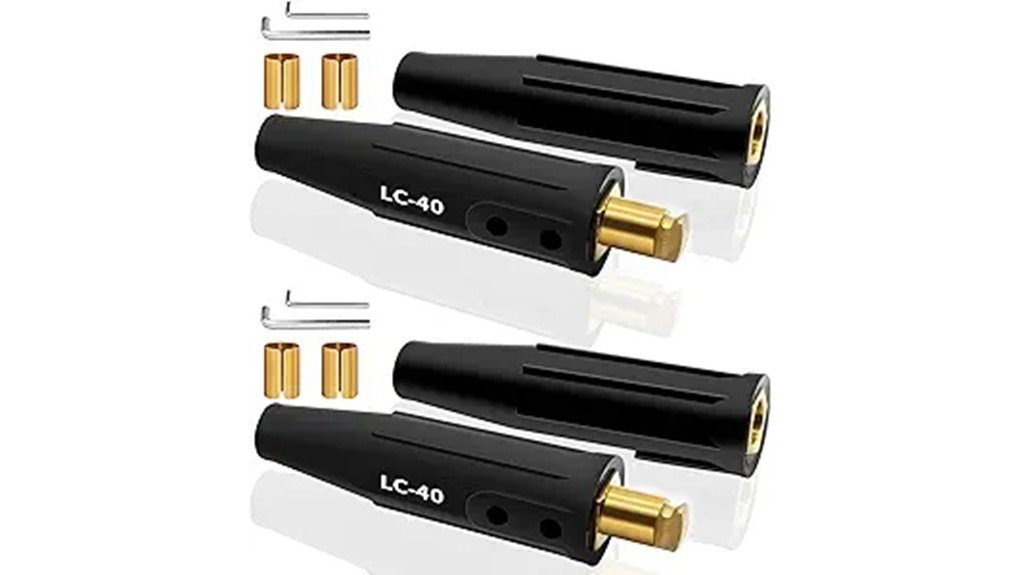
| Design | Male and female cam-lock style welding cable connectors |
| Material | Brass conductive body with black insulated connector covers |
| Max Current | Up to 350 amps |
| Cable Compatibility | 1/0 to 2/0 welding cable, about 50 to 70 mm² |
| Connection Type | Cam-type locking action for quick cable connection |
| Power Type | DC welding lead applications |
| Package Note | Some marketplace titles list 2 pairs. Check the current seller page for exact quantity. |
| Best Use | Workshop welding, mobile repair leads, cable extensions, and fabrication setups |
| Safety Note | Use only with correctly sized cable, fully tightened connections, and clean contact points |
What Is the LC-40 Welding Lead Connector?
The LC-40 Welding Lead Connector is a heavy-duty welding cable quick connector for joining welding machine leads. It uses a male and female connector design so you can connect or disconnect welding cables faster than with fixed terminal connections.
This connector is made for larger welding leads, especially 1/0 and 2/0 cable sizes. Those cable sizes are common in higher-current stick, MIG, engine-drive, and fabrication setups where a small connector could create heat or poor contact.
The main selling point is simple: you get a brass contact body, a cam-type lock, and a 350A maximum rating in a compact connector style. That combination works well when you need firm cable contact without turning every cable change into a slow setup job.
Who Should Buy It?
Best For
- Welders using 1/0 or 2/0 leads on higher-current machines
- Fabrication shops that need quick cable changes or extensions
- Mobile repair welders who move cables often during field work
Skip If
- Your welding leads are smaller than 1/0 or larger than 2/0
- You need a verified match for a different connector brand or key style
- You only run light-duty welding where a smaller connector is enough
Materials and Build Quality
Brass Contact Body
The brass conductive body is the key performance feature. Brass helps transfer current through the connector while resisting surface corrosion better than many lower-grade metals.
For you, that means a cleaner path for current when the connector is properly sized, tightened, and maintained. It does not remove the need for good cable prep, but it gives the connection a solid starting point.
Insulated Black Connector Covers
The connector uses black insulated covers around the conductive parts. These covers help protect the connection area and make the connector easier to handle during normal cable changes.
You should still treat every welding lead as a high-current component. Inspect the cover for cracks, heat damage, loose fit, or deformation before using the connector on a serious job.
Cam-Type Locking Action
The cam-style action pulls the connector halves together for a firmer contact. This helps reduce accidental loosening when a cable is dragged, repositioned, or bumped around a work area.
The lock works best when both connector halves are compatible and fully seated. If the connector feels loose, gritty, or hard to twist into place, stop and inspect the fit before welding.
Pro Tip: Clean the brass contact surfaces with a dry cloth before major jobs, then check that the connector twists fully into its locked position. A clean, tight connection helps reduce heat and arc instability.
Fit and Compatibility
This connector is designed around 1/0 to 2/0 welding cable, or roughly 50 to 70 mm². That cable range matters because the connector must grip the conductor securely without leaving gaps or crushing the cable.
If your cable is too small, the set screw or contact point may not hold it firmly enough. If your cable is too large, it may not seat properly, and forcing it can damage the connector or create a hot spot.
You should also compare the connector style with your current welding lead ends. LC-40 style connectors are common, but different brands and connector families may not always mate perfectly.
Before You Buy: Confirm both the welding cable size and the mating connector style. A 350A rating does not help if the connector does not fit your cable or match the lead ends already on your machine.
Installation and Setup Tips
Correct installation matters as much as the connector itself. Start by confirming your cable gauge, then prepare the cable end according to the connector instructions or your welding equipment guidance.
The conductor should sit fully inside the connector contact area before you tighten it. A shallow cable insertion can create poor contact, which increases resistance and heat during welding.
After installation, give the lead a firm pull test by hand and inspect the connector after the first few minutes of use. Warmth can be normal in high-current work, but excessive heat, discoloration, odor, or soft insulation means you should stop and inspect the setup.
Common Mistakes to Avoid
- Do not use the connector on a cable size outside the listed 1/0 to 2/0 range.
- Do not mix connector halves unless you know they seat and lock correctly.
- Do not weld with loose set screws, damaged insulation, or dirty contact surfaces.
- Do not treat the connector as weatherproof. Keep it dry and clean when stored.
Connection Stability and Heat Management
The LC-40 connector is rated up to 350 amps, which makes it suitable for many medium-to-heavy welding tasks. That rating still depends on correct cable size, clean contact surfaces, and a secure mechanical fit.
When running higher amperage near the connector’s upper range, check the connection during breaks. Heat buildup is often a sign of poor contact, undersized cable, a loose screw, or oxidation on the brass surface.
For most users, the connector’s value comes from stable current transfer and faster cable changes. It is not a shortcut for safe setup, but it can make a properly built lead system easier to manage.
Maintenance and Storage
Welding connectors live in rough environments, so dust, metal grit, moisture, and oxidation can build up over time. A quick inspection before each major job helps catch wear before it affects the arc.
Wipe the connector clean, inspect the brass contact surface, and check the insulated cover for cracks or heat marks. Replace the connector if it becomes loose, burned, misshapen, or difficult to lock securely.
Store the connector away from standing water and grinding dust when possible. This small habit helps protect the contact surfaces and keeps the cam action working smoothly.
How It Performs in Real Use
For Workshop Welding
In a fixed shop, the LC-40 works well when you need a dependable lead connection for repeated welding tasks. It is especially useful if you swap cable lengths, move between machines, or connect lead extensions during fabrication work.
For Mobile Repairs
For field repair work, the cam-lock design helps keep the connection secure while cables move across concrete, gravel, truck beds, or jobsite floors. You still need to inspect the connection often because mobile work exposes leads to more dirt and impact.
For Heavy-Duty Fabrication
When you run heavier welds near 300 to 350 amps, the connector’s brass contact design can support stable current when installed correctly. This is where proper cable size and clean contact points become most important.
For Cable Extensions
The connector also makes sense when you need to build or repair welding lead extensions. It gives you a removable connection point, which can be more flexible than a permanent splice when your shop layout changes.
Pros and Cons
Pros
- 350A max rating fits many medium-to-heavy welding lead setups
- 1/0 to 2/0 cable range matches common larger welding cables
- Brass conductive body supports steady current transfer
- Cam-type lock helps reduce accidental cable separation
- Useful for shop leads, field repairs, and cable extensions
Cons
- Limited to the correct 1/0 to 2/0 cable size range
- Package count may vary by seller or marketplace listing
- Needs periodic cleaning and inspection to avoid poor contact
Compatibility and Safety Notes
This connector handles high current, so small setup mistakes can become serious. Use it only with compatible welding cable, compatible connector halves, and a machine setup that fits the connector’s rating.
Do not exceed the connector’s listed 350A maximum rating. If your welding work regularly pushes above that level, compare higher-rated connector systems before you buy.
Always shut down the welder before installing, removing, or inspecting welding lead connectors. If you are not comfortable fitting high-current welding leads, ask a qualified welding technician or electrician for help.
Is It Worth the Price?
The LC-40 Welding Lead Connector offers strong value for the price if you already use 1/0 or 2/0 welding leads. It gives you a practical balance of brass conductivity, quick-connect convenience, and a 350A max rating.
It is most worthwhile for welders who change cables, add extensions, or work in shops where leads get moved often. You will get less value from it if your welder uses smaller leads or a different connector family.
The main limitation is fit. This is not a universal connector, so you should treat cable size and connector compatibility as the deciding factors before you order.
How It Compares to Alternatives
Compared with basic lower-grade connectors, the LC-40 gives you a stronger setup for larger welding leads and higher current use. Compared with premium industrial systems, it may offer fewer brand-specific accessories or specialized locking options.
If you already use Lenco-style LC-40 connectors, compare the fit carefully before mixing brands. The LC-40 Welding Lead Connector makes the most sense when you want a practical quick connector for 1/0 to 2/0 leads without moving into a more expensive industrial connector system.
Frequently Asked Questions
What cable sizes does the LC-40 Welding Lead Connector support?
It supports 1/0 to 2/0 welding cable, or about 50 to 70 mm². You should not use it with smaller or larger cable unless the current seller instructions clearly support that size.
Is this connector suitable for high-amperage welding?
Yes, it is rated up to 350 amps. Stay within that rating, use the correct cable size, and inspect the connector for heat during demanding welding sessions.
How many connectors come in the package?
Some marketplace titles for this ASIN list 2 pairs, while other seller pages may describe package quantity differently. Check the current Amazon product page and seller details before ordering if quantity matters for your project.
Does it fit every welder?
No. It fits welding lead setups that use compatible 1/0 to 2/0 cable and matching LC-40 style connector halves. Your welder’s output terminals, current rating, and existing lead ends still need to match your setup.
Can you mix this with other LC-40 style connectors?
You may be able to use it with matching LC-40 style connectors, but you should not assume every brand mates perfectly. Test the fit, lock, and contact pressure before putting the connector into regular welding use.
Does the connector require maintenance?
Yes. Keep the brass contact surfaces clean, check for loose screws, and inspect the cover for heat damage or cracks. Maintenance matters because dirty or loose connections can increase resistance and heat.
Can you use it outdoors?
You can use it for outdoor welding work if the rest of your setup is safe for that environment. Keep the connector dry, clean, and away from standing water, and inspect it more often after field use.
Who should skip this welding lead connector?
Skip it if your leads are not 1/0 to 2/0, if your machine needs a different connector type, or if you need a higher current rating than 350 amps. It is also not the best fit for light-duty setups where smaller connectors are easier and cheaper.
The Bottom Line
The LC-40 Welding Lead Connector is a solid buy for welders who need a 350A quick connector for 1/0 to 2/0 welding leads. Its brass contact body and cam-style lock make it useful for shop, field, and extension-cable setups.
You should skip it if your cable size, mating connector, or amperage needs do not match. For the right setup, it earns its recommended-with-caveats verdict because it is practical, durable, and easy to maintain with basic care.