Disclosure: As an Amazon Associate, we earn from qualifying purchases. If you click a link on this page and make a purchase, we may receive a small commission at no extra cost to you.
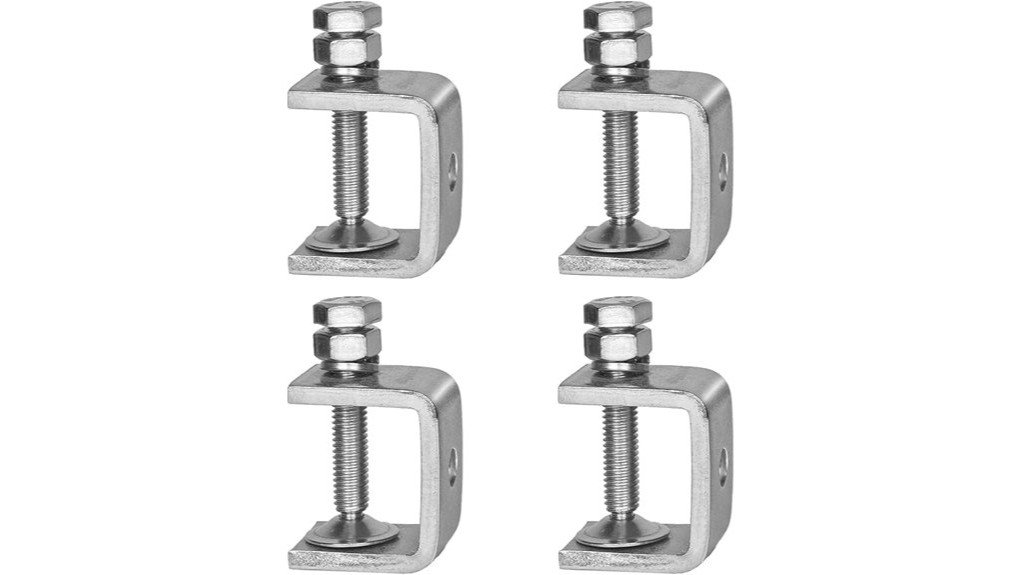
Small clamps can make or break a clean workshop setup. The 4 Pack Stainless Steel C Clamps are made for thin materials, light fixture work, and repeatable holding tasks where you need steady pressure without using a bulky clamp. Their 304 stainless steel construction and floating protective pads make them useful for woodworking, welding prep, and light fabrication. The main tradeoff is the compact 0 to 16mm range, which limits them to small projects instead of heavy structural work.
This review helps you decide where these clamps fit, where they fall short, and what to check before you add them to your bench, jig, or tool kit.
Quick Verdict
Rating: 8/10
Best For: DIY users, light woodworking, small metalwork, bench jigs, and compact workshop fixture setups
Bottom Line: These 304 stainless steel C clamps are a strong choice when you need rust resistance, compact size, and controlled pressure on thin materials. Skip them if you need wide jaw capacity or heavy industrial clamping force.
Key Specifications
| Specification | Detail |
|---|---|
| Product Type | C clamp set |
| Quantity | 4 pack |
| Material | 304 stainless steel |
| Clamping Range | 0 to 16mm (0 to 0.63 in) |
| Jaw Opening | 0.79 in |
| Adjustment Design | Screw adjustment |
| Contact Design | Floating protective pads |
| Best Use | Woodworking, light welding setup, small fixture work, and DIY repairs |
| Not Ideal For | Thick boards, large metal sections, or heavy industrial pressure jobs |
| Care Note | Keep the screw and pads clean so debris does not affect pressure or mark the work surface |
What Are the 4 Pack Stainless Steel C Clamps?
These are compact C-style clamps designed to hold small workpieces during cutting, drilling, welding prep, gluing, and assembly. Each clamp uses a screw-adjustment design, so you can apply more controlled pressure than you would get from a basic spring clamp.
The set focuses on light-duty precision rather than heavy clamping force. The 0 to 16mm clamping range makes the clamps better for thin stock, brackets, trim pieces, panels, small jigs, and fixtures. They are not the right tool for thick lumber or large steel sections.
Who Should Buy It?
Best For
- DIY users who need small clamps for repair, assembly, or fixture work
- Woodworkers clamping thin trim, small boards, glued joints, or jig parts
- Light metalworkers who need stable positioning before drilling or welding
Skip If
- You need a clamp for thick boards or larger workpieces beyond 16mm
- You need high-force industrial clamping for structural fabrication
- You want one large clamp instead of several small clamps for repeat setups
Build Quality and Materials
The 304 stainless steel body is the main reason to consider this clamp set. Stainless steel helps reduce rust problems in damp garages, outdoor sheds, and mixed-use workshops where tools may see moisture, dust, or metal residue.
The clamps also use floating protective pads. These pads help spread pressure across the contact point instead of forcing all pressure through a fixed screw tip. That matters when you work on softer wood, painted metal, polished brackets, or finished surfaces that can dent or scratch easily.
Pro Tip: Wipe the pads before clamping finished wood or painted metal. Tiny metal chips, sawdust, or grit under the pad can still leave marks.
Clamping Range and Fit
The most important limitation is the 0 to 16mm clamping range. That range works well for thin boards, metal strips, bracket tabs, panels, small fixture parts, and light-duty alignment work. It will not cover thick lumber, large tubing, stacked materials, or bulky assemblies.
The 0.79-inch jaw opening gives you some room for placement, but you still need to measure your material before buying. If your project often uses thicker boards or larger steel pieces, a larger cast iron or forged steel C clamp will be more practical.
Before You Buy: These clamps are limited to a 0 to 16mm working range, so they are not suitable for thick boards, large metal sections, or heavy pressure jobs.
Ease of Use and Setup
The screw mechanism is simple and predictable. You place the clamp over the workpiece, align the floating pad, and tighten the screw until the workpiece stays stable. You do not need special tools for normal setup.
The compact size helps when you work near edges, inside frames, or around small fixtures where a full-size clamp would get in the way. This makes the set useful when you need several pressure points across a small project.
Because the clamps are small, placement matters. Align the pad flat against the work surface before you tighten the screw. If you tighten the clamp at an angle, the pressure can shift and the workpiece may move.
Compatibility and Safety Notes
These clamps make sense for light woodworking, welding preparation, DIY repair, and small fabrication tasks. They can help hold parts in position, but they should not be treated as load-rated lifting hardware or a substitute for heavy-duty fabrication clamps.
For welding work, use them for positioning and light holding only. Always follow your welding setup’s safety rules, use proper protective gear, and keep the clamp away from tasks that require a dedicated grounding clamp or high-force fixture.
How It Performs in Real Use
Woodworking Projects
For thin trim, small boards, glued joints, and jig parts, these clamps provide controlled pressure without taking up much bench space. The floating pads help reduce dents compared with a bare screw tip, especially when you avoid overtightening.
Light Welding and Metalwork
For light welding setup, the clamps can hold small brackets, tabs, and thin metal pieces in place before tacking or drilling. They are not built for heavy structural fabrication, so you should use stronger clamps when the workpiece is large, hot, or under stress.
DIY Home Repairs
For home repair tasks, the 4-pack format is useful because you can hold multiple small parts at once. You can use them to stabilize brackets, align panels, hold a fixture while drilling, or keep small pieces from shifting during assembly.
Workshop Jigs and Fixtures
These clamps work well for repeatable jig setups where the same thin material needs consistent pressure. The compact body helps when your jig has limited clearance, and the screw adjustment gives you better control than a spring clamp.
How to Use These Clamps Correctly
Start by checking the thickness of your material. If the part is close to the 16mm limit, test-fit the clamp before applying full pressure. A clamp that barely fits can slip or apply pressure unevenly.
Next, position the floating pad flat against the surface. Tighten the screw slowly, then check that the workpiece has not shifted. For finished wood or painted metal, use light pressure first and increase it only as needed.
After metalwork, wipe the pads and screw area before using the clamps on wood. Small metal particles can transfer onto softer surfaces and cause scratches.
Pros and Cons
Pros
- 304 stainless steel construction helps resist rust in humid workshop spaces
- Compact size fits tight areas where larger clamps are hard to position
- Floating protective pads help reduce surface marks on wood and finished metal
- Screw adjustment gives you more controlled pressure than a spring clamp
- 4-pack format works well for jigs, repeat setups, and multi-point holding
Cons
- 0 to 16mm range limits use with thicker boards or larger metal pieces
- Not suitable for heavy industrial pressure or structural clamping jobs
- Requires careful pad placement to avoid uneven pressure on angled surfaces
Want a Compact Clamp Set?
Check the current product details before you decide if the 0 to 16mm range fits your projects.
Is It Worth the Price?
These clamps are worth considering if you need a small, rust-resistant clamp set for everyday workshop tasks. The value comes from the 304 stainless steel build, protective pad design, and the included 4-pack quantity.
They make the most sense for buyers who need several compact clamps for light-duty holding rather than one large clamp for heavy pressure. You get better value when your projects involve thin materials, small fixtures, repeat setups, or tight work areas.
They are not the best fit if you want one clamp that can handle thick lumber, large steel parts, or demanding industrial work. In that case, a larger forged steel or cast iron clamp will be a better match.
How It Compares to Alternatives
Compared to standard cast iron C clamps, these stainless steel clamps offer better corrosion resistance and easier handling in tight spaces. Cast iron clamps usually make more sense when you need larger jaw capacity or heavier pressure.
Compared to spring clamps, this set gives you more controlled screw pressure, but it takes longer to adjust. Compared to larger forged steel clamps, it is more compact and rust-resistant, but less suitable for high-force fabrication.
Frequently Asked Questions
Can these clamps handle heavy-duty welding work?
No, they are better for light welding setup and small positioning tasks. For heavy structural welding, use stronger industrial clamps designed for larger workpieces and higher holding force.
What is the maximum clamping range?
The supported clamping range is 0 to 16mm, or about 0 to 0.63 inches. This makes the clamps suitable for thin materials, small fixtures, brackets, trim, and light assembly work.
Will they scratch wood surfaces?
The floating protective pads help reduce surface marks, but they do not make the clamp damage-proof. Clean the pads and avoid overtightening when you work with soft wood or finished surfaces.
Are these clamps rust-resistant?
Yes, the article-supported material is 304 stainless steel, which is chosen for corrosion resistance in many workshop tools. You should still wipe the clamps clean after wet, dusty, or metal-heavy jobs.
Can I use them for thick boards?
They are not a good choice for thick boards because the clamping range is limited to 16mm. If you often work with thicker lumber, choose a larger C clamp, bar clamp, or pipe clamp.
What projects are they best for?
They are best for small woodworking, light metal positioning, brackets, jigs, panels, trim, and DIY fixture work. The compact body helps when you need several clamps in tight areas.
Do the floating pads make a difference?
Yes, the floating pads help spread pressure and align better against the work surface. They are useful on wood and finished metal, but you still need to keep them clean and aligned.
Who should skip this clamp set?
Skip it if you need heavy-duty pressure, wide jaw capacity, or a clamp for large workpieces. This set works best as a compact precision clamp set for small materials.
The Bottom Line
The 4 Pack Stainless Steel C Clamps are best for DIY users, woodworkers, and light metalworkers who need compact, rust-resistant clamps for thin materials. Their 304 stainless steel body, screw adjustment, and floating pads make them practical for small fixtures and repeat setups.
The main limitation is the 0 to 16mm clamping range. Choose them for light precision work, but skip them if your projects require wide jaw capacity or heavy industrial clamping force.