Disclosure: As an Amazon Associate, we earn from qualifying purchases. If you click a link on this page and make a purchase, we may receive a small commission at no extra cost to you.
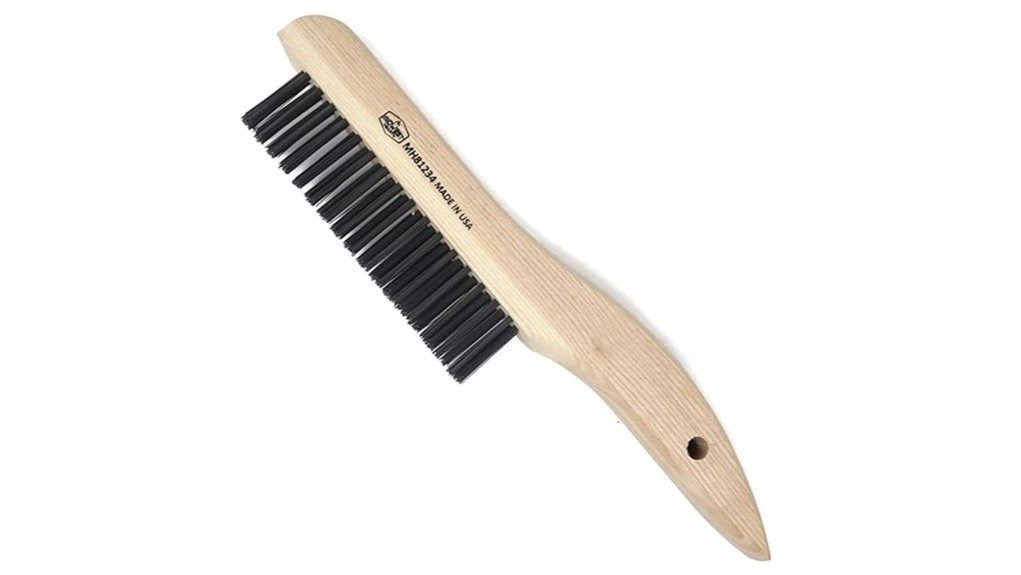
Removing welding slag, loose rust, corrosion, and stubborn surface buildup often calls for a hand brush that is aggressive enough to work without being hard to control. The Tempered Steel Wire Scratch Brush uses a 10-inch wood shoe-handle format with tempered steel bristles and a broad 4 x 16 bristle layout for this kind of manual cleaning. Its biggest strength is simple, direct surface preparation on tough materials, but the same stiff wire that makes it useful can also scratch softer or finished surfaces. This review explains where the brush makes sense, how to use it more carefully, and what you should confirm before buying.
Quick Verdict
Rating: Recommended with caveats
Best For: Manual removal of welding slag, loose rust, corrosion, and surface residue from durable metal workpieces.
Bottom Line: The tempered steel bristles and long wood shoe handle give you useful scrubbing coverage and control for workshop cleanup and surface preparation. The tradeoff is aggressiveness, so it is not the right brush for delicate, polished, coated, or easily scratched surfaces.
| Specification | Detail |
|---|---|
| Product type | Handheld wire scratch brush |
| Bristle material | Tempered steel |
| Bristle layout | 4 x 16 layout |
| Handle | Wood shoe-handle design |
| Length | 10-inch format stated in the source article |
| Best use | Welding slag, rust, corrosion, rough-surface cleaning, and metal preparation before painting or coating |
| Main limitation | Stiff steel bristles may scratch delicate or finished surfaces |
What Is the Tempered Steel Wire Scratch Brush?
This is a manual cleaning brush built around stiff tempered steel bristles and a wood shoe-style handle. You use it by hand instead of attaching it to a drill or grinder, which gives you more control over pressure and direction when cleaning a weld area, rusty tool, or rough metal surface.
The source article identifies a 10-inch wooden-handle format and a 4 x 16 bristle arrangement. The exact brand and model tied to the Amazon ASIN could not be independently confirmed during this review, so the buying advice below stays limited to the product details supported by the article rather than adding unverified claims.
Key Takeaways
- Tempered steel bristles: suited to firm manual scrubbing on durable metal surfaces.
- 4 x 16 bristle layout: gives you a broader working face than a narrow detail brush.
- 10-inch wood shoe handle: provides useful reach and a familiar hand-brush grip.
- Useful for surface preparation: the brush is aimed at rust, corrosion, welding slag, and residue that can interfere with painting or coating.
- Not for every surface: stiff steel wire can mark soft metal, polished finishes, paint, plating, or other sensitive materials.
Who Should Buy It?
Best For
- Welders cleaning slag and residue from durable metal workpieces
- DIY users removing loose rust or corrosion before refinishing metal
- Shop users who want a simple hand tool for controlled surface preparation
Skip If
- You need a brush for polished, coated, plated, or easily scratched surfaces
- You need a power-tool brush for fast removal across a large area
- You need a clearly verified brand, model, warranty, or specialty wire material
Features and Design
Tempered Steel Bristles
The main working feature is the tempered steel wire. Compared with a softer cleaning brush, steel bristles give you more bite against rough buildup. That makes the brush better suited to workshop jobs such as loosening welding slag, disturbing corrosion, and stripping loose residue from hard surfaces.
The benefit also creates the main limitation. A stiff wire brush is an abrasive tool, not a general-purpose duster. You should test it on an inconspicuous area when the finish matters, and you should avoid assuming that a surface is safe just because it is metal.
10-Inch Wood Shoe Handle
The wooden shoe-handle design gives you a longer grip than a small detail brush. That extra length can help keep your hand behind the working area while giving you enough leverage for short, controlled strokes. It also makes the brush easy to use without a power tool, battery, or accessory setup.
Because the handle is wood, storage matters. Keep the brush dry after cleaning so moisture is not left sitting in the bristles or handle area.
4 x 16 Bristle Layout
The original article described the bristle count in conflicting ways. A clearer description is a 4 x 16 bristle layout, which refers to the arrangement of the working face rather than a total of only 16 individual wires. This wider pattern is useful when you want more coverage than a narrow toothbrush-style wire brush can provide.
Before You Buy: Do not choose tempered steel wire for a delicate surface just because the brush size looks convenient. The bristles are intended for aggressive cleaning and may scratch paint, plating, soft metals, polished finishes, or decorative surfaces.
Performance and Applications
The brush is best understood as a manual surface-preparation tool. Its value comes from giving you direct control over pressure while the steel bristles work against tough surface contamination. It is most suitable for localized cleaning where a powered wire wheel would be unnecessary or harder to control.
- Welding cleanup: scrub slag and residue from durable metal after the workpiece has cooled and is safe to handle.
- Rust and corrosion removal: loosen flaky surface rust before further cleaning, inspection, or refinishing.
- Paint or coating preparation: remove loose debris that could interfere with surface prep.
- Tool restoration: clean rough buildup from suitable steel tools or shop parts when cosmetic scratching is not a concern.
- General shop cleanup: work on small areas that need more abrasion than a nylon or soft-bristle brush can provide.
How It Performs in Real Use
For Welding Cleanup
A hand brush makes sense when you want to clean a short weld bead or nearby metal without setting up a grinder. The broad wire face lets you make repeated strokes over slag and residue, while the handle gives you direct feedback about how much pressure you are applying.
For Rusty Tools and Hardware
On durable steel tools and hardware, the stiff wire can help break up loose surface rust and corrosion. It will not repair pitting or restore lost metal, so you should view it as a cleaning step rather than a full restoration method.
Before Painting or Coating
The brush can help remove loose contamination before a finishing step, especially on rough metal. Brushing alone does not replace the cleaning, degreasing, sanding, or preparation steps required by a specific paint or coating system, so follow the finish manufacturer’s instructions after brushing.
For Small Shop Jobs
The brush is most convenient when the area is small enough to handle manually. If you need to strip a large panel or heavy scale across a broad area, a different tool may save time. For spot cleaning, edge work, and quick maintenance, the hand-brush format keeps the setup simple.
How to Use It Correctly
- Make sure the workpiece is stable and safe to handle before brushing.
- Use short strokes and moderate pressure first. Increase pressure only when the surface can tolerate it.
- Brush away from your body and keep loose debris out of your face and eyes.
- Follow appropriate eye, hand, and work-area protection for the material you are cleaning.
- After use, remove trapped debris from the brush and store it in a dry place.
Pro Tip: Let the wire do the work. Starting with lighter pressure gives you more control and helps you judge how aggressively the brush is affecting the surface before you scrub harder.
Surface Compatibility and Safety
Tempered steel wire is intended for firm cleaning, so surface compatibility deserves more attention than the brush size alone. Use it on durable materials where scratching is acceptable or where the surface will be refinished. For soft metal, polished parts, plated finishes, painted surfaces you want to preserve, or decorative work, a softer brush material may be a better choice.
Wear suitable protection for the job and follow the instructions for the workpiece, coating, or process you are using. A hand wire brush can release rust, scale, slag, and other small particles during scrubbing. Stop using the brush if the handle becomes damaged or the wire becomes excessively bent, loose, or unsafe.
Pros and Cons
Pros
- Tempered steel bristles provide useful abrasion for tough surface buildup
- 4 x 16 layout gives you broad manual cleaning coverage
- 10-inch shoe-handle format offers reach and direct pressure control
- No power tool, battery, or accessory setup is required
- Useful for welding cleanup, loose rust, corrosion, and surface preparation
Cons
- Steel wire may scratch delicate, coated, plated, or polished surfaces
- Manual brushing is slower than a powered brush on large areas
- Exact brand, model, and warranty details for the linked ASIN could not be independently verified
Build Quality and What to Check
For a basic hand wire brush, useful quality checks are visible and practical. Before use, look for a secure handle, firmly seated wire, and a working face that is not badly bent or shedding. The article supports a wood shoe-handle design with tempered steel bristles, but it does not provide a verified manufacturing location, certification, or warranty term.
This is why the original claim about “American craftsmanship” and the earlier warranty guarantee have been removed. Those details should only appear if they are confirmed on the live product listing or by the manufacturer.
Is It Worth the Price?
This type of scratch brush is a simple workshop tool, so value depends more on fit for the job than on extra features. It is worth considering if you regularly clean welds, remove loose rust, or prepare small metal areas and want a manual tool that is easy to grab without power-tool setup.
It is less compelling if your work is mostly on delicate surfaces or large panels. In those cases, the wrong wire material or a hand-powered format can create more work rather than less. Check the current listing details and seller information before ordering because the exact brand and warranty could not be verified here.
How It Compares to Alternatives
A stainless-steel wire brush is worth comparing when corrosion resistance or material compatibility is important. A brass-wire brush is generally the better category to consider when you need a less aggressive brushing action on surfaces that could be marked by hard steel wire. For large-scale rust or paint removal, a powered wire wheel can work faster, but it also requires more setup and stricter control.
The Tempered Steel Wire Scratch Brush makes the most sense when you want a straightforward hand tool with broad coverage and firm abrasion for durable metal. Its advantage is simplicity and control, not speed on very large jobs.
Frequently Asked Questions
What is this wire scratch brush best used for?
It is best suited to firm manual cleaning on durable metal surfaces. The source article specifically supports uses such as welding slag removal, rust and corrosion cleanup, and preparation before painting or coating.
Is it safe for delicate or polished surfaces?
No broad safety claim should be made for delicate finishes. Tempered steel bristles are aggressive and may scratch paint, plating, polished surfaces, or softer materials, so test carefully or choose a softer brush type.
How should you clean and store the brush?
Remove trapped dust, rust, and slag after use, then keep the brush dry. Avoid storing it while wet because moisture can shorten the useful life of steel wire and a wooden handle.
Can you replace the bristles when they wear out?
The article describes a fixed hand brush, not a replaceable-bristle system. When the wire becomes badly worn, loose, bent, or ineffective, replacing the complete brush is the practical choice.
Can you use it outdoors?
You can use a hand wire brush outdoors when the surface and task are suitable. Do not treat the brush as weatherproof, and store it dry after use rather than leaving steel bristles and a wood handle exposed to moisture.
What warranty does this brush include?
A manufacturer warranty for the linked ASIN could not be verified. Check the live Amazon listing and seller terms before purchase if warranty coverage matters to you.
Who should skip this brush?
Skip it if you mainly work on delicate finishes, need a softer wire material, or need fast cleaning across a very large area. It is also a weaker choice if verified brand, model, or warranty information is a key part of your buying decision.
The Bottom Line
The Tempered Steel Wire Scratch Brush is a sensible choice for buyers who need a simple hand tool for welding cleanup, loose rust, corrosion, and surface preparation on durable metal. Its tempered steel bristles and 10-inch shoe-handle format give you firm cleaning action with direct control, but that same abrasion makes it a poor fit for delicate finishes. It is recommended with caveats, especially because the exact brand, model, and warranty tied to the linked ASIN could not be independently verified.
Ready to Buy?
Check the latest product details, seller information, and current price before you decide.