Disclosure: As an Amazon Associate, we earn from qualifying purchases. If you click a link on this page and make a purchase, we may receive a small commission at no extra cost to you.
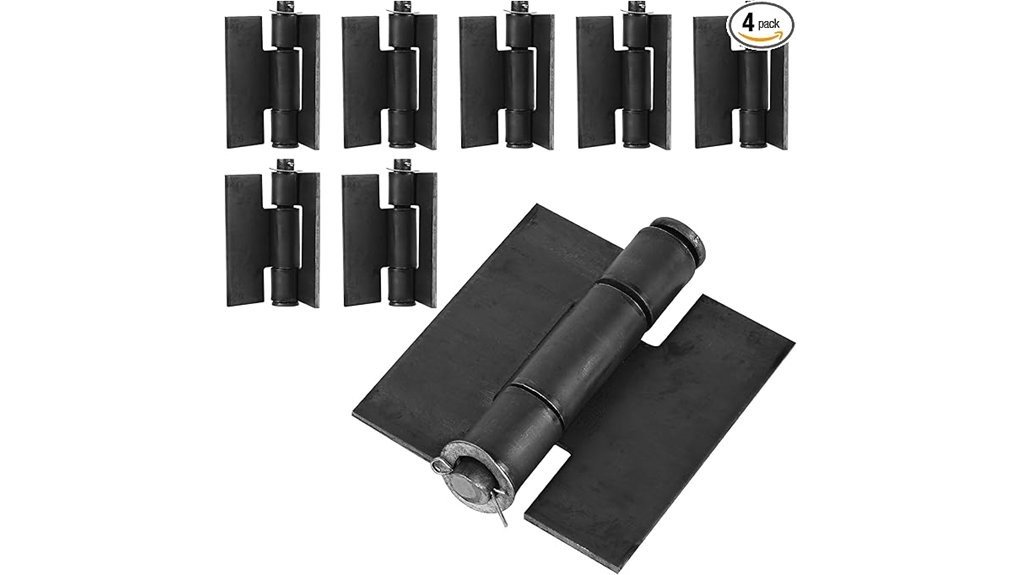
Choosing hinges for a heavy metal gate or shop door is not only about size. You need enough steel, a secure weld, and smooth movement after the frame is aligned. The Weld On Hinges Extra Heavy Duty model is built for buyers who want a direct-weld hinge instead of a screw-mounted option. This review explains what the 4.4″ x 4″ size, 5mm thickness, solid steel build, and pack-of-four setup mean in real use, along with the main tradeoff: these hinges require correct welding and alignment to perform well.
Quick Verdict
Rating: 8.4/10
Best For: Heavy swing metal gates, heavyweight doors, welded utility frames, and shop projects that need a strong hinge connection.
Bottom Line: These weld-on hinges make sense if you want a solid steel hinge that attaches directly to metal without screws. They are not the easiest choice for beginners because the final result depends on welding skill, surface prep, and hinge alignment.
Key Specifications
| Specification | Detail |
|---|---|
| Product name | Weld On Hinges Extra Heavy Duty |
| Product type | Weld-on hinges for metal gates and heavyweight doors |
| Design | Direct-weld hinge design with no screw installation required |
| Dimensions | 4.4″ x 4″ |
| Thickness | 5mm |
| Weight | 1.47 lb each |
| Material | Solid steel |
| Count | Pack of four hinges |
| Maximum rotation angle | Up to 270 degrees |
| Best use | Heavy swing metal gates, heavyweight doors, welded frames, and utility projects |
| Installation method | Direct welding to a compatible metal surface |
| Care note | Clean as needed, inspect for rust, and lubricate moving areas when performance starts to feel stiff. |
What Is the Weld On Hinges Extra Heavy Duty Model?
The Weld On Hinges Extra Heavy Duty model is a set of solid steel hinges made for projects where a normal screw-on hinge may not feel secure enough. Instead of using screws or bolts through the hinge leaf, you weld the hinge directly to the metal gate, door, or frame.
Each hinge measures 4.4″ x 4″, has a 5mm thickness, and weighs 1.47 lb. That gives you a heavier hinge body than many light-duty hardware-store hinges. The pack includes four hinges, which is useful when you are building or repairing more than one gate, using multiple hinges on a tall door, or keeping spares for future work.
The biggest selling point is the direct-weld design. When installed correctly, it removes the weak point of exposed screws and helps create a cleaner, more secure hinge connection. The tradeoff is that you need welding equipment, safe work habits, and careful alignment before the hinge is fully attached.
Who Should Buy It?
Best For
- Gate builders who need solid steel hinges for heavy swing metal gates.
- Welders repairing metal doors, utility doors, shop doors, or equipment enclosures.
- DIY users who already have welding tools and understand safe hinge alignment.
Skip If
- You need a bolt-on or screw-on hinge that can be installed with basic hand tools.
- You do not have a safe welding setup or access to someone qualified to weld the hinges.
- You need verified load-capacity data before choosing hardware for a critical structure.
Before You Buy: The source article does not provide a verified weight-capacity rating. Match the hinge size, steel thickness, number of hinges, weld quality, and gate weight to your project, and get professional guidance for heavy, public-facing, or safety-critical installations.
Why Weld-On Hinges Are Useful
Weld-on hinges are useful when you want a strong, permanent connection between the hinge and a metal frame. Since the hinge is welded in place, you do not rely on exposed screw heads that can loosen, strip, or be removed from the outside.
That matters most on heavy swing gates and metal doors. A gate moves with leverage, wind, vibration, and daily use. A thicker solid steel hinge gives the gate more support than a light hinge, but the weld and frame still matter. A strong hinge cannot make up for a weak post, poor weld bead, or twisted frame.
Materials and Build Quality
The main build detail here is solid steel construction. Steel is a practical choice for welded gate hardware because it can be joined directly to other compatible steel parts. The 5mm thickness also gives the hinge body more substance than a thin utility hinge.
At 1.47 lb each, these hinges are not lightweight decorative hardware. That extra mass makes sense for heavy swing metal gates and heavyweight doors. It can also make positioning more important during installation, especially if you are working alone or setting multiple hinges on a tall gate.
The product is best judged as functional hardware, not a finished design piece. You should plan for surface prep, weld cleanup, and paint or coating if the hinge will be exposed to weather or moisture.
Installation and Alignment
Installation is the most important part of this product. The hinge is designed for direct welding, so it does not use screws as the main attachment method. This can create a stronger connection, but only if the hinge is placed square, the surfaces are clean, and the welds are suitable for the load.
Because the hinge can rotate up to 270 degrees, alignment affects how the door or gate opens, closes, and clears nearby surfaces. Before final welding, test the swing path, mark hinge positions, and confirm that the gate does not bind at the post, frame, latch, or ground.
Pro Tip: Tack-weld the hinges first, then test the full swing before completing the welds. This gives you a chance to correct small alignment issues before the hinge is fixed permanently.
Range of Motion and Gate Clearance
The listed maximum rotation angle is 270 degrees. That wider movement can be helpful for gates that need to open back farther than a basic door swing. It may also help in work areas where you want the door or gate to sit out of the way when open.
Still, the hinge angle alone does not guarantee a full 270-degree swing in your setup. Gate thickness, hinge placement, post shape, wall clearance, latch hardware, and ground slope can all limit movement. Measure the area before you weld so the hinge can actually use the range it offers.
Security and Strength Benefits
A direct-weld hinge can improve security because there are no normal screw heads to remove from the outside. This is helpful on gates, storage areas, utility doors, and metal enclosures where exposed fasteners could be a weak point.
The 5mm solid steel build also supports the product’s heavy-duty purpose. For the best result, think of the hinge as one part of the system. Your gate post, frame tubing, latch, weld quality, and hinge spacing all affect strength.
Maintenance and Outdoor Use
The original article positions these hinges as suitable for outdoor applications. For outdoor use, the safe approach is to protect the steel after installation. Bare or scratched steel can rust when exposed to moisture, so paint, primer, or another suitable coating may be needed depending on your project.
Routine maintenance is simple but worth doing. Wipe off dirt, check for rust, inspect weld areas, and lubricate the hinge if movement becomes stiff. If you notice sagging, cracking around the weld, or uneven swing, stop using the gate until the problem is inspected.
Buyer Feedback and Real-World Notes
The source article describes buyer feedback as positive, especially around strength, size, and heavy-duty use. Since the current Amazon listing could not be independently verified during this update, this revised review does not repeat the exact star rating or review count from the original text.
The feedback pattern still matches what buyers usually care about with this type of hardware: solid steel feel, dependable gate movement, and a secure attachment after welding. The most likely complaints are not about daily use, but about fit, alignment, welding skill, or choosing the wrong hinge size for the gate weight.
How It Performs in Real Use
For Heavy Swing Metal Gates
For a heavy swing metal gate, the 5mm solid steel build is the key benefit. These hinges are made for metal-to-metal welding, so they are a better match for fabricated gates than light residential hinges. You still need the right hinge spacing and a strong post to prevent sagging.
For Workshop or Utility Doors
On shop doors, utility doors, or equipment enclosures, the direct-weld design gives you a clean and sturdy connection. It works best when you want a permanent hinge rather than hardware that may need to be removed often.
For Outdoor Gate Projects
Outdoor projects need extra attention after welding. If the hinge surface is left unprotected, moisture can lead to rust. Paint or coat the hinge after installation when your project calls for weather exposure.
For Long-Term Use
Long-term performance depends on more than the hinge itself. Check the welds, hinge movement, gate sag, and rust over time. A heavy hinge can last longer when it is installed on a straight frame and maintained before small issues become large ones.
Setup Tips Before First Use
- Confirm the project fit first: Use these hinges only on compatible metal surfaces that can be welded safely.
- Clean the weld area: Remove paint, rust, oil, and debris before welding so the hinge seats properly.
- Mark both hinge positions: Measure carefully so the gate weight is shared evenly across the hinges.
- Test with tack welds: Tack first, swing the gate, check clearance, then finish the welds.
- Protect the surface: After welding and cleanup, use a suitable coating if the hinge will face moisture or outdoor exposure.
- Inspect before loading heavily: Make sure the welds, post, frame, and gate movement all look stable before regular use.
Installation Safety Notes
These hinges are simple hardware, but installation involves welding. Wear proper welding safety gear, work in a safe area, and follow the equipment instructions for your welder. If you are not comfortable welding structural or load-bearing hardware, hire a qualified welder.
Do not rely on the hinge alone to decide if a gate is safe. Gate weight, hinge count, post strength, frame material, weld type, latch position, and traffic around the gate all matter. For public areas, commercial properties, or very heavy gates, use professional guidance.
Pros and Cons
Pros
- Solid steel construction supports demanding gate and door projects.
- 5mm thickness gives the hinge body a stronger feel than light-duty hinges.
- Direct-weld design removes the need for screws as the main attachment point.
- Pack of four works well for multiple hinges on a heavy gate or more than one project.
- Up to 270-degree rotation can help when your gate layout needs a wider swing path.
Cons
- Requires welding tools, safety gear, and proper metal prep.
- No verified weight-capacity rating was available from the supplied article.
- Not the right choice if you need an adjustable, removable, or screw-on hinge.
Is It Worth the Price?
These hinges are worth considering if you need a strong weld-on hinge set for metal gates, doors, or shop projects. The pack of four adds practical value because many heavy gates use more than one hinge, and having matching hinges can make the build cleaner.
This is a strong value for the price if you already have the welding setup and know how to align gate hardware. It is not the best fit if you need hardware that can be installed quickly with basic tools or adjusted after installation.
How It Compares to Alternatives
Compared with screw-on hinges, these weld-on hinges offer a more permanent and secure attachment for metal work. Screw-on hinges are easier for quick repairs, but they can loosen or expose removable fasteners.
Compared with stainless steel hinges, this solid steel set may be more practical for welded fabrication, but it may need coating for outdoor protection. Compared with adjustable gate hinges, this model is simpler and stronger in feel, but it does not offer the same post-install adjustment.
Frequently Asked Questions
Can these weld-on hinges be used outdoors?
Yes, they can be used for outdoor gate projects when installed correctly. Since the article supports solid steel construction but does not verify a specific coating, plan to paint, prime, or otherwise protect the hinges if they will face moisture.
What size are these hinges?
Each hinge is listed at 4.4″ x 4″ with a 5mm thickness. Each hinge also weighs 1.47 lb, which fits its heavy-duty use case.
How many hinges come in the package?
The article lists the product as a pack of four. That gives you enough hinges for several common gate or door setups, depending on the weight and height of the project.
Do these hinges have a verified weight capacity?
The supplied article does not provide a verified weight-capacity number. For heavy gates or safety-critical doors, match the hinge count and weld setup to the project and ask a qualified welder or fabricator if you are unsure.
Are these hinges good for DIY projects?
They can work for DIY projects if you already know how to weld safely and align gate hardware. If you only have basic hand tools, a bolt-on or screw-on hinge will be easier to install.
Can you paint these hinges after installation?
Yes, painting after installation can help protect the hinge surface and improve the finished look. Clean the hinge and weld area first, then use a paint or coating suited to metal and the environment.
What is the biggest mistake to avoid during installation?
The biggest mistake is fully welding the hinges before checking alignment and swing clearance. Tack-weld first, test the gate movement, then finish the welds once the hinge position is correct.
The Bottom Line
The Weld On Hinges Extra Heavy Duty model is a solid choice if you need 4.4″ x 4″, 5mm thick, solid steel hinges for a welded metal gate or heavyweight door. Buy it if you value a direct-weld connection and a pack of four hinges, but skip it if you need a simple screw-on hinge or a verified load rating before purchase.