Disclosure: As an Amazon Associate, we earn from qualifying purchases. If you click a link on this page and make a purchase, we may receive a small commission at no extra cost to you.
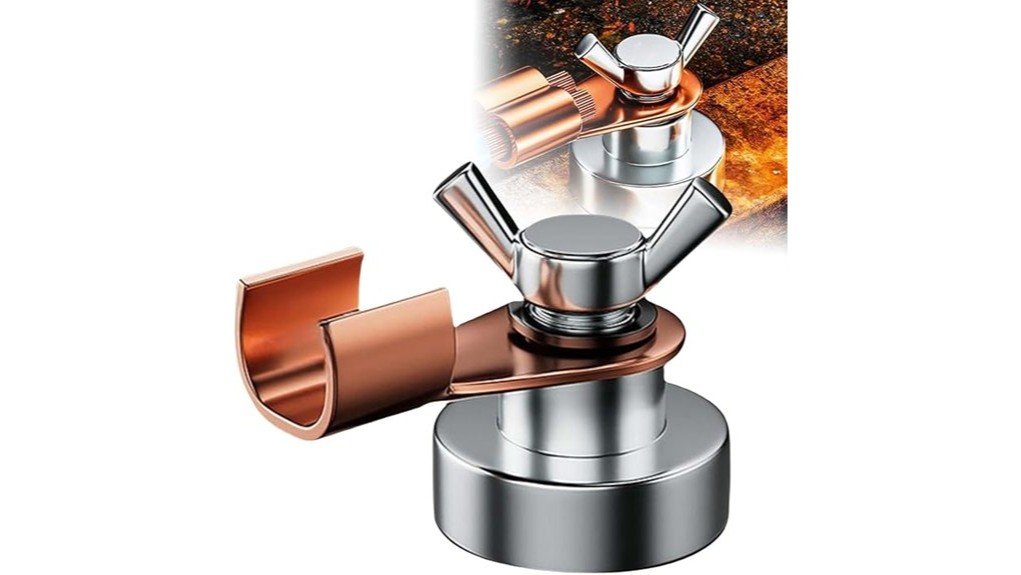
A weak ground connection can slow down a weld job, especially on curved pipe, railings, posts, or a welding table with limited clamp access. The Welding Magnetic Grounding Clamp is a compact magnetic ground clamp made to attach to ferrous metal surfaces without the jaw clearance needed by a traditional spring clamp. This review helps you decide if its 3.5 x 3.5 cm body, 300A rating, safety wire, and magnetic hold make sense for your shop. It looks useful for quick setup work, but it is not the right choice for every surface.
Quick Verdict
Rating: 7/10, Recommended with caveats
Best For: Welders who need a compact ground point on clean ferrous metal surfaces, including tables, posts, railings, and curved steel.
Bottom Line: The magnetic design can save time when a standard clamp is awkward to attach, and the 300A rating gives it useful range for many welding tasks. The tradeoff is that performance depends on clean ferrous contact, and durability concerns make it better for practical shop use than heavy abuse.
| Specification | Detail |
|---|---|
| Product type | Magnetic welding grounding clamp |
| Design | Compact magnetic attachment with safety wire |
| Dimensions | 3.5 x 3.5 cm |
| Current rating | Up to 300A, based on the source article |
| Materials | Alloy steel and copper |
| Magnet type | Permanent magnet |
| Compatible surfaces | Clean ferrous metal surfaces, including flat and curved steel surfaces |
| Known limitation | Limited use on non-ferrous metals because the magnet needs ferrous material to hold properly |
Key Takeaways
- The 3.5 x 3.5 cm magnetic body can attach where a larger jaw-style ground clamp may be awkward.
- The 300A rating gives it practical range for many welding tasks when your setup stays within that limit.
- It works best on clean ferrous metal, including welding tables, steel posts, railings, and curved steel.
- The safety wire adds backup security, but you still need solid bare-metal contact before welding.
- It is not a universal ground solution for aluminum, brass, copper, paint, rust, or heavy mill scale.
What Is the Welding Magnetic Grounding Clamp?
The Welding Magnetic Grounding Clamp is a small grounding accessory for welding. Instead of biting onto the workpiece with spring jaws, it uses a permanent magnet to attach to ferrous metal and create a ground point for your welding lead.
Its main appeal is access. A regular ground clamp works well when you have a clean edge, tab, or lip to grab. A magnetic grounding clamp is helpful when you are working on pipe, railing, a flat table surface, or another steel part where there is no easy clamping point.
Before You Buy: This clamp depends on magnetic contact, so it is mainly for ferrous metals. It is not a good fit for aluminum, copper, brass, painted surfaces, heavy rust, thick scale, or any setup that needs a larger rated ground connection.
Who Should Buy It?
Best For
- Welders who often work on steel tables, railings, posts, or pipe.
- Hobby and shop users who want faster ground setup on clean ferrous metal.
- Anyone who needs a compact ground point where jaw clamps are hard to position.
Skip If
- You mainly weld aluminum or other non-ferrous metals.
- Your workpieces are often painted, rusty, dirty, or covered in mill scale.
- You need a heavy-duty ground clamp with a verified rating above 300A.
Product Features and Benefits
The biggest benefit is magnetic attachment. You can place the clamp on a clean ferrous surface without searching for an edge that a standard clamp can bite. That can make setup faster on curved steel, steel posts, pillars, railings, and welding tables.
The compact size also helps with positioning. A small magnetic ground is easier to carry, store, and place in tight areas than a bulky jaw clamp. The tradeoff is contact area, since a small tool still needs a clean, stable metal surface.
Construction and Durability
The source article describes the clamp as being made from alloy steel and copper. The body needs strength, while the conductive path needs reliable electrical contact.
The permanent magnet does not need charging, but its holding strength still depends on the surface. Dirt, paint, rust, spatter, scale, and uneven contact can reduce grip. The original customer feedback also raised concerns about long-term durability, so this clamp is easier to recommend for convenient shop use than for rough job-site abuse.
Fit and Compatibility
This clamp is designed for ferrous metal surfaces, which makes steel and iron the best match. It is not a good solution for aluminum, copper, brass, or stainless grades with weak magnetic response.
For best results, the clamp needs direct contact with clean bare metal. Poor contact can cause heat, unstable arc behavior, or a failed ground path. The 300A rating is useful, but you should treat it as a limit and match it to your welder output, process, duty cycle, and workpiece.
Versatile Applications
The Welding Magnetic Grounding Clamp is most useful when a workpiece has no clear clamping edge. A magnetic ground can attach to a smooth section of steel, which helps on posts, railings, pillars, welding tables, and curved workpieces.
- Metal poles: Useful when a jaw clamp cannot grab a thin edge.
- Railings: Helpful when your ground point needs to move along a long steel rail.
- Welding tables: Convenient if the table surface is clean bare ferrous metal.
- Curved steel: Easier to place than a standard clamp, although contact area may be smaller.
Pro Tip: Before you strike an arc, clean the contact spot with a wire brush or grinder until you reach bare metal. A magnet that sticks to paint or rust is not the same as a clean electrical ground.
How It Performs in Real Use
For Welding Tables
On a clean steel welding table, this clamp can be quick and convenient. You can place it near the work area and move it as the job changes without fighting a jaw clamp on a thick table edge.
For Pipe, Posts, and Railings
Curved steel is one of the stronger use cases. The clamp can give you a ground point when a standard clamp does not sit well. Check that it sits firmly, since curved surfaces can reduce contact area.
For Small Shop Repairs
For hobby welding and light shop repairs, the compact design can save setup time. It is easy to store near your welder and useful when the workpiece has no exposed lip or tab.
For Long-Term Use
Long-term performance depends on care. Magnetic grounds can collect metal dust and grinding debris, so clean the magnet face often. If the base gets damaged or uneven, the connection may become less reliable.
How to Use It Correctly
Choose a clean ferrous metal spot close to the weld area. Attach the welding lead securely, set the magnetic base flat against the metal, and check that the clamp does not slide or rock. If the surface is curved, test the hold before welding.
After welding, let the area cool before handling the clamp. Keep the magnet face clean before storage, and follow your welder manual and shop safety rules.
Compatibility and Safety
This product touches the electrical grounding side of a welding setup, so use it with care. Do not exceed the stated 300A rating, and do not use it as a workaround for a damaged ground lead, loose cable connection, or poorly prepared workpiece.
You should also avoid unsafe welding conditions. Use proper PPE, keep the area clear of fire risks, and follow professional guidance when the job involves vehicles, structural parts, pressure vessels, coated materials, or unfamiliar metals.
Customer Insights and Reviews
Buyer feedback in the source article points to a mixed but useful pattern. Users like the strong magnetic hold and easy attachment, especially when they need a fast ground point on smooth metal.
The main concern is durability over time. That does not automatically make the clamp a poor choice, but it does mean you should treat it as a compact convenience tool rather than a rugged replacement for every heavy-duty ground clamp.
Pros and Cons
Pros
- Compact 3.5 x 3.5 cm size is easy to place and store.
- Magnetic base can attach to flat and curved ferrous metal surfaces.
- 300A rating suits many common welding tasks when used within limits.
- Safety wire adds a helpful backup during handling and setup.
- Useful when a standard jaw clamp has no easy edge to grab.
Cons
- Not suitable for aluminum and other non-ferrous metals.
- Needs clean bare metal contact, so paint, rust, and scale can cause problems.
- Durability concerns make it less ideal for rough job-site abuse.
Is It Worth the Price?
The Welding Magnetic Grounding Clamp is worth considering if you want a small, convenient ground accessory for everyday steel welding tasks. Its value comes from faster placement, easier use on curved or flat surfaces, and attachment where a jaw clamp may not work well.
It makes the most sense as an add-on tool, not as your only grounding option. Keep a traditional clamp available for dirty workpieces, non-ferrous metals, thick edges, or jobs that need a more rugged connection.
How It Compares to Alternatives
Compared with a traditional spring grounding clamp, this magnetic clamp is easier to place on flat steel, pipe, posts, and railings. A spring clamp is still better when you need a strong mechanical bite on an edge or when magnetic contact is not possible.
Compared with larger magnetic ground clamps, this model is more compact and easier to store, but it may not offer the same contact area or heavy-duty feel. Compared with a fixed bolt-on grounding point, it is more flexible, but not as permanent or secure.
Frequently Asked Questions
Can this magnetic grounding clamp be used on aluminum?
No, it is mainly for ferrous metals because the magnet needs steel or iron to hold. Aluminum, copper, and brass usually require a mechanical grounding clamp or another grounding method.
What size is the Welding Magnetic Grounding Clamp?
The source article lists the clamp at 3.5 x 3.5 cm. That makes it compact enough for tight spots, small work areas, and quick storage near your welder.
How much current can it handle?
The article-supported rating is up to 300A. You should still match the clamp to your welder output, process, duty cycle, and shop requirements before use.
Does the magnet need to be recharged?
No, the article describes the magnet as permanent. It does not need charging, but the magnet face should be kept clean so it can hold firmly against the metal.
Will it work on painted or rusty metal?
It may stick weakly to some coated surfaces, but that does not mean you have a reliable ground. For better results, clean the contact spot to bare metal before attaching the clamp.
Is this a replacement for a standard ground clamp?
It is better as an add-on tool than a full replacement. A traditional clamp is still useful for non-magnetic metals, rough surfaces, heavy-duty jobs, and workpieces with a strong clamping edge.
Who should skip this clamp?
Skip it if you mostly weld aluminum, work on painted or rusty metal, or need a heavy-duty ground above the stated 300A rating. You should also skip it if your shop rules require a specific grounding method.
The Bottom Line
The Welding Magnetic Grounding Clamp is a practical add-on for welders who want a compact ground point for clean ferrous metal, especially on tables, posts, railings, and curved steel. It earns a 7/10 recommendation because the 3.5 x 3.5 cm magnetic design, safety wire, and 300A rating are useful, but it is limited by surface prep, non-ferrous compatibility, and durability concerns.
Buy it if you want faster setup on clean steel. Skip it if you need a universal ground clamp for aluminum, dirty metal, or heavier-duty shop demands.