Disclosure: As an Amazon Associate, we earn from qualifying purchases. If you click a link on this page and make a purchase, we may receive a small commission at no extra cost to you.
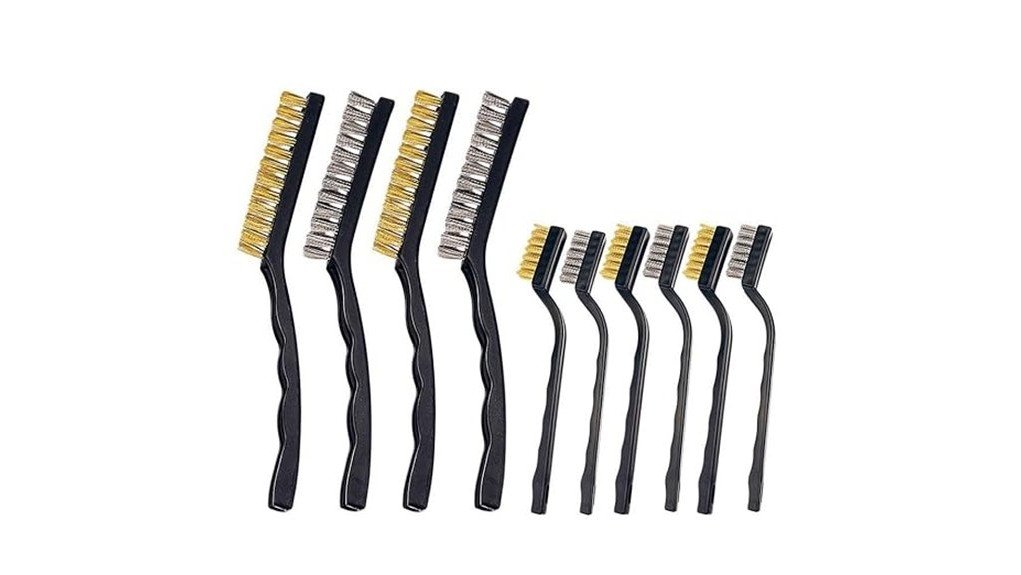
Removing rust, welding slag, scale, and stubborn residue by hand is easier when you have the right bristle material and brush size for the job. The Turboom Wire Brush Set JT-603 gives you ten hand brushes, split between stainless steel and brass, plus both large and compact brush sizes. That combination makes the set useful for workshop cleanup, metal preparation, machinery maintenance, and detail work. Its main limitation is that neither wire type should automatically be treated as safe for every painted, polished, plated, or otherwise sensitive surface.
Quick Verdict
Rating: 8.2/10, Recommended with caveats
Best For: Welders, mechanics, metalworkers, and DIY users who want multiple hand brushes for rust, slag, residue, and detail cleaning.
Bottom Line: The mixed 10-brush package gives you useful choices in bristle material and brush size instead of forcing one brush to handle every surface. The tradeoff is that wire brushes can mark softer finishes, so material selection and a small test area matter.
Key Takeaways
- You get 10 brushes: five stainless steel and five brass.
- The package combines six small brushes with four larger brushes for both detail work and broader cleaning.
- Large brushes have an 8.5-inch handle and a brush head measuring about 3.9 inches long by 0.95 inch wide.
- Small brushes have a 6.7-inch handle and a brush head measuring about 1.6 inches long by 0.45 inch wide.
- Curved handles, an inner convex grip area, and hanging holes make the brushes easier to control and store.
- Stainless steel is the more aggressive choice for stubborn deposits, while brass gives you a less aggressive option for surfaces that need more care.
Key Specifications
| Specification | Detail |
|---|---|
| Brand | Turboom |
| Model / Part Number | JT-603 |
| Product Type | Handheld wire scratch brush set |
| Total Quantity | 10 brushes |
| Bristle Mix | 5 stainless steel brushes + 5 brass brushes |
| Size Mix | 6 small brushes + 4 large brushes |
| Large Handle Length | 8.5 inches |
| Large Brush Head | About 3.9 inches long × 0.95 inch wide |
| Small Handle Length | 6.7 inches |
| Small Brush Head | About 1.6 inches long × 0.45 inch wide |
| Handle Features | Curved shape, inner convex grip area, hanging hole |
| Best Use | Rust, welding slag, residue, unfinished metal parts, machinery, and surface preparation |
What Is the Turboom Wire Brush Set?
The Turboom JT-603 is a manual scratch-brush assortment designed around two bristle materials and two brush sizes. Instead of giving you ten identical tools, the package includes five stainless steel and five brass brushes, with six small and four large brushes distributed through the set.
The larger 8.5-inch brushes give you more contact area for exposed metal, machinery, and larger rusted sections. The smaller 6.7-inch brushes have a 1.6-inch-long head, making them easier to position around corners, hardware, weld areas, edges, and other spots where a larger brush feels awkward.
Who Should Buy It?
Best For
- Welders who regularly clean slag, oxidation, or residue from metal.
- Mechanics and DIY users who need both larger and detail-size brushes.
- Workshops that benefit from having separate stainless and brass brushes available.
Skip If
- You mainly need a nylon brush for very delicate surfaces.
- You need a powered brush for removing heavy corrosion over a large area.
- You want a brush specifically approved for food-contact equipment or grills.
Before You Buy: A brass brush is generally less aggressive than stainless steel, but that does not make it automatically scratch-safe. Test an inconspicuous spot before brushing polished, painted, plated, soft, or decorative surfaces.
Key Features of the Wire Brush Set
Ten Brushes Instead of One General-Purpose Tool
The main advantage is quantity and variety. The set includes five stainless steel and five brass brushes, so you can keep brushes dedicated to different materials or jobs instead of using one contaminated or worn brush everywhere.
Having ten brushes also makes sense in a busy garage or workshop. You can keep a larger brush near a welding table, reserve smaller brushes for detail cleaning, and avoid stopping a job because the only brush you own is already worn or coated with debris.
Two Brush Sizes for Broad and Detailed Work
The large brushes measure 8.5 inches at the handle, with brush heads about 3.9 inches long and 0.95 inch wide. That footprint works better when you need repeated strokes across a flat or exposed area.
The small brushes use a 6.7-inch handle and a head roughly 1.6 inches long by 0.45 inch wide. Their narrower profile gives you better access around joints, corners, small parts, bolts, narrow weld areas, and other places where the larger head can get in the way.
Stainless Steel vs. Brass Brushes
Stainless Steel for More Aggressive Cleaning
The stainless steel brushes are the logical first choice when you are dealing with stubborn rust, welding residue, loose scale, or other deposits that need firm mechanical scrubbing. The stronger bristles can remove material faster than a softer brush, but that extra bite also increases the chance of changing a sensitive finish.
Brass for Lighter Cleaning
Brass gives you a less aggressive alternative. It can be useful when stainless steel feels unnecessarily harsh or when you are cleaning a surface that deserves more caution. You should still test first because brush pressure, bristle condition, the workpiece material, and its finish all affect the result.
Pro Tip: Keep individual brushes dedicated to specific metals or jobs. Marking the handles can help prevent you from accidentally moving residue from one workpiece to another.
Handle Design and Storage
Each brush uses a curved handle with a convex groove on the inside. That shape gives your fingers a more defined contact point while you scrub, which is useful when you need to control pressure around a small weld or narrow edge.
A hole at the end of each handle gives you a simple storage option. Hanging the brushes on hooks or a pegboard keeps the bristles separated and makes it easier to see which brush material and size you are grabbing.
How It Performs in Real Use
Cleaning Welding Slag and Residue
For welding cleanup, the stainless brushes give you the more aggressive option for loosening slag and residue around a weld. The smaller brushes are useful when you need better control close to a bead or joint, while a large brush can cover surrounding material faster.
Removing Surface Rust
Light to moderate surface rust is another suitable task for a hand wire brush. The larger stainless brush lets you work across accessible areas without bringing out a powered grinder or drill brush for every small job. Deep corrosion, however, may require more aggressive preparation than a handheld brush can provide.
Cleaning Machinery and Small Parts
The six smaller brushes are particularly useful on hardware, brackets, edges, recesses, and other detailed parts. Their 0.45-inch-wide brush heads give you more control than the nearly one-inch-wide large heads when space is limited.
General Workshop Cleanup
The set can also handle dried residue and debris on suitable unfinished metal surfaces. Because you have two bristle materials, you can begin with the less aggressive brush and move to stainless steel when the deposit requires stronger mechanical action.
How to Use the Brushes Correctly
- Identify the surface first. Check whether it is bare steel, stainless steel, plated metal, painted material, polished metal, or another finish.
- Start with the least aggressive suitable brush. Brass may be the better first test when you are unsure how easily the surface will mark.
- Test a small area. Do this before cleaning a visible or finished section.
- Use controlled pressure. Excessive force can bend bristles, scratch the workpiece, and reduce control.
- Brush away loose debris as you work. This lets you see whether the surface is clean before you keep scrubbing unnecessarily.
- Inspect the brush afterward. Stop using a brush if wires are badly bent, loose, or breaking away from the head.
Safety and Material Considerations
Wire bristles are stiff and sharp enough to injure skin or send loose particles toward your face. Wear appropriate eye protection and suitable work gloves when the task calls for them, and keep your hands away from sharp edges on the workpiece.
Do not assume these brushes are suitable for grills, cookware, electrical equipment, or other specialized applications simply because the bristles are metal. Use a tool specifically intended for the surface and application when food contact, electrical components, or manufacturer-specific cleaning requirements are involved.
When working on stainless steel or another corrosion-sensitive material, avoid casually using a brush that has already been used on ordinary carbon steel. Dedicated brushes help reduce the chance of transferring unwanted particles between workpieces.
Pros and Cons
Pros
- Ten-brush package gives you multiple replacements and dedicated-use options.
- Includes both stainless steel and brass bristles.
- Six small and four large brushes cover both detail and broader cleaning.
- Curved handles and inner grip grooves improve control during hand scrubbing.
- Hanging holes make workshop storage simple.
Cons
- Neither bristle material is guaranteed to be scratch-free on every finish.
- The set does not include a nylon brush for very gentle cleaning.
- Hand brushing is slower than powered abrasive tools on large areas of heavy corrosion.
Cleaning and Maintenance
After use, remove loose debris from the bristles and inspect the brush for damaged or protruding wires. The right cleaning method depends on what you brushed off, so avoid automatically rinsing a brush if the removed substance should not be washed into a sink or drain.
If a brush does get wet, let it dry thoroughly before storage. Hanging the brushes separately rather than piling them into a drawer also helps keep the bristles from being crushed or tangled with other tools.
Is It Worth the Price?
The value of this set comes mainly from receiving 10 brushes, two bristle materials, and two sizes in one package. That makes it more practical for someone who cleans different metal parts regularly than for a buyer who only needs one brush for an occasional repair.
It is worth considering if you want inexpensive manual brushes distributed around a workshop or you prefer keeping separate tools for different cleaning jobs. It is less compelling if your work normally requires powered surface preparation or if most of your cleaning involves delicate materials better suited to nylon or another non-metallic brush.
How It Compares to Alternatives
The Forney 70491 is a dedicated curved-handle brass scratch brush, while the Forney 70503 provides a dedicated stainless steel option. Buying individual professional-style brushes can make sense when you already know exactly which wire material you need and would rather have one purpose-specific tool than a mixed assortment.
A mixed set such as the KIWDZFU A416PH522198 six-piece brass and stainless set follows a similar concept but gives you fewer brushes. The Turboom package makes the most sense when quantity, two brush sizes, and having both brass and stainless options together matter more than buying one specialized brush.
Frequently Asked Questions
How many brushes are included in the Turboom set?
The package contains 10 brushes. Five use stainless steel bristles and five use brass bristles, with six small brushes and four large brushes in the assortment.
What are the large and small brush dimensions?
The large brushes use an 8.5-inch handle with a head about 3.9 inches long and 0.95 inch wide. The small brushes have a 6.7-inch handle and a head about 1.6 inches long by 0.45 inch wide.
Should I use brass or stainless steel for rust?
Stainless steel is usually the more aggressive choice when you need stronger mechanical cleaning. Brass is useful when you want to begin with a less aggressive brush, although you should still test the surface before proceeding.
Can I use these brushes on delicate or polished surfaces?
Use caution. Even brass wire can alter some soft, plated, painted, polished, or decorative finishes, so test a hidden area first and switch to a non-metallic brush when the surface requires gentler cleaning.
Are the brushes useful for welding cleanup?
Yes. Cleaning welding slag, residue, rust, and unfinished metal parts is one of the intended uses of the set. The two sizes also let you choose between broader cleaning and more controlled work around a joint.
How should I store the brushes?
Each handle has a hanging hole, so a pegboard or tool hook is a convenient option. Keeping brushes dry and separated also makes it easier to reserve individual brushes for specific metals or tasks.
Who should skip this wire brush set?
Skip it if nearly all of your work involves fragile finishes that require nylon or another soft brush. It is also not the fastest solution for removing extensive heavy corrosion from large metal surfaces.
The Bottom Line
The Turboom JT-603 Wire Brush Set is a practical choice when you want several manual brushes for welding cleanup, rust removal, machinery, and general metal work. Its strongest feature is the combination of 10 brushes, stainless and brass bristles, and two sizes, while its main limitation is that you still need to choose the correct bristle material and test sensitive surfaces before scrubbing.
Buy it if that variety is useful in your workshop. Skip it if you primarily need an ultra-gentle nylon brush or powered equipment for large-scale surface preparation.