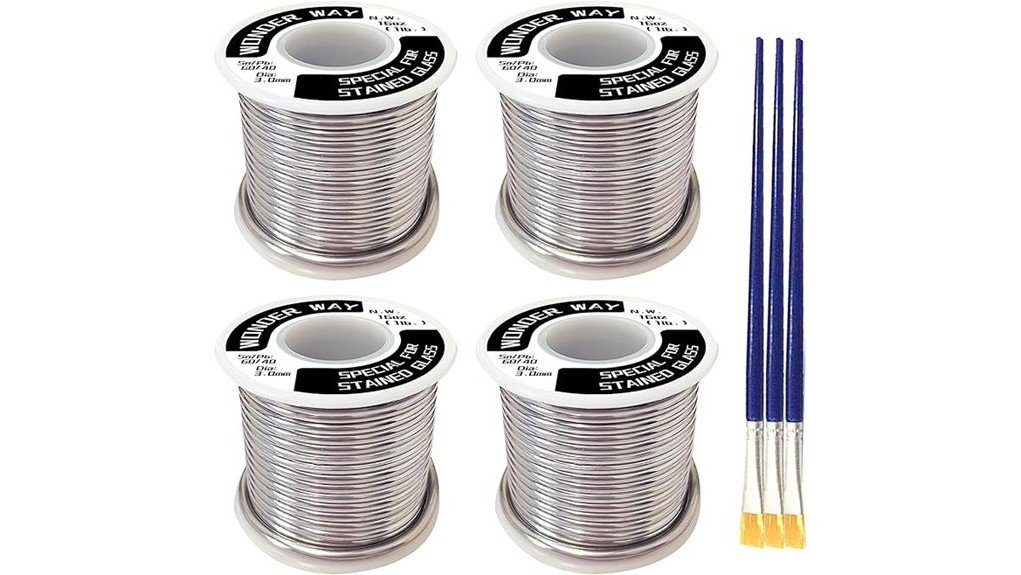
The Wonderway Sn60/Pb40 Solder Wire, composed of 60% tin and 40% lead, melts at a moderate temperature of 183℃. This characteristic minimizes thermal stress, making it particularly suitable for stained glass applications. Known for its excellent flow and clean application, it creates strong, seamless joints. However, user experiences reveal variability in performance consistency. As artisans seek reliable solder options, understanding how Wonderway compares to other alternatives can provide valuable insights.
Key Takeaways
- The Wonderway Sn60/Pb40 Solder Wire features a 60% tin and 40% lead alloy, providing a reliable balance of strength and ductility.
- With a melting point of 183℃, it minimizes thermal stress, reducing the risk of cracks or discoloration in delicate glass.
- Its 3.0mm diameter allows for excellent flow into gaps, ensuring seamless joints in stained glass applications.
- The no flux core design prevents residue buildup, resulting in clean finishes ideal for intricate glasswork.
- User feedback is mixed, with a 3.3 out of 5-star average rating, highlighting both satisfaction with soldering capabilities and concerns about product consistency.
Why Choose Wonderway Sn60/Pb40 Solder Wire?
When considering soldering projects, particularly those involving stained glass or intricate designs like Tiffany lamps, the Wonderway Sn60/Pb40 Solder Wire emerges as a compelling choice due to its specific composition and features.
This solder, with a 60% tin and 40% lead alloy, is ideal for a range of solder applications. Its melting point of 183℃ minimizes thermal stress on delicate glass, reducing the risk of cracks.
Additionally, the absence of a flux core prevents residue buildup, ensuring clean soldering. The 3.0mm diameter wire flows seamlessly into gaps, providing structurally sound joints and enhancing the overall craftsmanship of intricate designs.
Essential Features of Wonderway Sn60/Pb40 Solder Wire
The Wonderway Sn60/Pb40 Solder Wire boasts several features that enhance its functionality for various soldering applications. Comprising 60% tin and 40% lead, this alloy provides a reliable balance of strength and ductility, ensuring robust joints.
Its no flux core design minimizes residue buildup, promoting cleaner application techniques, especially on delicate surfaces. With a melting point of 183℃, it reduces thermal stress, preventing damage to sensitive materials.
The 3.0mm diameter wire flows seamlessly into gaps, making it ideal for intricate projects. Overall, these alloy benefits position the Wonderway Sn60/Pb40 Solder Wire as a versatile choice for artisans and professionals alike.
Using Wonderway Sn60/Pb40 Solder Wire for Stained Glass
Utilizing Wonderway Sn60/Pb40 Solder Wire for stained glass projects offers artisans a reliable solution that combines strength with precision.
This solder wire features a 3.0mm diameter, making it ideal for various stained glass techniques, particularly those requiring fine, seamless joints.
With a melting point of 183℃, it minimizes thermal stress, preventing glass cracks or discoloration during application.
The absence of a flux core guarantees clean solder flow, essential for delicate glass work.
Artisans can confidently use this solder for Tiffany-style copper foil seams, guaranteeing a strong bond that enhances both functionality and aesthetic appeal in their stained glass creations.
User Feedback on Wonderway Solder Wire
User feedback on the Wonderway Sn60/Pb40 Solder Wire reveals a mix of opinions regarding its performance and usability in various applications.
Many customers appreciate its clean soldering capabilities, especially on delicate glass, due to the no flux core design. However, some express concerns about consistency in product performance, citing varying results across different projects.
Customers praise its clean soldering on delicate glass, but note inconsistencies in performance across various projects.
The 3.0mm diameter is often noted for flowing well into gaps, facilitating seamless joints.
With an average rating of 3.3 out of 5 stars, customer experiences highlight both satisfaction and frustration, emphasizing the importance of individual project requirements in evaluating its overall effectiveness.
How Does Wonderway Compare to Other Solder Options?
When comparing the Wonderway Sn60/Pb40 Solder Wire to other soldering options on the market, several key factors emerge that can help users make informed decisions.
- Excellent flow for seamless joints, especially in copper foil applications.
- No flux core prevents residue, ensuring clean finishes.
- Melting point of 183℃ minimizes thermal stress, ideal for delicate materials.
- The alloy composition offers a balance of strength and malleability.
Solder comparisons reveal that while alternative materials exist, none quite match the precision and reliability of the Wonderway Sn60/Pb40, making it a compelling choice for artisans and hobbyists alike.
Frequently Asked Questions
Is Wonderway Solder Wire Safe for Indoor Use?
The solder wire’s toxicity may pose risks indoors without proper ventilation. Users should guarantee adequate airflow and consider safety measures, as lead content can be harmful in enclosed spaces, impacting overall health during soldering activities.
Can This Solder Wire Be Used for Electronics?
While the solder wire excels in stained glass applications, its electronics compatibility is limited due to the lead content. Users should seek alternatives specifically designed for electronic solder applications to guarantee peak performance and safety.
What Tools Are Needed to Use This Solder Wire?
To effectively use this solder wire, essential tools include a soldering iron suitable for the wire gauge, a work surface, and appropriate soldering techniques. A clean workspace enhances precision and promotes successful, liberating craftsmanship in intricate projects.
How Should I Store Unused Solder Wire?
Unused solder wire should be stored in a cool, dry place, ensuring proper sealing in its original packaging or a moisture-proof container. This prevents oxidation, maintaining the wire’s integrity for future use and creative projects.
Is This Solder Wire Compliant With Rohs Regulations?
This solder wire is not compliant with RoHS regulations due to its lead content. The solder wire properties suggest potential environmental impact, emphasizing the importance of choosing materials that minimize harm and promote sustainability in crafting.