You rely on an angle grinder to speed up cutting, grinding and finishing work, so choosing the right one matters. The grinders below cover cordless convenience, corded power, pneumatic performance and heavy-duty 7-inch capacity so you can match a tool to the tasks you do most.
Picking the right grinder saves time, reduces fatigue and helps you get cleaner results while staying safer on the job.
Quick Verdict
If you want one all-around grinder, start with the DEWALT 20V MAX DCG413B for cordless mobility and modern braking features. Choose the DEWALT DWE402 if you want corded power for long shop sessions, the Metabo WP 11-125 if torque and control matter most, or a 7-inch Makita or DEWALT when you need aggressive stock removal or masonry work.
Safety note: Always match the wheel to the grinder’s rated speed, use the correct guard, secure the workpiece, and wear eye, ear and respiratory protection.
Affiliate disclosure: This roundup is reader-supported. When you click through Amazon links, we may earn a commission from qualifying purchases at no extra cost to you.
Top Picks
|
Category |
Product |
Fit Score |
|---|---|---|
|
🏆 Best Overall |
92/100 |
|
|
🎯 Best Corded Power |
89/100 |
|
|
⭐ Best Lightweight |
86/100 |
|
|
🚀 Best Pneumatic |
85/100 |
|
|
📈 Best Torque |
90/100 |
|
|
💼 Best for 7-Inch Work |
88/100 |
|
|
🔧 Best for Tight Spaces |
87/100 |
|
|
🔨 Best for Masonry |
86/100 |
How We Chose These Grinders
You need a grinder that fits your job, so we focused on real-world factors you care about. We weighed power and torque to judge cutting and stock removal speed, looked at RPM and motor type for consistent performance, and checked runtime or continuous-duty characteristics based on power source.
Build quality, thermal management and warranty-related design features were used to assess durability. Ergonomics, weight and handle options determine how comfortable prolonged use will be, while safety features such as kickback brakes, guards and quick-stop functions reduce risk during demanding work.
Finally, we balanced features against price tier, accessories and buyer use case. We removed weak-fit or duplicate listings so the remaining picks are easier to compare.
Before You Buy
|
Check This |
Why It Matters |
|---|---|
|
Wheel size |
4.5-inch grinders are versatile, 5-inch models add reach, and 7-inch grinders remove material faster but feel heavier. |
|
Power source |
Cordless is best for mobility, corded is better for long sessions, and pneumatic makes sense if your shop already runs air tools. |
|
Guard and accessory match |
Use cutting and grinding guards correctly. Never mount a disc that exceeds the grinder’s rated speed. |
|
Fatigue and control |
Weight, handle position, paddle-switch feel and braking features all affect safety during long or awkward cuts. |
You get a compact, brushless cordless grinder that balances power with portability. It’s made for jobs where you need mobility without giving up useful torque, so you can cut, grind and wire-wheel around the site or in tight spots.
The kickback brake and quick-stop feature help you feel more in control when a wheel binds, and the cordless design reduces cord hassle during mobile work. Use it for patio pavers, metal prep, bolt cutting and general shop chores when a cord would get in the way. Carry a spare high-capacity battery if you’ll be using it continuously.
What People Say
Buyers often praise the grinder for feeling durable and manageable for the power class. Safety features and the quick-stop function are common confidence builders, while battery runtime is the main practical limitation to plan around.
General Review Pattern: Mostly positive

Where It Shines
|
Situation |
How It Helps |
|---|---|
|
Jobsite Mobility |
You can work where cords can’t reach and still get strong cutting and grinding performance for fast repairs. |
|
Welding Prep and Metalwork |
The grinder’s torque and safety shutoffs help you remove spatter and smooth seams while reducing the risk of kickback during tight grinding passes. |
|
Tight or Overhead Access |
Its compact head and cordless layout make it easier to reach confined areas and hold steady for shorter overhead cuts. |
Who Should Buy This
Choose this if you already use DEWALT 20V batteries or want a cordless grinder for field repairs, welding prep, quick metal cuts and punch-list work.
Who Should Avoid This
Skip it if most of your work is long, continuous grinding in one shop location. A corded grinder will usually reduce interruptions.
DIY Tips
Choose the right wheel for the job and inspect it before mounting. Use a high-capacity battery if you expect long runs, and keep a charged spare handy. Let the tool cool if it gets hot and clear dust from vents regularly. Secure the workpiece, wear eye and ear protection, and keep the guard positioned correctly.
Key Benefits
- Brushless motor for longer life and less maintenance
- Kickback brake and quick-stop for safer handling
- Compact cordless design for jobsite mobility
- Versatile for metal, masonry and general shop tasks
You get a solid, no-nonsense corded grinder that balances raw power with user-friendly features. With an 11 Amp motor and 11,000 rpm, it is built for metal, masonry and shop work where steady power matters.
The One-Touch guard and quick-change wheel system make swapping accessories simple so you can move from cutting to grinding without fuss. If you need a dependable workhorse for daily heavy-duty tasks or occasional big projects, this is the kind of tool that keeps you moving.
What People Say
Users often praise how powerful and well-built the grinder feels for the price tier, and many point to the dust-ejection design and guard as useful durability features. People also like the tool-less wheel changes and the paddle switch, though some buyers may still want more cord reach or storage for accessories.
General Review Pattern: Mostly positive

Where It Works
|
Situation |
How It Helps |
|---|---|
|
Heavy Cutting |
You can rely on steady power to slice through rebar, bolts and thicker metal with less interruption than a cordless setup. |
|
Surface Prep |
When removing rust or smoothing welds, the dust-management and consistent RPM help you get cleaner, faster results. |
|
Extended Shop Use |
The corded power and robust cooling mean you can run longer sessions without swapping batteries. |
Who Should Buy This
Buy it if you want one tough corded grinder for routine cutting, grinding, weld cleanup and shop jobs.
Who Should Avoid This
Skip it if you work far from outlets or need a lower-profile head for narrow access.
DIY Tips
Pick discs rated for 11,000 rpm and secure the workpiece before you start. Use the One-Touch guard properly and never bypass it. Keep the vents clear and brush out dust periodically to protect the motor, and consider an extension cord with adequate gauge if you need more reach.
Key Benefits
- High continuous power for demanding cutting and grinding
- Dust Ejection System helps extend tool life in dirty environments
- One-Touch 360° guard and quick wheel changes speed workflow
- Sturdy build and included accessories make it jobsite-ready
You’ll appreciate how easy this grinder is to handle without sacrificing everyday performance. It’s light enough for extended one-handed work yet delivers steady RPMs for cutting, stripping paint and general metal prep.
The directed airflow and Service Minder system help prevent dust-related failures so the tool keeps working longer between maintenance sessions. The adjustable guard and large spindle lock make disc changes simple, and the slender grip is useful when you’re up on a ladder or reaching awkward angles.
What People Say
Customers often note that the grinder feels light for its output and that the slim grip makes one-handed tasks easier. People point to the dust-diversion and Service Minder features as reasons the tool is easier to maintain in dirty work.
General Review Pattern: Mostly positive

Where It Works
|
Situation |
How It Helps |
|---|---|
|
Paint Stripping |
You can run abrasive discs for extended passes while the grip helps you stay steady on ladders or raised surfaces. |
|
Weld Cleaning & Metal Prep |
The steady RPM and comfortable handling let you blend welds and remove spatter with less fatigue and consistent results. |
|
Jobsite Use |
Directed airflow and the Service Minder reduce dust-related failures so the grinder stays serviceable through frequent use. |
|
Cutting Small Stock |
It handles rods, small rebar and light metal reliably when you use the right cutting disc and follow safe cutting practices. |
Who Should Buy This
Choose it if you want a lighter corded grinder for home projects, light fabrication, paint stripping and lower-fatigue handling.
Who Should Avoid This
Skip it if you need the strongest torque for thick stock or repeated masonry cutting.
DIY Tips
Use discs rated for 11,000 rpm and install the correct guard for the disc type. Keep vents clear and follow Service Minder prompts for brush service. Secure workpieces, wear eye, ear and dust protection, and use an appropriately gauged extension cord if you need extra reach.
Key Benefits
- Lightweight, ergonomic grip for reduced fatigue
- Consistent 11,000 rpm performance for common tasks
- Directed airflow and Service Minder for longer life
- Burst-protection guard and large spindle lock for safety and quick changes
You get a shop-oriented air grinder that trades battery convenience for high sustained speed and low weight. It’s built to work in cramped spots where a corded tool or large handheld grinder would be awkward, and the 12,000 rpm top end makes quick work of blending, deburring and polishing.
Because it’s pneumatic, it depends on a suitable compressor and clean air supply. If you do a lot of welding prep or repetitive metal finishing, this one feels purpose-built for that steady shop rhythm.
What People Say
Customers tend to highlight the tool’s solid build quality and compact form. Many buyers who already use pneumatic tools appreciate the steady speed and serviceable design, while compressor requirements are the main point to check before buying.
General Review Pattern: Mostly positive

Where It Works
|
Situation |
How It Helps |
|---|---|
|
Welding Prep |
You can blend welds and remove slag quickly thanks to the high rpm and steady air-powered delivery. |
|
Detail Polishing |
The compact head lets you reach tight contours while maintaining consistent speed for smooth finishes. |
|
Deburring & Rust Removal |
Variable speeds and sustained airflow let you scrub surfaces without overheating the tool as quickly as some electric options. |
Who Should Buy This
Buy it if your shop already has a compressor setup and you prefer pneumatic tools for repetitive weld prep, deburring and metal finishing.
Who Should Avoid This
Skip it if you need plug-and-play convenience or do most of your work away from a compressor.
DIY Tips
Match accessories to the 5-inch size and follow manufacturer airflow and pressure specs. Secure the workpiece, wear eye, ear and respiratory protection, and use proper lubricant or coolant if the task calls for it.
Keep inline air filters and lubricators maintained to extend tool life.
Key Benefits
- High 12,000 rpm speed for fast material removal
- Lightweight, compact body that reduces operator fatigue
- Pneumatic design resists overheating during long runs
- M10 spindle and robust construction for shop reliability
You get a premium, built-for-work grinder that focuses on durability and control. The LongLife motor gives strong torque for faster material removal while advanced cooling and winding protection help it live longer under heavy use.
The tool-free, burst-proof guard and rotatable housing make accessory changes and different grip positions easy, and the soft-start plus safety slip clutch reduce surprises when a wheel binds. Use it for metal fabrication, weld finishing, masonry cutting when needed, or any shop job where smooth, steady power matters.
What People Say
Customers commonly highlight how solid and well-built the grinder feels, often noting the extra torque and smooth operation compared with cheaper options. Reviewers appreciate the ergonomic grip and soft-start for controlled work, and many mention the convenient tool-free guard and easy access for blade changes.
Some buyers may still want to check packaging and service support, but the main appeal is durable, repairable performance.
General Review Pattern: Mostly positive

Where It Works
|
Situation |
How It Helps |
|---|---|
|
Weld Finishing |
The steady torque and grip design make blending welds and removing spatter less tiring and more consistent. |
|
Heavy Stock Removal |
Higher torque and thermal protection let you remove material quickly without bogging the motor. |
|
One-Handed Tasks |
Soft-start and ergonomic contours reduce kick and vibration, helping you keep control in awkward positions. |
|
Workshop Duty |
Robust construction and replaceable parts mean the tool stays serviceable under frequent, long shifts. |
Who Should Buy This
Choose it if you want a higher-control grinder for fabrication, weld finishing and frequent shop use.
Who Should Avoid This
Skip it if price matters more than torque, soft-start and long-term durability features.
DIY Tips
Match accessories to the 11,000 rpm rating and use the correct guard. Let the tool cool under heavy loads and keep rear air intake clear. Use the rotatable housing to find a comfortable switch position, tighten accessories per spec, and keep a maintenance schedule for brushes and bearings.
Key Benefits
- Made in Germany build quality for long service life
- LongLife motor delivers more torque and better overload protection
- Tool-free burst-proof guard and rotatable housing for quick setup
- S-Automatic slip clutch and soft-start improve safety and control
You’re looking at a full-size workhorse built for big grinding and serious stock removal. The heavy-duty 15 Amp motor and 7-inch wheel make quick work of large surfaces, countertop prep and concrete or masonry tasks where smaller grinders slow you down.
The rugged construction and rotating gear housing help protect the internals and let you position the switch for comfort, while the included wheel guard and side handle options give you control on long runs. If your projects call for fast, flat material removal or heavy-duty cutting, this Makita is designed to keep pace.
What People Say
Users repeatedly point to raw power and durability as standout traits, saying the grinder excels when you need serious removal or long runs of grinding. Many appreciate the robust build and protective design that keeps dust out of the motor, while the weight makes it best suited to bench or flat work rather than extended overhead use.
General Review Pattern: Mostly positive

Where It Works
|
Situation |
How It Helps |
|---|---|
|
Large Surface Grinding |
The 7-inch wheel and 15 Amp motor remove material quickly, so you finish big flat areas much faster than with a 4.5-inch grinder. |
|
Concrete & Masonry Prep |
Lower rpm but high torque makes it steady for cup wheels and heavy-duty masonry discs without bogging under load. |
|
Tabletop or Bench Work |
Weight helps keep the tool stable for long, even passes when dressing or flattening surfaces, reducing effort on the operator. |
|
Occasional Overhead Tasks |
You can still use it overhead for short periods, but the heft means you’ll move slower and may prefer a smaller grinder for prolonged overhead jobs. |
Who Should Buy This
Choose it for large flat surfaces, heavy-duty stock removal, masonry preparation and shop work where the tool can rest into the cut.
Who Should Avoid This
Skip it if you mainly do light metal prep, ladder work or overhead cutting. A smaller grinder will be easier to control.
DIY Tips
Use discs rated for the grinder’s rpm and follow guard recommendations. Secure workpieces, position the side handle for comfort, and let the tool do the work rather than forcing it.
Keep vents and the labyrinth seal clear of debris, swap brushes per the maintenance schedule, and wear eye, ear and dust protection.
Key Benefits
- Powerful 15 Amp motor for fast material removal
- Large 7-inch wheel handles big jobs and deep cuts
- Labyrinth and anti-dust features extend tool life
- Rotating housing and multiple handle positions improve control
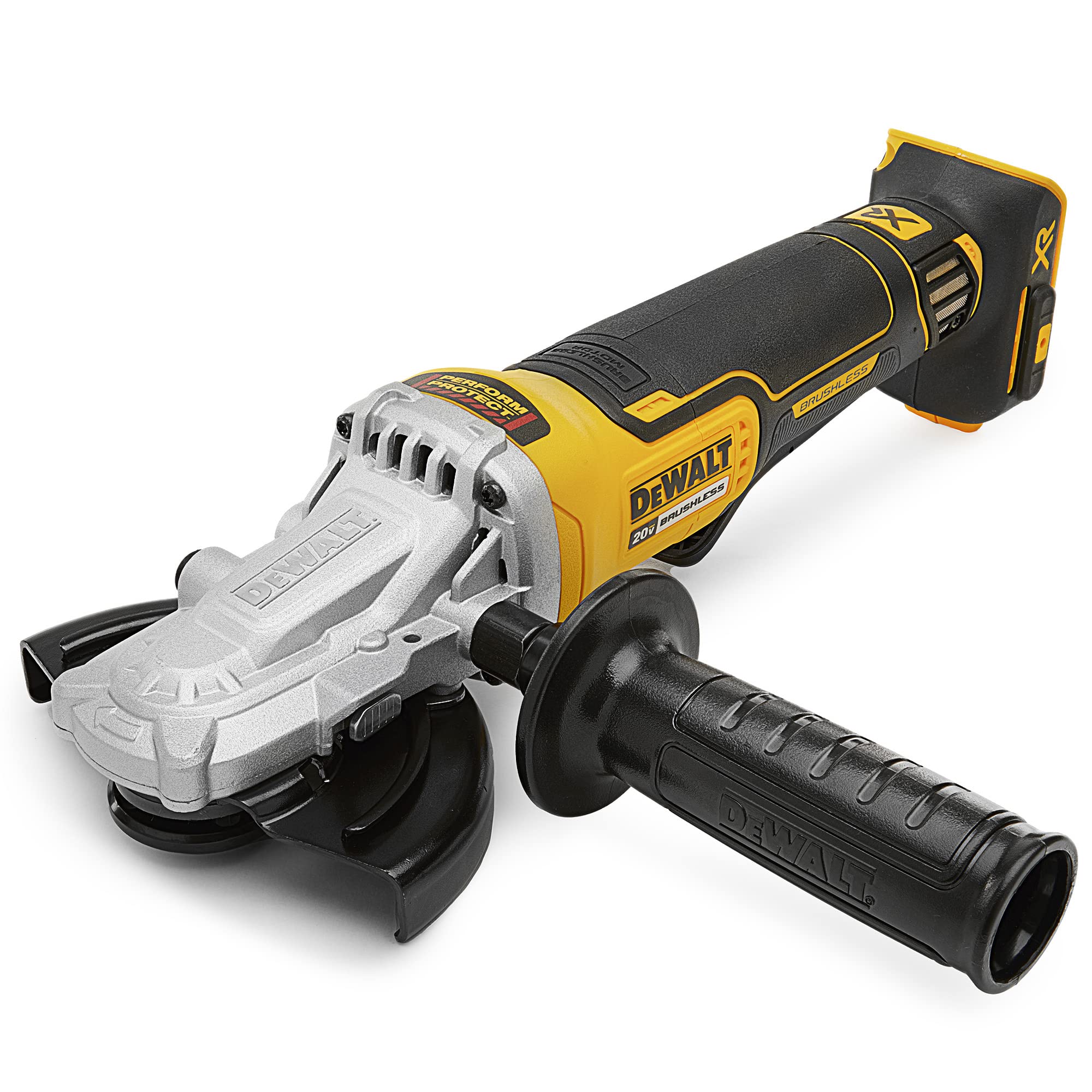
You get a compact brushless grinder that’s built for getting into tight spots without sacrificing control. The low-profile head and slim body let you reach narrow gaps and work overhead more comfortably, while the Kickback Brake and quick-stop function help reduce risks if a wheel binds.
It’s a good fit for on-site metalwork, weld prep, pipe cutting and any job where mobility matters. Keep a spare high-capacity battery on hand if you plan long sessions so you don’t lose momentum.
What People Say
Users commonly praise the grinder’s reach and maneuverability, saying the slim head makes cuts in tight areas easier. People also point to the safety features and brushless motor as confidence boosters, while battery runtime and paddle-switch feel are practical considerations.
General Review Pattern: Mostly positive

Where It Works
|
Situation |
How It Helps |
|---|---|
|
Tight Access Cuts |
The low-profile head and slim grip let you angle the tool into narrow gaps that bulkier grinders can’t reach. |
|
Field Repairs |
Cordless mobility lets you work where cords aren’t practical, making quick fixes on-site faster and less cumbersome. |
|
Weld Preparation |
Consistent torque and safety shutdowns help you remove spatter and blend seams while reducing the risk of kickback. |
|
Detail Grinding |
Lightweight handling and controlled stopping make fine shaping and cleanup easier without losing control. |
Who Should Buy This
Choose this if your priority is cordless access in pipes, frames, corners and other areas where a bulky head gets in the way.
Who Should Avoid This
Skip it if you need a primary grinder for long bench sessions or large-area grinding.
DIY Tips
Use discs rated for the grinder’s rpm and check accessory thread compatibility before you buy extras. Keep a charged spare battery for extended work, inspect guards before each use, and clear vents of debris to help cooling. Always secure the workpiece and wear eye, ear and respiratory protection.
Key Benefits
- Brushless motor for longer life and lower maintenance
- Low-profile head for access in tight spaces
- Kickback Brake and quick-stop wheel for added safety
- Lightweight design reduces fatigue during extended use
You get a heavyweight grinder made for big jobs where steady power matters. The 13 Amp motor and 7-inch wheel let you remove material fast on flagstone, concrete and thick metal while the dust-ejection system helps keep the motor running clean.
The rear-handle layout and adjustable guard make long passes more comfortable and safer, and the spindle lock speeds up wheel swaps so you spend less time changing accessories. If your work involves large surface prep, masonry cutting or heavy-duty metalwork, this is a tool that keeps the pace.
What People Say
Buyers commonly praise the grinder for its raw power and ability to handle heavy-duty tasks without bogging down. Many users highlight the durability and dust-management features as reasons it holds up on tough jobs, and the rear-handle control is often called out for making long cuts easier.
General Review Pattern: Mostly positive

Where It Works
|
Situation |
How It Helps |
|---|---|
|
Large Surface Grinding |
The 7-inch wheel and strong motor remove material quickly so you finish expansive flat areas in far less time. |
|
Masonry Cutting |
Lower rpm with high torque suits cup wheels and diamond blades for consistent cuts through stone and concrete. |
|
Extended Shop Use |
Dust ejection and sealed bearings reduce wear so the grinder stays reliable during long, repeated sessions. |
|
Heavy Metal Work |
Robust power keeps the tool from stalling when cutting thick stock or tackling weld removal. |
Who Should Buy This
Buy it for concrete, stone, heavy metal cutting and larger jobs where a rear-handle grinder gives you better control.
Who Should Avoid This
Skip it if you need a lightweight one-handed grinder for light fabrication or tight access.
DIY Tips
Use discs rated for the grinder’s RPM and pick the correct guard for the accessory. Secure the workpiece and position the side or rear handle for comfort.
Keep vents and dust seals clear, swap brushes per maintenance guidance, and wear eye, ear and dust protection.
Key Benefits
- High continuous power for demanding cutting and grinding
- Dust Ejection System increases long-term reliability
- Rear-handle design improves control on big passes
- Adjustable keyless guard and spindle lock for fast setup
FAQ
Cordless or Corded: Which Should You Get?
It depends on how and where you work. If you need mobility for field repairs, pipe work or tight spots, a brushless cordless grinder gives great access and lower maintenance; carry a spare high-capacity battery for longer runs. If you do long, continuous cutting, heavy masonry or shop work, a corded or pneumatic grinder avoids battery swaps and keeps steady power.
Think about runtime needs, portability and whether you can easily recharge or swap batteries on the job.
How Do I Keep Safe While Using a Grinder?
Always use the correct guard and accessory for the task and wear eye, ear and respiratory protection. Secure the workpiece, match the disc to the grinder’s RPM rating and let the disc do the work rather than forcing it.
Features like a Kickback Brake and quick-stop wheel can reduce risk, but treat them as added protection, not a substitute for safe technique. Check guards, threads and the locking mechanism before each use and clear vents to avoid overheating or premature wear.
Which Size and Accessories Should You Choose?
Pick the wheel size to match your jobs: 4.5-inch grinders are versatile for cutting and everyday metalwork, 5-inch or pneumatic tools are helpful for shop detail work, and 7-inch models shine at heavy stock removal and masonry. Use a Type 1 or Type 41 guard for many cutting wheels and a Type 27 guard for depressed-center grinding wheels, then verify spindle and thread compatibility before buying accessories.
Consider a dust shroud for concrete work, keep a small toolkit for quick wheel changes, and follow the manufacturer’s guidance on discs and maintenance.
Is a Pneumatic Grinder Worth It?
A pneumatic grinder is worth considering if you already have a compressor, air filtration and shop air lines. It can be light, cool-running and consistent during repetitive metal finishing. For mobile work or casual DIY use, a cordless or corded electric grinder is usually easier to set up.
When Should You Choose a 7-Inch Grinder?
Choose a 7-inch grinder for large flat surfaces, masonry prep, thicker stock and aggressive material removal. Choose a 4.5-inch or 5-inch grinder for tight access, lower fatigue and lighter fabrication work.
How to Choose Between Similar Picks
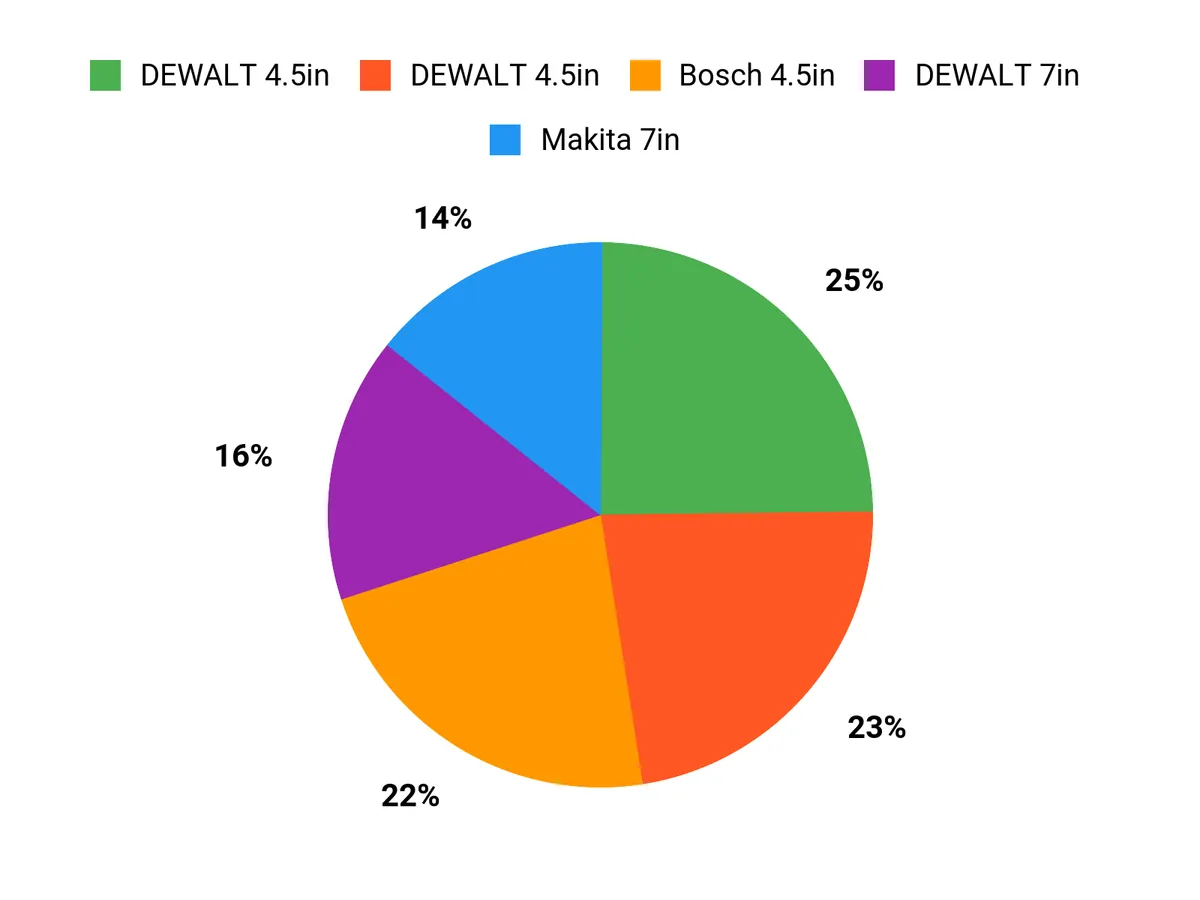
When choosing between the DEWALT 4.5in and the Bosch 4.5in, you usually weigh raw power and durability against ergonomics and lightweight handling. If you need steady torque and dust-management for heavier cutting, you’ll gravitate toward the DEWALT, while the Bosch appeals when reduced fatigue, a slimmer grip and easy maintenance matter more.
Wrapping Up
Now that you’ve seen the options, match the grinder to how you work. Choose cordless brushless models for mobility and modern safety features, corded machines when you need continuous high power, pneumatic grinders for shop environments where air tools dominate, and 7-inch grinders when aggressive stock removal or deep cuts are the priority.
If you want one versatile shop tool, pick a model with strong torque, good dust management and user-friendly guards. If portability and tight-space access matter, favor low-profile cordless options.
The right grinder will make your projects faster, cleaner and less tiring, so pick the one that aligns with the tasks you do most and the environments you work in.
| Product Name | Image | Best For | Power Source | Maximum Rotational Speed | Item Weight |
|---|---|---|---|---|---|
| DEWALT 20V MAX* Angle Grinder Tool (DCG413B) |
 |
Cordless all-around work | Battery Powered | 9000 RPM | Varies by battery setup |
| DEWALT Angle Grinder, 11 Amp (DWE402) |
 |
Corded cutting and grinding | Corded Electric | 11000 RPM | 6.2 Pounds |
| Bosch GWS8-45 4-1/2 In. Angle Grinder |
 |
Lightweight corded handling | Corded Electric | 11000 RPM | Check listing |
| Chicago Pneumatic CP854E 5-Inch Air Angle Grinder |
 |
Pneumatic metal finishing | Pneumatic-Powered | 12000 RPM | 3.75 Pounds |
| Metabo 4-1/2-5-Inch Angle Grinder (WP 11-125) |
 |
Torque and control | Corded Electric | 11000 RPM | 6 Pounds |
| Makita GA7021 7″ Angle Grinder |
 |
Large surface grinding | Corded Electric | 6600 RPM | 15.4 Pounds |
| DEWALT 20V MAX* XR Angle Grinder with Brake (DCG413FB) |
 |
Tight access and field repairs | Battery Powered | 9000 RPM | 4.6 Pounds |
| DEWALT Angle Grinder, 7-Inch (DW840) |
 |
Masonry and heavy cutting | Corded Electric | 8000 RPM | 12.05 Pounds |
This Roundup is reader-supported. When you click through links we may earn a referral commission on qualifying purchases.