As an Amazon Associate I earn from qualifying purchases. Buying through these links costs you nothing extra.
A portable plasma cutter for garage metalwork should help you cut metal faster, cleaner, and with less grinder work. This guide focuses on compact, dual-voltage plasma cutters and a few multiprocess machines that include plasma cutting, so you can match power, portability, and price to the work you actually do.
For most garage users, the best choice comes down to three things: the thickness of metal you cut most often, whether you have 120V or 240V power available, and whether you want a dedicated cutter or a combo machine that can also weld. Choose the right tool and weekend repairs, brackets, panels, and small fabrication jobs become much easier.
Quick Picks: Portable Plasma Cutter for Garage Work
|
Category |
Product |
|---|---|
|
Best Budget Pick |
|
|
Dedicated 50A Cutter |
|
|
Best For Beginners |
|
|
Most Versatile |
|
|
Best Pilot Arc |
|
|
Best Welding Combo |
|
|
Best Ultralight |
If you want the strongest dedicated plasma-cutter pick from this list, start with the PrimeWeld CUT50DP because its pilot arc is useful on painted, rusty, or imperfect metal. If you want the lowest-cost entry point, compare the Reboot RBC6000D. If you want one box for cutting and welding, look at the PrimeWeld CT-520D instead.
How We Compared These Portable Plasma Cutters
These picks are compared on power input, portability, rated cut thickness and features such as pilot arc and included regulators. Specs and features come from the Amazon listings; none of these machines were hands-on tested for this guide.
Duty cycle, accessories and warranty terms vary by seller, so confirm the current Amazon listing before you buy.

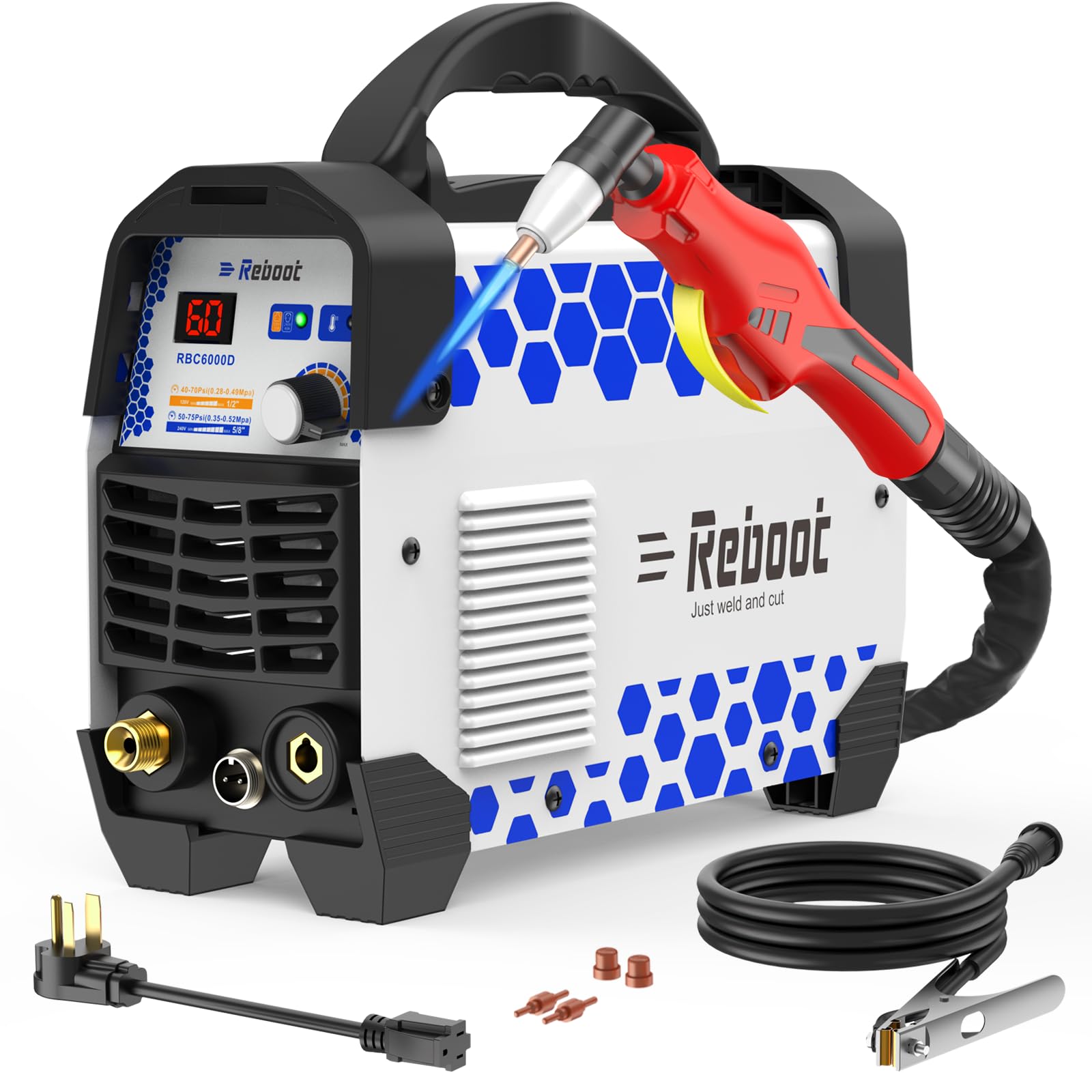
You get a surprisingly capable, compact cutter that’s geared toward weekend projects and small jobs. It runs on 120V or 240V, includes a torch and consumables, and ships with an air regulator already mounted so setup is faster.
If you plan to cut sheet metal, trim blades, or make decorative panels, this unit gives you a practical balance of power and portability without taking over your workspace. Keep in mind it performs best on a higher-amp circuit, so plan your power before you start cutting.
Best For
Buyers who want a budget-friendly portable plasma cutter for garage repairs, light fabrication, sheet metal, brackets, and occasional thicker cuts on proper power.
Who Should Skip It
Skip it if you need a heavy industrial duty cycle, verified professional support, or a non-touch pilot arc for frequent rusty or painted metal cutting.
Durability
Build details come from the listing. Check it for duty cycle and warranty terms, and budget for spare consumables such as tips and electrodes if you cut often.
How It Helps
This cutter helps you finish stalled projects by replacing slow grinding and torch work with faster, cleaner cuts. It’s useful for trimming, fabricating brackets, cutting panels, and quick repairs, as long as you supply steady power and dry compressed air.
Pros
- Dual-voltage flexibility for 120V or 240V operation
- Compact, portable design that’s easy to move and store
- Pre-installed air regulator reduces setup fuss
- Capable of clean cuts through common project thicknesses
- Includes torch, tips and basic accessories to get you started
Cons
- Best results depend on a suitable circuit and dry air supply
- Touch arc is less convenient than pilot arc on dirty or painted metal
- Frequent users should budget for spare consumables

This is a portable cutter suited to buyers who want a simple setup. It works on both 110V and 220V so you can use it in a home garage or a properly wired shop, and the upgraded connections and accessories make setup quicker.
If you want a weekend warrior machine that can handle frequent home-shop use and comes with strong brand support, this one fits that role well.
Best For
Home-shop users who want a dedicated 50A plasma cutter with better build quality and stronger accessory support than many entry-level models.
Who Should Skip It
Skip it if pilot arc is a must-have feature, or if you need a machine mainly for welding rather than cutting.
Durability
Build details come from the listing. Check it for duty cycle and warranty terms, and budget for spare consumables such as tips and electrodes if you cut often.
How It Helps
This cutter helps you move faster than grinders and oxy-fuel on light to medium tasks, letting you cut pipe, plates and trim parts cleanly so projects progress without constant rework. It’s especially useful when you need consistent results across many cuts and want less fiddling with hookups.
Pros
- Dual-voltage flexibility for garage or shop use
- Solid accessory set and reliable quick-connect plumbing
- Clean, fast cuts on common material thicknesses
Cons
- Not the best pick if you specifically need pilot arc starts

You’ll find this little cutter handy when you need a space-saving tool that still tackles common shop jobs. It runs on 110V or 220V, includes the essentials to get started, and the digital readout makes dialing in settings straightforward.
Use it for sheet metal, trimming parts, or small fabrication tasks. It is especially useful if you already have an air compressor and want a no-frills cutter for occasional heavier cuts.
Best For
Beginners and hobbyists who want a compact plasma cutter with a digital display and enough included accessories to simplify the first setup.
Who Should Skip It
Skip it if you need a heavily reviewed pro-grade machine, a known long-term service history, or pilot arc performance for dirty metal.
Durability
Build details come from the listing. Check it for duty cycle and warranty terms, and budget for spare consumables such as tips and electrodes if you cut often.
How It Helps
This unit solves the slow, messy work of grinding and oxy-fuel for small to medium tasks, letting you cut brackets, panels and pipe faster and with cleaner edges. It’s a practical step up if you want reliable cuts without a big, heavy machine.
Pros
- Portable, compact footprint for small shops
- Dual-voltage flexibility for home or shop circuits
- Includes torch, clamp, hose and regulator to simplify setup
- Digital display and post flow help consistent cut quality
- Good entry-level performance for hobbyists
Cons
- Lower review count than more established models in this list
- Requires a steady, dry air source for consistent cuts
- Best performance is likely on 220V rather than a standard 110V outlet

You get a multitool that tries to replace a small stack of gear, combining plasma cutting with TIG and stick welding in one box. It’s bulkier than single-purpose cutters but still portable enough to move around a garage or jobsite.
For daily tasks like trimming brackets, cutting sheet and plate, or occasional TIG work, it is versatile and convenient. Choose it only if you genuinely want both cutting and welding in one machine; buyers who only need plasma cutting may be better served by a dedicated cutter.
Best For
DIY fabricators who want one portable machine for plasma cutting, TIG welding, and stick welding instead of buying separate tools.
Who Should Skip It
Skip it if you want the simplest dedicated plasma cutter, the lightest tool, or the strongest reliability profile with fewer moving parts and functions.
Durability
Build details come from the listing. Check it for duty cycle and warranty terms, and budget for spare consumables such as tips and electrodes if you cut often.
How It Helps
This unit helps you avoid switching machines when a job calls for cutting then welding, so projects move faster and you carry less gear. It’s especially handy for small fabrication, repairs, and CNC table use, just be mindful of electrical and air requirements to get the best performance.
Pros
- Multiprocess versatility: plasma, TIG, stick, pulse and spot
- Dual-voltage operation fits garage and shop circuits
- Good power range for hobby and light-professional use
- Portable for a multipurpose unit and useful on CNC tables
- Includes basic accessories to get started quickly
Cons
- Bulkier and heavier than dedicated portable plasma cutters
- More features create more setup complexity for beginners

You get a pilot-arc machine that makes starting and cutting through painted or rusty material far less frustrating. It runs on 110V or 220V so you can use it in a garage or a properly wired shop, and the longer power and ground leads give you room to work without moving the unit constantly.
Expect clean, consistent cuts for common shop thicknesses when paired with a good air supply. Before your first cut, tighten connections, confirm circuit capacity, and match the settings to the metal thickness.
Best For
Garage users who cut rusty, painted, expanded, or imperfect metal and want the convenience of a non-touch pilot arc.
Who Should Skip It
Skip it if you only cut clean sheet metal occasionally and want the lowest-cost entry-level cutter.
Durability
Build details come from the listing. Check it for duty cycle and warranty terms, and budget for spare consumables such as tips and electrodes if you cut often.
How It Helps
This cutter speeds up trimming, shaping and repetitive cuts and reduces the need for grinding or torch work, making projects move along cleaner and faster. It’s particularly handy when you need reliable starts on imperfect surfaces.
Pros
- Pilot-arc starts handle dirty or painted metal
- Dual-voltage flexibility for garage or shop outlets
- Long power and ground leads improve reach
- Reliable cut quality for typical workshop tasks
Cons
- Costs more than some basic non-pilot-arc cutters
- Still requires a good compressor and dry air setup
- Check your plug, breaker, and lead setup before buying
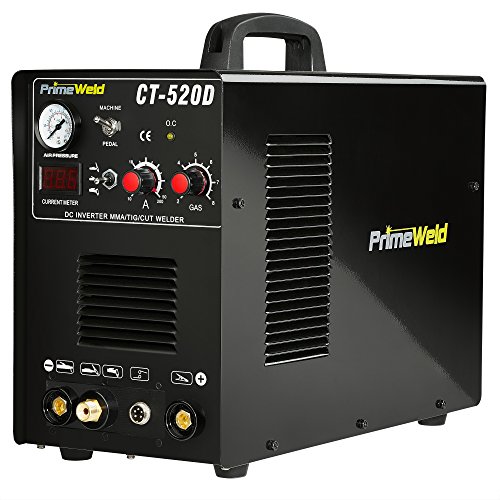
You get a compact multiprocess machine that replaces several pieces of gear and keeps your workspace less cluttered. It switches between plasma cutting, TIG and stick welding so you can trim parts, tack assemblies and finish welds without running back and forth between machines.
The unit’s portability and front-facing controls make it easy to move around a garage or mount on a cart, and the included leads and pressure gauge simplify initial setup. It is a strong fit for hobbyists and light-duty pro use as long as you pay attention to lead length, compressor needs, and electrical hookups.
Best For
Buyers who need plasma cutting plus TIG and stick welding in one portable machine for repairs, trailer work, and small fabrication.
Who Should Skip It
Skip it if you only need a dedicated plasma cutter. A single-purpose machine will usually be simpler to set up, lighter to move, and easier for a beginner to learn.
Durability
Build details come from the listing. Check it for duty cycle and warranty terms, and budget for spare consumables such as tips and electrodes if you cut often.
How It Helps
This unit helps you move projects along by eliminating gear swaps and reducing setup time, so cutting, tacking and finishing happen in a single workflow. It’s especially handy for small fabrications, trailer repairs and mobile jobs where carrying one versatile machine matters.
Pros
- Multiprocess flexibility: plasma, TIG and stick in one unit
- Portable form factor for garage or jobsite movement
- Useful for both cutting and welding without swapping machines
- Front controls and PSI gauge make adjustments straightforward
Cons
- Heavier than most dedicated compact plasma cutters
- Lead length may require planning in larger work areas
- Overkill if you do not need welding functions

You get a very small, travel-friendly cutter that still covers common shop tasks. The LED display and physical air gauge make it easier to dial in settings, and the lightweight frame means you can move it between the garage and a jobsite without wrestling a heavy box.
It’s geared toward hobbyists and light fabrication, so expect quick setup and decent cut quality for panels, brackets and small plate work when paired with a suitable air supply. Because the listing does not show a visible star rating or review count for this model, confirm current buyer feedback before relying on it as your top pick.
Best For
Buyers who place portability first and want a very compact plasma cutter for lighter garage, farm, or mobile repair tasks.
Who Should Skip It
Skip it if you want a product with a clearly displayed rating history in this article, a longer buyer-feedback record, or a heavier-duty build.
Durability
Build details come from the listing. Check it for duty cycle and warranty terms, and budget for spare consumables such as tips and electrodes if you cut often.
How It Helps
This cutter helps you replace slow grinding and torch work for small fabrication and repair jobs, letting you cut cleaner edges and move projects along faster. It’s particularly useful when you need a portable option that still handles plate and sheet work.
Pros
- Very light, compact footprint for portability
- LED display and physical gauge simplify adjustments
- IGBT tech for efficient performance
- Designed to handle common workshop cut sizes
- Includes basic accessories for quick setup
Cons
- No visible rating or review count is shown on the listing
- Lightweight construction is better for hobby use than heavy shop cycles
- Consumable life and quality control should be checked before committing
Buying Guide: How to Choose a Portable Plasma Cutter
Match the Cutter to Your Metal Thickness
Do not choose by amperage alone. Start with the material you cut most often, then check the machine’s clean-cut rating, severance rating, and recommended input power. A cutter that works on thin sheet metal may feel slow or messy on thicker plate if the circuit, air pressure, or duty cycle is not enough.
Decide Between Dedicated and Multiprocess Machines
A dedicated plasma cutter is usually simpler, lighter, and easier to troubleshoot. A multiprocess machine makes sense if you often cut and weld in the same project, but it adds weight, setup steps, and more parts to manage.
Check Air Supply Before You Buy
Every cutter here needs compressed air. Match your compressor’s CFM and pressure output to the cutter’s requirements, and use dry, clean air to reduce spitting, rough edges, and premature consumable wear.
Look for Pilot Arc if You Cut Rough Metal
Pilot arc is worth considering if you regularly cut painted, rusty, expanded, or uneven metal. It can make starts easier and reduce frustration compared with basic touch-start machines.
Related Plasma Cutter Guides
Also see our portable plasma cutters for DIY projects, the plasma cutters with a built-in compressor roundup, how a pilot arc plasma cutter works and the PrimeWeld plasma cutter comparison.
FAQ
What Power Do I Need?
You should confirm the outlet and breaker you plan to use before buying. Many portable cutters run on 120V for light work but deliver their best performance on a 240V circuit with a dedicated 30–40 amp breaker for thicker cuts, so check your circuit and plug type and consult an electrician if you’re unsure.
Do I Need An Air Compressor?
Yes, a plasma cutter requires compressed air to operate; the machine’s built-in regulator helps, but you still need a steady supply of clean, dry air at the right pressure and sufficient CFM to match the cutter’s duty. Use an appropriately sized tank or compressor and add a filter/dryer if moisture or oil is a risk.
How Do I Get The Best Cuts And Maintain The Unit?
Work at a steady speed, use the right amperage for the material, and make multiple passes on thicker steel rather than forcing a single fast cut. Keep consumables clean and replace worn tips, tighten hose fittings before use, allow cooling breaks to respect duty cycle, and always wear proper PPE and ensure good ventilation when cutting.
Which Portable Plasma Cutter Fits Your Garage
When you’re choosing between the Reboot RBC6000D, PrimeWeld CUT50D and HVC50 HZXVOGEN, you’ll prioritize dual-voltage flexibility and raw cutting power for thicker metal or a lightweight, portable footprint if you move the cutter between sites. You’ll also factor in build quality, the accessories that come in the kit like regulators and torches, and seller support—choose based on whether you want the best value for portability, stronger accessories and pilot-arc convenience, or a simple hobby-friendly setup.
Final Verdict
You’ve seen compact plasma cutters that promise the moon and ones that deliver consistent results. This list helps you match the machine to the task, whether you want an ultralight unit for quick repairs, a pilot arc model for cleaner starts, or a multiprocess box that covers cutting and welding.
For most buyers, start with the PrimeWeld CUT50DP if pilot arc matters, the PrimeWeld CUT50D if you want a dedicated cutter with strong build quality, or the Reboot RBC6000D if budget is the deciding factor. Pick based on the material thickness you expect to cut and the power you can supply, and you’ll finish projects faster with cleaner edges and fewer tool headaches.
| Product Name | Image | Specifications | Primary Cutting Capability | Weight | Best For | CTA |
|---|---|---|---|---|---|---|
| Reboot 60A Plasma Cutter Dual Voltage 120V/240V – RBC6000D |
 |
|
1/2″ Clean Cut | 15.18 pounds | Budget garage cutting | Check price on Amazon |
| PrimeWeld 50A Air Inverter Plasma Cutter – CUT50D |
 |
|
1/2″ Clean Cut | N/A | Dedicated cutting | Check price on Amazon |
| H HZXVOGEN Plasma Cutter 50A – HVC50 |
 |
|
1/3″ Clean Cut | 15.6 pounds | Beginners | Check price on Amazon |
| TOOLIOM CUT/HF TIG/Pulse TIG/Stick 5 in 1 – TL-CT520D PRO |
 |
|
50A Plasma Cutting | 31.9 pounds | Cutting plus welding | Check price on Amazon |
| PrimeWeld 50A Air Inverter Plasma Cutter – CUT50DP |
 |
|
1/2″ Clean Cut | 25 pounds | Pilot arc starts | Check price on Amazon |
| PrimeWeld 3-in-1 Plasma Cutter, TIG Welder and Stick Welder – CT-520D |
 |
|
1/2″ Clean Cut | 35.6 pounds | Best welding combo | Check price on Amazon |
| CUT50 Plasma Cutter Machine – PLASMARGON |
 |
|
1/2″ Clean Cut | 9.9 pounds | Ultralight portability | Check price on Amazon |