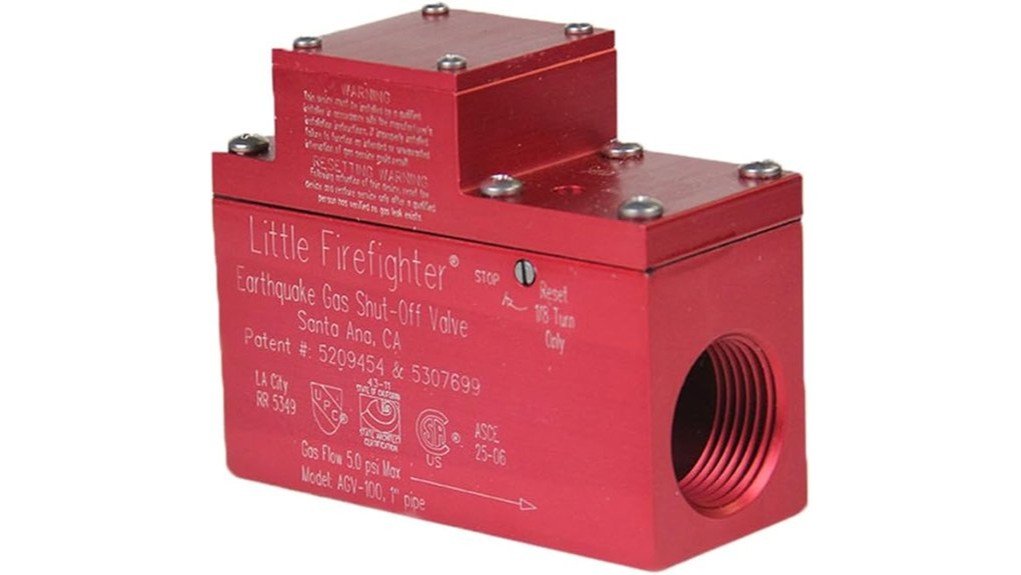
The AGV-100 earthquake gas valve is a 1-inch horizontal automatic gas shut-off valve. The AGV-100 model number matches the Little Firefighter AGV series, which closes the gas line when it senses strong ground shaking. It is aimed at homes and small shops with a 1-inch gas line, and it has to be installed to code by a qualified person. This is a home gas-safety product rather than a welding tool, so read it as a buying guide for a garage or workshop that runs natural gas or propane.
This review is based on the Amazon listing, retailer pages and an independent code listing for the AGV series. We have not tested the valve, and the figures on the Amazon page should be matched against the seller’s product page.
AGV-100 earthquake gas valve at a glance
| Item | Per the listing |
|---|---|
| Size and connection | 1 in, NPT threaded ends (retailer listings) |
| Orientation | Horizontal pipe runs; vertical runs use the separate VAGV series |
| Maximum pressure | 5 psi (ICC-ES listing and retailer pages) |
| Trigger | Retailer page quotes shut-off on a 5.4 magnitude event |
| Standard | ASCE 25 earthquake-actuated gas shut-off valve (ICC-ES listing) |
| Reset | Manual reset after the event |
| Body material, weight, size | Figures differ between sellers; check the listing you are buying from |
Specs can change between listing updates, and the Amazon item may differ from retailer pages, so confirm the exact model, size and pressure rating before you buy.
What it does and who it suits
An earthquake gas valve sits on the gas line after the meter. A seismic sensor trips a shut-off mechanism when shaking reaches its threshold, which cuts off gas to the building and reduces the risk of a gas fire. After the event, a person resets the valve by hand once it is safe.
It suits owners of homes, garages and small workshops in earthquake-prone areas that have natural gas or propane service on a 1-inch pipe, for example for a heater, water heater or furnace. It does not replace a gas leak detector, a proper regulator or a licensed installation.
How to check it fits your gas line
- Confirm the pipe size. The AGV-100 is a 1-inch model, so a different line needs a different size.
- Check the pressure. The listing for the series gives 5 psi maximum for this model, so a higher-pressure system needs a different valve.
- Check orientation. This is a horizontal valve, and a vertical pipe needs the vertical version.
- Check the local code. Many areas specify the standard, the location and who may install it.
- Confirm the gas type and that the valve is rated for your fuel.
Installation and reset safety
- Have a licensed plumber or gas fitter install it, and get any permit your area requires.
- Install it level and in the orientation the instructions give, because the sensor depends on it.
- Leak-test every joint after installation with approved methods.
- Never reset the valve until you are sure there is no gas leak. If you smell gas, leave the building and call the gas company.
- Check and test it on the maintenance schedule in the manual.
Always follow the maker’s instructions and local regulations, which take priority over any general guidance here.
Pros and limitations
Pros
- Automatic shut-off helps reduce gas fire risk after strong shaking
- Compact valve meant for a standard 1-inch line
- Manual reset keeps control with the person on site
- Series is covered by an independent code listing for ASCE 25
Limitations
- Not a welding product and does not detect leaks
- Must be installed to code, which usually means paying for a professional
- Specs differ between sellers, so the Amazon item needs checking
- Only for 1-inch horizontal lines at the listed pressure
Related guides: Boltigen 3/4 Inch Gas Valve Review: Ratings and Safe Use | Robertshaw Gas Valve Review: Standing Pilot Specs
Frequently Asked Questions
Can a homeowner install the AGV-100?
Many areas require a licensed gas fitter or plumber and a permit for this valve, and a mistake can cause a leak. Check local rules and have it installed by a qualified person.
How long does the valve last?
The maker and your local code set the service life and test schedule. Check the manual for inspection intervals instead of relying on a general estimate.
Does it work with every fuel gas?
Not automatically. Check the gas types and pressure the model is rated for. Retailer pages list it for natural gas and propane at up to 5 psi, but confirm this for the unit you buy.
Is it suitable for an outdoor or unheated shed?
The independent listing for the series gives an ambient range of -20 F to 150 F. Check the manual for where the valve may be mounted, and avoid exposed locations that fall outside that range.
Where do I find replacement parts or support?
Ask the seller and the manufacturer. The listing does not say whether parts are sold separately.
Conclusion
The AGV-100 earthquake gas valve is a sensible safety addition for a 1-inch gas line in a seismic area, as long as it is the right size, pressure and orientation and is installed by a qualified person. Match the exact model to the seller’s specifications before you order.