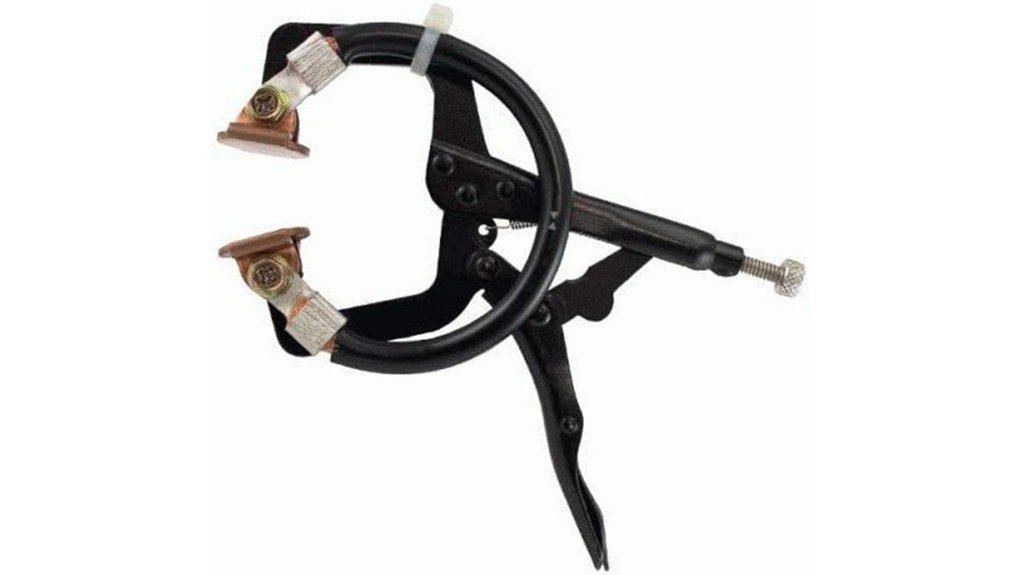
The Dent Fix DF-SP360 shunting pliers are 6-inch C-jaw pliers with swivel copper pads that carry welding current around a non-conductive coating, so you can make squeeze-type resistance spot welds on e-coated steel without stripping every surface. They are a body-shop accessory for use with a squeeze-type spot welder, not a welder themselves. Here is what they do, how to use them, and where they stop being useful.
Dent Fix DF-SP360 shunting pliers at a glance
| Spec | Detail |
|---|---|
| Tool type | Shunting pliers for squeeze-type resistance spot welding (STRSW) |
| Size | 6 inches (per retailer listing) |
| Contact parts | Swivel copper pads on C-jaws, with thick copper cable (4-gauge per one retailer) |
| Rated current | 145 amps per one retailer listing; check the maker’s sheet |
| Purpose | Shunt current past E-coat or adhesive on mating surfaces |
| Made | Designed in the U.S., made in Taiwan (per Dent Fix, via trade press) |
| Weight and handle material | Not stated on the sources checked |
How shunting pliers help with e-coated panels
A squeeze-type spot welder needs current to pass through both panels. When the mating flanges are coated with e-coat or adhesive, that coating blocks the current. The usual fix is to grind the coating off, which also removes factory corrosion protection.
Shunting pliers take another route. You clamp the pliers at the weld site and make the spot weld on the adjacent spot. Current runs through the copper pads and cable, which bypasses the coating so the weld can form while less of the factory coating has to be removed from the mating surfaces. Trade press describing the tool notes that iCAR guidance calls for shunting current on the first weld when mating flanges carry a non-conductive coating, and for a dedicated shunting clamp when weld bonding.
How to use them
- Check the vehicle maker’s repair procedure first. Spot weld locations, count and method are set by the OEM.
- Remove coating only from the outside surfaces where the welder tips contact the panel.
- Fit the panels together and clamp the pliers at the weld site with the copper pads on clean metal.
- Make the spot weld on the adjacent spot with your squeeze-type spot welder.
- Test on scrap of the same thickness and coating before welding on the vehicle.
- Inspect the weld, then move the clamp and repeat.
Wear welding gloves and eye protection, and clear flammables and sound deadener from the area. For setup basics, see how to use a spot welder and why your spot welder isn’t making good welds.
Limits to know
- They suit steel panels. They are not a way to spot weld aluminum, which needs a different process and equipment.
- They need a squeeze-type resistance spot welder and do not work with MIG, TIG or stick equipment.
- Maximum material thickness and approved use depend on your welder and the vehicle maker, and the sources checked do not state a thickness limit for the pliers.
- The jaws and pads wear. Keep the copper clean and replace damaged parts as the maker allows; replacement-part availability was not confirmed.
- Not hands-on tested for this article. The details come from the retailer listing and trade press.
Who should buy them
Buy them if you do collision repair or panel replacement with a squeeze-type spot welder and want to preserve e-coat on mating flanges. Skip them if you only use MIG plug welds, if you work mostly on aluminum, or if your repair procedure forbids shunting. Related reading: F98ES spot welder dent puller review.
Frequently Asked Questions
What are shunting pliers used for?
They carry spot welding current around e-coat or adhesive on the mating surfaces, so a squeeze-type spot weld can be made on coated steel while less factory coating is removed.
Can I use the DF-SP360 on aluminum?
Treat it as a steel-panel tool. The sources checked describe it for coated steel, and aluminum spot welding needs different equipment and procedures.
Do these pliers work with a MIG welder?
No. They are meant for squeeze-type resistance spot welding, not MIG, TIG or stick welding.
What size are the DF-SP360 pliers?
One retailer lists them as 6 inches. Weight was not stated on the sources checked.
Is there a warranty?
The sources checked do not state one. Check the seller listing and Dent Fix before you buy.
Bottom line
The DF-SP360 is a narrow but useful body-shop accessory: it lets a squeeze-type spot welder work through e-coat and adhesive with less coating removal. If you do not own that kind of spot welder, it is not the tool to start with.