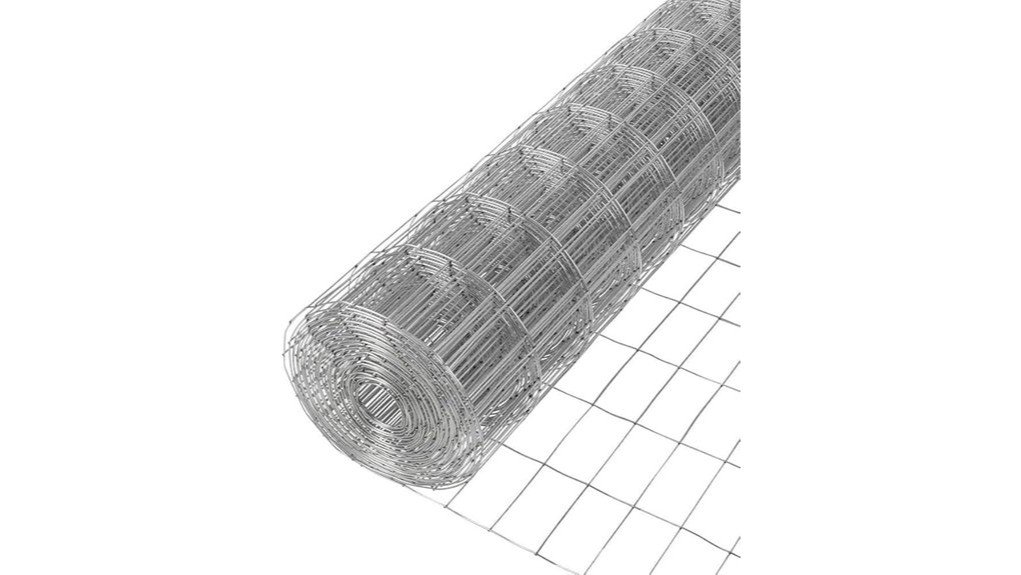
Fencer Wire 14 gauge welded wire mesh is a galvanized steel mesh with 1 inch by 2 inch openings, sold as a 3 ft by 50 ft roll. It suits garden fencing, small pet pens, crafts and light-duty enclosures. This is a fencing material rather than a welding product, so it is included here for shop and yard projects. It is not a livestock or heavy security fence, and you should check the current listing for weight and coating details before ordering.
Fencer Wire 14 Gauge at a Glance
| Item | Detail |
|---|---|
| Material | Galvanized steel welded wire mesh, per the listing |
| Wire gauge | 14 gauge |
| Mesh opening | 1 in x 2 in |
| Roll size | 3 ft high x 50 ft long |
| Coating | Zinc galvanized. Retailer pages for this mesh describe the wire as galvanized before welding |
| Roll weight | About 42 lb per the Amazon listing, not independently confirmed |
| Warranty | Not stated in the listing text we reviewed |
Good Uses for 14 Gauge Welded Wire
- Garden beds and plant guards.
- Small pet or poultry runs where a 1 x 2 inch opening is small enough for the animal.
- Shop and garage storage racks, shelf liners and tool panels.
- Crafts, trellises and decorative panels.
It is not designed for livestock, large dogs that push or climb, or security fencing. Heavier gauge or woven field fence is a better choice for those jobs.
How to Install Welded Wire Mesh
- Measure the run and add a little for overlap at corners and gates.
- Set T-posts or wooden posts at regular spacing so the mesh stays taut.
- Unroll the mesh against the posts. Because the roll wants to curl back, weigh or clamp the loose end first.
- Fasten the mesh to the posts with clips, staples or tie wire, and keep it tight to prevent sagging.
- Cut with bolt cutters or heavy wire cutters and bend cut ends back so no sharp points face walkways or animals.
Check local rules for fence height and materials before you build.
Working With Galvanized Mesh Safely
- Wear leather gloves and safety glasses when handling and cutting. Cut wire ends are sharp and can spring back.
- Do not weld or torch-cut galvanized mesh without ventilation. Zinc fume can make you ill, so remove the coating or work outdoors with the wind at your back.
- Touch up cut ends with cold galvanizing paint, because cutting exposes bare steel that can rust.
Pros and Limitations
Pros
- Rigid welded grid is easier to keep flat than woven chicken wire.
- Galvanized coating gives rust protection for outdoor use.
- A 50 ft roll covers a lot of ground for garden and small-animal projects.
Limitations
- Roll curl makes it awkward to unroll alone.
- Cut ends are sharp and need folding or capping.
- Light gauge compared with fencing meant for livestock.
- Zinc coating can wear at welds and cut ends over time.
Related reading: galvanized hardware cloth review · Tongmo fence review · chicken wire fencing review
Frequently Asked Questions
What size are the openings in Fencer Wire 14 gauge mesh?
The openings are 1 inch by 2 inch, on a 3 ft by 50 ft roll, according to the product listing.
Is Fencer Wire 14 gauge mesh galvanized?
Yes, it is listed as galvanized steel. Retailer pages describe the wire as galvanized before welding. Cut ends and welds can still rust over time, so touch up exposed steel.
What tools do I need to install it?
You need bolt cutters or heavy wire cutters, gloves, safety glasses, fence clips, staples or tie wire, and posts to hold the mesh. A post driver helps if you use T-posts.
Can I paint welded wire mesh?
Yes. Clean off oil and dirt first and use a primer made for galvanized metal, because ordinary paint often does not stick to fresh zinc.
Can I weld this mesh?
You can, but galvanized coating gives off harmful zinc fume when heated. Remove the coating where you will weld, ventilate well and wear suitable respiratory protection.
Verdict
This 14 gauge mesh is a practical choice for garden, craft and small-animal projects that need a rigid galvanized grid. Check the roll size, mesh opening and current price on the listing, and pick a heavier fence for livestock or security.