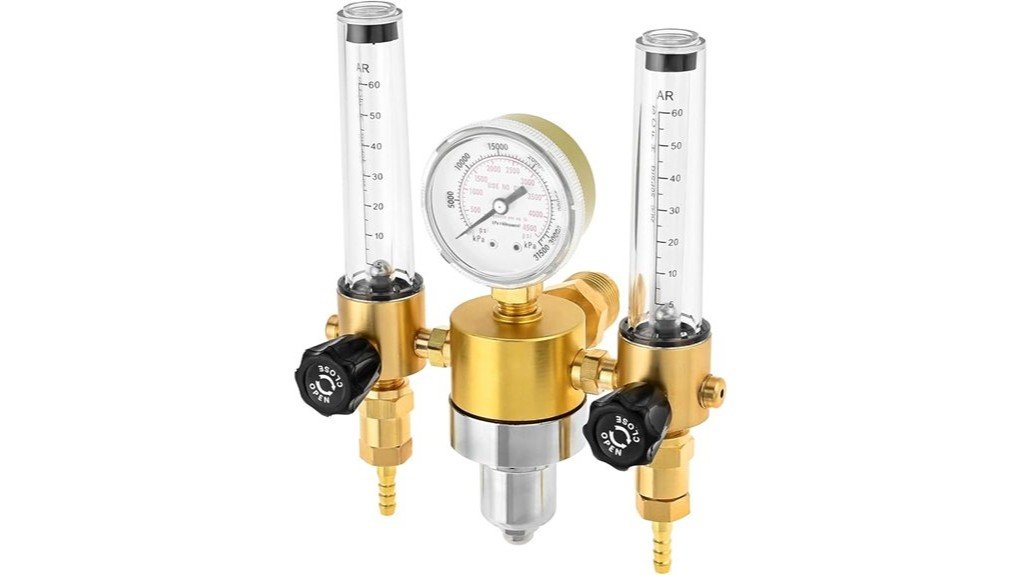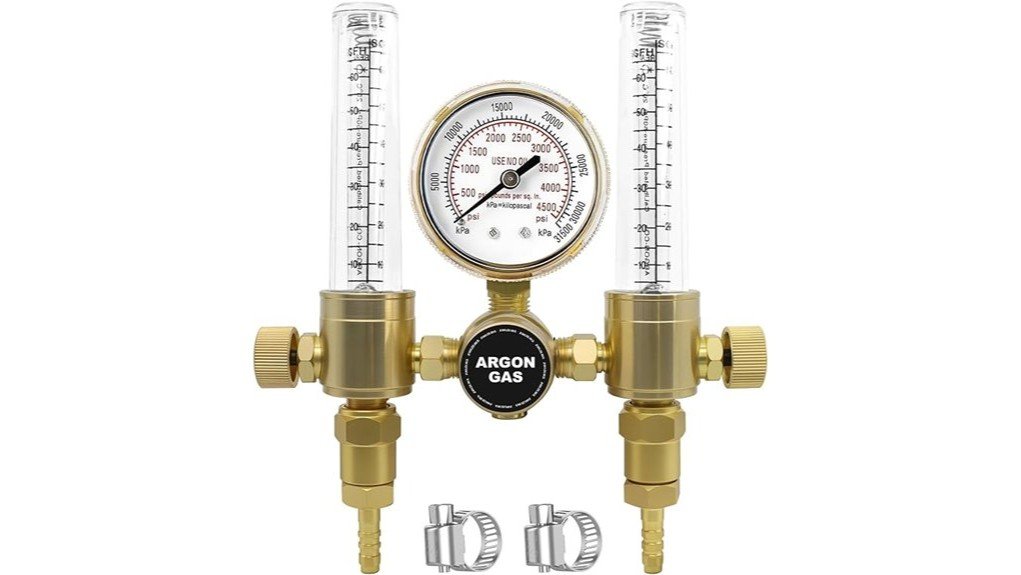
The 60 SCFH argon regulator reviewed here is a flowmeter-style shielding gas regulator for TIG and MIG welding, listed with a CGA 580 inlet, a 5/8 inch-18 RH outlet fitting and a 0 to 4000 psi cylinder gauge. The listing spells the name “60 SFCH”; the 60 most likely means a flow range up to 60 SCFH. It fits argon and argon-mix cylinders. If you plan to run pure CO2, check the cylinder connection first, because CO2 cylinders normally use a different inlet.
60 SCFH Argon Regulator: Specs From the Listing
These details come from the Amazon listing. Confirm them there before you buy.
| Spec | Per the listing |
|---|---|
| Gas | Argon and CO2 shielding gas (listing wording) |
| Inlet | CGA 580 |
| Outlet fitting | 5/8 inch-18 RH |
| Cylinder gauge | 0 to 4000 psi |
| Flow range | Check the listing; the “60” in the name likely means up to 60 SCFH |
| Outputs | Described as dual output; confirm the outlet count on the listing |
Fit Check Before You Buy
- Cylinder inlet: CGA 580 matches argon and argon-mix cylinders. Pure CO2 usually needs CGA 320, so you would need a matching regulator or an adapter. See the CGA-320 to CGA-580 adapter review.
- Hose thread: check that your gas hose nut matches the 5/8 inch-18 outlet.
- Flow range: MIG and TIG need modest flow, so a 60 SCFH range is enough for most garage work. Check your welder manual for the setting it wants.
- Do not use it for oxygen or fuel gas. Those need regulators made for them.
How to Set Up and Leak Test the Regulator
- Secure the cylinder upright with a chain or strap.
- Stand to the side of the valve and crack it open briefly to blow out dust, then close it.
- Thread the regulator inlet onto the cylinder and snug it with a wrench. Do not over-tighten.
- Connect the gas hose to the outlet fitting.
- Back the adjusting knob out, open the cylinder valve slowly, and read the cylinder gauge.
- Brush soapy water on the connections. Bubbles mean a leak, so close the valve and fix it before you weld.
- Set the flow your welder or filler wire calls for while gas is running.
Limits and Safety
- Always close the cylinder valve when you finish, and relieve the pressure in the line.
- Never use a regulator with a cracked gauge, damaged threads or gas creeping up with the valve closed.
- Argon displaces air. Weld with ventilation, especially in small rooms.
- Keep cylinders away from heat and sparks.
Related Regulator Guides
Compare it with the CGA580 argon CO2 regulators review and the Meanlin argon regulator and flow meter. To learn the basics, read how a welding gas regulator works and how to size a shielding gas regulator for MIG welding.
Frequently Asked Questions
What does the 60 in the name mean?
Most likely a flow range of up to 60 SCFH, although the listing spells it SFCH. Confirm the flow range on the listing page before you buy.
Will it fit a pure CO2 cylinder?
Not directly. CGA 580 is the standard inlet for argon and argon-mix cylinders, while pure CO2 cylinders normally use CGA 320. If you plan to use CO2, check the listing and see our adapter review.
Can I use it for TIG and MIG?
Yes, it is meant for shielding gas on TIG and MIG setups using argon or argon blends. It is not for oxygen or acetylene, which need their own regulators.
How do I check for leaks?
Open the cylinder valve slowly, then brush soapy water on every fitting. Bubbles mean a leak. Close the valve, relieve pressure and re-tighten the fitting before you weld.
How long does a regulator last?
There is no fixed lifespan. Replace it if the gauge drifts, the pressure creeps up with the valve closed, or you see damage or leaks.