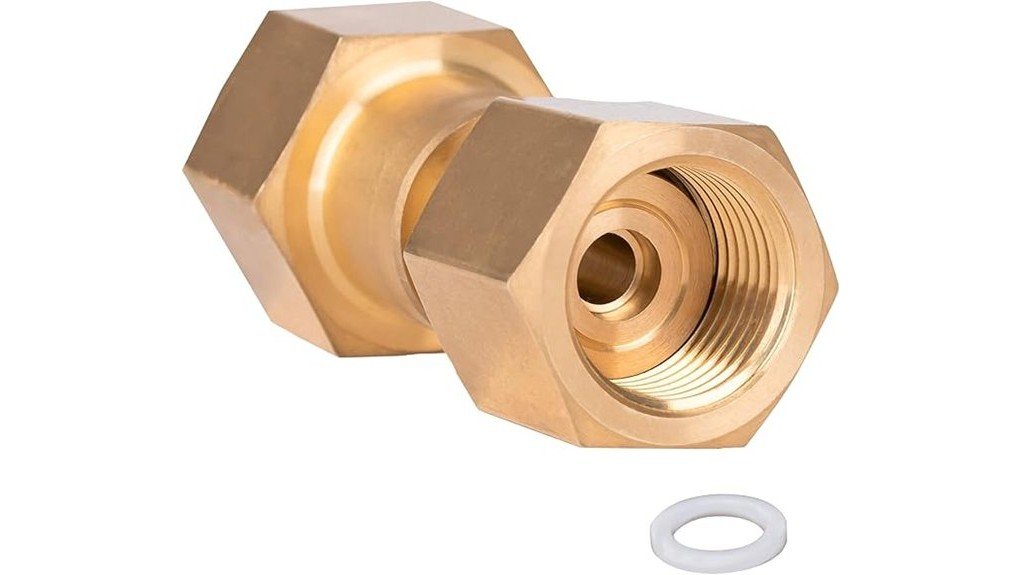
The GRYVOZE CGA-320 to CGA-580 adapter connects a CO2 cylinder (CGA-320 valve) to a regulator or flowmeter with a CGA-580 inlet. It only makes sense if that regulator is rated for CO2 service and for the cylinder pressure, because CGA fittings are different for different gases on purpose.
The listing describes a forged brass body, precision-machined threads and an included nylon washer (gasket) to help seal the connection. Check the pressure rating with the seller before use, because it is not clearly stated in the accessible listing view.
Key Takeaways
- Worth considering if you need to connect a CGA-320 CO2 tank to a CGA-580 regulator/flowmeter without swapping equipment, and your regulator maker confirms it is suitable for CO2.
- Biggest pro: forged brass body plus a nylon sealing washer for a more reliable seal.
- Biggest con: you must confirm your regulator inlet is truly CGA-580 and that your setup matches the intended use.
- Best for setups where the regulator or flowmeter is confirmed by its maker as suitable for CO2 service.
- Install is straightforward, but take your time, clean the threads, seat the washer properly, and leak-check after assembly.
Best For / Not For
Best for
- Welders who already own a CGA-580 regulator/flowmeter and want to run a CO2 (CGA-320) cylinder.
- MIG setups where the regulator or flowmeter is confirmed suitable for CO2 and the adapter pressure rating is acceptable.
- DIY users who want a solid adapter instead of a pile of mismatched fittings.
Not for
- Anyone unsure of their cylinder valve type or regulator inlet. If you can’t confirm CGA-320 and CGA-580, don’t guess.
- Use cases that require a clearly published max-pressure rating when the listing does not specify one.
- Situations where the cylinder, regulator, or local shop rules prohibit adapters.
Features and Benefits of the GRYVOZE CGA-320 to CGA-580 Adapter
The CGA-320 to CGA-580 adapter is designed to connect a CO2 cylinder to compatible regulators, flow meters, or welding equipment that uses a CGA-580 inlet. The listing identifies the model/part number as CGA580-320FM and it ships as a single adapter (with a nylon washer included for sealing).
The CGA-320 to CGA-580 adapter is made to bridge a CO2 cylinder to a CGA-580 regulator/flowmeter so you can reuse a CGA-580 regulator if it is rated for CO2.
The listing describes a forged brass body for corrosion resistance, and the precision-machined threads are meant to seat smoothly and hold securely. The included nylon washer is there for a reason, it helps seal the connection and reduce CO2 seepage when everything is tightened correctly.
Installation tips: wipe the threads clean, place the nylon washer where it belongs, and tighten firmly using the hex profile. After you pressurize the system, do a quick leak check before you start welding.
Pros and Cons
- Pro: Forged brass construction per the listing.
- Pro: Includes a nylon washer to help improve sealing and reduce leaks.
- Pro: Compact way to adapt CGA-320 to CGA-580 without buying a second regulator.
- Con: Max pressure rating is not clearly listed in the accessible Amazon view, confirm before use in high-pressure applications.
- Con: Fit depends on correct CGA identification, mixing standards can create dangerous leaks.
Compatibility and Applications
The CGA-320 to CGA-580 adapter is one way to connect a CO2 cylinder (CGA-320) to equipment that expects a CGA-580 inlet connection. A common example is using a CO2 cylinder with an argon/nitrogen-style regulator or flowmeter.
It’s most relevant for CO2 or mixed-gas welding setups, especially MIG-style use cases. In some shops, it can also be helpful for other workflows that rely on a CGA-580 regulator body, as long as the gas and regulator are appropriate for the job.
Quick fit check: this should thread on smoothly by hand at first. If it binds early, stop and re-check the connection standard rather than forcing it.
Material Quality and Safety Considerations
Material quality matters with gas fittings because small issues become leaks fast. This adapter is listed as forged brass; check the listing for any further material or pressure details. The included nylon washer helps improve sealing when properly seated and tightened.
If you want a quick reference on how CGA connection numbers work (and why the right washer or sealing method matters), the Linde cylinder connections spec sheet is a helpful overview. For general compressed-gas handling rules and safety expectations in workplaces, OSHA’s 29 CFR 1910.101 compressed gases standard is a solid starting point.
CGA connections are standardized by gas service so that the wrong regulator cannot be fitted to a cylinder by accident. Before using any adapter, confirm that your regulator or flowmeter is rated for CO2 and for the cylinder pressure, and that the adapter pressure rating is published. This page does not verify either.
Basic safety reminders:
- Confirm the CGA standards on both sides before you connect anything.
- Use the nylon washer if your setup calls for it and replace it if it looks damaged.
- Tighten on the hex, then leak-check after pressurizing.
- Stop if you smell or hear gas and fix the seal before you weld.
Related guides: Brass CGA-320 to CGA-580 Adapter Review | CGA-320 to CGA-580 Adapter Review | CO2 Welding Gas Safety and Storage Guidelines | How a Welding Gas Regulator Works
Frequently Asked Questions
How Do I Install the CGA-320 to CGA-580 Adapter?
Make sure your cylinder valve is CGA-320 and your regulator inlet is CGA-580. Clean the threads, seat the nylon washer, then tighten the adapter using the hex surfaces. Pressurize slowly and do a leak check before welding.
What Tools Are Required for Installation?
Usually a wrench that fits the hex on the adapter is enough. Go snug, not reckless, and always leak-check after you bring the system up to pressure.
Can This Adapter Be Used for Other Gases?
This adapter is meant to solve a connection mismatch between CGA-320 and CGA-580. Gas compatibility depends on your cylinder, regulator, and the gas you’re using. If you’re not 100% sure your regulator and process are rated and intended for that gas, don’t use an adapter as a workaround.
What Is the Maximum Pressure Rating for This Adapter?
The accessible Amazon listing view does not clearly state a maximum pressure rating. For safety, confirm the rating with the seller/manufacturer or documentation before using it in any high-pressure scenario.
Is There a Warranty on the CGA-320 to CGA-580 Adapter?
Warranty details can vary by seller and listing. Check the warranty/support area on the Amazon page and keep your order info in case you need support.
Conclusion
If you need to connect a CGA-320 CO2 cylinder to a CGA-580 regulator or flowmeter, the GRYVOZE CGA-320 to CGA-580 adapter is a simple option. The listing describes forged brass, precision threads and a nylon washer. Confirm that your regulator is rated for CO2, check the adapter pressure rating with the seller, install it carefully, and leak-check before welding.