Disclosure: As an Amazon Associate, we earn from qualifying purchases. If you click a link on this page and make a purchase, we may receive a small commission at no extra cost to you.
A gas connection mismatch can stop a MIG welding setup before you even strike an arc. The AOOHYEO CGA-320 to CGA-580 adapter is made for welders who need to connect a CO2 cylinder with a CGA-320 outlet to a regulator or flowmeter that uses a CGA-580 connection. This review helps you decide if this compact brass adapter is the right fix for your shop, or if you should replace the regulator instead. Its strength is simple compatibility, but its main limitation is that safe use depends on exact thread matching, good seals, and a proper leak test.
Quick Verdict
Rating: Recommended with caveats (8/10)
Best For: MIG welders who already know they need a CGA-320 cylinder to CGA-580 regulator adapter
Bottom Line: The brass body, compact size, and included sealing gaskets make it a practical adapter for many home and small-shop welding setups. It is not a universal gas fitting, so you need to confirm both CGA connections before using it.
Key Specifications
| Specification | Detail |
|---|---|
| Brand | AOOHYEO |
| Product Type | Compressed gas cylinder to regulator adapter |
| Model / Identifier | #806-style CGA adapter |
| Connection Direction | CGA-320 CO2 cylinder to CGA-580 regulator or flowmeter |
| Material | Brass / copper-colored metal construction |
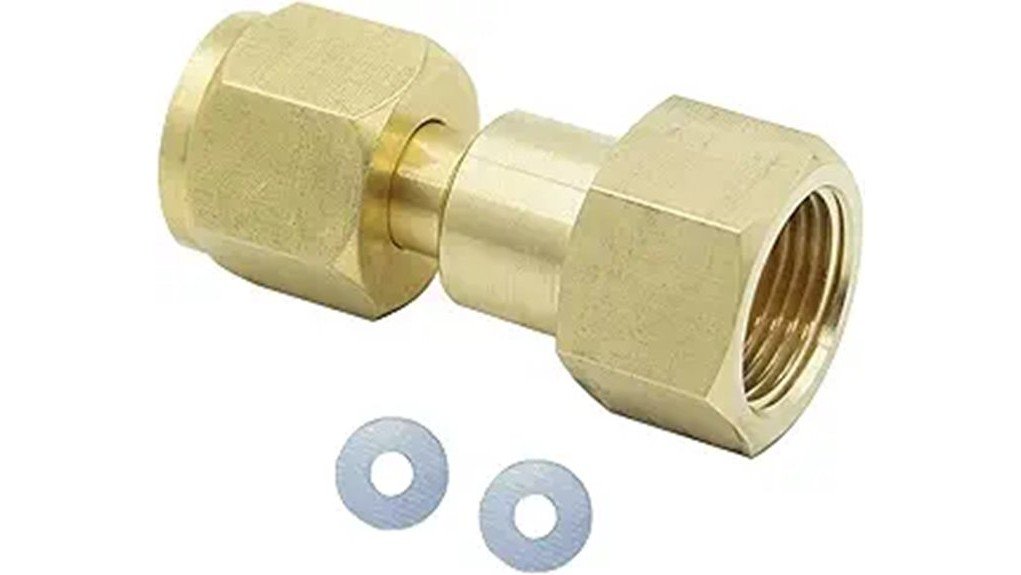
| Length | Approx. 2 inches, based on article-stated detail |
| Included Accessories | 2 spare sealing gaskets |
| Best Use | CO2 MIG welding setups with a confirmed CGA-320 to CGA-580 mismatch |
| Compatibility Note | Check cylinder valve, regulator inlet, gas type, and thread direction before installation |
| Safety Note | Leak-test every connection after installation and follow your gas supplier’s guidance |
What Is the AOOHYEO CGA-320 to CGA-580 Adapter?
The AOOHYEO CGA-320 to CGA-580 adapter is a short metal fitting that helps bridge two different compressed gas connection standards. In common welding use, CGA-320 is associated with carbon dioxide cylinders, while CGA-580 is commonly used on argon, nitrogen, helium, and many mixed-gas regulator connections.
This adapter is mainly for welders who have a CO2 bottle but a regulator or flowmeter with a CGA-580 inlet. Instead of replacing the entire regulator right away, you can use the adapter to correct that specific connection mismatch.
It does not improve weld quality by itself. Its job is to create the correct mechanical connection so your regulator can control shielding gas flow as intended.
Who Should Buy It?
Best For
- MIG welders using a CO2 cylinder with a regulator that has a CGA-580 inlet
- Home garage users who want a simple fitting before replacing a full regulator assembly
- Small-shop welders who understand their cylinder valve, regulator inlet, and gas type
Skip If
- You cannot confirm that your cylinder is CGA-320 and your regulator is CGA-580
- You need a certified industrial setup that must follow a workplace gas-safety policy
- Your gas supplier recommends a dedicated regulator instead of an adapter
Fit and Compatibility
Fit is the most important buying factor with this adapter. It is intended for a CGA-320 cylinder side and a CGA-580 regulator or flowmeter side, which means it solves one specific mismatch only.
You should confirm the markings on your cylinder valve and regulator before ordering. Thread standards are not interchangeable, and a fitting that feels close is not the same as a correct, safe match.
Before You Buy: Do not buy this adapter because the parts “look similar.” Confirm CGA-320 on the CO2 cylinder side and CGA-580 on the regulator side before use.
Materials and Build Quality
The adapter uses a brass or copper-colored metal body, which is a common choice for gas fittings because it handles threaded contact well and resists corrosion better than many low-grade metals. The compact body also keeps the setup shorter than a hose-style conversion.
The short length matters because it reduces leverage on the regulator inlet. That can help limit strain if the regulator gets bumped during setup or storage.
The included spare sealing gaskets are useful because soft seals can wear, compress, or get damaged during repeated installation. You should inspect the gasket before each installation and replace it when it looks flattened, cut, or brittle.
Installation and Setup
Installation is simple in theory: connect the adapter to the cylinder valve, connect the regulator to the adapter, then check for leaks. In practice, you need patience because gas fittings depend on clean threads, correct gasket placement, and controlled tightening.
Start with the cylinder valve fully closed. Inspect the adapter threads, check the gasket, and make sure the regulator is backed off before pressurizing the system. After tightening the connection with the correct wrench, open the cylinder slowly and watch the regulator gauges.
Pro Tip: Use a gas leak detection solution or soapy water on the joints after installation. Bubbles mean you should close the cylinder, vent safely, and fix the connection before welding.
Compatibility and Safety Notes
This adapter should only be used when the gas, cylinder valve, and regulator connection all match the intended setup. It is not a universal adapter for oxygen, fuel gas, high-pressure specialty gases, or unknown cylinders.
Never force a fitting. If the threads do not engage smoothly by hand at the start, stop and recheck the connection type. Cross-threading can damage the adapter, the regulator, or the cylinder valve.
For commercial shops, schools, shared workspaces, and industrial settings, check your internal safety rules before using any adapter. Some environments require dedicated regulators, documented fittings, or gas-supplier approval.
How It Performs in Real Use
For Home MIG Welding
In a home MIG setup, this adapter can make a CO2 cylinder usable with a compatible CGA-580 regulator or flowmeter. Once sealed correctly, it should not change your welding settings beyond allowing normal gas flow control through the regulator.
For Hobart and Miller-Style Garage Setups
Many garage welders use machines such as Hobart Handler and Miller Millermatic models with shielding gas setups. This adapter may help when the welder is fine but the cylinder and regulator connection do not match. You still need to confirm your exact regulator inlet before buying.
For Small Shop Repairs
Small repair shops often deal with different cylinders, regulators, and customer projects. A CGA-specific adapter can save time when the mismatch is known and repeatable, but it should not replace a proper regulator inventory for every gas type.
For Occasional Equipment Changes
If you switch gas bottles only once in a while, this adapter is easier to store than another full regulator. Keep it with its spare gaskets in a clean drawer or case so dirt and metal dust do not damage the threads.
Common Mistakes to Avoid
The biggest mistake is treating this as a general welding gas adapter. It is made for a specific CGA conversion, so it should not be used as a guess-and-check fitting.
Another common mistake is skipping the leak test after installation. A connection can feel tight and still leak at the gasket, thread face, or regulator inlet.
You should also avoid using pipe tape on fittings unless the manufacturer or gas supplier specifically tells you to. Many compressed gas fittings seal at the seat or gasket, not through thread tape.
Pros and Cons
Pros
- Solves a specific CGA-320 to CGA-580 connection mismatch
- Brass-style construction supports repeated threaded installation
- Compact body helps reduce extra stress on regulator fittings
- Includes 2 spare sealing gaskets for future maintenance
- Costs less than replacing a full regulator when compatibility is already confirmed
Cons
- Only useful for the correct CGA-320 to CGA-580 setup
- Incorrect installation or worn gaskets can cause leaks
- Not ideal for regulated workplaces that require dedicated gas equipment
Need This Exact Adapter?
Confirm your CGA numbers first, then check the current product details.
Is It Worth the Price?
This adapter is a strong value for the price when you already know your cylinder and regulator have the exact mismatch it solves. It can be much cheaper and faster than replacing a regulator that still works well.
It is less valuable if you are guessing about your fittings. In that case, the safer and smarter move is to ask your gas supplier or welding supplier to confirm the correct regulator connection.
For hobby MIG users, the value comes from convenience. For professional shops, the value depends on whether adapters are allowed under your safety process.
How It Compares to Alternatives
Compared with a full CO2 regulator replacement, this adapter costs less and takes up less storage space. A dedicated regulator, however, may be the better long-term choice if you use that gas setup every day.
Compared with universal gas adapter kits, this CGA-specific fitting is simpler and more focused. Universal kits may cover more situations, but they also increase the chance of choosing the wrong fitting if you are not careful.
Frequently Asked Questions
Is this adapter safe for MIG welding setups?
It can be safe when the cylinder, regulator, gas type, and CGA standards all match the adapter’s intended use. You should always leak-test the connection before welding.
What does CGA-320 to CGA-580 mean?
CGA-320 commonly refers to a carbon dioxide cylinder connection. CGA-580 commonly refers to regulator connections used with gases such as argon, nitrogen, and helium.
Can I use it with any gas type?
No. This adapter is meant for a specific cylinder-to-regulator connection mismatch. Do not use it with oxygen, fuel gas, unknown cylinders, or gases your regulator is not rated to handle.
Will it fit Hobart or Miller MIG welders?
It may work with Hobart or Miller-style setups when the gas cylinder is CGA-320 and the regulator inlet is CGA-580. The welder model alone is not enough, so check the regulator and cylinder fittings.
Does it require special tools to install?
You usually need the correct wrench for the fittings and a leak-test solution. You should not force the threads or use makeshift tools that can round the fitting.
Do I need the included gaskets?
Yes, the gasket helps form the seal where the fitting design requires it. Inspect the gasket before use and replace it if it looks crushed, cracked, or uneven.
Should I use thread tape on this adapter?
Do not add thread tape unless the fitting instructions or your gas supplier specifically recommends it. Many compressed gas fittings seal at the seat or gasket, not through the threads.
Who should skip this adapter?
Skip it if you cannot identify your CGA fittings or if your workplace requires dedicated regulators. You should also skip it when your gas supplier recommends a different cylinder valve or regulator setup.
The Bottom Line
The AOOHYEO CGA-320 to CGA-580 adapter is worth considering if you need a simple fitting for a confirmed CO2 cylinder to CGA-580 regulator mismatch. Its brass-style build, compact body, and spare gaskets make it practical for many garage and small-shop MIG setups.
Skip it if you are unsure about your CGA numbers, gas type, or workplace safety requirements. The adapter earns its 8/10 rating because it solves a real compatibility problem, but only when you use it in the exact setup it was made for.