Disclosure: As an Amazon Associate, we earn from qualifying purchases. If you click a link on this page and make a purchase, we may receive a small commission at no extra cost to you.
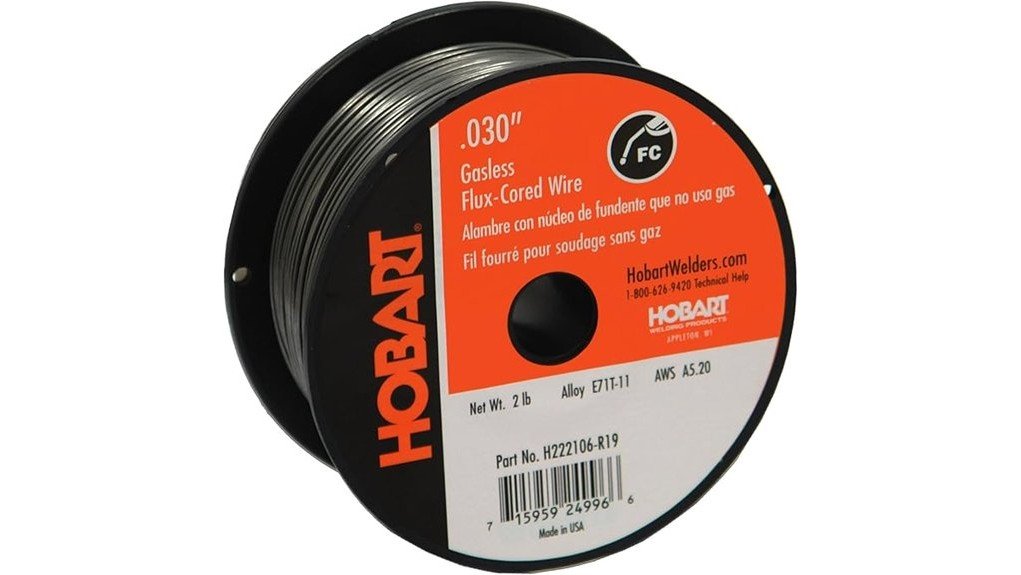
Choosing flux-cored wire can feel confusing because the wrong spool size, wire diameter, or wire type can cause poor feeding, messy welds, or weak results. The Hobart H222106-R19 Welding Wire is a 0.030-inch E71T-11 carbon-steel flux-cored wire made for mild steel and galvanized steel projects where you want gasless welding convenience. This review helps you decide whether its 2-pound spool, self-shielded flux-core design, and light fabrication focus match your welder and your work. It is a strong choice for small shop repairs and thin-gauge steel, but it is not the right wire for stainless, aluminum, or every heavy structural job.
Quick Verdict
Rating: 8.4/10
Best For: DIY welders, small-shop users, and repair work on mild steel where a 0.030-inch flux-core wire fits the machine setup.
Bottom Line: The Hobart H222106-R19 is worth considering if you need a compact 2-pound spool of E71T-11 flux-cored wire for light to medium mild-steel jobs. It gives you gasless convenience, but you still need proper welder settings, slag cleanup, and extra care around galvanized steel fumes.
| Specification | Detail |
|---|---|
| Brand | Hobart |
| Model | H222106-R19 |
| Product Type | E71T-11 flux-cored welding wire |
| Material | Carbon steel |
| Wire Diameter | 0.030 in. |
| Spool Size | 2 lb spool |
| AWS Classification | A5.20 |
| Shielding | Self-shielded flux-core wire, no external shielding gas needed when used correctly |
| Compatible Metals | Thin-gauge mild steel and galvanized steel |
| Welding Type | Single-pass or multi-pass welds when matched to the machine and material |
| Common Uses | Light structural work, machinery parts, prefab construction, railroad car repair, short assembly welds, tanks, general fabrication, and auto body-style repairs |
| Safety Note | Use proper ventilation and welding PPE, especially when welding galvanized steel |
What Is the Hobart H222106-R19 Welding Wire?
The Hobart H222106-R19 is a 2-pound spool of E71T-11 carbon-steel flux-cored welding wire with a 0.030-inch diameter. It is made for flux-core welding on mild steel and galvanized steel, especially when you need a compact spool for a smaller MIG or flux-core-capable machine.
Its main advantage is convenience. Because it is self-shielded flux-cored wire, you do not need a separate shielding gas bottle when your welder is set up correctly for this wire type. That makes it useful for garage repairs, field work, small fabrication tasks, and quick steel fixes where dragging out a gas cylinder would slow you down.
The 2-pound spool size also makes sense if you weld occasionally and do not want to store a larger roll. For high-volume shop production, a larger spool from the same wire family may be more practical.
Before You Buy: Confirm that your welder accepts 0.030-inch flux-cored wire and a 2-pound spool. This wire is not for aluminum, stainless steel, TIG welding, stick welding, or gas-shielded solid-wire setups.
Who Should Buy It?
Best For
- DIY welders using a flux-core-capable MIG welder with 0.030-inch wire support.
- Small repairs on mild steel, thin-gauge steel, and some galvanized steel parts.
- Users who want a small 2-pound spool instead of a larger shop-size roll.
Skip If
- You need wire for stainless steel, aluminum, or non-steel metals.
- Your welder only supports gas-shielded solid wire and does not handle flux-core polarity or feeding.
- You weld daily and need a larger spool to reduce changeovers.
Key Features of Hobart H222106-R19 Welding Wire
0.030-Inch Diameter for Smaller Steel Jobs
The 0.030-inch diameter gives you a practical balance between control and deposition for many home-shop and light fabrication tasks. It is especially useful when your work involves thinner mild steel where a larger wire may feel harder to control.
You still need to match the wire speed, voltage, and travel speed to the metal thickness. If you are working near the low end of your machine range, test on scrap from the same material before welding the final part.
E71T-11 Flux-Core Design
E71T-11 is a flux-cored wire type made for self-shielded welding. The flux inside the wire helps protect the weld puddle and leaves slag that you chip or brush away after the pass cools.
This design helps when you want to weld without a gas bottle. The tradeoff is cleanup. You should expect slag removal and some spatter management, especially compared with clean gas-shielded solid wire on prepared steel.
Carbon-Steel Construction
This wire is made for carbon-steel welding applications. That fits mild steel repairs, brackets, small frames, farm-style fixes, and general shop work where mild steel is the base material.
Do not use it as a catch-all filler metal. If you are welding stainless, aluminum, cast iron, or critical engineered parts, choose the correct filler metal and follow the project requirements.
2-Pound Spool Convenience
The 2-pound spool is easy to store and makes sense for occasional welding. It also reduces waste if you only need wire for repairs, short assembly welds, or weekend fabrication.
The smaller spool can be a limitation for heavy use. If you run long beads often or work in a production setting, a larger spool may give you better workflow and fewer pauses.
Applications and Use Cases
The Hobart H222106-R19 fits light structural fabrication, machinery part fabrication, prefab construction, short assembly welds, tank fabrication, and general mild-steel repairs. It also suits many auto body-style repairs when your welder settings and metal prep are correct.
It can be used for single-pass or multi-pass welds, but your results depend on the machine, joint prep, base metal thickness, and your technique. Multi-pass work needs clean slag removal between passes so the next bead ties in properly.
For galvanized steel, use extra caution. Welding galvanized coating can produce zinc oxide fumes, so you need proper ventilation, suitable respiratory protection when required, and safe work practices. Remove coatings only when appropriate for the job and follow the product label, your welder manual, and local safety rules.
Performance and Versatility
The strongest reason to choose this Hobart wire is its mix of gasless convenience and practical mild-steel performance. You can load the small spool, set your welder for 0.030-inch flux-core wire, and handle many short repair jobs without a gas cylinder.
It also works better than gas-shielded MIG wire in some draft-prone settings because it does not rely on an external shielding gas cloud. That does not mean wind no longer matters. Strong drafts can still affect your arc, weld puddle, and overall control.
Expect a more forgiving experience on imperfect steel than you might get with solid wire, but do not treat flux-core wire as a substitute for cleaning. Removing loose rust, oil, paint, and dirt improves arc stability and helps the weld tie into the base metal.
Pro Tip: Before your first weld, check the chart inside your welder door for 0.030-inch E71T-11 wire. Then run a short test bead on scrap steel and adjust wire speed before welding the real part.
Welder Compatibility and Setup
This wire works best with a MIG or flux-core welder that supports 0.030-inch flux-cored wire. You should also use the correct drive roll, contact tip, polarity, and tension setting for flux-core wire.
Too much drive-roll tension can flatten or damage the wire. Too little tension can cause feeding slips. Start with your welder manual, then fine-tune the feed path so the wire moves smoothly without bird-nesting or stuttering.
Use a contact tip sized for 0.030-inch wire. A worn or wrong-size tip can cause inconsistent arc behavior, feeding issues, and poor control at the puddle.
Material Safety and Galvanized Steel Notes
The article-supported use case includes galvanized steel, but galvanized work needs special care. Heating galvanized coating can create zinc fumes, and poor ventilation can make the risk worse.
Work in a properly ventilated area, keep your head out of the fume plume, and use welding PPE that fits the job. If you weld in a shop, workplace, or enclosed area, follow your safety program and use appropriate fume control. For critical or uncertain work, ask a qualified welding professional before you start.
How It Performs in Real Use
For Thin-Gauge Mild Steel Repairs
The 0.030-inch size is useful for controlled beads on thinner mild steel. You still need careful heat control because thin steel can burn through when voltage, wire speed, or travel speed is too aggressive.
For Outdoor or Draft-Prone Work
Because this is self-shielded flux-cored wire, it is more convenient outside than solid MIG wire that depends on bottled shielding gas. Use a wind block when needed, and avoid welding in conditions that make puddle control unsafe.
For Small Shop Fabrication
The 2-pound spool works well for brackets, short assemblies, small repairs, and general fabrication. You get enough wire for many small jobs without committing to a larger roll that may sit unused.
For Multi-Pass Welds
This wire can support multi-pass work when the base metal, welder output, and joint design allow it. Clean the slag fully between passes so the next bead bonds cleanly and does not trap contamination.
Common Mistakes to Avoid
- Skipping polarity checks: Flux-core wire often needs a different polarity than gas-shielded solid wire. Always follow your welder and wire instructions.
- Using the wrong contact tip: Use a 0.030-inch contact tip for this wire size.
- Welding dirty metal without prep: Flux-core wire can handle some imperfect surfaces, but loose rust, paint, oil, and heavy contamination still hurt weld quality.
- Forgetting slag cleanup: Chip and brush slag before painting, inspecting, or adding another pass.
- Ignoring fumes on galvanized steel: Galvanized work needs ventilation and proper protection.
Pros and Cons
Pros
- 0.030-inch diameter fits many light repair and thin-gauge mild-steel jobs.
- E71T-11 flux-core design allows gasless welding when your machine is set correctly.
- 2-pound spool is convenient for occasional welding and small shop storage.
- Works for single-pass and multi-pass welds when you clean properly between passes.
- Useful for light structural fabrication, machinery parts, short assembly welds, and general fabrication.
Cons
- Not suitable for aluminum, stainless steel, or all welding processes.
- Requires slag cleanup after welding, especially before multi-pass work.
- 2-pound spool may be too small for frequent or production welding.
- Galvanized steel applications require careful ventilation and fume control.
Is It Worth the Price?
The Hobart H222106-R19 is a smart buy for everyday use if you need a trusted 0.030-inch flux-cored wire in a small spool. It is especially practical when you weld occasionally and want wire for repair work instead of a large roll that takes up space.
You get the most value from it if your projects involve mild steel, thin-gauge repairs, or short fabrication jobs. The main limitation is spool size. If you burn through wire often, a larger Hobart spool may be more convenient.
It is not the best fit if your main goal is the cleanest possible weld appearance with minimal slag. For that, a gas-shielded solid-wire setup may be worth comparing, assuming your work area and welder support it.
How It Compares to Alternatives
Compared with a larger 10-pound Hobart E71T-11 spool, the H222106-R19 is easier to store and better for occasional users. The larger spool makes more sense for frequent welding because you will change wire less often.
Compared with gas-shielded ER70S-6 solid wire, this flux-cored wire is more convenient when you do not want to use shielding gas. Solid wire may produce cleaner-looking welds on well-prepped steel, but it depends more on proper shielding gas coverage and indoor conditions.
Frequently Asked Questions
Does Hobart H222106-R19 need shielding gas?
No. This is E71T-11 self-shielded flux-cored wire, so it does not require external shielding gas when used with the correct machine setup. Always confirm polarity and settings in your welder manual.
What metal is this wire made for?
It is made for carbon-steel welding applications, especially mild steel and galvanized steel. It is not the right choice for aluminum, stainless steel, or cast iron.
Can you use it outdoors?
Yes, flux-cored wire is often more practical outdoors than gas-shielded solid wire because it does not depend on a shielding gas cloud. You should still protect the weld area from strong wind and maintain safe control of the arc.
Will it fit every MIG welder?
No. Your welder must support 0.030-inch flux-cored wire and the correct spool size. Check the machine manual, drive roll, contact tip, and polarity before loading the wire.
Can it be used for multi-pass welds?
Yes, the wire is suitable for single-pass or multi-pass welds when the base metal and welder setup allow it. Clean slag completely between passes to avoid trapped contamination.
Is it safe to weld galvanized steel with this wire?
The wire is listed for galvanized steel applications, but galvanized steel can release hazardous zinc fumes when heated. Use ventilation, correct PPE, and safe welding practices, especially in enclosed or workplace settings.
How should you store the spool?
Store it in a dry, clean place away from moisture, dust, and shop chemicals. Keep the wire covered when not in use so it feeds smoothly and stays ready for your next project.
The Bottom Line
The Hobart H222106-R19 is a strong choice if you need 0.030-inch E71T-11 flux-cored wire for mild-steel repairs, light fabrication, and compact-spool convenience. Buy it if your welder supports this wire size and you want gasless flux-core performance. Skip it if you need wire for non-steel metals, a larger production spool, or the cleanest gas-shielded finish with less slag cleanup.