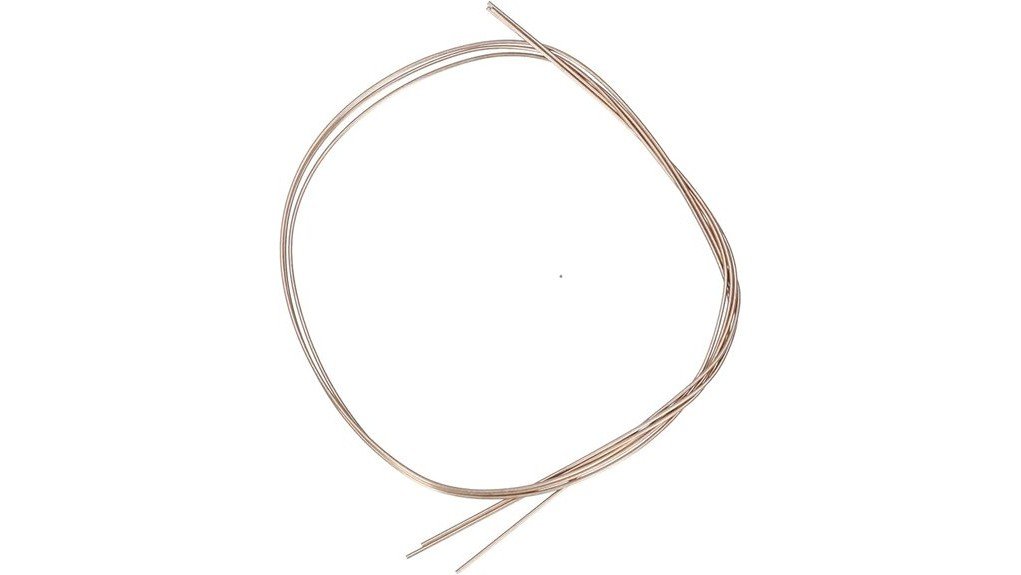
This brass wire solder for jewelry is a 1.2 mm wire, about 50 cm long per the listing, intended for joining small brass and copper-alloy parts in craft and jewelry repair. Brass filler melts at a much higher temperature than tin-lead or lead-free electronics solder, so it needs a torch, not a soldering iron. It is not a substitute for gold or silver jewelry solder on precious-metal pieces.
This review is based on the Amazon listing; the wire was not hands-on tested. Alloy details are not fully stated on the listing page, so confirm them with the seller before relying on them.
Quick specs
| Item | Detail (per the listing) |
|---|---|
| Product | Brass wire solder for jewelry |
| Diameter | 1.2 mm |
| Length | About 50 cm (19.7 in.) |
| Material | Brass filler wire; exact alloy and melting range not confirmed here |
| Heat source | Torch (a soldering iron will not melt brass filler) |
| ASIN | B0DG3T1JWJ |
What brass wire solder for jewelry is and is not
Brass filler is a copper-zinc alloy used for brazing. Common brass brazing alloys melt in the range of several hundred degrees Celsius above electronics solder, so the base metal must handle that heat. That is fine for brass, copper and some steel parts, but it will damage heat-sensitive stones, glued parts and thin or low-melting jewelry metals.
- Good fit: brass and copper craft pieces, findings, small repairs and hobby builds where a brass-colored joint is wanted.
- Poor fit: sterling silver, gold, pewter and anything with stones set. Use silver or gold solder rated for that metal.
- Not for: electronics, where tin-based solder is the correct choice.
How to use brass wire solder on small parts
- Clean the surfaces to bare metal and fit the parts tightly.
- Apply a flux suited to brass brazing, and support the work on a heat-proof block.
- Heat the parts, not the wire, with a small torch until they glow dull red.
- Touch the wire to the joint so it flows in by capillary action, then remove the heat.
- Let the piece cool, then pickle or clean off the flux and polish.
Wear eye protection, work in a ventilated area and keep the torch away from flammable material. Flux and zinc fumes should not be breathed in.
Pros and limitations
Pros
- Thin 1.2 mm wire is easy to feed into small joints.
- Brass color matches brass and copper-alloy work.
- Length is enough for several small joints.
Limitations
- Needs a torch and flux, and is not usable with a soldering iron.
- Alloy and melting point are not clearly stated on the listing.
- Not matched to gold or silver jewelry, so joints may differ in color and strength.
Related solder and brazing reviews
For another small brass wire pack, see the Hapivida brass wire solder review. For larger brazing work, read the brass solder brazing rods review, and for precious-metal jewelry, the Sadnyy silver jewelry solder review.
Frequently Asked Questions
Can I use brass wire solder on silver or gold jewelry?
No. Brass filler melts higher than most jewelry solders and will damage thin silver or gold. Use solder made for that metal.
Do I need a torch to use it?
Yes. A soldering iron cannot reach the temperature needed to melt brass filler, so you need a small torch.
Is brass wire solder good for beginners?
It can work for simple brass and copper repairs, but the higher heat and the need for flux make it harder than low-temperature soldering. Practice on scrap first.
Can it be used for plumbing or electrical work?
No. Plumbing uses specific solders or brazing alloys, and electrical work uses tin-based solder. Use the product the job requires.
What safety gear should I use?
Wear safety glasses and heat-resistant gloves, work with ventilation, and keep a fire-safe surface under the piece.
Conclusion
Brass wire solder in 1.2 mm suits small brass and copper craft joints done with a torch. Confirm the alloy and melting range with the seller, and use proper silver or gold solder on precious-metal jewelry.