As an Amazon Associate, Garage Welding may earn from qualifying purchases. This does not change the price you pay.
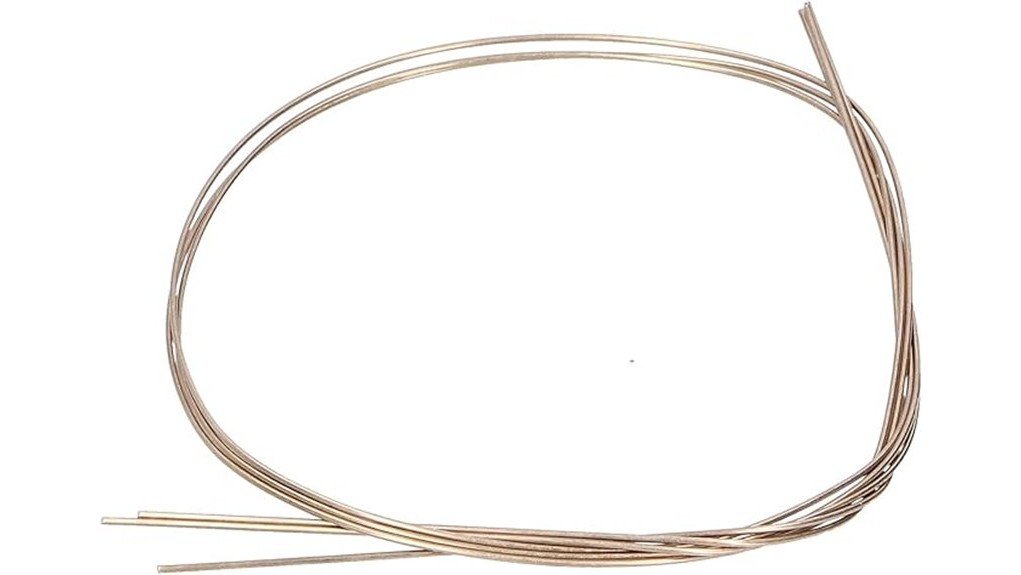
The Hapivida 3-piece brass wire solder pack contains three 1.2 mm brass filler wires, each about 19.7 inches (50 cm) long, marketed for jewelry joining and small repairs. This Hapivida brass wire solder review is based on the Amazon listing, not hands-on testing. The key point: brass filler is a torch-and-flux material (technically brazing), so it suits brass, copper and similar metals and is not an electronics solder.
Quick specs at a glance
| Item | Per the listing |
|---|---|
| Product | Hapivida brass wire solder, 3 pieces |
| Material | Brass |
| Wire diameter | 1.2 mm |
| Length | About 19.7 in (50 cm) each |
| Marketed use | Jewelry welding and DIY repairs |
| Melting point | Not stated here; confirm with the seller |
The exact alloy and melting range matter, so check the listing for them before you plan your heat source.
Check current price on Amazon →
What it is and who it suits
Brass filler wires are used to join brass, copper and often steel at temperatures well above electronics solder. Because the alloy is yellow, the joint line on a brass piece blends in better than a silver seam would. That is why it is marketed to hobbyists making brass jewelry or small ornamental parts.
It is a reasonable pick for brass craft work, small repairs and learning to braze with a torch. It is not for PCBs, tinning wires or plumbing that must meet code. Silver-bearing solders flow at lower temperatures and are the usual choice for fine jewelry; see our AIEX silver solder wire review for that route.
How to check it fits your project
- Base metals: match the filler to your work. Brass-on-brass, copper and steel are typical; confirm with the seller for stainless, aluminum or precious metals.
- Heat source: you need a torch that can reach brazing temperatures. A soldering iron will not melt it.
- Flux: brazing flux is normally required to keep oxides off the joint. Check whether any comes in the pack.
- Wire diameter: 1.2 mm suits small to medium joints. For thin jewelry parts you may need to cut it down.
- Joint gap: keep a tight, clean joint so the filler can pull in by capillary action.
Pros and limitations
| Pros | Limitations |
|---|---|
| Three pieces for repeated small jobs | Needs a torch and flux |
| Brass color blends on brass or bronze work | Alloy and melting range need confirming |
| 1.2 mm wire is easy to cut to size | Not for electronics or drinking-water plumbing |
| Long 50 cm lengths reduce waste | Brass contains zinc, so fumes need controlling |
Check current price on Amazon →
How to use brass filler wire
- Clean the joint with a file or abrasive pad and degrease it.
- Coat the faying surfaces with flux and clamp the pieces in position.
- Heat the base metal evenly with the torch until the flux turns clear.
- Touch the wire to the joint (not the flame) and let it flow into the gap.
- Let the work cool, then clean off flux residue with warm water or pickle, as the flux maker advises.
Safety tips for brass brazing
- Brass contains zinc, and overheated zinc gives off white fume. Work with good ventilation or fume extraction. See our solder fume extractor review for a bench option.
- Wear safety glasses and heat-resistant gloves. Use a fire-resistant surface; our carbon fiber heat mat can serve as a small shield.
- Do not braze on closed containers or sealed parts that can trap pressure.
- Store the wire clean and dry so it does not oxidize.
Alternatives and related guides
- Brass brazing rods for thicker steel and repair work.
- Kodilin brazing torch kit if you also need a torch.
- Beebeecraft solder chips for jewelry-style solder pieces.
Frequently Asked Questions
Is brass wire solder the same as regular solder?
No. Brass filler melts at a much higher temperature than electronics or plumbing solder and is applied with a torch and flux. This is brazing rather than soldering in the strict sense, so do not use it with a standard iron.
Do I need flux with brass wire solder?
Yes, in most cases. Brazing flux protects the joint from oxides while it heats. Check whether any flux is included in the listing, and buy one rated for brass or copper brazing if not.
Can I use brass wire solder on silver jewelry?
Be careful. Brass filler is not usually matched to fine silver, and its melting range may be too close or too far from the base metal. Ask the seller for the alloy details, or choose a silver-bearing solder instead.
Is brass brazing safe indoors?
Only with ventilation. Brass contains zinc, which gives off fumes when overheated, and flux fumes are irritating. Use an extractor, work near an open window, and wear eye protection and gloves.
Conclusion
Hapivida’s brass wire pack is a sensible, low-fuss filler for small brass and copper projects when you have a torch and flux. Confirm the alloy and melting range, and handle zinc fumes with care.
Check current price on Amazon →