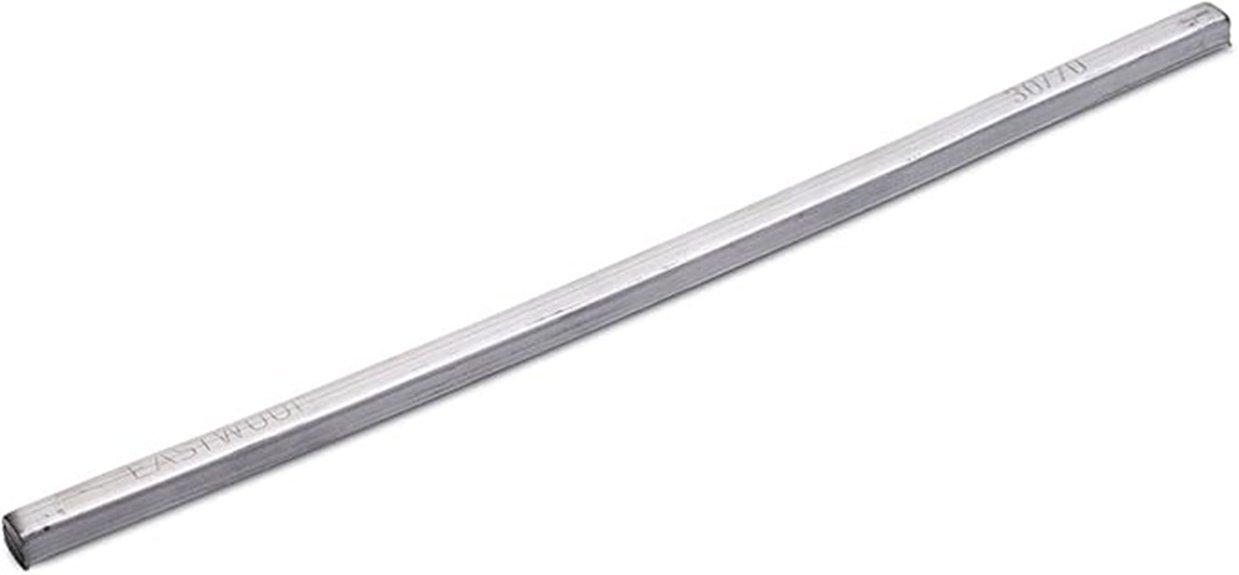
The Eastwood 30/70 body solder stick is a 30% tin, 70% lead stick used to fill and smooth steel body panels, the traditional alternative to plastic filler. The alloy stays pasty over a temperature range, so you can spread and shape it before it sets. It is for auto body and restoration work, not for plumbing or electronics. The details below come from the product listing and were not hands-on tested. Because it contains lead, read the safety notes before you buy.
Key Takeaways
- 30/70 means roughly 30% tin and 70% lead, which gives a wide plastic working range for shaping.
- You heat the panel with a torch and melt the stick against it, then spread and shape the solder. A soldering iron is not the right tool.
- Lead fumes and filing dust are hazardous. Ventilate, wear gloves and a suitable respirator, and wash your hands before eating or drinking.
Eastwood 30/70 Body Solder Stick Specs
| Product type | Lead/tin body solder (lead loading) stick for auto body repair |
| Alloy | 30% tin / 70% lead, per the listing |
| Stick weight | 1/4 lb per stick, per the listing (other text on the original page said about 1 lb and 12 in, so confirm the stick size you order) |
| Use | Filling and shaping steel body panels, on horizontal or vertical surfaces |
| Heat source needed | Propane or similar torch, plus flux or tinning compound |
| Amazon ASIN | B07NTPDFWX |
How to Use Body Solder
- Clean the metal: grind or sand to bare, bright steel in the repair area and remove paint, rust and grease.
- Apply flux or tinning compound: body solder will not bond to bare steel without it. Follow the flux maker’s instructions.
- Tin the surface: heat the panel gently with a torch and wipe a thin layer of solder over the fluxed area until it flows and sticks.
- Build up the filler: keep the panel warm and rub the stick against it so the solder softens to a putty-like state. Do not overheat the panel or the solder will run.
- Shape it: spread with a wooden paddle, then move quickly before it sets. Let it cool.
- Finish: file and sand the cooled solder smooth, then clean off the flux residue before priming.
Practice on scrap first: too much heat warps thin panels, and too little leaves a poor bond.
Where Body Solder Makes Sense
- Seams and small dents on steel body panels where you want a metal filler
- Restoration work where originality matters
- Repairs on vertical surfaces, because the solder sets quickly once it cools
For structural repair or joining panels, use proper welding instead. See our guides on welding body panels with flux core and MIG vs flux core welding for auto body.
Safety With Lead Solder
- Work with strong ventilation, and use a respirator rated for lead fume and dust when heating or filing.
- Wear gloves, avoid skin contact and do not eat, drink or smoke while working.
- Wash hands and clean up filings and dust with a damp cloth or a HEPA vacuum, not a dry sweep.
- Keep children and pregnant people away from the work area.
- Dispose of scraps and dust following your local rules for lead waste.
Pros and Cons
Pros
- Metal filler that bonds to steel and can be shaped like putty while warm
- Does not shrink or absorb moisture the way some plastic fillers can
- 1/4 lb sticks are easy to handle
Cons
- Contains lead, so ventilation and PPE are essential
- Needs a torch, flux and some practice
- Slower and more technique-heavy than plastic filler
Frequently Asked Questions
Is the Eastwood solder stick safe for home use?
Only with precautions. It contains lead, so ventilate well, wear gloves and a suitable respirator, avoid skin contact, wash up afterward and clean dust carefully. If you cannot control the lead exposure, use a lead-free filler.
Can this body solder be used on other materials?
It is meant for steel body panels. It is not a general electrical or plumbing solder. For other metals, check the manufacturer’s guidance first.
What tools do I need to use body solder?
A propane or similar torch, flux or tinning compound, a wooden paddle, files and sanding blocks, a respirator and gloves, plus cleaning supplies for the bare metal.
How should the solder stick be stored?
Keep it in a dry place away from children and food, and wash your hands after handling.
Is body solder suitable for beginners?
It can be learned, but it takes practice with heat control. Start on scrap sheet metal before working on a real panel.
Bottom Line
A traditional lead body solder for steel panel repair. It is a good match for restoration work if you are comfortable with a torch and can manage lead safely. Confirm the stick size and current price on the Amazon page.