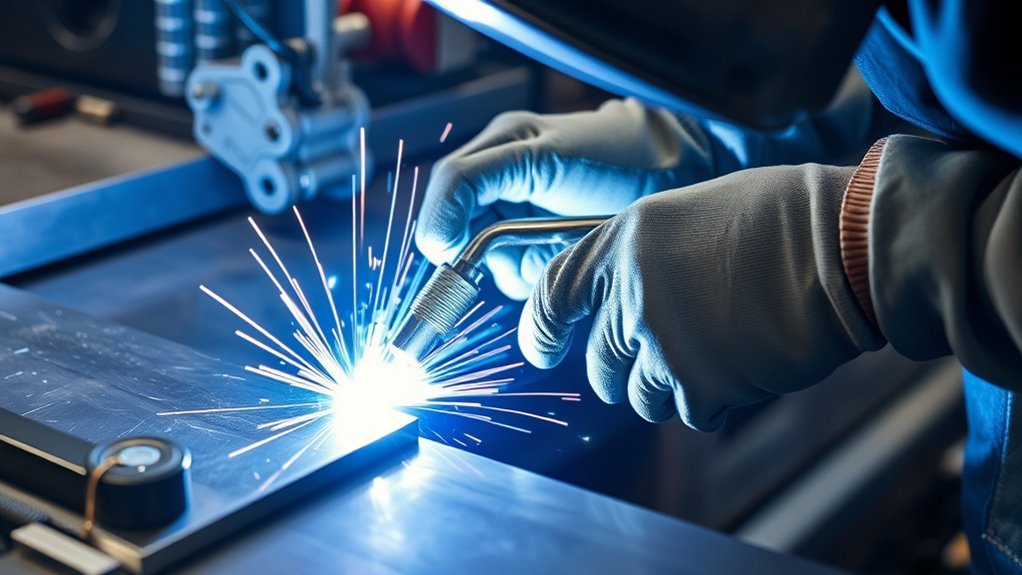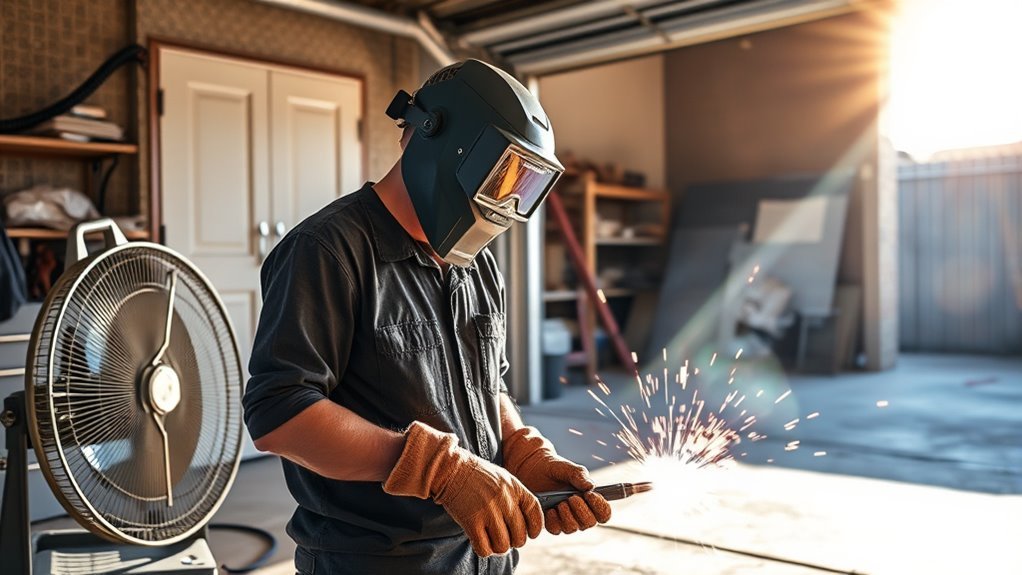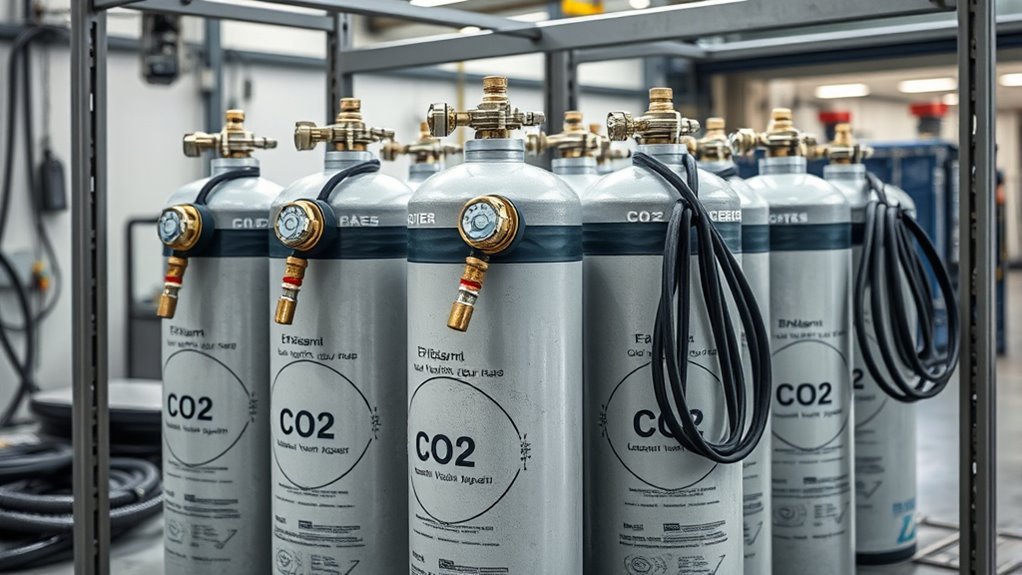
Store CO2 welding gas cylinders upright, secured, capped when not in use, and kept in a dry, well-ventilated area away from heat. CO2 is nonflammable, but it is still a pressurized gas and an asphyxiation hazard. Safe handling means checking the cylinder, valve, regulator, hose, storage area, and transport setup before something goes wrong.
Quick Answer
Store CO2 welding gas cylinders upright, chained or strapped, capped when not connected, and protected from heat, impact, and poor ventilation. Check valves, regulators, and hoses for damage before use. Leak-check connections with an approved leak solution, close valves when finished, and transport cylinders upright in a ventilated vehicle or cargo area.
Key Takeaways
- Keep CO2 cylinders upright and secured with a chain, strap, rack, or cylinder cart so they cannot tip.
- Store cylinders in a dry, well-ventilated, protected area away from heat, traffic, electrical circuits, and tampering.
- Use the correct regulator and fitting for your cylinder; never force mismatched connections.
- Check for leaks before welding and after reconnecting equipment.
- Close the valve, bleed the regulator, remove the regulator, and fit the cap before moving a cylinder unless it is secured on a carrier designed for that purpose.
At a Glance
| Time Required | 5 to 10 minutes for a routine cylinder and leak check |
| Difficulty | Easy, but safety-critical |
| Tools Needed | Cylinder chain or strap, approved regulator, wrench if required by the fitting, leak-detection solution, cylinder cart, valve cap |
| Cost | Usually $0 to $50 if you already own restraints and a regulator; CO2 monitors, carts, or replacement caps add cost |
CO2 Welding Gas Safety Basics
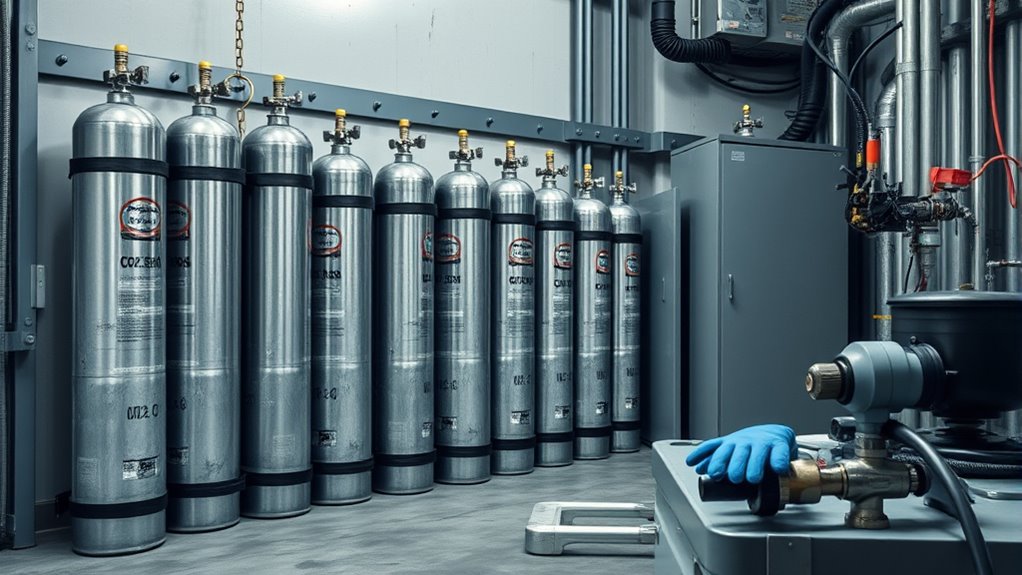
CO2 welding gas is common for MIG welding, but the cylinder still deserves careful handling. It is a compressed gas cylinder, and it can become dangerous if it falls, leaks, overheats, or vents into a poorly ventilated area.
The most important rule is simple: control the cylinder before you use it. Keep it upright, secure it against tipping, protect the valve, and use equipment rated for the cylinder and gas service.
OSHA’s compressed-gas rules require employers to make sure cylinders under their control are in safe condition by visual inspection and to handle, store, and use compressed gases according to recognized compressed-gas practices. You can review the general compressed-gas requirements in OSHA 1910.101.
Warning: CO2 is colorless and odorless. A leak may not smell unusual, but it can still displace breathable air. Headache, dizziness, shortness of breath, sweating, confusion, or unusual fatigue can be warning signs. Leave the area, ventilate if it is safe to do so, and get help.
NIOSH lists CO2 as a nonflammable gas, but also lists symptoms such as headache, dizziness, breathing difficulty, increased heart rate, coma, asphyxia, and frostbite from liquid or solid exposure. The OSHA permissible exposure limit is 5,000 ppm as an 8-hour time-weighted average, and NIOSH lists 40,000 ppm as the immediately dangerous to life or health level. See the NIOSH Pocket Guide for carbon dioxide for the exposure details.
Store CO2 Cylinders Upright and Secure
Store CO2 cylinders upright and secure them with a chain, strap, wall bracket, cylinder rack, or other steadying device. A cylinder that tips can damage the valve, regulator, or safety device, and that can create a leak or sudden release.
Choose a storage spot that is dry, protected, and well ventilated. Keep cylinders away from doors, stairs, walkways, welding traffic, forklifts, and areas where falling objects could strike them. Do not store cylinders in lockers, cupboards, sealed closets, or other unventilated enclosures.
Keep the valve protection cap on whenever the cylinder is not connected for use, if the cylinder is designed to accept a cap. Do not lift the cylinder by the cap. The cap protects the valve; it is not a handle.
Use a regulator designed for CO2 service and for the cylinder outlet you have. Do not force a regulator onto the wrong fitting, use adapters as a shortcut, or use damaged threads. If a valve does not open by hand or by the correct tool for that valve, stop and contact the gas supplier.
Pro Tip: Put a simple cylinder tag on each tank: Full, In Use, Empty, or Return. It keeps storage cleaner and helps prevent someone from connecting the wrong cylinder under pressure.
Keep CO2 Cylinders Away From Heat
Heat is a pressure hazard. Store CO2 cylinders away from radiators, direct sunlight through windows, heaters, hot work, engine exhaust, ovens, and other heat sources. Also keep cylinders away from sparks, slag, flame, and any area where welding or cutting heat can reach the cylinder.
Follow the temperature limit printed on the cylinder label, supplier instructions, or safety data sheet. If your shop uses a 125°F (52°C) maximum storage rule, treat that as a ceiling, not a target. Cooler, dry, shaded storage is safer.
Do not confuse two different spacing rules. Cylinders should be kept away from heat sources. Separately, compressed gas cylinders stored indoors should be kept at least 20 feet from highly combustible materials such as oil, grease, excelsior, cardboard piles, or similar fire loads unless a compliant barrier or protected storage arrangement applies.
Inspect the storage area regularly. Look for heat exposure, missing caps, damaged labels, loose chains, poor ventilation, corrosion, blocked access, and cylinders stored where they can become part of a welding circuit.
A CO2 cylinder does not have to be flammable to be dangerous. Pressure, impact, heat, and oxygen displacement are enough to create a serious hazard.
Separate CO2 Tanks From Other Gases
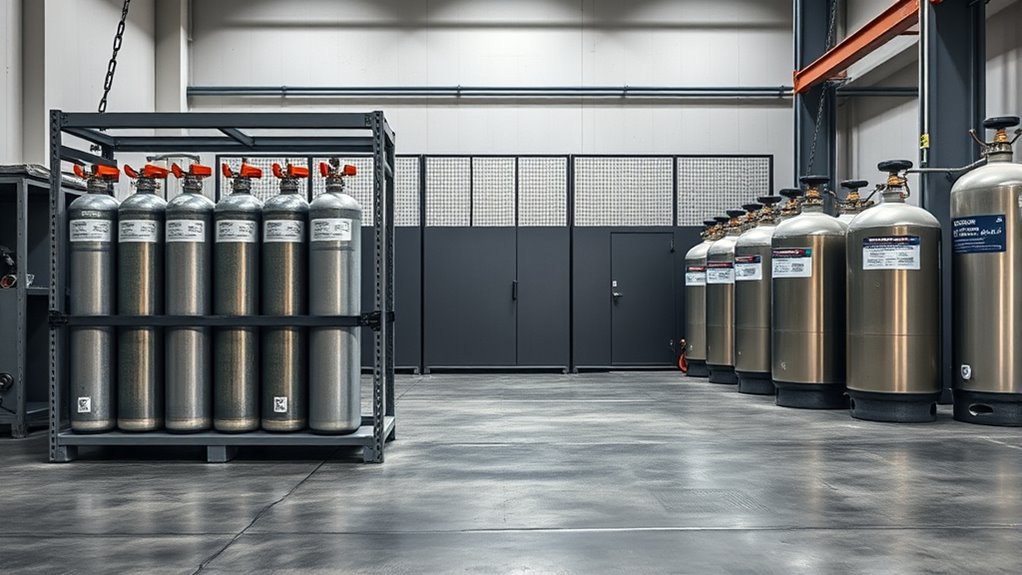
Separate CO2 tanks from incompatible or higher-risk storage areas. CO2 is not a fuel gas, but you should still keep your gas storage organized by cylinder type, hazard class, and shop use.
Keep oxygen cylinders away from fuel-gas cylinders and combustible materials. OSHA’s oxygen-fuel separation rule uses a minimum 20-foot distance or a noncombustible barrier at least 5 feet high with a fire-resistance rating of at least one-half hour. This rule is mainly about oxygen, fuel gases, and combustibles, but it is still a helpful reminder to keep cylinder storage disciplined.
Use this shop storage table as a practical guide:
| Action | Why it matters |
|---|---|
| Store CO2 in a marked cylinder area | Prevents mix-ups with oxygen, argon, fuel gas, and empty cylinders |
| Keep cylinders upright and restrained | Reduces tip-over and valve-damage risk |
| Keep away from oil, grease, and combustibles | Keeps the storage area cleaner and reduces fire-load exposure |
| Do not store in sealed or low areas | CO2 can collect and displace breathable air |
| Keep cylinders out of electrical circuits | Prevents the cylinder from becoming part of the welding current path |
Note: Do not use a CO2 cylinder as a support, roller, grounding point, or work rest. Keep cylinders away from welding circuits and do not strike an arc against a cylinder.
Inspect CO2 Valves, Hoses, and Regulators
Inspect the cylinder, valve, regulator, hose, fittings, and flowmeter before each use. Look for corrosion, dents, worn threads, cracked hoses, missing gauges, damaged O-rings or washers, loose fittings, oil, grease, dirt, or signs of impact.
Keep the gas path clean. Do not use oil, grease, pipe dope, or homemade sealants on cylinder valves or regulator fittings. If a fitting needs a washer or seal, use the correct part recommended for that regulator and gas service.
Before you open the cylinder valve, stand to the side of the regulator, not directly in front of the gauges. Open the valve slowly. Check that the regulator responds smoothly and that pressure does not climb unexpectedly.
When work is finished, close the CO2 cylinder valve. Then release gas from the regulator and hose so trapped pressure is not left in the system. This protects the regulator and helps you notice leaks or creeping pressure later.
Replace damaged hoses, regulators, gauges, or fittings. Do not tape over cracks, force threads, modify relief devices, or repair cylinder valves yourself. If the valve or safety device is suspect, tag the cylinder and contact the supplier.
Products Worth Considering

Compatible with CGA-580 tanks: Easily attach this Gas Pressure Regulator/Flowmeter to your Argon, Helium, and CO2 tanks with its CGA-580 inlet connector

APPLICATION: It can be used with argon, helium and CO2 gas tanks

WIDE APPLICATION: It easily connects to Argon, Helium, and Argon/CO₂ mixed gas tanks via the CGA-580 inlet nut. No additional adapters are required. Featuring superior airtight and leak-proof performance, it achieves stable and sealed gas supply with minimal gas loss. This regulator is ideal for MIG/TIG welding, chemical processing, general industrial use, and electronics industry applications.
How to Check CO2 Cylinders for Leaks
Check CO2 cylinders for leaks before first use, after changing cylinders, after reconnecting a regulator, and any time you suspect damage. Use a commercial leak-detection solution made for gas equipment. If your supplier allows mild soapy water, use only a clean solution with no oil, grease, or fat-based soap.
- Secure the cylinder upright before testing.
- Confirm the valve, regulator, and hose connections are properly installed.
- Open the cylinder valve slowly.
- Brush or spray leak-detection solution around the valve outlet, regulator connection, hose fittings, flowmeter, and other joints.
- Watch for growing bubbles. Bubbles mean gas is escaping.
- If you see a leak, close the cylinder valve right away.
- Ventilate the area if it is safe to do so.
- Do not weld, grind, smoke, or create sparks near a leaking cylinder.
- If the leak continues or involves the cylinder valve, move people away and contact the gas supplier or emergency response team.
Warning: Do not try to repair a cylinder valve, safety relief device, or damaged cylinder. Close the valve if you can do it safely, leave the area if CO2 may be accumulating, and contact the supplier.
A CO2 monitor is a smart upgrade for indoor welding areas, beverage-gas rooms, small garages, basements, and any shop with poor airflow. Place monitors where CO2 could collect and follow the monitor manufacturer’s alarm settings and maintenance instructions.
Products Worth Considering

APPLICATION: Better Bubble is an advanced leak locator that can detect refrigerant gas, air, oxygen and most other gas leaks; May be used on surface temperatures from 20°F to 250°F

This pack contains 2 indicator solutions of 30 ml each. Total 60ml. Better for longer storage.

FAST & RELIABLE DETECTION: Experience quick and accurate leak detection with this high-performance gas leak detector. Its fluorescent yellow color ensures easy visibility under a fluorescent light, making even the smallest leaks noticeable.
What to Do With Empty CO2 Cylinders
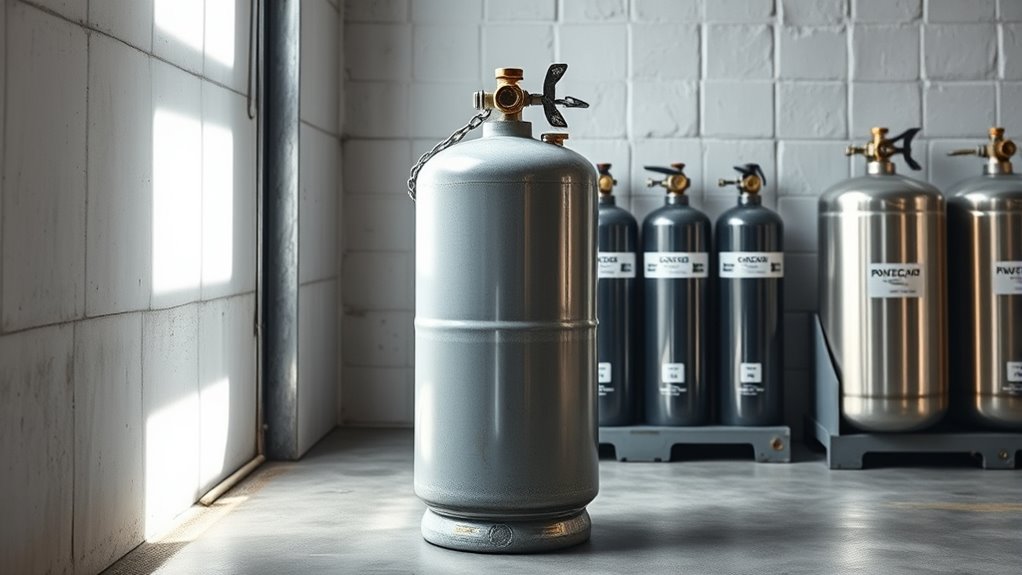
When a CO2 cylinder is empty, treat it as if it still has residual pressure. Empty does not mean harmless. Close the valve, bleed the regulator, remove the regulator if the cylinder is being stored or returned, and install the protective cap if the cylinder accepts one.
Mark Empty Cylinders
Mark empty CO2 cylinders clearly as “EMPTY” or “MT.” Put them in a separate empty-cylinder area so no one confuses them with full cylinders. Keep the original cylinder label visible and never remove or cover the supplier’s gas identification markings.
If a cylinder is damaged, leaking, missing a cap, or has unreadable markings, tag it and keep it out of service. Contact the supplier for return instructions.
Store With Caps
Store empty cylinders upright, secured, capped, and separated from full cylinders. Use the same storage discipline you use with full cylinders because the valve can still be damaged and some pressure may remain inside.
| Step | Action |
|---|---|
| 1 | Close the cylinder valve |
| 2 | Bleed pressure from the regulator and hose |
| 3 | Remove the regulator if the cylinder is being stored or moved |
| 4 | Install the valve protection cap if provided |
| 5 | Label it empty and store it upright in the return area |
How to Move CO2 Cylinders Safely
Move CO2 cylinders with control, not force. Keep the cylinder upright, close the valve, remove the regulator unless the cylinder is secured on a carrier designed for that purpose, and install the valve cap before moving it.
Use an approved cylinder cart, hand truck, or carrier with a chain or strap. Do not drag cylinders, lift them by the valve cap, drop them, strike them, or let them hit each other. Do not roll a cylinder across the floor as a routine moving method.
- Check the route before moving the cylinder.
- Keep the cap on and the valve closed.
- Secure the cylinder to the cart before moving.
- Keep the cylinder away from sparks, flame, heat, and electrical circuits.
- Move one cylinder at a time unless your cart or rack is made for multiple cylinders.
- Keep people clear of the path.
OSHA construction rules say cylinders transported by powered vehicles must be secured in a vertical position, regulators must be removed and caps installed before moving unless the cylinder is secured on a special carrier, and a cylinder truck, chain, or other steadying device must be used to keep cylinders from being knocked over while in use. See OSHA 1926.350 for the wording.
How to Transport CO2 Cylinders on Roads
Road transport adds another layer of risk because vibration, sudden stops, heat, and poor ventilation can turn a small mistake into a serious problem. Before road transport, close the valve, remove the regulator and hose, install the valve protection cap, and secure the cylinder upright so it cannot roll, tip, or strike other cargo.
Use a ventilated cargo area whenever possible. An open truck bed, service vehicle with gas-cylinder rack, or separated cargo area is safer than a closed passenger compartment. Avoid carrying CO2 cylinders inside the passenger area of a car. If you must move a small cylinder in an enclosed vehicle for a short distance, keep it upright, secure it tightly, ventilate the vehicle, go directly to the destination, and unload it immediately.
Note: Road rules depend on cylinder size, quantity, business use, and location. In the United States, compressed gas shipment can fall under DOT hazardous-material rules. In Canada, the Transportation of Dangerous Goods rules may apply. Follow your local authority, supplier instructions, and employer policy.
Secure Cylinder Restraints
Use restraints that stop movement in every direction. A cylinder should not slide forward during braking, roll sideways in a turn, or bounce against tools and metal parts. A strap around the cylinder body is better than relying on boxes, blankets, or loose cargo to hold it in place.
- Place the cylinder upright against a rack or wall of the cargo area.
- Use a chain, strap, bracket, or approved carrier.
- Keep the valve cap facing up and protected.
- Keep the cylinder away from heat and direct sun during transport.
- Inspect the restraint again before driving.
Valve Caps and Hoses
Do not transport a CO2 cylinder with the regulator, hose, or flowmeter attached unless the cylinder is secured on a special carrier designed for that exact setup. Exposed fittings can be damaged by vibration or impact.
Close the valve before moving. Remove the regulator. Bleed trapped pressure from the regulator and hose. Install the cap hand-tight if the cylinder accepts a cap. Load the cylinder carefully and keep the cap accessible for inspection.
Roadway Transport Compliance
For workplace or commercial transport, check the rules before the trip. Cylinder size, number of cylinders, gas classification, route, placarding, paperwork, driver training, and vehicle type may matter. If you are not sure, ask your gas supplier or safety manager before you move the cylinder.
For small-shop best practice, use this minimum checklist:
- Valve closed
- Regulator and hose removed
- Valve cap installed
- Cylinder upright
- Cylinder restrained
- Vehicle ventilated
- No passenger-compartment storage
- No heat exposure
- Direct trip with immediate unloading
CO2 Cylinder Emergency Response
If you suspect a CO2 leak, act quickly. CO2 can build up in low or poorly ventilated areas, and you may not smell anything unusual.
- Stop welding or hot work if it is safe to do so.
- Close the cylinder valve if you can reach it safely.
- Move people out of the area.
- Ventilate the space from a safe position.
- Do not enter a suspected oxygen-deficient area without proper training and equipment.
- Call the supplier, supervisor, or emergency services if the leak continues or anyone has symptoms.
For indoor cylinder rooms or small welding areas, consider fixed or portable CO2 monitoring. A monitor does not replace ventilation, but it gives an early warning before CO2 reaches a dangerous level.
CO2 Cylinder Storage Checklist
Use this checklist before you leave a CO2 cylinder in storage:
- The cylinder is upright.
- The cylinder is chained, strapped, or racked.
- The valve is closed.
- The regulator is removed if the cylinder is not in use.
- The valve cap is installed if the cylinder accepts one.
- The label is readable.
- The area is dry and well ventilated.
- The cylinder is away from heat, flame, sparks, and direct sunlight.
- The cylinder is away from walkways, doors, stairs, and forklift paths.
- Full and empty cylinders are separated and clearly marked.
- No cylinder is being used as a support, roller, work rest, or electrical path.
Frequently Asked Questions
What are the storage requirements for CO2 cylinders?
Store CO2 cylinders upright, secured, capped when not connected, clearly labeled, and kept in a dry, well-ventilated, protected area. Keep them away from heat, direct sunlight, traffic, electrical circuits, and highly combustible materials. Follow the cylinder label, supplier safety data sheet, OSHA rules, and local code.
Does CO2 need to be refrigerated?
No. CO2 welding gas cylinders do not need refrigeration for normal shop storage. Store them at a safe ambient temperature, away from heat and direct sun, and below the temperature limit listed by the supplier or cylinder label.
How should a CO2 tank be stored?
Store a CO2 tank valve-end up, secured with a chain or strap, in a ventilated and dry location. Close the valve when not in use, remove the regulator for storage or transport, and install the protective cap if the cylinder is designed for one.
What are the main safety guidelines for CO2 welding gas?
Secure the cylinder upright, use the correct regulator, inspect valves and hoses, leak-check connections, keep the area ventilated, close the valve after use, protect the valve during movement, and keep cylinders away from heat, sparks, flame, and electrical circuits.
Can you transport a CO2 cylinder in a car?
Avoid transporting CO2 cylinders in the passenger compartment. Use a ventilated cargo area or open vehicle when possible. The cylinder should be upright, capped, closed, regulator-free, and secured so it cannot roll or tip. Follow local hazardous-material transport rules for your cylinder size and use.
How do you know if a CO2 cylinder is leaking?
Use an approved leak-detection solution on the valve, regulator connection, and hose fittings. Growing bubbles show a leak. You may also see frost, hear hissing, notice pressure loss, or feel symptoms such as headache or dizziness in a poorly ventilated area. Close the valve and ventilate if safe.
Conclusion
Treat CO2 welding gas as a pressurized safety hazard every time you store, connect, inspect, move, or transport it. Keep cylinders upright, secured, capped when not connected, and away from heat and damage. Use the correct regulator, check for leaks, and keep your workspace ventilated. When a cylinder is empty, close it, bleed the regulator, cap it, mark it, and store it separately for return. Safe handling is not extra work; it is the routine that prevents injuries, leaks, and damaged equipment.
Sources
- OSHA 1910.101 — Compressed gases, general requirements — backs up compressed-gas inspection and handling requirements.
- OSHA 1910.253 — Oxygen-fuel gas welding and cutting — backs up cylinder storage, marking, caps, heat separation, and valve handling guidance.
- OSHA 1926.350 — Gas welding and cutting — backs up upright restraint, cylinder movement, powered-vehicle transport, regulator removal, and valve cap guidance.
- NIOSH Pocket Guide to Chemical Hazards: Carbon dioxide — backs up CO2 exposure limits, symptoms, and nonflammable classification.
- NIOSH IDLH Documentation: Carbon dioxide — backs up the 40,000 ppm IDLH value and acute exposure risk.