A multi-process welder is one welding machine that can run more than one process, usually MIG, flux-cored, stick, and TIG from a single power source. You need one if you want flexibility, less equipment clutter, and faster setup changes for mixed projects. It is useful for metalworkers, small shops, auto repair, construction work, farm repair, and DIY fabrication. The tradeoff is higher upfront cost than a single-process machine and more setup decisions, but the wider capability can make your workflow simpler if you use more than one welding process.
Quick Answer
A multi-process welder is worth it if you switch between MIG, TIG, stick, and flux-cored welding often enough to justify one flexible machine. It saves space and can lower total equipment cost, but you still need to change leads, polarity, gas, wire, electrodes, or torches for each process.
Key Takeaways
- A multi-process welder combines several welding modes in one machine, but not every model supports every process equally well.
- MIG and flux-cored welding are usually fastest for general fabrication, TIG gives cleaner control, and stick works well for outdoor and repair jobs.
- Process switching is not always automatic. You may still need to change polarity, cables, gas, filler metal, torch, or settings.
- Before buying, compare amperage range, duty cycle, input voltage, TIG type, aluminum support, portability, and included accessories.
- Welding involves electric shock, fire, eye, gas, and fume hazards, so PPE, ventilation, and proper instruction matter as much as machine features.
What Is a Multi-Process Welder?
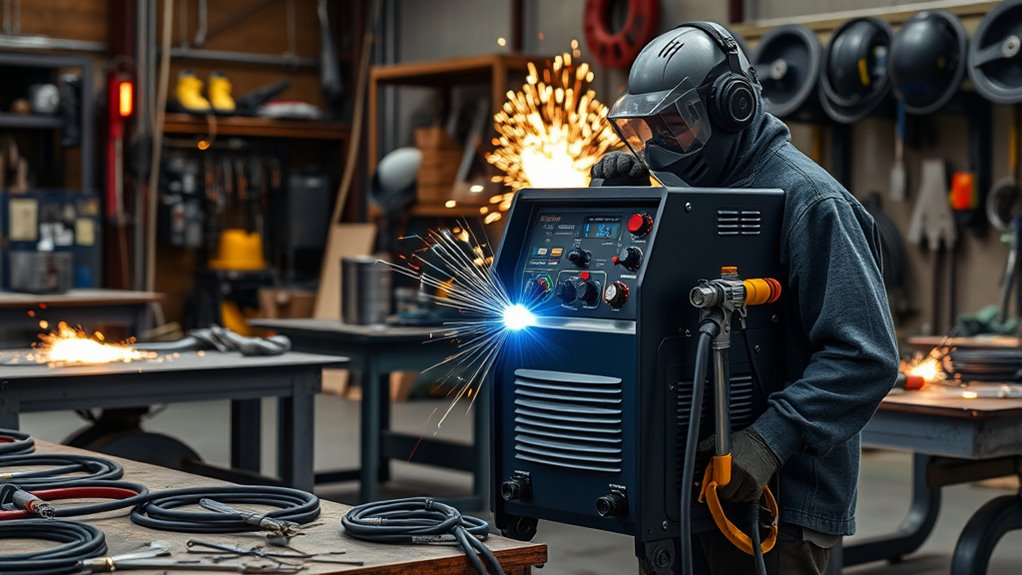
A multi-process welder, sometimes called an MTS welder for MIG, TIG, and stick, is a single welding power source that supports multiple welding methods. Instead of buying a separate MIG welder, TIG welder, and stick welder, you can use one unit and configure it for the process your job needs.
The basic idea is simple: one machine gives you several process paths. For example, multiprocess welders are built to help users switch welding processes without changing power sources. That can save floor space, reduce cable clutter, and make a small shop more flexible.
You still need to understand the limits of the model you buy. Some machines offer strong MIG and stick performance but only basic lift-start TIG. Others add advanced options such as AC TIG, high-frequency TIG start, pulse TIG, or spool-gun support for aluminum. Models like the ARCCAPTAIN MIG160 show how 4-in-1 flexibility can help with mixed welding needs, but the exact process quality depends on the machine.
A multi-process welder gives you one power source for several welding methods, but every process still needs the right leads, polarity, gas, filler, and settings.
What Welding Processes Can It Handle?
Most multi-process welders handle some combination of MIG welding, flux-cored welding, stick welding, and TIG welding. The best process depends on material thickness, joint type, working location, finish quality, and how much control you need.
| Process | Best Use | What to Know |
| MIG / GMAW | Fast fabrication, auto repair, mild steel, general shop work | Uses a continuously fed wire electrode and shielding gas. It is fast and beginner-friendly but less ideal in wind. |
| Flux-Cored / FCAW | Outdoor repair, thicker steel, farm work, field welding | Uses tubular wire with flux. Self-shielded wire can work without a gas bottle, but it creates more smoke and slag. |
| Stick / SMAW / MMA | Rusty steel, outdoor work, structural repair, heavy maintenance | Uses a coated electrode that supplies filler and shielding. It is rugged but takes more skill and cleanup. |
| TIG / GTAW | Thin metal, stainless, clean beads, precision work | Uses a non-consumable tungsten electrode and shielding gas. It gives the most control but is slower and more skill-based. |
Some machines also combine welding with cutting functions. That can be useful, but a plasma cutter welder combo should still be judged by each function separately. A good plasma cutter does not automatically mean the TIG or MIG side is equally strong.
Why a Multi-Process Welder Is Worth It
A multi-process welder is worth it when you regularly need more than one welding process. If you do only light MIG work, a dedicated MIG machine may be cheaper and easier. If you repair farm equipment, fabricate brackets, patch auto panels, and occasionally TIG stainless, a multi-process unit can make more sense.
The biggest benefit is versatility. You can use MIG for speed, flux-cored wire for outdoor steel, stick for repair work, and TIG when you want a clean, controlled bead. That lets one machine handle more jobs in a home garage, mobile rig, or small shop.
The second benefit is space savings. Instead of storing several welders and power cords, you keep one main power source and swap the right accessories. Over time, you may also save money on equipment, maintenance, and storage, especially if you would otherwise buy three separate machines.
Modern units often include dual-voltage input, digital controls, preset modes, and thermal overload protection. These features can reduce setup friction, but they do not replace welding knowledge. You still need to set amperage, voltage, wire speed, gas flow, polarity, and filler material correctly.
Note: A multi-process welder is not always cheaper than a dedicated machine. It usually saves money only when you truly need two or more welding processes.
How Multi-Process Welders Switch Between Processes
You switch a multi-process welder by choosing the correct process mode, connecting the right leads or torch, setting the right polarity, and installing the correct wire, electrode, tungsten, or shielding gas. Some machines make part of this process easier with menus or preset programs, but you should never assume the machine has changed everything for you.
This matters because MIG, TIG, stick, and flux-cored welding do not use the same setup. A machine may have one control panel, but each process still has its own hardware and consumable needs. This is what allows effective welding on different materials, but only when the setup matches the process.
Process Selector Switch
The process selector switch or digital menu tells the machine which welding mode you want to use. It may select MIG, TIG, stick, or flux-cored mode and adjust the control behavior for that process. On some machines, synergic settings can also suggest wire speed or voltage based on wire size and material.
That does not mean the setup is finished. You may still need to move the work clamp, change the electrode holder, connect a TIG torch, attach a gas hose, install a wire spool, choose the drive roll, or change polarity. The control panel helps you switch faster, but the operator still has to verify the full setup.
Polarity Changeover
Polarity changeover is the process of matching current direction to the welding process, wire, electrode, and material. It affects arc stability, penetration, spatter, tungsten life, and bead shape.
| Process | Common Polarity | Important Caveat |
| Solid-wire MIG | Usually DCEP | Check the wire chart, gas mix, and machine manual. |
| Self-shielded flux-cored | Often DCEN | Some wires differ, so follow the wire manufacturer’s polarity marking. |
| Gas-shielded flux-cored | Often DCEP | Gas type and wire classification matter. |
| TIG on steel or stainless | Usually DCEN | Aluminum TIG usually needs AC, which not every multi-process welder has. |
| Stick / MMA / SMAW | Depends on electrode | Some rods run DCEP, some DCEN, and some AC. Read the rod package. |
Warning: Do not weld by guessing polarity. Wrong polarity can cause unstable arcs, excessive spatter, poor penetration, tungsten damage, weak welds, or unsafe operation.
Setup and Consumables
Once the process and polarity are correct, the rest of the changeover comes down to consumables and accessories. MIG needs wire, drive rolls, contact tips, and shielding gas. TIG needs a tungsten electrode, cup, collet, shielding gas, and often filler rod. Stick needs the right electrode. Flux-cored welding needs the correct wire, drive roll tension, and polarity.
You should also confirm gas flow, metal cleanliness, work clamp contact, extension cord rating, and duty cycle before you start. These small checks prevent many common problems, including porosity, burn-through, wire feeding issues, and thermal shutdown.
Pro Tip: Keep a small setup card near the welder for each process. List polarity, gas, wire or electrode, starting amperage, and torch setup so you can switch faster without missing a safety check.
Who Should Buy a Multi-Process Welder?
You should buy a multi-process welder if your work changes often and you need one machine that can adapt. It is a strong fit when you do repairs one day, fabrication the next, and cleaner TIG work when the finish matters.
If you are a metalworking artist, you can choose TIG for cleaner visible joints, MIG for faster assembly, and stick or flux-cored welding for heavier steel fixtures.
If you run a small welding shop, one machine can reduce duplicate equipment while expanding the jobs you can accept. It also helps if your shop space is limited.
If you work in automotive repair, you can use MIG for sheet metal and brackets, TIG for precise stainless or thin material, and stick or flux-cored welding for heavier repair work.
If you manage field or construction repair, a compact multi-process machine can help crews adapt to changing site conditions. Some combo machines also include features such as an integrated air monitoring system, but those added features should be checked separately from welding performance.
If you are a hobbyist or DIY builder, a multi-process welder can be a smart long-term purchase when you want to learn more than one process without filling your workspace with separate machines.
Who Should Not Buy One?
A multi-process welder is not the best choice for everyone. If you only weld thin mild steel with MIG, a dedicated MIG welder may be easier and cheaper. If you do serious TIG work on aluminum, you may want a dedicated AC/DC TIG machine instead of a basic multi-process unit. If you weld all day at high amperage, compare duty-cycle ratings carefully before choosing a compact machine.
What Are the Pros and Cons?
A multi-process welder gives you flexibility, but it also asks more from the operator. You trade some simplicity for a wider range of work.
| Pros | Cons |
| One machine can replace several separate welders. | Costs more than a basic single-process welder. |
| Saves shop space and reduces equipment clutter. | Setup is more complex because each process needs different accessories. |
| Lets you match the process to the metal, joint, and location. | Some models offer basic TIG only, without AC TIG, pulse, or foot-pedal control. |
| Good for repair work, mobile jobs, and mixed fabrication. | One machine failure can stop every welding process you rely on. |
The balance usually favors a multi-process welder if you value versatility and use at least two processes often. If you only need one process, keep the setup simple and buy the best dedicated machine for that job.
How Do You Choose the Right Model?
Choose a multi-process welder by matching its output, duty cycle, process support, and accessories to the work you actually do. Do not buy only by the number of processes printed on the box. A machine that claims four modes may still be weak in the one mode you need most.
Products Worth Considering

MULTIFUNCTIONAL: A 4-in-1 welder, capable of Flux Core MIG/Gas MIG/ Stick/Lift TIG (need to purchase extra tig lift torch). This unit caters to a wide range of welding applications and meets your various welding needs.

4 IN 1 MIG WELDER: Capable of Gas MIG/Flux Core Gasless MIG/Lift TIG/Stick (additional lift TIG torch required: B08BXGGNFL). Designed to tackle a wide array of welding tasks, this unit is your all-in-one solution for diverse fabrication needs.

6-IN-1 Multifunctional Welder Machine: This 6-in-1 multi welder supports FLUX MIG, GAS MIG, PLASMA CUTTING, HF TIG, and STICK,SPOT welding, provide a comprehensive solution for a wide range of welding and cutting tasks, suitable for both home DIY and industrial projects.
Key Buying Factors
Power and amperage range: A wider amperage range gives you more control on thin sheet and thicker steel. Many light to medium-duty users look for a machine around the 160 to 200 amp range, while heavier shop work may require more.
Duty cycle: Duty cycle tells you how long the machine can weld at a stated output before it needs to cool. Compare duty cycle at the amperage you will actually use, not only at the lowest setting.
Input voltage: Dual-voltage machines can run on 120V for light work and 240V for better output. If you only have a standard outlet, check the machine’s real 120V capacity before buying.
TIG capability: Basic lift TIG is useful, but it is not the same as a dedicated TIG setup. If you want aluminum TIG, look for AC TIG support. If you want easier arc starts, look for high-frequency start. Advanced options such as HF TIG and Pulse TIG can improve precision when used correctly.
Aluminum support: For MIG aluminum, check spool-gun compatibility. For TIG aluminum, check AC output. Do not assume every multi-process welder can handle aluminum well.
Controls: Digital displays, memory settings, and preset modes can help beginners. Features such as smart synergic control can speed setup, but you should still understand voltage, wire speed, and amperage.
Portability: If you move the welder often, compare weight, handle design, generator compatibility, and cable storage. A compact frame matters more for field repair than for a fixed bench setup.
Included accessories: Check whether the package includes a MIG gun, TIG torch, electrode holder, work clamp, gas regulator, drive rolls, contact tips, and adapter plugs. A low purchase price can rise quickly if key parts are missing.
Matching Features to Tasks
The right welder depends on the work. Use the machine’s feature list to solve real job problems, not just to collect more modes.
| Task | Feature to Prioritize | Why It Matters |
| Thin sheet metal | Low-end amperage control | Helps prevent burn-through. |
| Outdoor repair | Stick and self-shielded flux-cored support | Works better where wind can disturb shielding gas. |
| Mixed fabrication | MIG, TIG, stick, and flux-cored modes | Lets one machine handle more joint types. |
| Aluminum MIG | Spool-gun compatibility | Improves aluminum wire feeding. |
| Aluminum TIG | AC TIG output | DC-only TIG is not enough for typical aluminum TIG work. |
| Long welds | Higher duty cycle | Reduces cooling pauses and thermal shutdowns. |
Which Multi-Process Welders Are Best?
The best multi-process welder is the one that matches your main job, not the one with the longest feature list. Use these categories to narrow your choice.
- Best for beginners: Choose a dual-voltage MIG, flux-cored, stick, and lift-TIG machine with clear digital controls, setup charts, thermal protection, and included accessories.
- Best for small shops: Look for stronger duty cycle, 200A or higher output, stable wire feeding, quality leads, and support for common wire sizes.
- Best for field repair: Prioritize stick and flux-cored performance, portability, generator compatibility, rugged case design, and simple controls.
- Best for aluminum MIG: Make sure the welder supports a spool gun and has enough output for the aluminum thickness you plan to weld.
- Best for aluminum TIG: Choose a machine with AC TIG, high-frequency start, foot-pedal support, and good low-amperage control.
- Best for combo cutting and welding: Compare welding output and plasma cutting capacity separately, because those are different performance measures.
Avoid buying only by advertised process count. A “5-in-1” label sounds impressive, but the details matter more: rated output, duty cycle, TIG type, wire feed quality, included torches, warranty, and service support.
Products Worth Considering
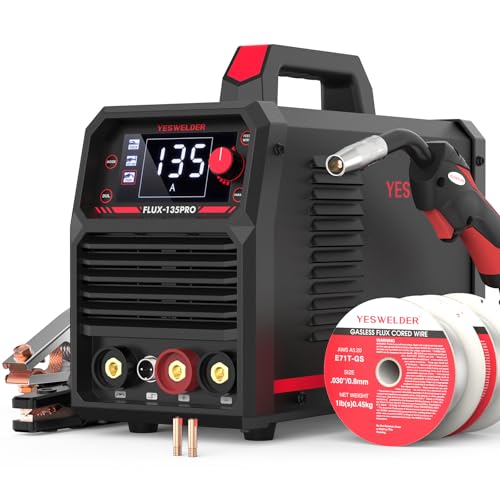
READY OUT OF THE BOX: Start welding immediately! It masterfully handles Gasless Flux Core MIG, Stick, and Lift TIG (Extra Lift TIG torch required). This budget-friendly 3-in-1 machine includes extra E71T-GS .030''&.035'' flux core wires, known for its smooth arc and high feedability. Say goodbye to heavy shielding gas cylinders—perfect for outdoor, windy, or all-position welding.

4 IN 1 MULTIFUNCTIONAL: Enjoy the convenience of a 4-in-1 welding machine that masterfully handles Gasless Flux Core MIG/Gas MIG/Stick/Lift TIG (additional lift TIG torch required). This unit suits a wide range of welding applications and meets your various welding needs.

6-IN-1 WELDER & CUTTER: Outfit your entire shop for the price of one machine. MCT-520 multiprocess machine features 6 working modes: Gas MIG/Flux Core MIG/CUT/HF TIG/MMA/Spool Gun Aluminum Welding (Spool gun sold separately). This versatile welder covers all your project demands—from home DIY and garage projects to outdoor maintenance, farm equipment, and on-site fabrications.
Safety Notes Before You Weld
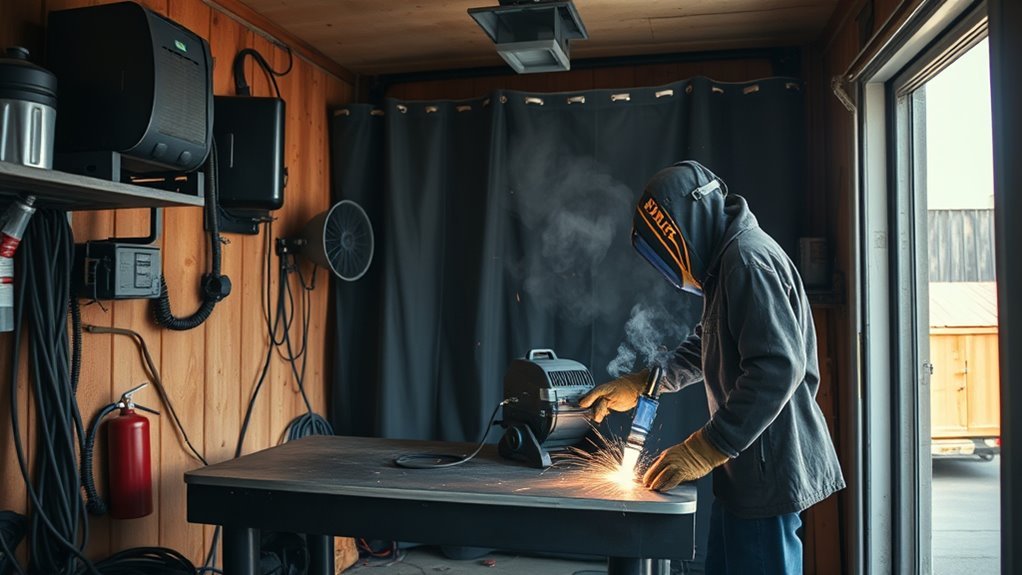
Welding can expose you to electric shock, fire, burns, eye injury, compressed gas hazards, and welding fume. The OSHA welding fume fact sheet explains that welding fume can contain harmful metal fume and gas by-products, and that ventilation and work positioning help reduce exposure.
- Wear a properly rated welding helmet, gloves, jacket, and eye protection.
- Keep flammable materials away from the weld area.
- Use ventilation or local exhaust to move fume away from your breathing zone.
- Do not weld in confined spaces without proper training, ventilation, and required safety controls.
- Clean coatings, paint, oil, and solvent residue from the weld area before welding.
- Read the welder manual, wire chart, electrode package, and gas safety information before setup.
- Follow applicable workplace rules and OSHA guidance for arc welding equipment and instruction.
Warning: A multi-process welder gives you more capability, but it also creates more ways to set up the machine incorrectly. If you are new, practice on scrap metal, learn from a qualified welder, and do not use a process you do not understand on structural or safety-critical work.
Frequently Asked Questions
What is the purpose of a multi-process welder?
The purpose of a multi-process welder is to give you several welding methods from one power source. It lets you switch between jobs that need MIG speed, TIG control, stick durability, or flux-cored outdoor performance without owning a separate machine for each process.
Is MMA stronger than MIG?
MMA, also called stick welding, is not automatically stronger than MIG. Weld strength depends on base metal, joint design, filler metal, preparation, settings, and operator skill. Stick welding can be better for outdoor, dirty, or heavy repair work, while MIG can produce strong welds when the setup is correct.
Can a beginner use a MIG welder?
Yes, a beginner can use a MIG welder, and MIG is often one of the easier welding processes to start with. You still need proper PPE, ventilation, clean metal, correct polarity, suitable shielding gas, and practice on scrap before welding anything important.
Is multiprocess welding worth the investment?
Multiprocess welding is worth the investment if you use more than one process often. It can save space, reduce duplicate equipment, and make mixed repair or fabrication work easier. It may not be worth it if you only need one process or need advanced TIG performance every day.
Can a multi-process welder weld aluminum?
Some multi-process welders can weld aluminum, but you must check the exact method. For aluminum MIG, look for spool-gun support. For aluminum TIG, look for AC TIG output. A DC-only lift-TIG machine is usually not the right choice for typical aluminum TIG welding.
What is the biggest downside of a multi-process welder?
The biggest downside is setup complexity. You have to understand several processes, change accessories, verify polarity, choose the correct gas or electrode, and adjust settings. Also, if the machine fails, you may lose access to every process it provides.
Conclusion
A multi-process welder is a smart buy when your work moves between MIG, TIG, stick, and flux-cored welding. It can save space, reduce equipment overlap, and help you handle more jobs from one machine. It is not magic, though. You still need to understand polarity, gas, filler metal, duty cycle, and each process setup.
If you weld varied materials, repair different equipment, or want one flexible machine for a small workspace, a multi-process welder can be worth the investment. If you only use one process or need advanced TIG performance all day, a dedicated welder may serve you better.
Sources
- Miller Electric Multiprocess Welders — supports the core concept of switching processes without changing power sources.
- OSHA Fact Sheet: Controlling Hazardous Fume and Gases during Welding — supports welding process definitions, fume hazards, gases, and ventilation guidance.
- OSHA 29 CFR 1910.254: Arc Welding and Cutting — supports safe arc welding equipment selection and operator instruction guidance.
- OSHA Welding, Cutting, and Brazing — supports current OSHA standards coverage for welding, cutting, and brazing operations.