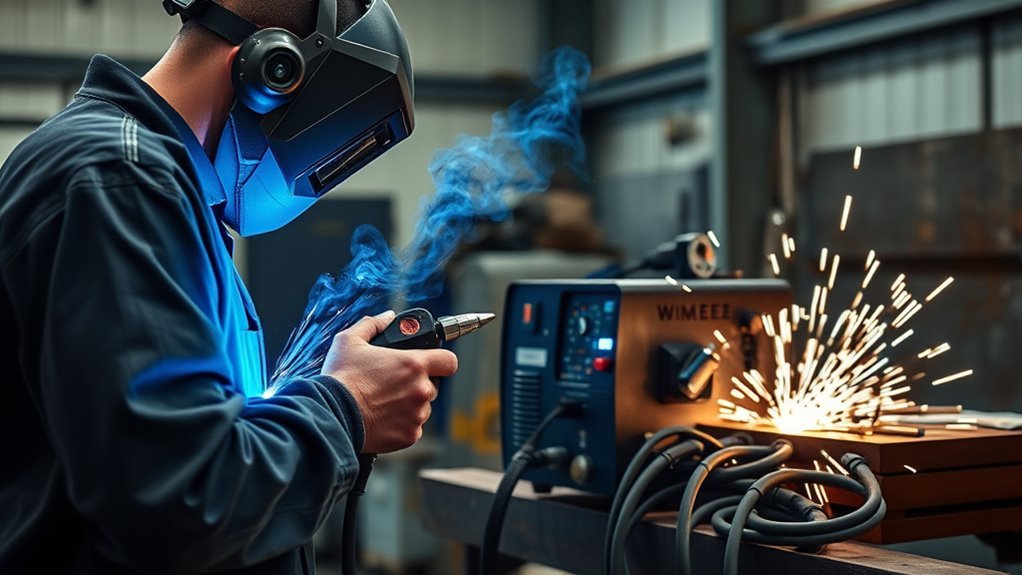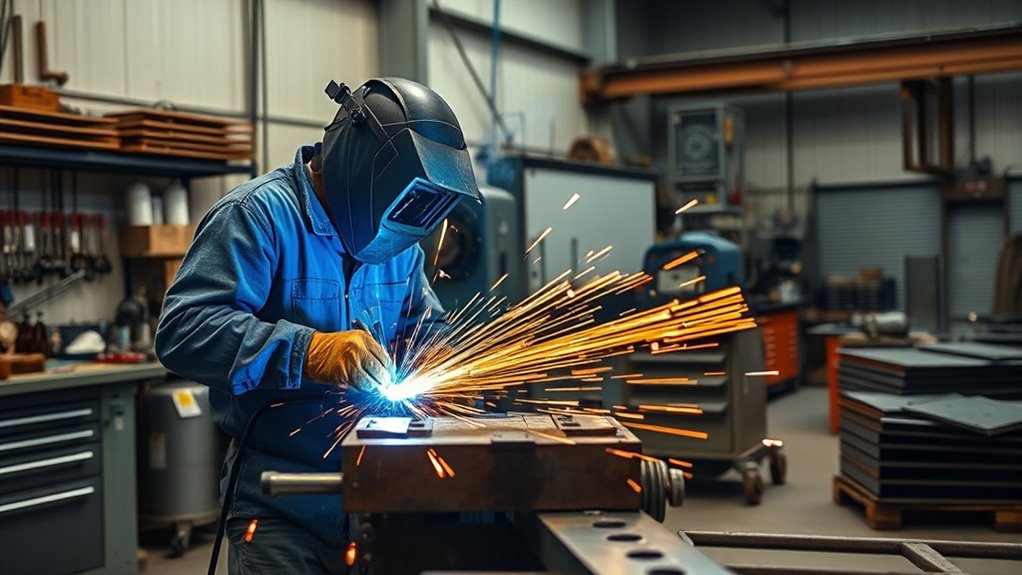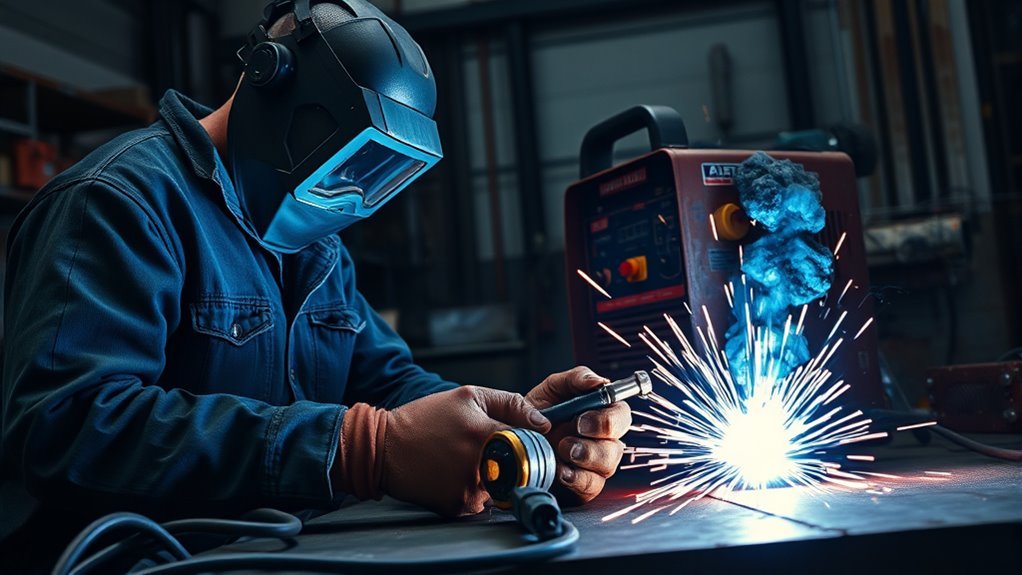
A welder is usually the person who performs welding, while a welding machine is the equipment used to produce or control the welding output. In electric arc welding, the more precise equipment term is often welding power source. Clear wording matters most in job descriptions, qualification records, procedures, maintenance notes, and safety instructions.
Quick Answer
A welder is the person who performs manual or semiautomatic welding. A welding machine is the equipment used to make the weld, and a welding power source is the part that supplies controlled electrical output for arc welding. In casual speech, people often call the machine a “welder.”
Key Takeaways
- Welder normally means the person who performs welding.
- Welding machine is a broad, everyday term for welding equipment.
- Welding power source is the unit that provides controlled current and voltage for electric arc welding.
- Welding operator is not always a synonym for welder; codes often use it for someone operating mechanized, automatic, or robotic equipment.
- Use work clamp, not “ground clamp,” when referring to the clamp that completes the welding-current circuit.
What Does “Welder” Mean?
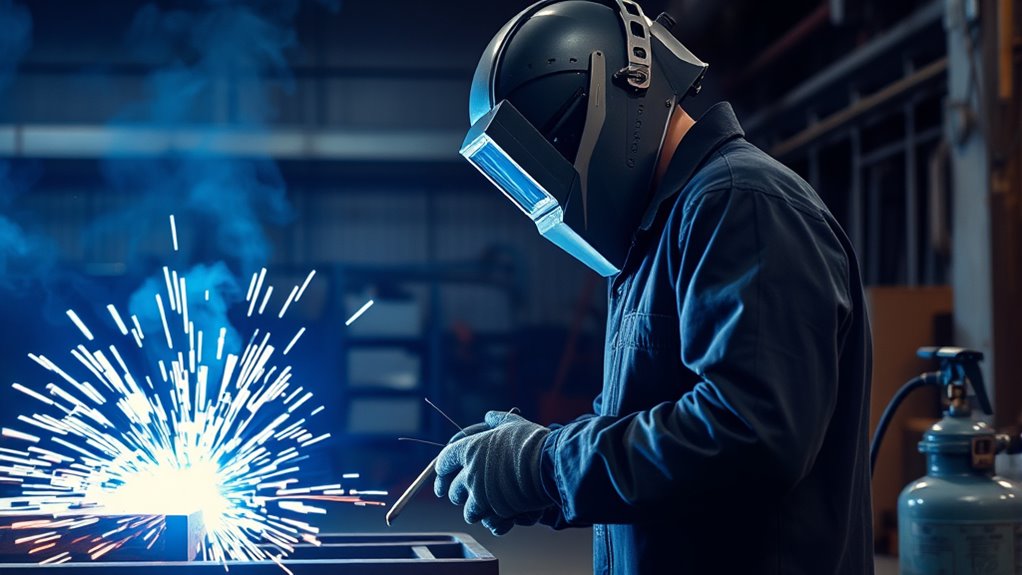
A welder is the person who performs welding. The U.S. Bureau of Labor Statistics describes welders, cutters, solderers, and brazers as workers who use handheld or remotely controlled equipment to join, repair, or cut metal parts and products.
Depending on the job, a welder may read drawings, inspect material, prepare joints, select a process, position the torch or electrode, watch the weld pool, adjust heat, and inspect the finished work. O*NET also lists tasks such as selecting equipment, installing torches and filler materials, preparing surfaces, and detecting faulty equipment.
A welder must understand the base metal, filler metal, shielding method, electrode or wire, joint design, welding position, and suitable welding amperage. The person’s skill remains important even when the equipment automatically controls wire feed or other settings.
Use “welder” when the sentence is about a person’s skill, duties, qualification, certification, technique, or safety responsibilities.
Welder Versus Welding Operator
A welding operator is not simply another name for every welder. Welding codes commonly use separate terms based on how the weld is made:
- Welder: Usually performs manual or semiautomatic welding and physically guides the torch, gun, or electrode holder.
- Welding operator: Commonly operates mechanized, automatic, adaptive-control, or robotic welding equipment.
The exact definition can vary by code, contract, or employer. Use the terminology in the governing welding code, Welding Procedure Specification, qualification record, or company procedure. Do not change a job title or qualification category based only on casual shop usage.
Should You Write “Welder” or “Weldor”?
You may see weldor in older publications or trade discussions, sometimes as an attempt to separate a worker from a machine. That spelling is not a dependable way to make the distinction. For general writing, welder is the familiar spelling for the person. Follow a different spelling only when a code, employer, school, or source document specifically requires it.
What Is a Welding Machine?
A welding machine is a broad term for equipment used to perform welding. In everyday product descriptions, it may refer to the complete portable unit. In a larger industrial system, it may include or work with a power source, wire feeder, controller, cooling system, torch, work lead, and other equipment.
For electric arc welding, welding power source is often the more precise term. The power source converts input power into controlled electrical output suitable for the selected welding process. It may control current, voltage, polarity, waveform, or other arc characteristics.
Note: Not every welding process uses an electric arc power source. Oxygen-fuel welding uses gas cylinders or another approved gas supply, regulators, hoses, and a torch. Resistance, laser, friction, and other welding processes use different equipment systems.
Products Worth Considering

💪200A POWER & PORTABLE DESIGN: Weld metals up to 1/4" thick (0.06-0.2") including stainless steel, alloy steel, carbon steel, and copper. Compact size (8.6x4.1x5.5") and ultra-lightweight (5 lbs) with shoulder strap make it easy to carry for jobs anywhere – high altitude, indoors, or outdoors. Enjoy extended welding sessions without overheating, backed by a solid 60% duty cycle for professional results.


【Power Specs】: Input 100V-240V 50/60Hz; Output: 6V 2A. Output adaptor Self-Adapting Barrel jack size: 5.5mm x 2.1mm (applicable 2.5mm) positive (+) center.
Welding Machine Basics
A welding machine does not replace the worker’s knowledge or technique. It provides and controls the output required by the process. Important equipment details include:
- Supported processes: Such as SMAW, GMAW, GTAW, FCAW, or more than one process.
- Input power: The voltage, phase, frequency, and circuit requirements for the machine.
- Output type: AC, DC, constant-current, constant-voltage, or another rated output characteristic.
- Output range: The current and voltage the equipment can provide.
- Polarity: The required electrode-positive, electrode-negative, or alternating-current connection.
- Duty cycle: How long the power source may operate at a stated output during its rated test period.
- Connections: The torch or electrode holder, work lead, wire feeder, remote control, gas hose, and cooling connections when required.
Duty cycle is tied to a specific output rating. For example, a 30% duty cycle based on a 10-minute period generally means the power source can weld for three minutes at the stated output and then needs seven minutes to cool. The duty cycle often increases when the machine operates below its maximum rated output. Always use the rating plate and manufacturer’s manual for the exact machine.
Machine settings affect arc behavior, fusion, penetration, bead profile, and deposition. They do not independently determine an acceptable weld size. Joint design, procedure requirements, material thickness, loading, and the applicable code also affect matters such as the maximum fillet weld size.
Welder vs Welding Machine at a Glance
The easiest way to separate the terms is to identify whether the sentence describes a person, an equipment system, a power-producing component, or a welding method.
| Term | Meaning | Best Use |
| Welder | The person who performs manual or semiautomatic welding. | Job titles, skills, duties, qualifications, certifications, and technique. |
| Welding operator | A person who operates mechanized, automatic, adaptive-control, or robotic welding equipment under many codes. | Automated-equipment duties and code-specific qualification records. |
| Welding machine | A broad term for equipment used to perform welding. | Product descriptions, shop instructions, maintenance, and equipment discussions. |
| Welding power source | The component that provides controlled electrical output for arc welding. | Technical specifications, output ratings, process setup, and equipment comparison. |
| Welding process | The method used to produce the weld. | Procedures, training, process selection, and code documents. |
For example, “hire a welder” refers to a person. “Repair the welding machine” refers to equipment. “Check the welding power source output” refers to the electrical power-producing unit. “Qualify the welding operator” may refer to the person responsible for mechanized or automatic equipment under the applicable code.
Products Worth Considering

- NEMA 14-50P adapter plugs into a NEMA 14-50R outlet, 14-50R is a 50 Amp 250 Volt receptacle,which is common for electric ranges, stoves,EV chargers,dryers,50 amp large generators and 50 amp RVs.Use the electric range/stove/EV charger/dryer/50 amp RV pedestal outlet to power a 220/240 volt input welding machine.

Dual voltage Output supply; Superior Arc characteristics smooth and stable performance (including special mode for stick 6010)

【Important】 Please use our charging cable to charge the machine, other charging cables may not charge.It can be fully charged in 3 hours, the air purifier can be adjusted in 3 speeds, and the battery life is 8~10 hours;
How the Welder and Welding Machine Work Together
The welder and the equipment have different roles. The person prepares the joint, selects or follows the approved procedure, positions the torch or electrode, watches the weld pool, controls travel, and checks the result. The equipment provides the output and process controls needed to maintain the arc.
For example, a beginner learning flux-core welding may buy a flux-cored welding machine, but the person still must choose the correct wire, verify polarity, prepare the work, set suitable wire-feed speed and voltage, maintain proper stickout, and use a safe work angle.
The equipment can support the process, but it cannot correct every preparation or technique problem. A poor weld may result from contaminated metal, loose connections, incorrect consumables, unsuitable settings, poor torch angle, excessive travel speed, inadequate shielding, or equipment trouble.
Common Welding Process Names
Product listings often use short trade names, while procedures and code documents use formal process names. These common pairs refer to welding processes, not to the person:
- Stick welding: Shielded Metal Arc Welding, or SMAW.
- MIG welding: Common name for Gas Metal Arc Welding, or GMAW. Not every GMAW application uses an inert shielding gas, so GMAW is the more exact process name.
- TIG welding: Gas Tungsten Arc Welding, or GTAW.
- Flux-core welding: Flux Cored Arc Welding, or FCAW.
These are four widely used arc-welding processes, but they are not the only forms of welding. Other processes include submerged arc, resistance, plasma arc, laser beam, electron beam, friction, and oxygen-fuel welding.
Why People Confuse “Welder” and “Welding Machine”
People confuse the terms because everyday speech often names equipment by the job it performs. Product pages commonly advertise a “MIG welder,” “TIG welder,” “stick welder,” or “multi-process welder.” In that context, buyers understand that “welder” means the machine.
That shorthand is usually harmless when the context is obvious. It becomes a problem when a sentence could describe either a person or equipment.
- Clear person reference: “The welder completed the qualification test.”
- Clear equipment reference: “The welding machine overheated at the rated output.”
- Ambiguous: “The welder failed inspection.”
- Clearer: “The worker’s weld failed visual inspection.”
- Clearer: “The welding power source failed its equipment inspection.”
Industry Usage Differences
- Job descriptions: Use “welder” for a person being hired to perform manual or semiautomatic welding.
- Qualification records: Use the role named by the applicable code, such as welder or welding operator.
- Product listings: “Welder” may describe equipment because that is familiar search language.
- Technical specifications: Use “welding power source” when discussing electrical output and ratings.
- Maintenance records: Name the exact component, such as power source, wire feeder, gun, torch, work lead, or cooling unit.
- Safety instructions: Clearly identify the worker, machine, input-power disconnect, work lead, and protective ground.
Warning: Vague safety wording can cause mistakes. Before inspection or service, stop welding and isolate the equipment from input power as directed by the manufacturer and workplace procedure. Do not use damaged cables, and leave internal electrical repairs to qualified personnel.
When “Welder” Means the Machine
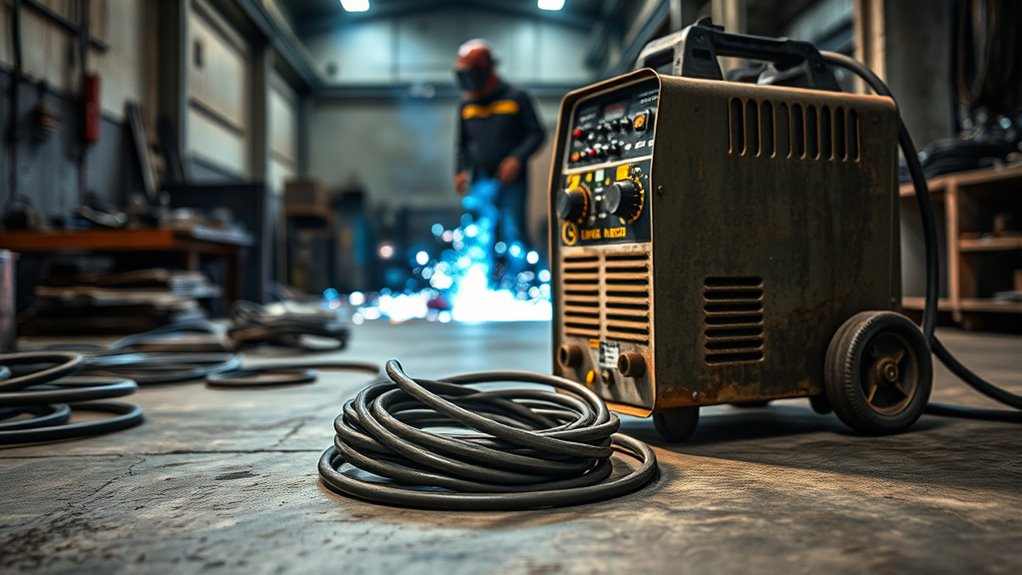
In product listings and casual shop language, “welder” often means the machine. A listing for a “140-amp MIG welder” normally describes equipment, not a worker. A compact unit such as the YESWELDER FLUX-135 MINI may be called a welder because that is the wording buyers commonly use when searching.
This shorthand is acceptable when the meaning is obvious:
- Casual but common: “I bought a new MIG welder.”
- More precise: “I bought a new GMAW/FCAW welding machine.”
- Ambiguous: “The welder needs maintenance.”
- Clear: “The welding power source needs maintenance.”
Use “welding machine” when writing general equipment instructions. Use “welding power source” when discussing current, voltage, polarity, duty cycle, input requirements, or output characteristics.
What Does AWS Say About Welding Terminology?
The American Welding Society publishes AWS A3.0M/A3.0:2025, Standard Welding Terms and Definitions. Its purpose is to establish consistent terminology for communicating information about welding and allied processes.
The complete standard is a copyrighted publication, so writers should not claim to quote an exact definition unless they have the applicable edition in front of them. The practical approach is to separate these ideas:
- Welder: The person performing manual or semiautomatic welding under common code usage.
- Welding operator: A person operating mechanized, automatic, adaptive-control, or robotic equipment under common code usage.
- Welding machine: A broad term for the welding equipment.
- Welding power source: The electrical-output component used for arc welding.
- Welding process: The method used to produce the weld.
When an AWS, ASME, API, military, employer, or customer document defines a term for a specific job, that governing definition takes priority. Consistent terminology helps welders, inspectors, supervisors, engineers, and maintenance personnel understand the same instruction.
The distinction also applies to related operations. A worker may need specific plasma cutter safety training, while the cutting power source, torch, leads, gas system, and consumables require separate inspection and maintenance.
Work Clamp vs Equipment Ground
The clamp attached to the workpiece is commonly called a “ground clamp,” but work clamp is the more accurate term. It connects the workpiece to the welding power source through the work lead and completes the welding-current circuit.
Protective equipment grounding serves a different purpose. It connects the machine frame or case to the facility’s grounding system to reduce electric-shock risk if an electrical fault energizes exposed metal. The work lead is not a substitute for the machine’s required protective grounding connection.
Note: Attach the work clamp to clean metal as close to the weld area as practical, following the procedure and equipment manual. Do not intentionally route welding current through chains, bearings, wire ropes, lifting equipment, gas cylinders, or unintended building components.
If the arc is unstable or the machine appears to have an output problem, inspect the work connection, lead condition, polarity, consumables, settings, and other likely causes before assuming the MIG welding machine is not working. Stop using equipment with exposed conductors, overheated connections, damaged insulation, or other safety defects.
How to Use Each Term Correctly
Use welder when the sentence concerns a person’s skill, job, qualification, actions, or responsibility. Use welding machine for the equipment as a whole. Use welding power source when discussing the unit’s electrical output.
- Job post: “We are hiring a welder with GMAW and GTAW experience.”
- Qualification record: “The welder completed the required performance test.”
- Automated production record: “The welding operator verified the robotic program and inspected the completed weld.”
- Maintenance note: “Inspect the welding machine, work lead, work clamp, electrode lead, torch, and input cable.”
- Equipment specification: “The welding power source provides constant-voltage DC output.”
- Product description: “This 120-volt welding machine supports self-shielded FCAW.”
- Safety instruction: “Disconnect and isolate the welding machine from input power before qualified personnel begin internal service.”
Pro Tip: Replace “welder” with “person” in the sentence. If the sentence still makes sense, you probably mean the worker. If “machine” makes more sense, write “welding machine” or name the exact equipment component.
The same rule applies to PPE. The welder or welding operator wears protective equipment. The welding machine has controls, cables, leads, connectors, a torch or electrode holder, and an input-power connection. Suitable protective clothing for arc welding is part of the worker’s safety setup, not a machine specification.
Frequently Asked Questions
What is a welding machine called?
A welding machine may be called a welder, arc welder, MIG welder, TIG welder, stick welder, multi-process welder, or welding system. “Welding machine” is clear for general equipment discussions. “Welding power source” is more precise when referring to the component that supplies controlled electrical output for arc welding.
Is a welding power source the same as a welding machine?
The terms may refer to the same unit on a small portable machine, but they are not always identical. A welding power source specifically produces controlled electrical output. A complete welding machine or system may also include a wire feeder, torch, cooler, controller, gas equipment, cables, and other components.
What is welding terminology?
Welding terminology is the set of standard and commonly used words for welding personnel, equipment, processes, joints, positions, symbols, filler metals, gases, discontinuities, inspection, and safety. Consistent terminology helps workers, inspectors, engineers, supervisors, and customers interpret instructions the same way.
Is a welding operator the same as a welder?
Not always. Welding codes commonly use “welder” for someone performing manual or semiautomatic welding and “welding operator” for someone operating mechanized, automatic, adaptive-control, or robotic equipment. The applicable code, qualification record, contract, or employer procedure controls the exact meaning.
What are the four main types of welding?
Stick, MIG, TIG, and flux-cored welding are four common arc-welding processes that beginners often compare. Their formal names are SMAW, GMAW, GTAW, and FCAW. They are not the only welding processes; resistance, submerged arc, laser, friction, oxygen-fuel, and other methods are also used.
Is it wrong to call a welding machine a welder?
It is common and usually understood in product names and casual speech. It becomes unclear in technical, qualification, inspection, maintenance, or safety documents because “welder” can also mean the person. Use “welding machine” or “welding power source” when precision matters.
Is the work clamp the same as a ground clamp?
People often call it a ground clamp, but “work clamp” is more accurate. The work clamp completes the welding-current circuit through the work lead. Protective equipment grounding connects the machine frame to the electrical grounding system and performs a different safety function.
Should I write welder or weldor?
Use “welder” for general writing unless a governing code, employer, school, or source document requires another spelling. “Weldor” appears in some older and specialized usage, but it is not a reliable way to distinguish a person from welding equipment.
Conclusion
A welder is normally the person who performs manual or semiautomatic welding. A welding machine is the equipment used to carry out the process, while a welding power source is the component that supplies controlled electrical output for arc welding. A welding operator may be a separate code-defined role involving mechanized, automatic, or robotic equipment.
Casual phrases such as “MIG welder” are widely understood, but formal documents should name the person, machine, power source, process, and components clearly. Also use “work clamp” for the welding-current connection and keep it separate from protective equipment grounding. Precise language improves job descriptions, qualification records, procedures, inspections, troubleshooting, maintenance, and safety communication.
Sources
- U.S. Bureau of Labor Statistics: Welders, Cutters, Solderers, and Brazers — supports the occupational meaning of welder, common duties, and equipment usage.
- O*NET Online: Welders, Cutters, Solderers, and Brazers — supports welding tasks, equipment setup, surface preparation, and inspection duties.
- American Welding Society: AWS A3.0M/A3.0:2025 — identifies the current standard reference for welding terms and definitions.
- OSHA 1910.252: General Welding, Cutting, and Brazing Requirements — supports fire prevention, PPE, ventilation, and general welding-safety context.
- OSHA 1910.253: Oxygen-Fuel Gas Welding and Cutting — supports the distinction between oxygen-fuel equipment and electric arc-welding power sources.
- OSHA 1910.254: Arc Welding and Cutting — supports equipment grounding, work-current connections, shutdown controls, cable inspection, and qualified repairs.