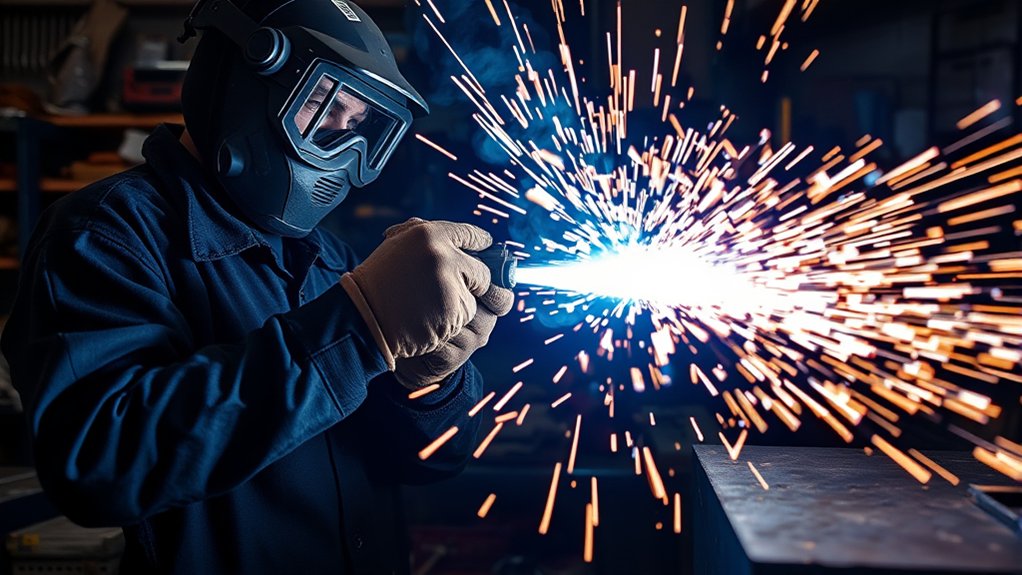
A plasma cutter can cut metal quickly, but the arc, electricity, hot slag, fumes, noise, and compressed gas can cause serious injury. Safe operation starts before you press the trigger. You must identify the material, inspect the machine, control fire and fumes, connect the work lead correctly, and put on the right protective equipment.
Quick Answer
Plasma cutter safety requires a fire-safe area, dry electrical setup, secure work lead, properly shaded eye protection, gloves, flame-resistant clothing, hearing protection, and effective fume control. Inspect the torch, leads, consumables, power source, and gas supply before every cut, and never cut an unprepared container or unknown coated metal.
Key Takeaways
- Move combustibles at least 35 feet away when practical; otherwise shield them and use a fire watch when required.
- Wear safety glasses beneath a shaded cutting helmet or face shield, along with gloves, flame-resistant clothing, boots, and hearing protection.
- Treat the work clamp as part of the cutting circuit, not as a substitute for the machine’s protective earth ground.
- Identify the base metal and every coating before cutting, then control fumes with source-capture ventilation.
- Disconnect input power before changing consumables or opening equipment, and check the area for hot metal or smoldering fires after the cut.
At a Glance
| Time Required | About 5–10 minutes for the pre-cut check, plus cooling, cleanup, and any required post-cut fire watch |
| Difficulty | Beginner-friendly only after reading the machine manual and receiving safe-use instruction |
| Tools Needed | Machine manual, full PPE, suitable fire extinguisher, ventilation or fume extractor, dry nonflammable support, work lead, and approved air or process-gas supply |
| Cost | No added cost when required safety equipment is already available; otherwise the cost varies by PPE and ventilation needs |
Essential Safety Rules for Plasma Cutting
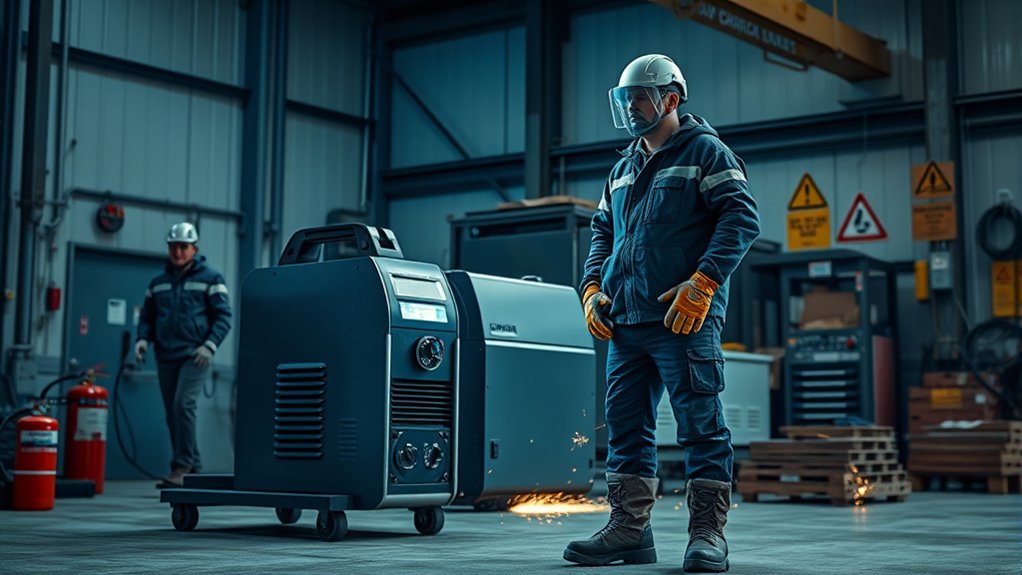
Start by reading the safety section of your plasma cutter manual. Confirm that the machine, torch, consumables, input voltage, air or gas supply, and cutting capacity match the job. Do not operate a machine you have not been trained to use, and do not bypass a cover, interlock, pressure switch, or other safety device.
Fire prevention comes next. Under OSHA’s welding and cutting requirements, combustible materials should be relocated at least 35 feet from hot work where practical. Check above, below, behind walls, through floor openings, and on the opposite side of metal panels because sparks and conducted heat can ignite material you cannot see.
If a combustible item cannot be moved, protect it with a suitable fire-resistant shield or cover. Keep an appropriate fire extinguisher ready, know how to sound an alarm, and assign a trained fire watch when the work conditions require one. A required fire watch must continue for at least 30 minutes after cutting to detect smoldering fires.
Warning: Never plasma cut a pressurized cylinder, sealed pipe, closed container, or used drum, barrel, tank, or hollow structure that has not been professionally cleaned, vented, tested, and prepared for hot work. An “empty” fuel or solvent container can still contain explosive vapor.
Keep gasoline, paint thinner, aerosol cans, cardboard, sawdust, oily rags, combustible dust, and other easily ignited materials outside the cutting zone. Maintain a clear exit, keep first aid supplies accessible, and position hot scrap so it cannot fall onto a hose, power cord, gas cylinder, vehicle, floor opening, or combustible surface.
Personal Protective Equipment (PPE) for Plasma Cutting
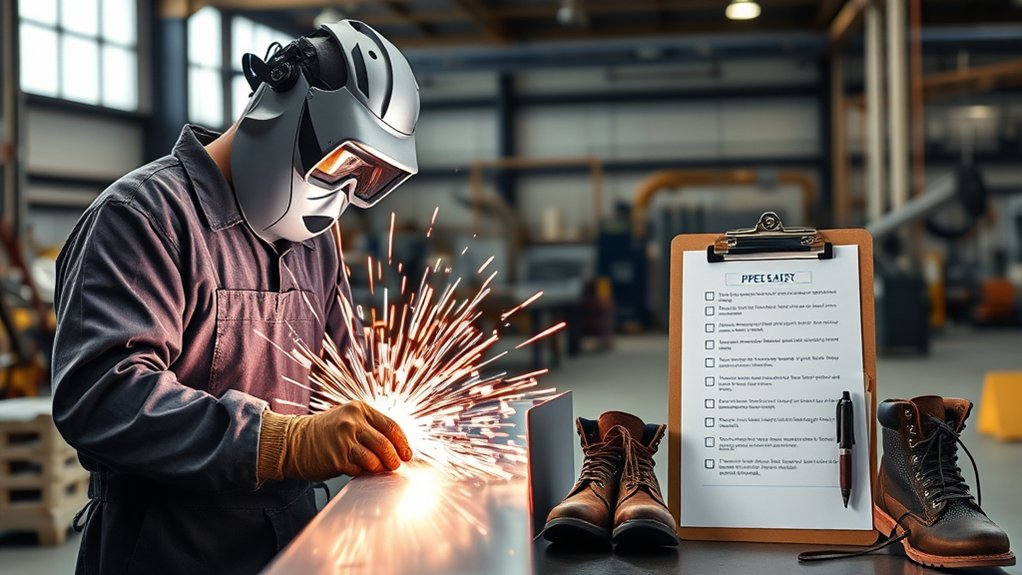
Your PPE must protect against optical radiation, hot sparks, molten slag, sharp metal, noise, and fumes. Put it on before energizing the machine.
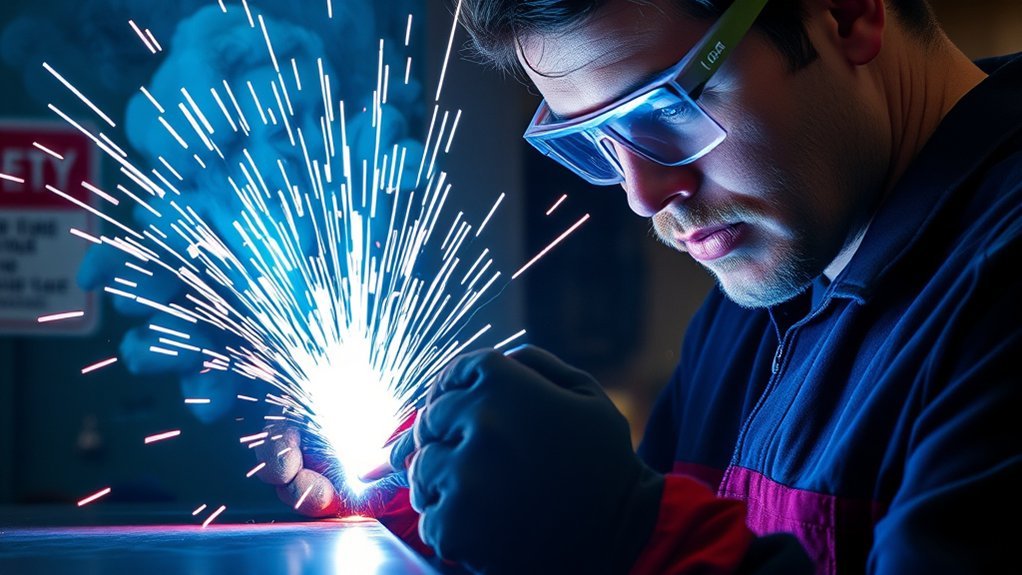
- Eyes and face: Wear impact-rated safety glasses with side shields beneath a plasma-cutting helmet or face shield fitted with the correct filter shade. An ordinary clear face shield does not protect against arc radiation.
- Hands: Wear dry, heat-resistant leather cutting or welding gloves. Replace gloves that are wet, torn, contaminated with oil, or worn through.
- Body: Wear flame-resistant long sleeves and long pants made for hot work. Keep collars and cuffs closed, remove exposed jewelry, and avoid synthetic fabrics that can melt against the skin.
- Feet: Wear dry leather work boots that cover the ankles. Keep pant legs over the boots so sparks cannot fall inside.
- Hearing: Wear earplugs or earmuffs when noise is high or when the machine manual, employer, or hazard assessment requires them.
- Respiratory protection: Use a properly selected respirator only after identifying the contaminant and evaluating the exposure. A generic dust mask is not a universal plasma-fume solution.
Safety glasses protect against flying particles, while the shaded helmet or shield protects against harmful arc radiation. For most cutting jobs, you need both layers.
Protect other people as well. Use suitable welding screens or curtains without blocking ventilation, and require assistants, fire-watch personnel, and nearby observers to use eye protection appropriate for their exposure.
Products Worth Considering

Lens Technology- IR 5.0 Filter Green Lens are ANSI & CSA compliant, with 99% protection from UV rays to reduce eye fatigue and prevent damage.

Strong & Durable Design: Thanks to their tough polycarbonate wraparound construction, these anti-fog safety goggles offer superior protection from both direct and peripheral threats.

Mirrored shade 5 lenses
Plasma Cutting Lens Shade Guide
For U.S. workplaces, OSHA’s eye and face protection table lists the following minimum filter shades for plasma arc cutting when the actual arc is clearly visible. Follow your machine manual and workplace rules when they require a darker shade.
| Plasma Arc Cutting Current | OSHA Minimum Protective Shade |
|---|---|
| Less than 300 amps | Shade 8 |
| 300–400 amps | Shade 9 |
| 400–800 amps | Shade 10 |
Note: OSHA states that these plasma-cutting values apply when the actual arc is clearly visible. Do not select a lighter filter merely because a darker one is inconvenient. Begin with a darker shade and lighten it only as allowed by the applicable standard and machine instructions.
Products Worth Considering

INFARED (IR) PROTECTION - Certified IR 5.0 protection for use in grinding, oxyfuel cutting, plasma cutting and more

2 Lenses - Double Protection One frame, two types of safety protection! Includes clear lenses (for daily shop inspections) and professional IR 5.0 blackout lenses (for welding).

Includes 5.0 IR filter lens: commonly used around welding sites or for medium to heavy cutting and Gas welding
Control Plasma Cutting Fumes Before You Cut
Plasma fumes come mainly from the base metal, coatings, contamination, and material heated by the arc. Before cutting, identify the metal and every coating on it. Review labels, safety data sheets, job records, or supplier information when the material is not known.
Pay special attention to galvanized metal, stainless steel, plated parts, painted surfaces, primers, lead-bearing coatings, cadmium coatings, and metal contaminated with oil or solvent. Remove hazardous coatings only with a method that controls the dust, debris, and chemical exposure created during removal.
OSHA’s welding-fume guidance recommends keeping the operator out of the fume plume and placing local exhaust close enough to capture contaminants near their source. Cutting outdoors or beside an open door does not guarantee adequate ventilation.
- Place the extractor so it pulls fumes away from your breathing zone without drawing sparks into combustible filters or ducts.
- Keep your head to the side of the rising plume rather than directly above the cut.
- Stop if smoke collects around your face or spreads through occupied areas.
- Do not recirculate contaminated air unless the system is designed and maintained for that purpose.
- Do not enter a tank, vessel, pit, or other confined space for plasma cutting without a formal confined-space assessment, atmospheric testing, ventilation, rescue planning, and qualified supervision.
Respirators are a backup when engineering controls and work practices cannot reduce exposure enough. In a workplace, required respirator use must follow OSHA’s respiratory protection requirements, including hazard-based selection, medical evaluation, fit testing, training, and maintenance.
Electrical Setup: Work Lead, Grounding, and Dry Conditions
Plasma cutters use high voltage. Keep your body, gloves, clothing, floor, machine, and work area dry. Do not stand on wet concrete, touch the workpiece while cutting, or use damaged electrical equipment.
The clamp commonly called a “ground clamp” is more accurately the work clamp or work lead. It completes the cutting circuit. Attach it securely to clean bare metal on the workpiece or an approved cutting table, as close to the cut as practical. Do not attach it to the scrap section that will fall away.
The work lead is separate from the machine’s protective earth ground. Install and ground the power source and cutting table according to the manufacturer’s instructions and applicable electrical rules. Use the input voltage, breaker, plug, receptacle, cord, and disconnect specified for the machine. Use an extension cord only when the manual permits it and the cord is correctly sized for the load and length.
Inspect the power cord, plug, torch lead, work lead, connectors, and machine case for cracks, exposed conductors, overheating, or loose parts. Stop using the machine if you find damage. Before inspecting or changing consumables, turn off and disconnect input power and follow the manual’s stored-energy discharge instructions. Only qualified personnel should open or repair the power-source enclosure.
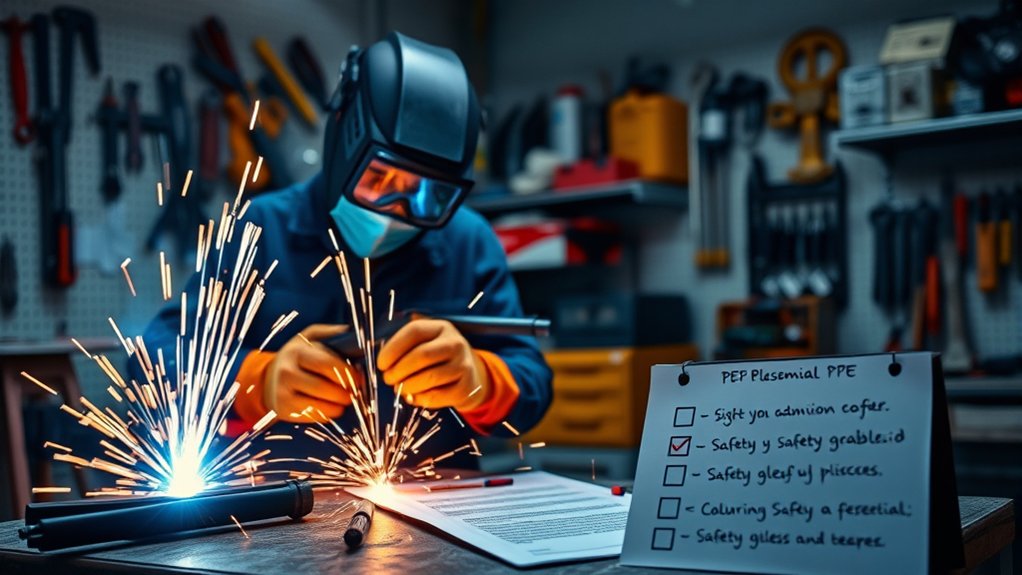
Setup Checklist for a Safe Plasma Cutting Environment
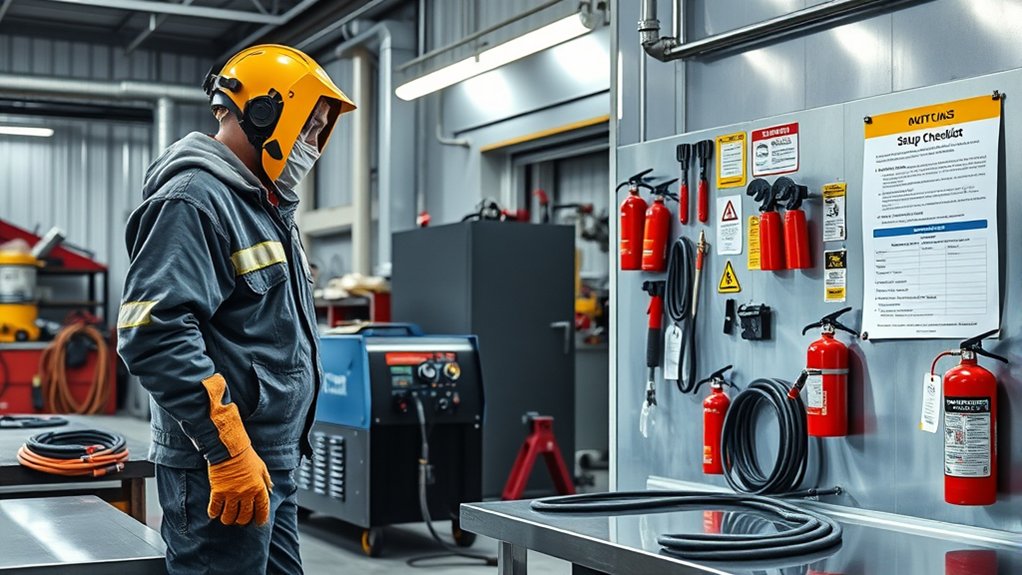
Complete this check before every cutting session. Stop and correct any failed item before pressing the torch trigger.
| Checklist Item | Action Required |
|---|---|
| Manual and Training | Confirm that the operator understands the machine controls, hazards, shutdown procedure, and material limits. |
| Clear Cutting Area | Move combustibles at least 35 feet away when practical and inspect hidden areas above, below, and behind the work. |
| Fire Protection | Shield immovable combustibles, place a suitable extinguisher within reach, and arrange a trained fire watch when required. |
| Containers and Voids | Do not cut a sealed, pressurized, uncleaned, or unknown-service container, pipe, tank, drum, or hollow structure. |
| Material Identification | Identify the base metal, plating, paint, primer, oil, solvent, and other coatings or contamination. |
| Machine Inspection | Check the power source, case, controls, cooling openings, power cord, plug, torch lead, work lead, and connectors. |
| Torch and Consumables | With input power disconnected, inspect the retaining cap, shield, nozzle, electrode, swirl ring, O-rings, and torch body. |
| Surface Setup | Use a stable, dry, nonflammable support rated for the workpiece, heat, sparks, and falling slag. |
| Work Lead | Clamp to clean bare metal on the workpiece or approved table, not to the section that will fall away. |
| Air or Process Gas | Use only the gas type, pressure, filters, regulators, hoses, and fittings specified by the machine manufacturer. |
| Ventilation | Start general ventilation or source-capture extraction and confirm that fumes move away from the operator and bystanders. |
| Personal Protective Equipment | Wear safety glasses, a correctly shaded helmet or shield, dry gloves, flame-resistant clothing, boots, and hearing protection. |
| Torch Path and Drop Zone | Plan the cut, control the falling piece, and keep the torch lead, air hose, power cord, and body out of the spark path. |
| Bystanders and Exit | Set up screens, restrict access, protect observers, and maintain a clear path to the power disconnect and exit. |
Pro Tip: Print this checklist and keep it beside the machine. A written routine makes it less likely that you will skip the work lead, ventilation, fire check, or PPE when a job seems quick.
Common Plasma Cutting Mistakes to Avoid
Many plasma cutting problems begin before the arc starts. Cutting painted, oily, rusty, plated, or dirty metal without identifying and controlling the contamination can increase fumes, arc instability, and fire risk. Worn consumables and incorrect air pressure can also cause poor starts, excess slag, torch damage, and unpredictable sparks.
Do not cut wet metal or operate in damp conditions. Keep your hands, gloves, clothing, floor, work surface, power source, and electrical connections dry.
- Do not cut without a secure work-lead connection.
- Do not attach the work lead to the scrap section that will drop away.
- Do not stand in the direct path of sparks, hot slag, or falling metal.
- Do not touch freshly cut metal with bare hands.
- Do not pick up or reposition the workpiece while the arc is active.
- Do not use substitute torches, consumables, gas, or pressure settings not approved for the machine.
- Do not wrap the torch lead or work lead around your body.
- Do not block machine cooling openings or place the unit where sparks can enter it.
- Do not bypass guards, covers, machine settings, or safety switches.
- Do not change consumables while input power remains connected.
What to Do Before You Make the First Cut
- Read the job and machine requirements. Confirm the metal type, thickness, amperage, consumables, input power, and approved air or gas settings.
- Make the area fire-safe. Remove or shield combustibles, inspect hidden areas, prepare an extinguisher, and arrange a fire watch when required.
- Identify coatings and fume hazards. Do not cut unknown, solvent-wet, painted, plated, or contaminated material until you know how to control the exposure.
- Set up ventilation and screens. Place source capture near the plume, protect bystanders from arc radiation, and keep the exit clear.
- Inspect the machine. With power disconnected where required, check the cords, leads, torch, consumables, filters, connectors, and machine case.
- Connect the work and gas systems. Secure the work lead to clean metal and set only the manufacturer-approved gas type and pressure.
- Put on all PPE. Wear safety glasses beneath the correctly shaded helmet or shield, along with gloves, flame-resistant clothing, boots, and hearing protection.
- Perform a dry run. Trace the torch path without firing, confirm your body position, control the drop piece, and route every cord and hose away from the cut.
Note: A dry run means checking the planned movement without starting the arc. Keep the torch pointed away from your body and make sure the trigger cannot be pressed accidentally.
Safe Shutdown and Post-Cut Fire Check
When the cut is complete, release the trigger and keep the torch pointed in a safe direction during its post-flow cycle. Turn off the power source when the job is finished. Close or isolate the air or gas supply as instructed by the manufacturer.
Do not touch the cut edge, scrap, torch tip, or nearby table surfaces until they have cooled. Use tools designed for hot metal and mark or isolate hot pieces so another person does not pick them up.
Inspect the cutting area, floor openings, shields, walls, the opposite side of metal panels, and any lower level where sparks may have traveled. When a fire watch is required, maintain it for at least 30 minutes after cutting and longer when site conditions or workplace procedures require it.
Before cleaning the torch or replacing consumables, disconnect input power and follow the machine manual’s waiting period for stored energy to discharge. Clean slag and sharp offcuts only after they are cool, then report or repair damaged equipment before the next use.
Frequently Asked Questions
How often should you maintain or service plasma cutter equipment?
Inspect the machine, power cord, torch lead, work lead, torch parts, and consumables before each use. Follow the service intervals in the machine manual because filter, torch, cooling, and internal inspection schedules vary by model and operating conditions. Disconnect input power and the gas supply before maintenance.
What are the common signs of wear on plasma cutter consumables?
Common signs include a distorted nozzle opening, deep electrode pitting, cracked or burned parts, poor arc starts, an angled arc, wider kerf, rough edges, and more slag than normal. Turn off and disconnect the machine before inspecting or replacing consumables.
Can you use a plasma cutter outdoors in different weather?
Use a plasma cutter outdoors only when the machine, connections, operator, and work area remain dry and stable. Do not cut in rain or on wet ground. Avoid wind that carries sparks toward combustibles or blows fumes into people. Outdoor air alone does not guarantee adequate fume control.
How can you reduce noise during plasma cutting?
Wear suitable earplugs or earmuffs, keep unnecessary people outside the cutting area, maintain the torch and air system, and use manufacturer-approved noise controls. Do not install makeshift barriers that block ventilation, hide combustibles, or reflect sparks toward the operator.
What should you do after a plasma cutter injury?
Stop the machine and disconnect power if you can do so without exposing yourself to the hazard. Do not touch a person who is still in contact with energized equipment. Contact emergency services for electric shock, serious burns, eye injury, heavy bleeding, chest pain, breathing trouble, or loss of consciousness. Do not restart work until the cause has been corrected.
What shade lens should you use for plasma cutting?
For U.S. workplaces where the arc is clearly visible, OSHA lists minimum shades of 8 below 300 amps, 9 from 300 to 400 amps, and 10 from 400 to 800 amps. Follow the machine manual and workplace rules when they require a darker shade, and wear impact-rated safety glasses beneath the shaded helmet or shield.
Can you plasma cut galvanized, stainless, or painted metal?
These materials can create hazardous fumes from zinc, chromium, paint, primers, plating, or other coatings. Identify the material and coating first, use source-capture ventilation, keep out of the plume, and obtain a hazard-specific respirator assessment when ventilation cannot control exposure.
Where should you place the plasma cutter work clamp?
Attach the work clamp to clean bare metal on the workpiece or an approved cutting table, close to the cut when practical. Do not attach it to the section that will fall away. Remember that the work lead completes the cutting circuit and does not replace the machine’s protective earth ground.
Can you plasma cut an empty fuel tank or drum?
Not merely because it is empty. Residual vapor, sludge, coatings, and trapped pressure can cause an explosion or toxic exposure. Do not cut a used tank, drum, barrel, pipe, or hollow structure unless qualified personnel have cleaned, isolated, vented, tested, and approved it for hot work.
Safety Disclaimer: This article provides general educational information and does not replace hands-on training, a workplace hazard assessment, your plasma cutter manual, applicable electrical and hot-work rules, or professional advice. Stop work and obtain qualified help whenever you cannot identify the material, control fumes, make the area fire-safe, or verify the electrical setup.
Conclusion
Safe plasma cutting depends on the checks you complete before, during, and after the arc. Make the area fire-safe, identify the metal and coatings, control fumes, inspect the equipment, connect the work lead correctly, and wear complete PPE. After cutting, isolate hot material, disconnect power before maintenance, and inspect for smoldering fires. When any part of the setup is uncertain, stop and correct it before continuing.
Sources
- OSHA 29 CFR 1910.252 — General Requirements — fire prevention, combustible clearance, fire watches, container preparation, ventilation, and hot-work controls
- OSHA 29 CFR 1910.133 — Eye and Face Protection — minimum filter-lens shades for plasma arc cutting
- OSHA — Controlling Hazardous Fume and Gases During Welding — coating hazards, ventilation, source capture, and operator positioning
- OSHA 29 CFR 1910.134 — Respiratory Protection — respirator selection, fit testing, training, and program requirements
- Hypertherm Safety and Compliance Manual — plasma electrical hazards, work-lead placement, grounding, fire control, compressed-gas safety, and equipment isolation
- Hypertherm Powermax Preventive Maintenance Guidance — torch, lead, consumable, filter, and power-isolation checks