Disclosure: As an Amazon Associate, we earn from qualifying purchases. If you click a link on this page and make a purchase, we may receive a small commission at no extra cost to you.
Welding goggles can make quick jobs easier, but your main concern should be simple: will they protect your eyes well enough for the task in front of you? The Auto Darkening Welding Goggles are built for lighter welding work where you want less bulk than a full helmet and faster visibility between arcs. This review helps you decide where they fit, what the 5 to 13 shade range means in practice, and when you should step up to full-face protection. They offer useful auto-darkening convenience, but they are not the right answer for every welding setup.
Quick Verdict
Rating: Recommended with caveats (8/10)
Best For: DIY welders, quick repairs, tack welding, and light to medium workshop jobs
Bottom Line: You get lightweight eye protection with automatic dimming, UV/IR shielding, and an adjustable 5 to 13 shade range. The tradeoff is limited face coverage, so long industrial sessions and high-spatter work still call for a full welding helmet.
| Specification | Detail |
|---|---|
| Product Type | Auto darkening welding goggles |
| Design | Compact eye-protection design for welding tasks |
| Weight | Approx. 300g |
| Shade Range | 5 to 13 adjustable |
| Material | Lightweight PC (polycarbonate) |
| Protection | UV and infrared radiation shielding |
| Technology | Auto darkening with high-sensitivity probe |
| Ventilation | Built-in ventilation holes for airflow |
| Best Use | Light to medium welding, quick repairs, tack welding, and workshop projects |
| Safety Note | Not a full-face replacement for heavy-duty, high-spatter, or long industrial welding sessions |
What Are the Auto Darkening Welding Goggles?
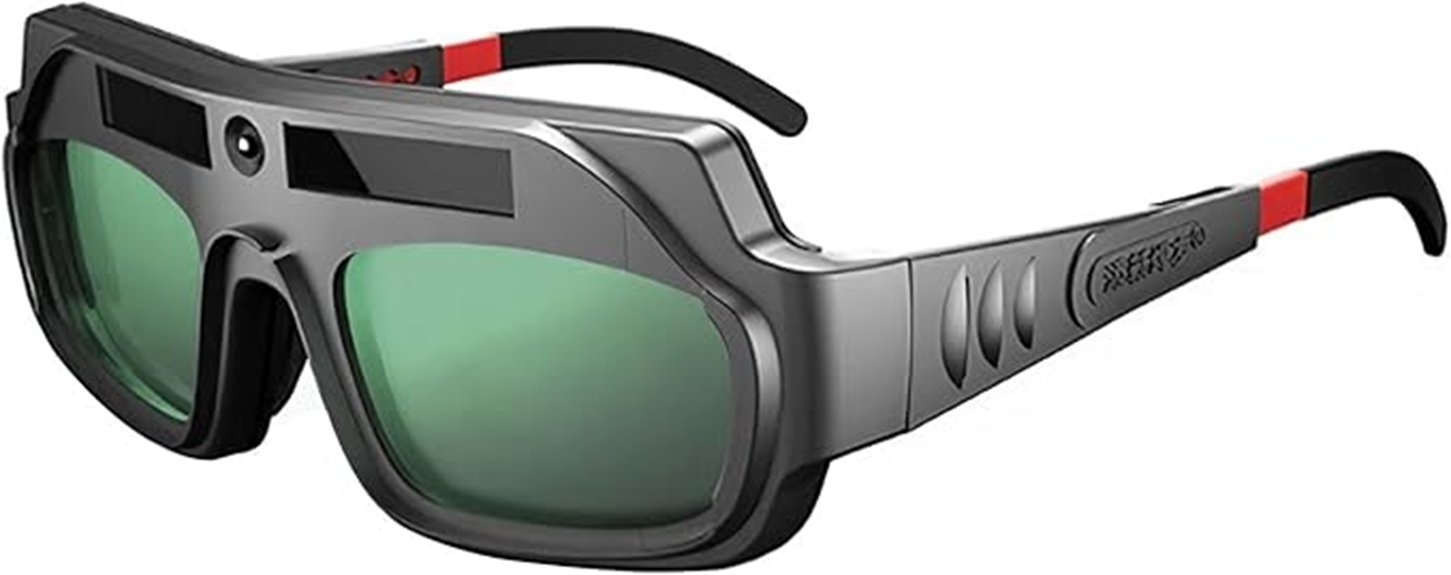
These Auto Darkening Welding Goggles are compact welding eye protection designed for jobs where a full helmet feels bulky or slows you down. The lens uses an auto-dimming filter that reacts to arc light and shifts to a darker shade while you work.
The article-supported specs point to a lightweight PC frame, an approximate 300g weight, ventilation holes, UV/IR shielding, and an adjustable shade range from 5 to 13. That mix makes the goggles most useful for short welds, maintenance work, DIY fabrication, and confined spaces where mobility matters.
Because the product is goggles instead of a helmet, you should treat them as task-specific eye protection rather than complete face protection. For grinding, overhead welding, heavy spatter, or long arc-welding sessions, you may need additional PPE or a full helmet that matches your work process.
Who Should Buy It?
Best For
- DIY welders who need quick eye protection for short jobs
- Workshop users who want a lighter option than a full helmet
- Maintenance work, tack welding, and repairs in tight spaces
Skip If
- You need full-face coverage from sparks, spatter, and UV exposure
- You weld for long continuous shifts and need helmet-level stability
- Your workplace requires a specific certified helmet or face shield
Key Features and Build Quality
The goggles use lightweight polycarbonate material, which helps keep the listed weight around 300 grams. That matters when you need to lean, crouch, or work in a small area where a bulkier helmet can feel restrictive.
Ventilation holes help move warm air away from your face and reduce the sealed-in feel that some goggles create. They do not turn the goggles into breathable safety gear for fumes, so you still need proper ventilation and respiratory protection when your welding process calls for it.
Auto Darkening Technology
The built-in high-sensitivity probe reacts to arc light and darkens the lens automatically. This helps you keep both hands on the workpiece or tool instead of stopping to lift and lower protection between short welds.
Auto darkening also helps during repeated tack welds because you can see the joint before the arc starts and regain visibility after the arc stops. The benefit is speed and convenience, not a license to ignore correct shade settings or full PPE requirements.
Adjustable Shade Control
The 5 to 13 shade range gives you room to match lens darkness to different welding brightness levels. Lower settings can help with visibility in lighter work, while higher settings give more protection during brighter arcs.
You should set the shade before active welding and adjust it cautiously if the weld puddle looks too bright or too dark. Do not use the lowest visible setting just because it feels easier to see through.
Pro Tip: Start with a darker shade that still lets you see the weld area, then step down only as needed for a clear view without going below the protection your task requires.
Performance and Eye Protection
The main performance advantage is fast light control. When the arc starts, the auto-darkening filter helps reduce sudden glare and eye strain during short bursts of welding.
The goggles also include UV and infrared protection, which is important because welding light can damage your eyes even when the arc exposure feels brief. Still, eye protection alone does not cover your cheeks, neck, or forehead, so consider the full exposure area before choosing goggles over a helmet.
For the best result, use the adjustable shade range with the welding process, arc brightness, and amperage in mind. A shade that works for one task may not be right for another.
Comfort and Fit
The lightweight PC frame should feel easier to wear than many full helmets during short sessions. At around 300 grams, the goggles are less likely to pull on your neck when you work overhead or move around a small bench area.
The compact fit can also be a drawback. Goggles may feel less stable than a helmet during long continuous work, and tight contact around the face may bother sensitive users if heat builds up.
Before you start a full job, test the fit, seal, and visibility in a safe setup. If the goggles shift when you move your head, they are not the best choice for that task.
Before You Buy: These goggles are better suited for light to moderate welding tasks. They do not give the same face, neck, and spatter coverage as a full welding helmet.
Material Safety and Comfort
The listed PC, or polycarbonate, build makes sense for protective eyewear because the material is light and commonly used where impact resistance and clarity matter. The frame keeps bulk low, which helps when you need better movement than a helmet allows.
Because the goggles touch your skin, fit and airflow matter. If you feel pressure around the nose, cheeks, or temples, adjust the fit before welding rather than pushing through discomfort.
Do not assume the shade range alone proves workplace compliance. If you weld professionally, confirm the product labeling, workplace rules, and required eye and face protection standard before relying on these goggles.
How to Use It Correctly
Check the lens, frame, and strap before each use. Cracks, loose parts, or a lens that does not darken consistently should stop the job until you replace or repair the protection.
Set your shade before striking an arc. Begin at a protective setting for the process, then make small adjustments only when you can keep a clear view without too much brightness.
Pair the goggles with the rest of the protection your task requires. That may include gloves, flame-resistant clothing, ventilation, respiratory protection, and face protection for spatter or grinding.
How It Performs in Real Use
For Quick Repairs
For short welds and maintenance fixes, the goggles are convenient because you do not need to keep lifting a helmet between tiny arcs. The auto-darkening response helps you line up the work and then handle the arc without a manual flip.
For Workshop Projects
In small fabrication tasks, the lightweight frame gives you more head movement and less bulk. This helps when you need to inspect a joint, reposition a clamp, or move around a bench between short welds.
For Tight Spaces
The compact design helps when a helmet hits a surface or blocks your angle of view. That makes the goggles useful for confined repairs, but you should still check whether exposed skin or nearby spatter creates a separate safety issue.
For Occasional DIY Use
Hobby welders who only weld occasionally may appreciate the simpler fit and easy storage. The limitation is that a casual user may be more likely to choose the wrong shade, so the adjustable lens needs careful setup before each job.
Pros and Cons
Pros
- Approx. 300g PC build keeps the goggles light for short sessions
- Auto darkening helps protect your eyes during repeated arc starts
- Adjustable 5 to 13 shade range supports different brightness levels
- UV and IR shielding adds important protection during welding work
- Ventilation holes help reduce heat buildup around the face
Cons
- Does not provide full-face coverage like a welding helmet
- May feel less stable during long continuous welding sessions
- Requires correct shade setup and may involve some trial and error
Want lighter welding eye protection for quick jobs?
Is It Worth the Price?
These welding goggles sit in the budget to mid-range category and make the most sense when convenience matters. You get a compact build, adjustable shade control, auto darkening, UV/IR shielding, and a lighter feel than a full helmet.
They offer strong value for the price if you mostly do quick repairs, light fabrication, and occasional DIY welding. They are not the best fit if your work needs full-face protection, verified workplace certification, or all-day helmet stability.
Before buying, compare the product requirements against your actual welding tasks. Saving space and weight is helpful only when the protection level still matches the job.
How It Compares to Alternatives
Compared to full auto-darkening welding helmets, these goggles trade coverage and stability for lighter weight and easier movement. A helmet is the safer pick for long welds, overhead work, heavy spatter, and jobs where your whole face needs protection.
Compared to basic passive welding goggles, this model adds automatic dimming and shade adjustment, which makes repeated short welds easier. Passive goggles can be simpler, but they do not give the same convenience before and after the arc starts.
Frequently Asked Questions
Do these goggles replace a full welding helmet?
They can replace a helmet only for some light or short tasks where eye protection is the main need. For heavy-duty welding, overhead work, or high-spatter jobs, a full helmet gives better face and neck coverage.
Is the shade adjustable while working?
The shade range is adjustable from 5 to 13, but you should set it before active welding. Stop and reset the shade if the weld area looks too bright or too dark.
Are they comfortable for long use?
They should feel comfortable for short to medium sessions because the frame is lightweight. Long continuous welding may still feel less stable than a full helmet.
Do they protect against UV and IR rays?
Yes, the article-supported specs list UV and infrared radiation shielding. You should still confirm the product label and use the correct shade for your welding process.
What welding jobs are they best for?
They fit quick repairs, tack welding, light to medium workshop jobs, and tight spaces where a helmet feels bulky. They are less ideal for all-day industrial welding or tasks with heavy spatter.
Can you use them for grinding?
Do not assume they are enough for grinding unless the product labeling says they are suitable for that use. Grinding can throw particles at your face, so a face shield or rated eye and face protection may be needed.
What is the biggest mistake to avoid?
The biggest mistake is treating compact goggles like complete welding protection. Check the shade, fit, lens condition, and face-coverage needs before each job.
The Bottom Line
The Auto Darkening Welding Goggles are a practical choice if you want lightweight, quick-reacting eye protection for short welding tasks, tack welds, and DIY workshop repairs. They earn the recommended-with-caveats verdict because the 5 to 13 shade range, UV/IR shielding, and 300g PC build are useful, but the compact design does not replace full-face helmet coverage.
Buy them for convenience and mobility. Skip them if you weld for long shifts, face heavy spatter, or need workplace-approved full-face protection.