Disclosure: As an Amazon Associate, we earn from qualifying purchases. If you click a link on this page and make a purchase, we may receive a small commission at no extra cost to you.
Choosing a TIG filler rod gets frustrating when your mild steel is not perfectly clean, your bead shape matters, and you still need predictable arc control. The WeldingCity ER70S-6 TIG welding rods are made for mild steel fabrication and repair work where extra deoxidizers can help the puddle wet out more smoothly. They are a practical choice for frames, brackets, small pipe, and sheet metal, but they are not a universal filler for aluminum, stainless steel, or specialty alloys. This review helps you decide whether the rod size range, 36-inch length, copper coating, and ER70S-6 formulation match your work.
Quick Verdict
Rating: 8/10, Recommended with caveats
Best For: DIY welders, repair shops, fabrication work, maintenance welding, and mild steel projects with light surface contamination
Bottom Line: These rods make sense if you want a mild steel TIG filler with smooth puddle behavior and multiple diameter options. The main tradeoff is material compatibility, since this is not the right filler for aluminum, stainless steel, cast iron, or non-ferrous metals.
Key Specifications
| Specification | Detail |
|---|---|
| Brand | WeldingCity |
| Product Type | ER70S-6 TIG welding rods |
| Welding Process | TIG / GTAW mild steel filler rod use |
| Material | Mild steel filler wire with copper coating |
| Rod Length | 36 inches |
| Diameter Options | 0.045", 1/16", 3/32", and 1/8" |
| Standard Listed | AWS A5.18 / ASME SFA A5.18 |
| Key Alloy Features | Higher manganese and silicon content for improved wetting and fluidity |
| Compatibility | Mild steel projects only |
| Best Use | General fabrication, maintenance welding, small pipe, frames, brackets, and sheet metal repairs |
| Storage Note | Keep rods dry and clean to reduce oxidation and contamination before welding |
What Is the WeldingCity ER70S-6 TIG Welding Rod?
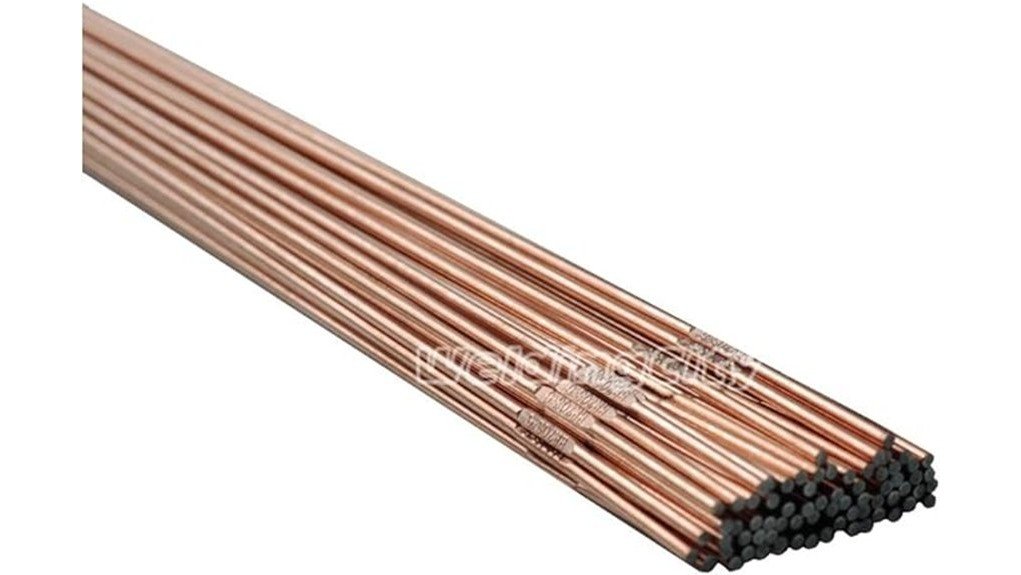
The WeldingCity ER70S-6 is a mild steel TIG filler rod for general fabrication, repair, and maintenance welding. It is built around the ER70S-6 filler classification, which is commonly chosen when you want a smooth-flowing weld pool on carbon steel workpieces.
The rod uses a copper coating and comes in a 36-inch length. That length gives you enough reach for bench work, pipe sections, brackets, and small structural repairs without switching rods too often.
Its biggest appeal is the higher manganese and silicon content compared with simpler mild steel filler choices. Those elements help with wetting action and puddle fluidity, especially when the base metal has light rust, mill scale, or small surface imperfections. You should still clean the joint first, because no filler rod replaces good preparation.
Key Features and Performance
Welding Stability and Puddle Control
The ER70S-6 formulation focuses on steady mild steel welds with a fluid puddle. That helps when you need a consistent bead shape across short repair welds or repeated fabrication joints.
This rod is especially useful when your travel speed is not perfectly even. The more fluid puddle can make the bead easier to watch and control, though your machine settings, torch angle, shielding gas, and fit-up still matter.
Surface Tolerance on Mild Steel
One reason welders choose ER70S-6 is its tolerance for mild surface contamination compared with more basic filler rods. It can help on repair work where the steel is slightly rusty, lightly dirty, or not as clean as new stock.
That tolerance has limits. For the strongest and cleanest welds, grind or brush away rust, paint, oil, heavy mill scale, and moisture before you start. The rod can make imperfect shop conditions easier to manage, but it should not become an excuse for poor prep.
Diameter Flexibility
The listed diameter options include 0.045", 1/16", 3/32", and 1/8". That range lets you match the filler size to the base metal, heat input, and weld joint style.
Use smaller rods for thinner sheet metal and detail work where puddle control matters more than deposition speed. Larger diameters make more sense on thicker mild steel, frames, and repair welds where you need more filler metal in the joint.
Copper Coating and Storage
The copper coating helps protect the rod surface during storage and handling. It also supports smooth feeding by hand because the rod feels more consistent and less rough than bare wire.
Storage still matters. Keep the rods dry, clean, and away from shop moisture. If the surface becomes dirty or oxidized, wipe it before welding so you do not carry contamination into the puddle.
Before You Buy
Before You Buy: These rods are for mild steel TIG welding only. Do not buy them for aluminum, stainless steel, cast iron, copper, brass, or specialty alloy work unless a qualified welding procedure specifically calls for this filler.
Pro Tip: Match rod diameter to the thinnest part of the joint, not just the thickest plate. This helps you avoid adding too much filler and heat on sheet metal or small repair tabs.
Who Should Buy It?
Best For
- DIY welders working on mild steel brackets, tabs, frames, and small repairs
- Fabrication shops that want several diameter choices for common TIG work
- Maintenance welders dealing with mildly imperfect steel after normal cleaning
Skip If
- You need filler for aluminum, stainless steel, cast iron, or non-ferrous metals
- Your project requires a certified welding procedure with a different filler classification
- You want one rod that covers every metal type in your shop
Compatibility and Safety
Use these rods only with compatible mild steel TIG welding projects. If your base metal is unknown, plated, coated, galvanized, painted, or part of a critical structure, confirm the material and welding procedure before you strike an arc.
Wear proper welding PPE, maintain ventilation, and use the correct shielding gas setup for your process. The filler rod can support a clean weld, but it cannot compensate for unsafe work conditions, poor fit-up, or the wrong filler for the base metal.
How to Use It for Better Results
Clean the Joint First
Brush, grind, or wipe the joint area before welding. ER70S-6 can tolerate light contamination better than some filler choices, but clean steel still gives you a more predictable puddle and bead.
Choose the Right Diameter
For thin sheet metal, start with a smaller diameter so you can add filler gradually. For heavier mild steel sections, a larger rod can fill the joint faster and reduce how often you need to dip.
Keep Rods Straight and Dry
Store unused rods in a dry place and avoid handling the filler end with greasy gloves. Bent, dirty, or oxidized rods make it harder to feed smoothly and can affect weld appearance.
How It Performs in Real Use
For Repair Work
These rods fit general repair jobs such as brackets, tabs, frames, and small structural fixes. The added silicon and manganese help the puddle stay workable when the steel has minor surface flaws after cleaning.
For Fabrication Projects
In shop fabrication, the rod gives you a predictable filler choice for repeated mild steel joints. The 36-inch length also works well at a bench because you can keep a steady hand position through longer beads.
For Small Pipe and Tube Work
For small pipe or tube repairs, the fluid puddle can help you maintain a consistent bead around changing angles. You still need the right gap, clean edges, and steady torch control to avoid undercut or uneven penetration.
For Thin Sheet Metal
The smaller listed diameters are useful when you need controlled filler addition on thinner mild steel. Keep heat input low, move carefully, and avoid oversized filler that can make the bead bulky.
Pros and Cons
Pros
- ER70S-6 formulation supports smooth puddle flow on mild steel
- Higher manganese and silicon content helps with wetting action
- Multiple diameter options cover thin sheet metal through heavier repair work
- 36-inch rod length is practical for bench, pipe, frame, and bracket welding
- Copper coating helps protect the rod surface during storage and handling
Cons
- Not compatible with aluminum, stainless steel, or most specialty metals
- Still requires proper surface prep for clean, strong welds
- Wrong diameter choice can add too much heat or slow down thicker welds
Is It Worth the Price?
The WeldingCity ER70S-6 TIG welding rods offer strong value if you regularly weld mild steel and want one filler type for many shop and repair tasks. You get practical diameter options, a common 36-inch rod length, and a formulation aimed at smooth puddle behavior.
They are worth considering if you care more about mild steel versatility than specialty-metal coverage. They are not the best fit if your work often involves aluminum, stainless steel, cast iron, or code work that requires a different approved filler.
How It Compares to Alternatives
Compared with other mild steel TIG filler choices such as ER70S-2 or ER70S-3, ER70S-6 is usually chosen when you want strong wetting behavior and better tolerance for lightly imperfect steel. That makes it appealing for repair and fabrication work where the material is not always new or perfectly clean.
If you weld stainless steel, compare stainless filler rods instead. If you weld aluminum, compare aluminum TIG filler such as 4043 or 5356 options that match your base alloy and procedure. The WeldingCity ER70S-6 makes the most sense when your main work is mild steel.
Frequently Asked Questions
What metal are WeldingCity ER70S-6 TIG rods best for?
They are best for mild steel and carbon steel TIG welding projects. Use them for fabrication, maintenance repairs, brackets, frames, small pipe, and sheet metal when ER70S-6 is the right filler classification.
Can these rods be used for aluminum or stainless steel?
No. These rods are for mild steel, so they are not suitable for aluminum, stainless steel, cast iron, brass, copper, or other specialty metals. Choose a filler rod that matches your base metal and welding procedure.
Which diameter should you choose?
Use 0.045" or 1/16" for thinner mild steel and more detailed control. Use 3/32" or 1/8" for heavier material, larger joints, or repair work that needs more filler metal.
Do you still need to clean the steel before welding?
Yes. ER70S-6 can handle light surface contamination better than some basic filler choices, but clean steel is still better. Remove oil, paint, heavy rust, moisture, and loose mill scale before welding.
Can you use these rods outdoors?
You can TIG weld outdoors only when you can protect the shielding gas from wind. If the gas coverage gets disturbed, weld quality can suffer, so use wind protection and safe ventilation.
How should you store these TIG rods?
Store them in a dry, low-humidity area and keep them clean before use. Moisture, dirt, and shop grime can affect arc behavior and bead appearance.
Does the copper coating mean the weld is copper?
No. The rod is a mild steel filler wire with a copper coating on the surface. The coating helps with handling and storage, but the filler is intended for mild steel welding.
The Bottom Line
The WeldingCity ER70S-6 TIG welding rods are a strong fit for mild steel welders who want smooth puddle control, useful diameter options, and better tolerance for lightly imperfect steel. Buy them for general fabrication, maintenance, pipe, bracket, frame, and sheet metal work, but skip them if your project needs aluminum, stainless, cast iron, or another specialty filler.