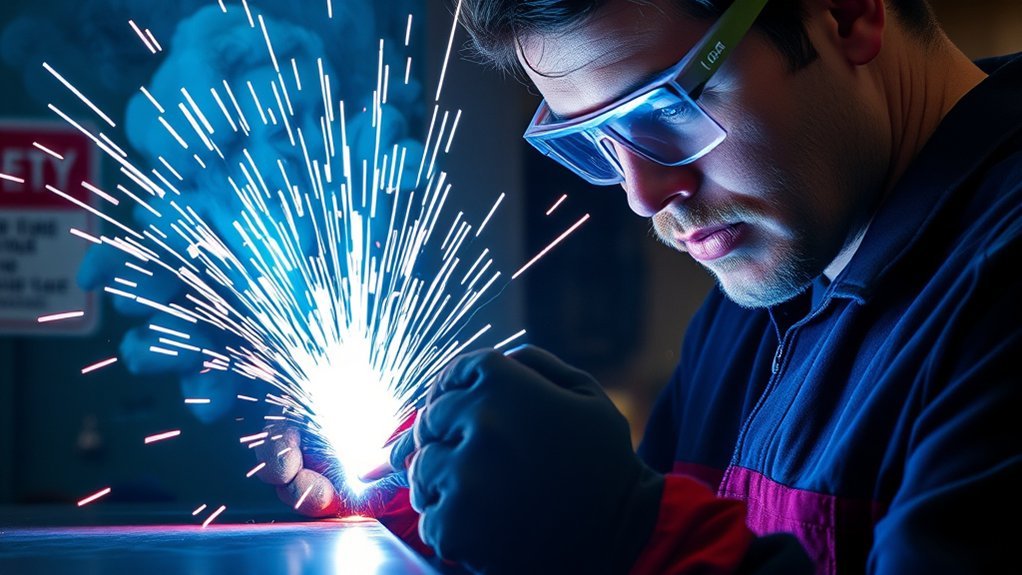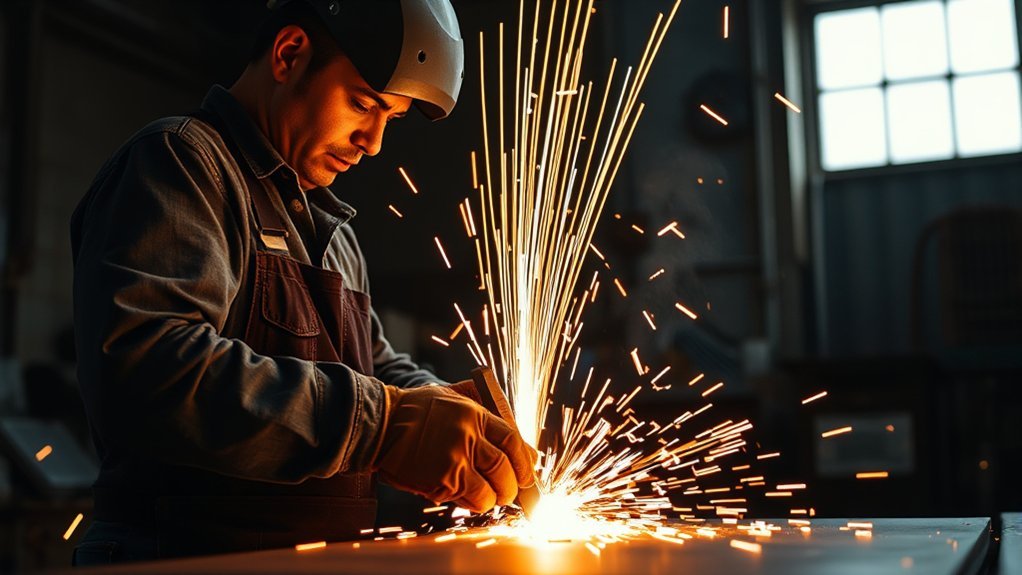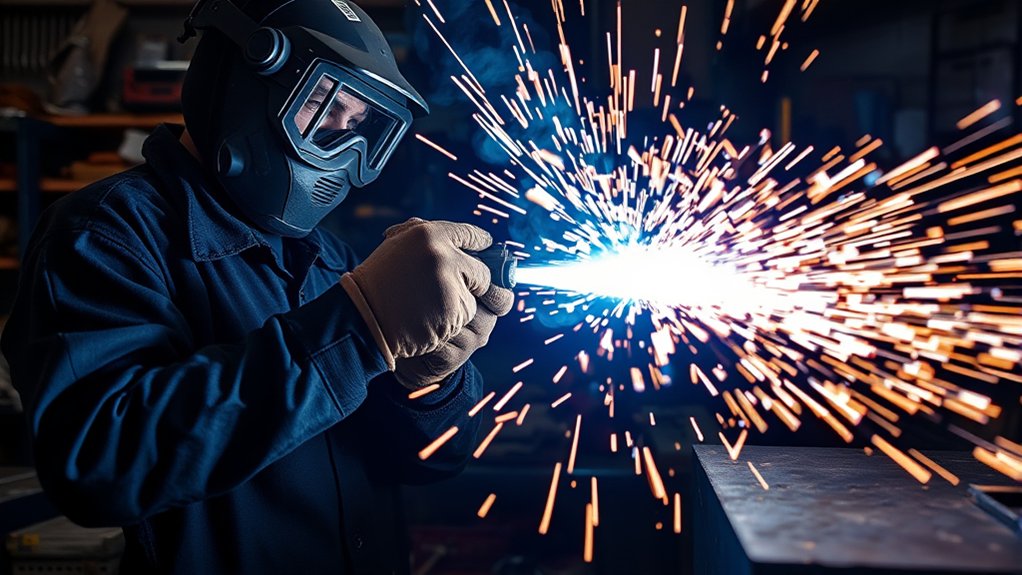
A plasma cutter can slice conductive metal quickly, but the same arc can cause fatal electric shock, severe burns, eye damage, hearing loss, fires, explosions, and harmful fume exposure. Safe plasma cutting starts before you pull the trigger: identify the metal and coatings, inspect the system, control sparks and fumes, and put on the correct protective equipment.
Quick Answer
Plasma cutting can be done safely only when you control electrical, fire, fume, light, noise, and burn hazards before the arc starts. Wear rated eye and face protection, dry flame-resistant PPE, use source-capture ventilation, connect the work lead correctly, maintain protective grounding, clear combustibles, and inspect the machine and material.
Key Takeaways
- Treat every plasma cutter as high-voltage hot-work equipment, even when the cut will take only a few seconds.
- Use safety glasses under a properly shaded helmet or face shield, plus dry gloves, flame-resistant clothing, leather footwear, and hearing protection.
- The work lead and the machine’s protective earth ground serve different purposes; one does not replace the other.
- Capture fumes near the cut and identify paint, plating, oil, and base-metal hazards before heating the material.
- Move combustibles away, control sparks on both sides of the work, and use a trained fire watch when workplace conditions require one.
- Never improvise confined-space cutting, sealed-container cutting, or underwater aluminum cutting.
What’s in This Article
- Understanding the Basics of Plasma Cutting
- Key Plasma Cutter Hazards
- Common Plasma Cutter Safety Myths
- Before, During, and After-Cut Precautions
- Personal Protective Equipment
- Electrical Safety, Work Lead, and Grounding
- Equipment Inspection and Maintenance
- Compressed Air, Cutting Gases, and Cylinders
- Ventilation and Fume Control
- Confined Spaces and Unusual Setups
- Emergency Response
- Frequently Asked Questions
- Conclusion
Understanding the Basics of Plasma Cutting
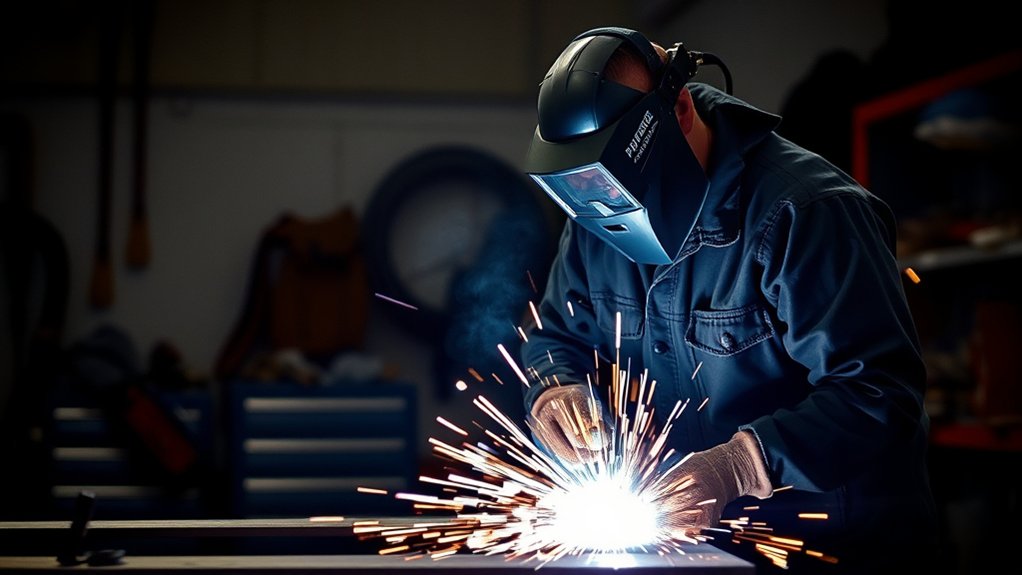
Plasma cutting uses an electrically conductive stream of ionized gas to melt and blow away metal. It works on conductive materials such as carbon steel, stainless steel, aluminum, copper, and brass. It does not cut wood, glass, plastic, or other nonconductive materials by the plasma-arc process.
Inside the torch, gas passes through a small nozzle while electrical energy creates the plasma arc. The focused arc supplies enough heat to melt a narrow path through the workpiece. The moving gas then clears molten metal from the kerf.
The exact cutting capacity depends on the power source, amperage, torch, consumables, gas or air supply, duty cycle, cut speed, and metal thickness. Use the capacity and setup limits in the operator manual for your exact model.
A plasma cutter may look compact, but the cutting circuit can use hundreds of volts. Its speed does not reduce the electrical, heat, arc-radiation, or fire hazards.
Many handheld torches are “instant-on” designs. The arc can start as soon as the trigger and safety are operated, so keep the torch pointed away from your body, other people, hoses, cords, and anything flammable.
Identifying Key Hazards Associated With Plasma Cutters
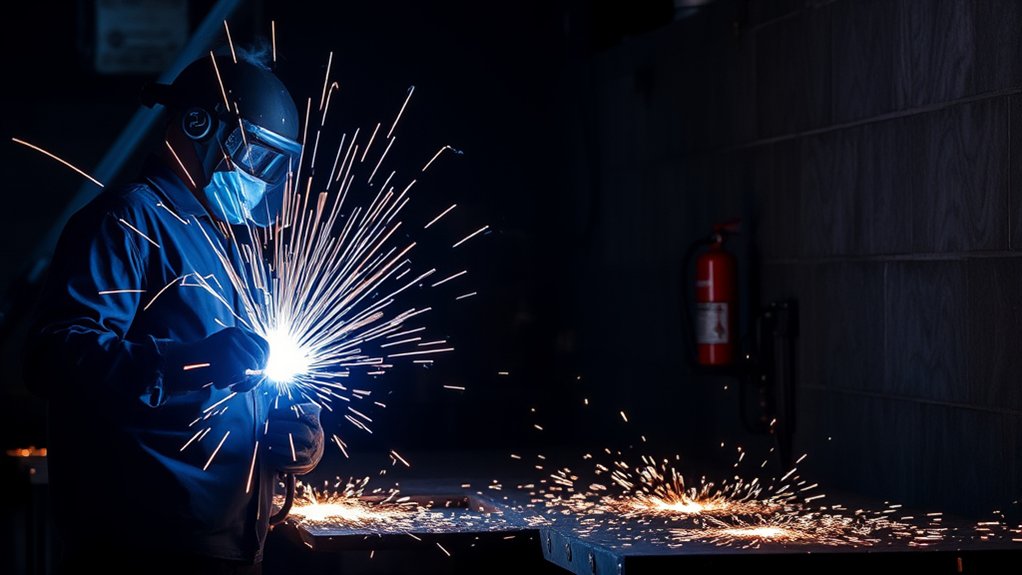
The main hazards are electric shock, arc radiation, burns, fire, explosion, fumes and gases, noise, compressed gas, and unexpected machine movement. A single cut can create several of these hazards at the same time.
| Hazard | What Can Happen | Primary Controls |
|---|---|---|
| Electricity | Fatal shock or severe electrical burn from live parts, damaged insulation, wet conditions, or improper installation. | Dry PPE, intact leads, correct input grounding, dry footing, and power disconnected before service. |
| Arc light | Ultraviolet and infrared radiation can injure eyes and burn exposed skin. | Correct filter shade, safety glasses, covered skin, and screens for bystanders. |
| Heat and sparks | Burns, clothing ignition, hidden fires, or ignition of material on the far side of the cut. | Flame-resistant PPE, spark containment, combustible clearance, and fire watch when required. |
| Fumes and gases | Irritation, metal fume fever, toxic exposure, cancer risk from some compounds, or oxygen displacement. | Material identification, coating removal when safe, local exhaust ventilation, exposure assessment, and proper respiratory protection. |
| Noise | Temporary or permanent hearing damage. | Noise assessment, quieter processes or barriers, and suitable earplugs or earmuffs. |
| Explosion | Ignition of flammable vapor, combustible dust, pressurized containers, or trapped hydrogen. | No cutting in explosive atmospheres, no sealed-container cutting, and approved procedures for water tables and reactive materials. |
Warning: Never cut a sealed, pressurized, or “empty” tank, drum, pipe, fuel container, or unknown vessel. Residue and vapor can remain after the liquid is gone. A qualified person must identify, isolate, clean, test, and approve the container under an established hot-work procedure.
Hot metal may look cool before it is safe to touch. Mark recently cut parts, keep them away from combustibles, and move them with pliers, tongs, or suitable gloves only after the arc has stopped.
Dissecting Common Myths About Plasma Cutter Safety
Myth: Clear Safety Glasses Are Enough
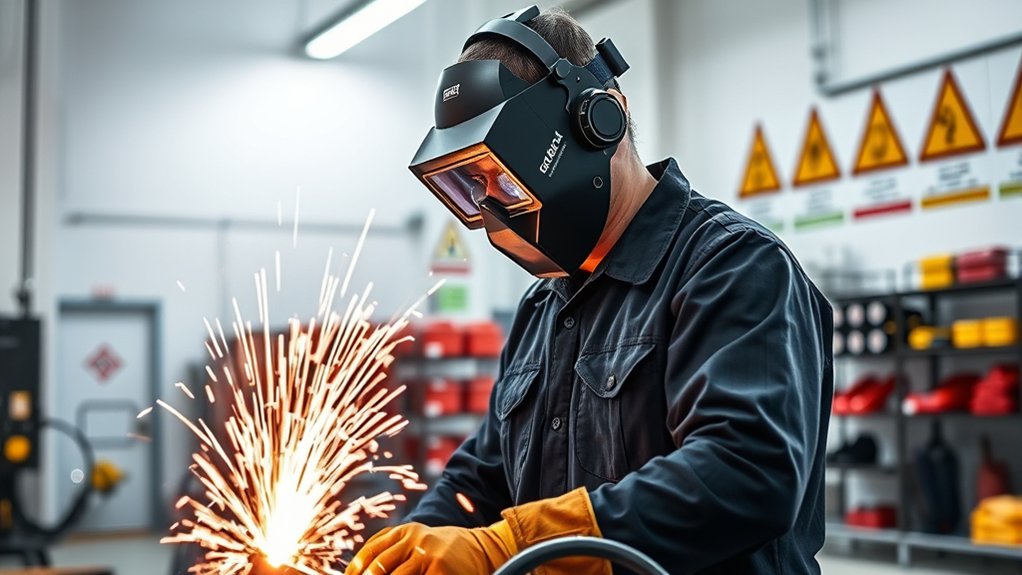
Clear safety glasses protect against flying debris, but they do not provide the filter shade needed for direct plasma-arc viewing. Wear impact-rated safety glasses with side shields under a helmet or face shield fitted with the correct filter lens.
Myth: A Small or Fast Cut Does Not Need Full PPE
The torch can start instantly, and one brief cut can send sparks into clothing or expose your eyes and skin to arc radiation. Use the required PPE every time.
Myth: The Work Clamp Grounds the Whole Machine
The work lead completes the cutting circuit. The equipment grounding conductor and any required cutting-table earth ground are separate safety connections. A clean work-lead connection improves circuit performance, but it does not replace correct electrical installation.
Myth: Outdoor Cutting Makes Fumes Harmless
Wind can move fumes into your breathing zone or toward other people. Outdoor work still requires material identification, sensible body position, and exposure controls when hazardous coatings or metals are present.
Myth: A Fan or Respirator Fixes Every Fume Problem
A poorly placed fan can push fumes through your face. A respirator must be selected for the actual hazard, and workplace use may require medical evaluation, fit testing, training, and a written respiratory-protection program. Source capture is usually the first practical control.
Myth: A Water Table Removes Every Hazard
Water may reduce visible smoke and some noise, but it does not make the process hazard-free. Aluminum cut over or under water can generate hydrogen that may collect and explode unless the table and procedure are designed to prevent accumulation.
Essential Safety Precautions for Plasma Cutting
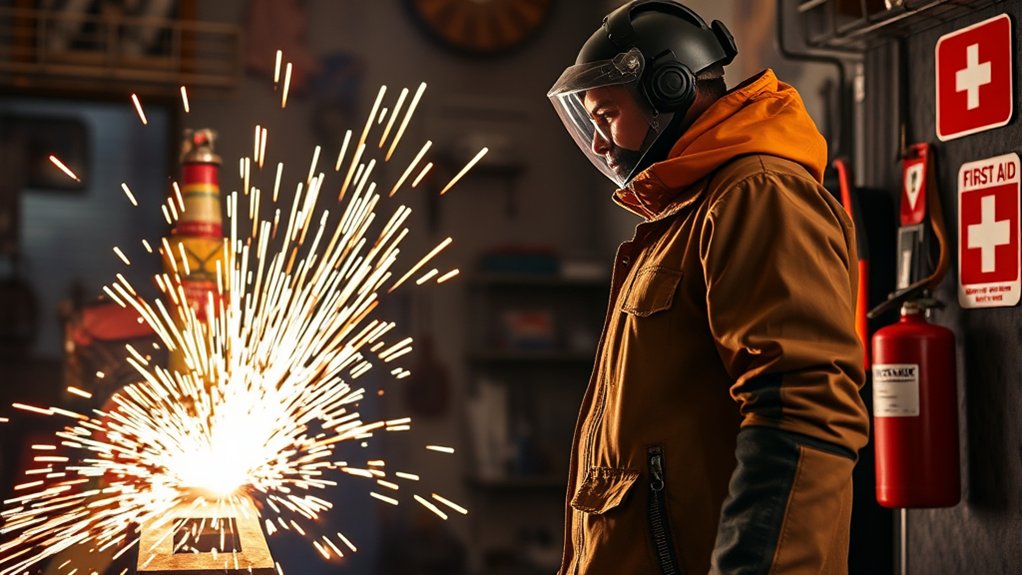
Before You Cut
- Read the manual. Confirm the input power, duty cycle, air or gas pressure, consumable stack, cut capacity, and safety interlocks for the exact machine.
- Identify the material. Check the base metal, plating, paint, primer, oil, sealant, and any material behind or inside the workpiece. Review the safety data sheet when available.
- Inspect the work area. Look above, below, behind, and through openings for combustibles, people, hoses, vehicles, glass, and hidden spaces that sparks can reach.
- Control fire hazards. Move combustibles away when practical, protect what cannot be moved with approved fire-resistant shielding, and keep suitable extinguishing equipment ready.
- Set up ventilation. Position local exhaust close enough to capture the fume without pulling it through your breathing zone.
- Inspect the machine. Check the input cord, torch lead, work lead, clamp, hoses, torch body, consumables, retaining cap, filters, and covers.
- Put on PPE. Cover your eyes, face, hearing, hands, feet, and skin before energizing the cutter.
- Protect bystanders. Use noncombustible screens or barriers and keep people away from arc light, sparks, fumes, and noise.
While You Cut
- Keep your body, clothing, gloves, and work area dry.
- Stand on a dry, stable surface and route leads so you cannot trip or drag them across sharp, hot metal.
- Keep both hands clear of the cut path and never support the workpiece with your body.
- Direct sparks and molten slag away from yourself, cylinders, cords, hoses, windows, vehicles, and other people.
- Do not touch the workpiece, cutoff, torch tip, or water in a cutting table while the arc is active.
- Stop if the arc becomes unstable, a cable heats, insulation smokes, gas leaks, ventilation fails, or you smell an unknown coating.
- Do not bypass a trigger guard, parts-in-place switch, retaining-cap switch, or other safety interlock.
After the Cut
- Release the trigger, allow post-flow to finish, and switch off the machine as directed by the manual.
- Mark or isolate hot parts and slag until they have cooled.
- Check the cutting area, the opposite side of the work, floor openings, wall cavities, and nearby surfaces for smoldering material.
- Disconnect input power before inspecting, cleaning, or changing torch parts.
- Store the torch where the trigger cannot be pressed accidentally.
For covered U.S. workplaces, OSHA’s hot-work rule uses a 35-foot combustible-control zone and requires a fire watch for at least 30 minutes after cutting when fire-watch conditions exist.
OSHA’s welding, cutting, and brazing requirements also call for suitable fire-extinguishing equipment and prohibit cutting in explosive atmospheres or near large quantities of readily ignitable material.
Personal Protective Equipment: What You Need
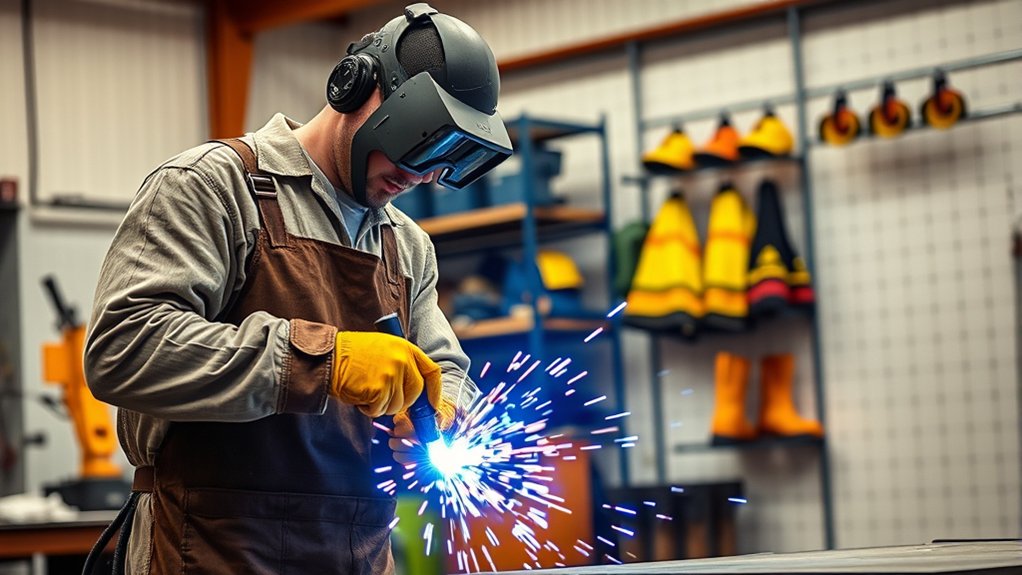
PPE is the last line of defense, not a substitute for ventilation, guarding, fire control, or safe electrical installation. Choose PPE for the amperage, material, position, noise level, and workplace assessment.
Products Worth Considering

Lens Technology- IR 5.0 Filter Green Lens are ANSI & CSA compliant, with 99% protection from UV rays to reduce eye fatigue and prevent damage.

Mirrored shade 5 lenses
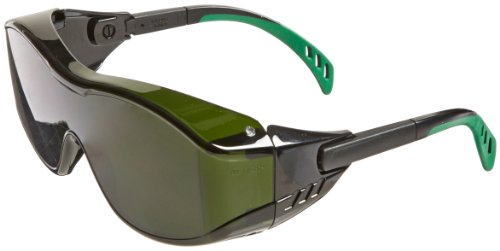
One-piece polycarbonate lens fits over most prescription glasses
Eye and Face Protection
Wear safety glasses or goggles with side protection under a welding helmet or cutting face shield. The outer shield protects your face from sparks and radiation; the glasses continue protecting your eyes when the shield is raised.
For U.S. general-industry workplaces, OSHA’s plasma-arc cutting table lists these minimum filter shades when the arc is clearly visible:
| Plasma Arc Cutting Current | OSHA Minimum Protective Shade |
|---|---|
| Less than 300 A | Shade 8 |
| 300–400 A | Shade 9 |
| 400–800 A | Shade 10 |
Other standards and manufacturer tables may give amperage-specific recommendations. Start with a shade that is too dark to see the cut, then move lighter only as needed without going below the minimum required by the rule, manual, or workplace assessment that applies to you.
Clothing, Gloves, Footwear, and Hearing Protection
| Protective Gear | Purpose | Safety Note |
|---|---|---|
| Helmet or Cutting Face Shield | Arc-light and face protection | Use a compliant filter lens and keep the cover lens clean and undamaged. |
| Safety Glasses or Goggles | Flying-particle protection | Wear them under the helmet; use side protection. |
| Dry Leather or Rated Cutting Gloves | Heat, spark, and limited electrical protection | Replace wet, torn, oil-soaked, or burned gloves. |
| Flame-Resistant Clothing | Skin and clothing protection | Cover exposed skin. Avoid meltable synthetic fabrics, open pockets, cuffs, and frayed clothing. |
| Closed Leather Footwear | Hot slag and foot protection | Use sturdy footwear that prevents sparks from entering at the top. |
| Earplugs or Earmuffs | Noise protection | Select protection from measured exposure; earplugs can also help keep sparks out of the ear canal. |
| Respiratory Protection | Control of residual inhalation exposure | Use only after identifying the contaminant and selecting an approved respirator under a proper program. |
Workplace noise requirements depend on measured exposure. OSHA requires a hearing-conservation program when covered employee exposure reaches an 8-hour time-weighted average of 85 dBA; see the occupational noise standard.
Pro Tip: Keep a dedicated plasma-cutting PPE kit beside the machine and replace damaged lenses, gloves, and clothing before the next job. Convenience removes one common excuse for skipping protection on a “quick” cut.
Electrical Safety, Work Lead, and Protective Grounding
Plasma systems use high voltage. Hypertherm’s current safety manual notes that 200–400 VDC is common in the cutting process. Never touch the torch body, workpiece, cutoff, or water in a cutting table while the system is operating.
Understand the Three Connections
- Work lead: Attach it securely to clean bare metal on the workpiece or cutting table. Do not attach it to the piece that will fall away.
- Equipment grounding conductor: The power-cord or input ground must be installed as the manufacturer and electrical rules require.
- Cutting-table earth ground: Some mechanized or water-table systems require a separate earth-ground connection. Follow the system and table instructions.
A rusty or painted work-lead contact can cause poor arc starts and unstable cutting, but cleaning the clamp location does not correct a missing or defective protective ground.
Warning: Do not open the power-supply enclosure or service energized internal parts unless you are trained, authorized, and following the required electrical safe-work procedure. Capacitors can store dangerous energy after power is removed. Follow the manual’s shutdown and waiting time.
Keep gloves, clothing, floors, and the work area dry. Replace cracked cords, exposed conductors, burned torch leads, damaged plugs, and loose connections immediately. Never use tape as a permanent repair for serious cable damage.
The Hypertherm Safety and Compliance Manual provides a clear manufacturer example of work-lead, grounding, electric-shock, fire, fume, water-table, and PPE precautions. Your own cutter’s manual remains the controlling equipment-specific source.
Maintaining Equipment for Safe Operation
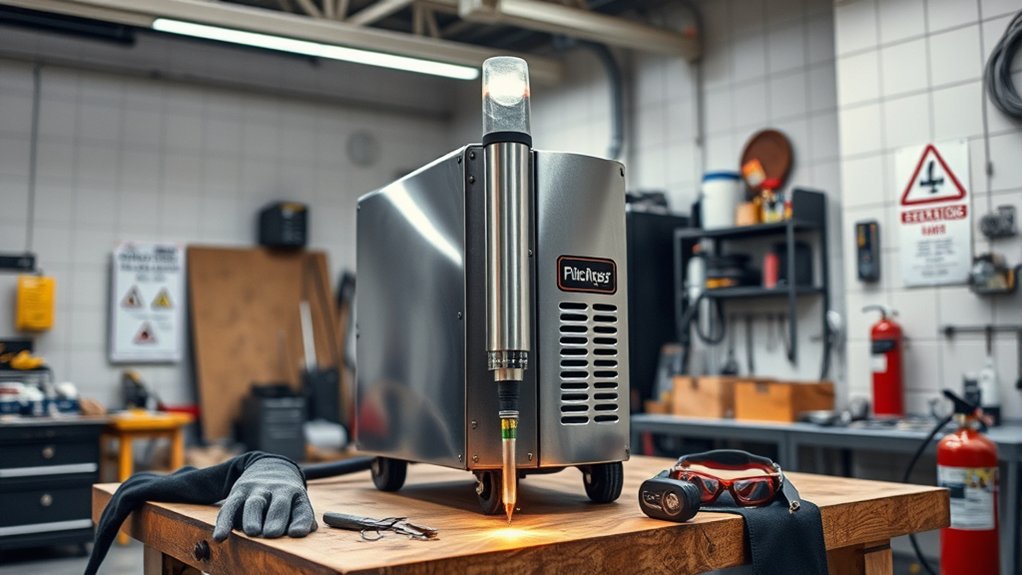
Safe plasma cutting depends on equipment that is clean, intact, and assembled correctly. Remove damaged equipment from service until a qualified person repairs it.
Products Worth Considering

PACKAGE INCLUDED: 5 Pcs Cup-15 Pcs Electrodes-10 Pcs Ring-30 Pcs Tip(Standard)

[Achieve Precise Cuts] PT31 Plasma Cutting Consumables – Your Essential Tool for Efficient Cutting! Whether you're working with sheet metal, steel, or any other material, superior cutting performance ensure clean, accurate, and smooth cuts.

⚡【Precision Compatibility】 Exact fit for YESWELDER CUT 55DS Pro & 65DS (2019-2024 models). Replaces OEM# IPT40-55DS/65DS.
Pre-Use Inspection
- Look for cuts, crushing, exposed conductors, overheated connectors, and loose strain relief on all power, torch, and work leads.
- Check the torch body, trigger, trigger guard, retaining cap, O-ring, nozzle, electrode, swirl ring, and shield.
- Confirm that consumables match the torch and amperage and are installed in the correct order.
- Inspect the work clamp for strong spring pressure and clean contact surfaces.
- Check air hoses, gas hoses, fittings, regulators, filters, drains, and cooling components for leaks or damage.
- Make sure covers, guards, labels, and safety interlocks are present and working.
Planned Maintenance
Follow the manufacturer’s service intervals rather than using a universal schedule. Dusty air, high duty cycles, long mechanized cuts, and poor air quality can shorten inspection intervals. Clean or replace filters, inspect cooling systems, service the torch, and check leads at the interval in the manual.
Before preventive maintenance, switch the cutter off, disconnect input power, isolate the gas supply, and wait the time required for stored energy to discharge. Do not clean or service moving mechanized equipment while it is operating.
Good maintenance supports safe operation, but it cannot compensate for a wrong consumable stack, bypassed interlock, damaged lead, or unapproved torch.
Compressed Air, Cutting Gases, and Cylinders
Many portable plasma cutters use compressed air. Larger systems may use nitrogen, oxygen, argon-hydrogen mixtures, or other gases. Use only the gas type, pressure, flow, hose, and regulator approved for the system.
- Drain moisture and maintain air filters as the manual directs.
- Do not use oxygen to ventilate a room or confined space.
- Check hoses and fittings for leaks using the manufacturer-approved method.
- Secure compressed-gas cylinders upright and protect the valve from impact.
- Keep cylinders away from sparks, slag, heat, and electrical contact.
- Do not use oil or grease on oxygen equipment.
- Close and isolate gas supplies before maintenance.
Note: Oxygen-enriched areas burn more readily, while leaked fuel-gas mixtures can explode. Gas selection is part of the approved cutting procedure, not a performance setting to improvise.
Ensuring Proper Ventilation and Fume Control
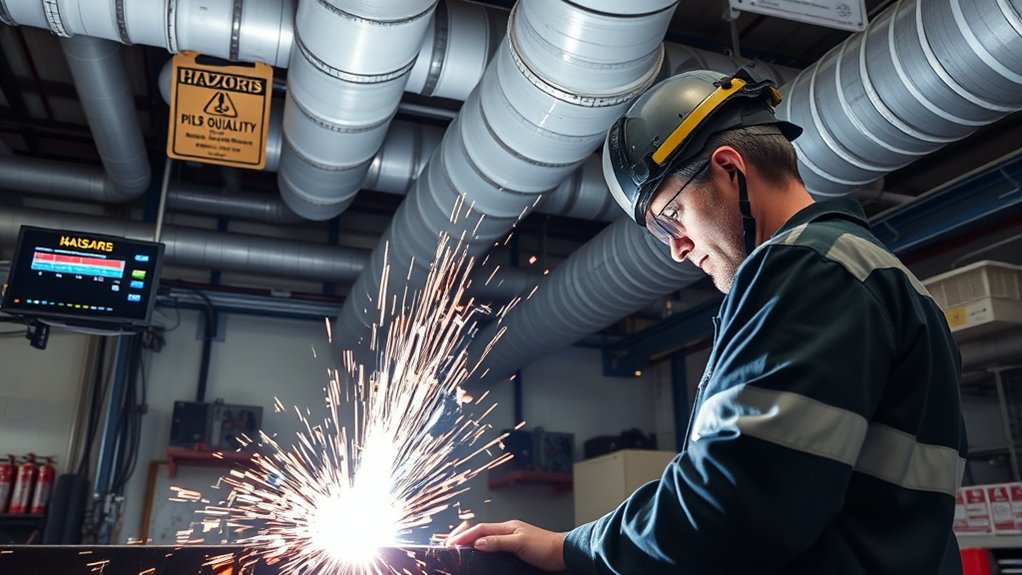
Plasma cutting fumes come mainly from the material, coatings, and contaminants being heated. The process can also form gases such as ozone and nitrogen oxides. The hazard changes with the base metal, coating, amperage, cut length, ventilation, and operator position.
Identify the Metal and Coating First
| Material or Contaminant | Why It Needs Extra Control | Safer Approach |
|---|---|---|
| Galvanized Steel | Heating zinc coating can produce zinc oxide fume and metal-fume-fever symptoms. | Use effective local exhaust. Remove coating near the cut only when the removal method is itself safe and permitted. |
| Stainless Steel and High-Chromium Alloys | Thermal cutting can generate hexavalent chromium and nickel-containing fume. | Use source capture and an exposure assessment; apply respiratory controls when engineering controls do not reduce exposure enough. |
| Lead, Cadmium, Beryllium, or Mercury | These metals or coatings can create highly toxic exposures with strict control requirements. | Do not proceed as a routine hobby cut. Use a qualified industrial-hygiene plan and the specific legal controls that apply. |
| Paint, Primer, Plating, Sealant, or Unknown Coating | Composition may be unknown, flammable, or toxic when heated. | Identify it from records or testing, review the safety data sheet, and remove it with a controlled method before cutting when appropriate. |
| Oil, Solvent, or Degreaser Residue | Residue may burn, explode, or create decomposition products. | Clean by an approved method and keep chlorinated-solvent vapor away from hot-work and arc-radiation areas. |
NIOSH identifies thermal cutting as a potential source of hexavalent chromium exposure and describes local exhaust ventilation as a common engineering control. See its local exhaust ventilation guidance for welding operations.
Importance of Airflow
Good airflow moves fume away from the operator without spreading it through the shop. Keep your head out of the plume. Position yourself so natural airflow does not carry fume across your face or toward another person.
General room ventilation may help dilute low-level contaminants, but it may not control the concentrated plume at the cut. A small fan is not a reliable substitute for source capture, especially indoors, on long cuts, or with stainless and coated metals.
Effective Fume Extraction
Local exhaust ventilation captures contaminants close to the source. A downdraft table, backdraft hood, or movable extraction arm can work when it is designed and positioned correctly. Keep the inlet close enough to capture the plume, but do not let airflow disrupt the plasma gas or pull sparks into an unsuitable filter.
Check that the exhaust system discharges safely and that filters are rated for the material. Clean and replace filters on schedule. A clogged filter or misplaced hood can give a false sense of protection.
Respiratory Protection
Respirators are selected by contaminant, concentration, oxygen level, and required protection factor. A disposable dust mask is not a universal plasma-fume solution, and no air-purifying respirator is safe in an oxygen-deficient or immediately dangerous atmosphere.
For covered workplaces, OSHA’s respiratory protection standard requires hazard evaluation and, when respirators are required, a program that includes correct selection, medical evaluation, fit testing, training, maintenance, and use.
Note: If you cannot identify a coating or control the fume, stop. Moving outdoors or putting on an arbitrary filter does not turn an unknown exposure into a safe job.
Confined Spaces and Unusual Cutting Setups
Confined Spaces
A tank, vessel, boiler, pit, or small compartment can collect toxic gas, flammable vapor, or an oxygen-deficient atmosphere. Ventilation is required, but ventilation alone does not automatically make entry safe.
Permit-required confined-space work may require atmospheric testing, isolation of energy and material, an entry permit, an attendant, communications, continuous or repeated monitoring, and a planned rescue method. OSHA says atmospheric testing should check oxygen first, then combustible gases and vapors, then toxic contaminants. Review the permit-required confined-space standard before workplace entry.
Warning: Do not enter a confined space to plasma cut unless a qualified program has evaluated the space and supplied the required ventilation, monitoring, isolation, attendant, and rescue controls. Never use oxygen for ventilation.
Water Tables and Aluminum
Cutting aluminum under water or over a water table can generate hydrogen. Gas may collect under the plate or within the table and explode when an arc or spark ignites it. Use only a table and procedure designed to prevent hydrogen accumulation, and follow the table and plasma-system manufacturer’s instructions.
Aluminum-lithium alloys require special care and should not be cut in the presence of water unless the material supplier and equipment manufacturer provide an approved procedure.
Medical Implants and Hearing Aids
High cutting currents create magnetic fields that may affect some pacemakers, medical implants, or hearing aids. Anyone with an implanted or body-worn medical device should ask the device manufacturer and treating clinician for job-specific advice before going near plasma cutting or gouging.
Reactive Metals and Combustible Dust
Magnesium and some reactive alloys, chips, and dusts can create difficult metal fires. Do not treat them as routine plasma-cutting jobs. Use a qualified procedure, suitable dust control, and an extinguisher rated for the specific combustible metal. Water and common ABC extinguishers may be unsafe or ineffective on some metal fires.
What to Do If Something Goes Wrong
- Electric shock: Do not touch a person who may still be energized. Disconnect power by a safe means, call emergency services, and begin first aid or CPR only when the scene is safe and you are trained.
- Fire: Stop cutting, raise the alarm, and use an extinguisher only if the fire is small, you have the correct extinguisher, you are trained, and you have a safe exit. Otherwise evacuate.
- Eye exposure: Stop work and seek medical evaluation for eye pain, gritty sensation, tearing, light sensitivity, or vision changes after arc exposure.
- Burn: Stop the exposure, follow your trained first-aid procedure, and seek prompt medical care for electrical burns, deep burns, or burns involving the face, hands, joints, or a large area.
- Fume symptoms: Move to fresh air without entering a dangerous space. Seek medical help for breathing difficulty, chest pain, confusion, fainting, severe headache, or flu-like symptoms after metal-fume exposure.
- Gas leak or unknown odor: Stop, isolate the supply if it is safe, remove ignition sources, ventilate from a safe location, and keep people out until the hazard is evaluated.
Keep first-aid supplies, emergency shutoff access, the correct extinguisher, and emergency contact information available before cutting starts.
Frequently Asked Questions
Can a beginner use a plasma cutter safely?
Yes, after reading the manual and receiving practical instruction on PPE, electrical setup, fire control, ventilation, consumables, and emergency shutdown. Practice on clean scrap in an approved area before attempting coated metal, complex cuts, vehicles, containers, or confined work.
What materials should never be cut with a plasma cutter?
Do not cut sealed or pressurized containers, unidentified tanks, explosive atmospheres, or unknown coated material. Reactive metals, lead-, cadmium-, beryllium-, or mercury-containing materials, and aluminum over water need specialized controls rather than routine hobby-shop methods.
Is it safe to cut galvanized metal with a plasma cutter?
It can be done only with effective fume control. Heating zinc coating can create zinc oxide fume. Identify the coating, use local exhaust, keep your head out of the plume, and use respiratory protection when a qualified exposure assessment shows it is needed.
How often should plasma cutter safety training be refreshed?
There is no single universal annual interval for every user. Refresh training when the machine, material, procedure, workplace, PPE, ventilation, or rules change; after unsafe behavior or an incident; and at the interval required by the employer or applicable standard.
Are there plasma cutters designed for hobbyists?
Yes. Compact, lower-amperage machines are sold for home and light-shop use. Their size does not remove the hazards. They still need correct input power, protective grounding, dry PPE, shaded eye protection, fire control, ventilation, and equipment inspection.
How do environmental conditions affect plasma cutting safety?
Wet floors increase shock risk. Wind can redirect sparks and fumes. Dust and clutter increase fire risk. Cold can stiffen leads and hoses, while heat can affect duty cycle. Keep the area dry, stable, clean, ventilated, and within the machine’s operating limits.
What shade lens should I use for plasma cutting?
Use the shade required by your machine manual and the safety rule that applies to your work. OSHA’s U.S. general-industry table lists shade 8 below 300 A, shade 9 at 300–400 A, and shade 10 at 400–800 A when the arc is clearly visible.
Does the work clamp ground the plasma cutter?
No. The work lead completes the cutting circuit. The input equipment-grounding conductor and any required cutting-table earth ground are separate. Attach the work lead to clean metal and make sure the machine is electrically installed and grounded exactly as its manual requires.
Is a shop fan enough ventilation for plasma cutting?
Not always. A fan may spread fume or blow it through your breathing zone. Local exhaust placed near the cut is usually more reliable. The metal, coating, room, cut duration, and measured exposure determine whether general ventilation, source capture, or respiratory protection is needed.
Safety Disclaimer: This article provides general information and does not replace hands-on training, an exposure assessment, your equipment manual, workplace rules, electrical codes, hot-work permits, or advice from a qualified safety professional. Follow the plasma cutter manufacturer’s instructions and all rules that apply to your location and work.
Conclusion
Plasma cutter safety depends on controlling several hazards at once. Before every cut, identify the material, inspect the machine, connect the work lead correctly, confirm protective grounding, clear combustibles, capture fumes, shield bystanders, and wear the right PPE.
Do not let a short cut become an excuse for shortcuts. A repeatable pre-cut, during-cut, and post-cut routine protects your eyes, lungs, hearing, skin, equipment, and workspace while helping you make cleaner, more controlled cuts.
Sources
- OSHA 29 CFR 1910.252 — Welding, Cutting, and Brazing — fire prevention, fire watch, PPE, ventilation, confined-space, and material-specific controls.
- OSHA 29 CFR 1910.133 — Eye and Face Protection — minimum plasma-arc cutting filter shades.
- OSHA 29 CFR 1910.134 — Respiratory Protection — hazard evaluation, respirator selection, medical evaluation, fit testing, training, and program requirements.
- OSHA 29 CFR 1910.146 — Permit-Required Confined Spaces — atmospheric testing, entry control, attendants, and rescue planning.
- NIOSH Engineering Controls Database — Local Exhaust Ventilation for Welding Operations — source-capture ventilation and fume control.
- Hypertherm Safety and Compliance Manual, Revision 9 — plasma-specific electrical, fire, fume, compressed-gas, PPE, medical-device, and water-table hazards.