Disclosure: As an Amazon Associate, we earn from qualifying purchases. If you click a link on this page and make a purchase, we may receive a small commission at no extra cost to you.
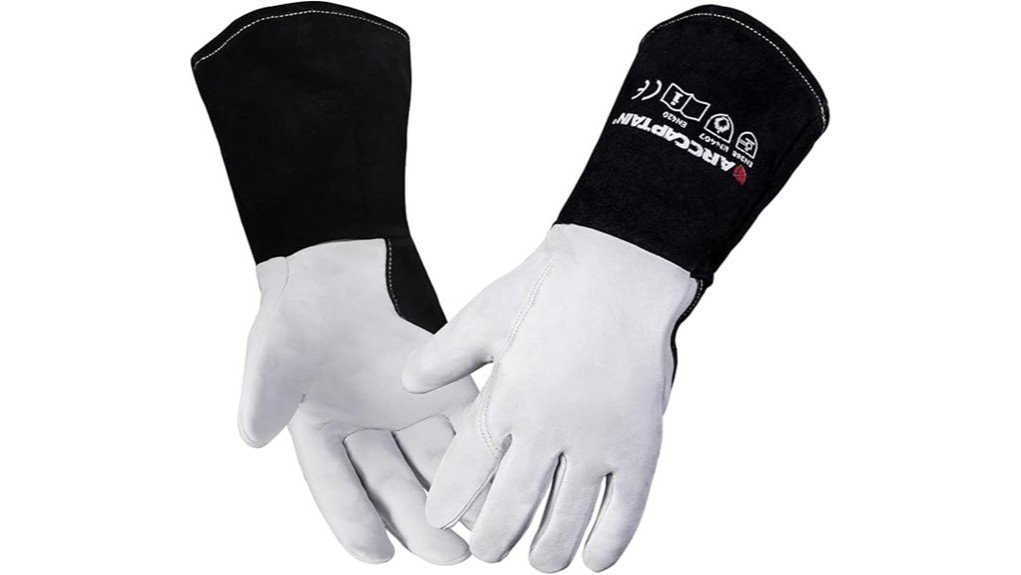
TIG welding requires more finger control than many other welding processes, so a glove that feels bulky can make filler-rod handling harder than it needs to be. The ARCCAPTAIN TIG Welding Gloves use a lightweight goatskin design with reinforced leather areas and an extended cuff to balance dexterity with basic welding protection. They make the most sense when you value touch and movement during precision work, but they are not the best choice when your job exposes your hands to sustained extreme heat or heavy spatter. This review explains the fit, construction, practical uses, limitations, and buying details you should check before ordering.
Quick Verdict
Rating: 8/10
Best For: TIG welders and DIY fabricators who want flexible leather gloves with good fingertip movement and forearm coverage.
Bottom Line: The soft goatskin construction and extended cuff give you a useful balance of control, comfort, and spark protection. The main tradeoff is that this model does not have a verified product-specific temperature rating, so it should not replace heavier welding gloves when heat and spatter become more severe.
Key Specifications
| Specification | Detail |
|---|---|
| Brand | ARCCAPTAIN |
| Product Type | TIG welding gloves |
| Length | 14-inch design |
| Listed Size | Medium 14 inch; manufacturer also describes the oversized-cuff design as fitting a broad range of users |
| Main Material | Soft, lightweight goatskin leather |
| Reinforcement | Protective cowhide/reinforced leather in wear-prone areas |
| Stitching | Heat-resistant reinforced/synthetic stitching |
| Lining | Comfort-oriented, sweat-absorbing lining with soft cotton material described by the manufacturer |
| Closure | Elastic slip-on design |
| Cuff | Extended, oversized leather cuff for added forearm coverage |
| Care | Hand wash |
| Best Use | TIG welding and other tasks where dexterity and light leather protection are useful |
What Is the ARCCAPTAIN TIG Welding Glove?
The ARCCAPTAIN model is a 14-inch leather welding glove designed primarily around TIG work. Its main construction uses soft goatskin leather, a material that gives your fingers more freedom than the thicker split-cowhide designs commonly associated with heavy MIG or stick welding.
ARCCAPTAIN reinforces wear-prone areas with additional leather and uses an extended cuff to increase forearm coverage. An elastic back and slip-on construction are intended to keep the glove secure while still making it easy to put on and remove.
The main selling point is therefore not maximum insulation. It is the combination of dexterity, relatively light construction, reinforced contact areas, and longer coverage for welders who need to control a torch and filler rod precisely.
Key Takeaways
- The soft goatskin construction favors fingertip movement and tactile control during TIG welding.
- Reinforced leather in high-wear areas adds durability without turning the entire glove into a bulky heavy-duty design.
- The 14-inch extended cuff provides more forearm coverage against sparks and light welding debris than a short work glove.
- The elastic slip-on design can make the gloves easier to put on and remove during shop work.
- The exact model does not have a verified product-specific maximum temperature rating, so you should not assume it provides the same heat protection as a thick MIG or stick glove.
Who Should Buy It?
Best For
- TIG welders who need good finger movement for torch and filler-rod control.
- DIY fabricators who prefer lighter leather gloves instead of thick, heavily insulated welding gloves.
- Shop users who want an extended cuff for added wrist and forearm coverage.
Skip If
- Your work involves heavy MIG or stick spatter and you need thicker insulation.
- You need a glove with a clearly documented maximum contact-temperature rating.
- You require several precisely measured hand-size options rather than a broad-fit design.
Before You Buy: Do not choose a TIG glove only by sleeve length. A glove that is too loose at your fingertips can reduce filler-rod control, while one that is too tight can restrict movement. Check the current seller sizing information before ordering because the verified ARCCAPTAIN listing does not support the three-size circumference chart previously associated with this review.
Build Quality and Materials
The most important material is soft goatskin leather. Goatskin is useful for TIG work because it can provide a closer feel around your fingers than a thick, heavily padded welding glove. That matters when you are feeding a small filler rod or adjusting torch position in a confined area.
ARCCAPTAIN also describes protective cowhide or reinforced leather in areas exposed to more wear. This construction gives you additional material where abrasion is more likely without making every part of the glove equally thick.
The original version of this article described the seams as Kevlar stitched. That detail is not confirmed on the verified product listing. The manufacturer instead describes heat-resistant reinforced or synthetic stitching, so that is the safer specification to use when evaluating this exact model.
Dexterity and Comfort
A TIG glove succeeds or fails largely on how easily you can move your fingers. The ARCCAPTAIN glove uses supple leather and a relatively lightweight design to keep your hand from feeling excessively restricted during precision work.
The manufacturer also describes a comfort-oriented, sweat-absorbing lining and an elastic section at the back of the hand. Those details can help the glove stay in place while reducing the loose, floppy feeling that makes a precision glove harder to use.
That does not mean every hand will get the same fit. Finger length, palm width, and cuff preference can change how the glove feels, which is why fit deserves as much attention as the leather itself.
Cuff Protection and Fit
The 14-inch overall design and oversized leather cuff extend coverage beyond your wrist and onto your forearm. This is useful when sparks or small pieces of hot debris would otherwise land near the gap between your glove and sleeve.
The cuff should still work with the rest of your welding PPE. Your glove and welding jacket or sleeve should overlap appropriately so exposed skin is not left between them.
The verified seller information describes the product as Medium 14 inch while also presenting the long sleeve and oversized cuff as suitable for a broad range of users. Because those descriptions are not a detailed hand-circumference chart, you should confirm the current Amazon fit information instead of relying on an assumed numerical size conversion.
Pro Tip: When checking fit, bend your fingers into the same positions you use to hold the torch and feed filler rod. You want enough room to move naturally, but not so much extra leather at the fingertips that you lose contact with the rod.
Versatile Applications Beyond TIG Welding
ARCCAPTAIN markets these gloves primarily for TIG welding but also lists broader work uses, including other welding processes, construction, equipment operation, truck driving, and landscaping. The soft leather can be useful anywhere you need more protection than a bare hand while still maintaining reasonable grip and finger movement.
For MIG or stick welding, however, your process matters. Heavy spatter and sustained heat may justify a thicker glove with more insulation. The fact that a glove can be used for several tasks does not mean it offers the ideal protection level for every one of them.
For landscaping or general shop handling, the leather can provide a useful barrier against rough surfaces and minor abrasion. You should still select task-specific gloves when dealing with chemicals, sharp blades, electrical hazards, or other risks that require a particular safety rating.
How It Performs in Real Use
For Precision TIG Welding
This is the use case that best matches the glove’s design. The lighter goatskin construction makes it easier to manipulate a filler rod and maintain a stable grip than a very thick, heavily insulated glove would. Reinforced leather in wear areas adds some durability while allowing the fingers to remain comparatively flexible.
For Longer Shop Sessions
The soft leather, lining, and elastic back can make the gloves more comfortable during repeated welding and fabrication tasks. Comfort still depends on fit, so a glove that bunches at your fingertips or feels tight across your knuckles can become tiring regardless of material quality.
For Light MIG or Stick Work
ARCCAPTAIN lists the gloves for more than TIG welding, so they can be useful for lighter multi-process work. For jobs that generate substantial spatter or keep your hands close to strong radiant heat, a thicker MIG or stick welding glove is the more sensible choice.
For General Workshop and Outdoor Tasks
The same dexterity that helps during TIG work can be useful for equipment handling, construction tasks, landscaping, and other jobs where you need a leather barrier without excessive bulk. These uses should stay within the glove’s material capabilities and should not replace specialized PPE when a task has additional hazards.
Cleaning and Maintenance
ARCCAPTAIN lists these gloves as hand wash. Avoid assuming that leather welding gloves are machine washable, because aggressive washing and high heat can stiffen or damage leather.
Remove loose dirt when possible before it becomes embedded in the material. After hand cleaning, allow the gloves to dry naturally rather than placing them directly against a strong heat source.
Inspect the palms, fingers, seams, and cuff regularly. Stop using the gloves for welding if you find holes, severe thinning, open seams, or damage that exposes your skin.
Material Safety and Protection Limits
These are welding gloves, not a guarantee against every heat, electrical, cut, or chemical hazard. The exact 14-inch goatskin model does not have a verified product-specific maximum temperature rating in the information used for this review, so you should not assign it a temperature limit borrowed from a different ARCCAPTAIN glove.
The extended leather cuff helps cover your forearm from sparks and welding debris, but proper PPE still includes suitable clothing, eye and face protection, and equipment appropriate to your process. Follow the glove instructions and your workplace safety requirements.
The gloves should also not be treated as dedicated high-heat cooking gloves. No food-use rating or product-specific cooking temperature rating was verified for this model.
What Customer Feedback Suggests
Feedback summarized in the original product information emphasizes dexterity, comfort, and useful cuff coverage. Those comments match the design priorities of a goatskin TIG glove, where buyers generally care more about fingertip control than maximum bulk or insulation.
Fit remains the factor most likely to change your experience. A flexible material cannot compensate for fingers that are substantially too long, too short, or too tight, so treat broad comfort claims as secondary to getting a workable fit for your own hand.
Pros and Cons
Pros
- Soft goatskin construction supports good finger movement for precision TIG work.
- Reinforced leather in wear-prone areas adds protection without making the whole glove bulky.
- 14-inch extended cuff gives you additional wrist and forearm coverage.
- Elastic slip-on design can make the gloves quick to put on and remove.
- Useful for TIG welding plus selected workshop, construction, equipment, and landscaping tasks.
Cons
- No verified maximum temperature rating was found for this exact model.
- Broad-fit sizing may not give every hand the close fingertip fit needed for precision TIG work.
- The lighter TIG-oriented design is not the best choice for sustained heavy spatter or extreme-heat work.
Is It Worth the Price?
The ARCCAPTAIN gloves are worth considering if your priority is a light, flexible TIG glove with extended coverage rather than a thick glove designed around maximum insulation. The goatskin construction, reinforced areas, and longer cuff create a practical feature set for hobby fabrication and precision-oriented welding.
You receive the most value when you actually need the dexterity advantage. If most of your work involves high-spatter MIG, stick welding, forging, or prolonged handling of very hot material, spending your budget on a heavier glove designed specifically for those conditions makes more sense.
Because Amazon pricing can change, compare the current price with other goatskin TIG gloves and focus on fit, cuff length, reinforcement, and documented protection rather than choosing from price alone.
How It Compares to Alternatives
The Tillman 24C is a useful alternative if you want a premium kidskin TIG glove with an unlined construction, a 4-inch cuff, Kevlar stitching, and several clearly listed sizes. It puts a strong emphasis on tactile feel and size choice.
The Tillman 1328 is another alternative built around top-grain goatskin, a 4-inch cuff, and Kevlar-reinforced construction. The ARCCAPTAIN model makes more sense if you prefer its 14-inch overall coverage, reinforced leather areas, lining, and elastic slip-on layout. The Tillman options deserve comparison when precise sizing or explicitly documented Kevlar construction matters more to you.
Frequently Asked Questions
Are ARCCAPTAIN TIG Welding Gloves good for precision TIG work?
Yes, precision TIG work is the use that best matches their lightweight goatskin construction. The softer leather is intended to give you better finger movement and filler-rod control than a bulky, heavily insulated glove.
What size are these ARCCAPTAIN gloves?
The verified product information identifies the version as Medium 14 inch and also describes its oversized-cuff design as fitting a broad range of users. A reliable multi-size hand-circumference chart was not verified, so check the current Amazon sizing information before ordering.
Are the gloves stitched with Kevlar thread?
Kevlar stitching was not confirmed for this exact ARCCAPTAIN model. The verified manufacturer information describes heat-resistant reinforced or synthetic stitching, so you should not buy this pair specifically for a Kevlar-thread feature unless the current seller listing confirms it.
Can you use them for MIG or stick welding?
ARCCAPTAIN lists the gloves for multiple welding applications, but their lightweight TIG-oriented construction should influence how you use them. For heavy spatter or sustained heat, a thicker MIG or stick glove may give you a more appropriate protection level.
What temperature can the gloves withstand?
A product-specific maximum temperature rating was not verified for this exact 14-inch goatskin model. Do not apply a heat rating from another ARCCAPTAIN glove to these gloves, and select more heavily insulated PPE when your task involves higher or sustained heat exposure.
How should you clean ARCCAPTAIN TIG Welding Gloves?
The manufacturer lists the gloves as hand wash. Clean them gently, avoid machine washing unless the current care instructions specifically allow it, and let the leather dry naturally away from strong direct heat.
Can you use these gloves for high-heat cooking or grilling?
This review does not recommend them as dedicated cooking gloves because a food-use rating and exact temperature limit were not verified for this model. Use gloves specifically rated for your cooking or grilling temperatures when handling hot cookware or grill components.
The Bottom Line
The ARCCAPTAIN 14-inch goatskin TIG Welding Gloves are a good match when you want flexible leather, reinforced wear areas, and extended cuff coverage without moving to a thick heavy-duty glove. They are less suitable if you need exact multi-size fitting, a documented maximum temperature rating, or maximum insulation for high-spatter welding.
The 8/10 verdict reflects that balance: strong dexterity-oriented features for TIG and general fabrication, with important limits you should consider before using them for hotter or more demanding processes.
Ready to Buy?
Check the latest price, size information, and product details before you decide.