As an Amazon Associate, Garage Welding may earn from qualifying purchases. This does not change the price you pay.
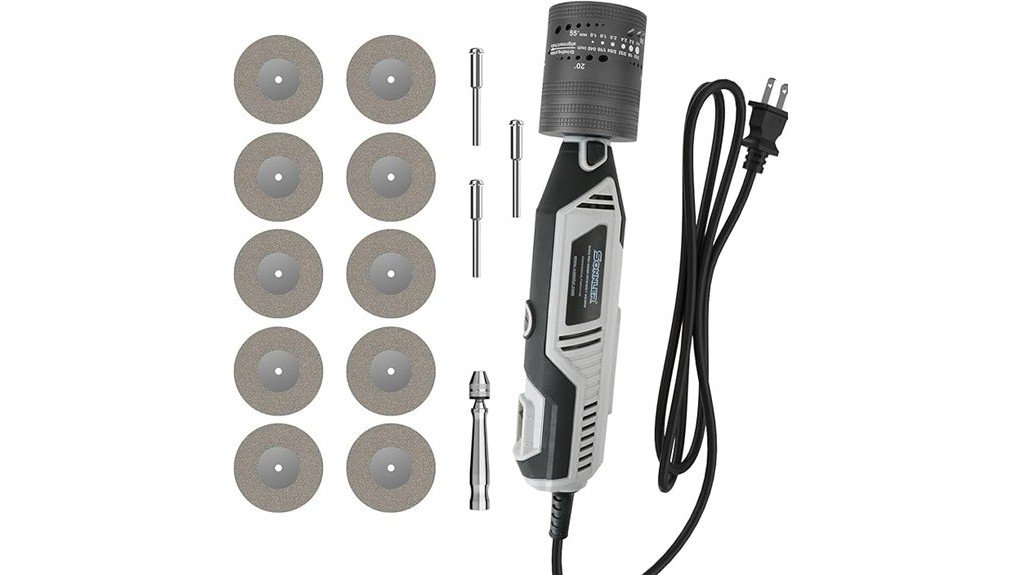
The SONNLER tungsten sharpener is a compact, hand-held grinder for putting a consistent point on TIG tungsten electrodes. The Amazon listing describes fixed electrode holes, eight angle settings, several grinding wheels and a storage box. It is worth considering if you want repeatable points without freehand grinding on a bench grinder; skip it if you need to prep large-diameter tungsten or want a dust-collecting tool with a vacuum port.
This review is based on the listing, not hands-on testing.
SONNLER tungsten sharpener at a glance
| Item | Detail |
|---|---|
| Type | Hand-held tungsten electrode sharpener grinder |
| Weight (per listing) | About 1.2 lb |
| Size (per listing) | About 2.2 x 2.2 x 2.8 in |
| Electrode holes (per listing) | Six sizes in fixed holes |
| Angle settings (per listing) | Eight |
| Included (per listing) | Grinding wheels and a storage box |
The listing is the source of truth for supported diameters. Confirm that your tungsten size is covered.
Check the current price on Amazon →
What it is and who it suits
Tungsten shape matters in TIG welding. A clean, ground point gives a stable, focused arc, and the grind marks should run lengthwise along the electrode, not around it. Freehand grinding on a bench wheel is the usual method but takes practice. A fixture-style sharpener holds the electrode at a set angle so the tip is repeatable.
- Beginners who struggle to hold a consistent point.
- Welders who change electrode type or diameter often.
- Mobile or small-shop users who want something compact and pocket sized.
If you grind a lot of tungsten every day, a larger dedicated bench sharpener or a diamond wheel setup may suit you better.
How to check it fits your needs
- Electrode diameter. Confirm the sizes of the six holes. Common TIG tungsten is 1/16, 3/32 and 1/8 inch (1.6, 2.4, 3.2 mm). Make sure the sizes you use are covered.
- Angle. Typical DC grinds are around 20 to 30 degrees for lower current, with steeper angles for higher current. Check that the listed angles match what you want, and follow your tungsten maker guidance.
- Power source. Check the listing for how it is powered and its speed, so it matches your shop setup.
- Wheel type. Confirm the wheel material is suitable for tungsten. Diamond wheels are common because they keep tungsten from picking up contamination.
- Spare wheels. Check which wheels are included and whether replacements are sold.
Pros and limitations
Pros
- Fixed holes help produce a repeatable tip, per the listing.
- Small and light, so it fits a tool bag.
- Eight angle settings give some range of point shapes.
Limitations
- Fixed hole sizes limit which electrodes you can grind.
- It is unlikely to include serious dust extraction, so you need your own dust control and eye protection.
- Wheels wear and need replacement.
- The listing text is limited, so verify details such as power and wheel material.
Check the current price on Amazon →
Safety and grinding tips
- Wear safety glasses and a dust mask or respirator suited to fine dust. Ground tungsten dust should not be inhaled.
- Thoriated (red) tungsten is mildly radioactive. If you use it, grind with dust control and avoid breathing dust. Ceriated, lanthanated and similar types are common alternatives.
- Grind lengthwise so lines run along the electrode, which tends to give a more stable arc.
- Use a dedicated grinder or wheel for tungsten only. Mixing it with steel grinding contaminates the tip.
- Secure long hair and loose clothing. Let the tungsten cool before touching it.
Alternatives and related guides
- Cordless tungsten electrode sharpener review: another grinder option without a cord
- Tungsten sharpener grinder head review: a replacement head option to compare
- Pre-ground TIG tungsten electrodes: electrodes that skip the sharpening step
- Nexon tungsten electrode holder review: a carrier for the electrodes you sharpen
Frequently Asked Questions
What tungsten sizes does the SONNLER sharpener handle?
The listing describes six electrode sizes in fixed holes. Common TIG sizes are 1/16, 3/32 and 1/8 inch, and you should confirm the size you use is on the list.
What angle should I grind my tungsten to?
Many welders use roughly 20 to 30 degrees for DC work, with the point matched to the current and joint. Shallower points focus the arc less. Follow your tungsten maker or welding procedure, and test on scrap to see what suits your machine.
Is grinding tungsten dust dangerous?
It can be. Fine tungsten dust should not be inhaled, and thoriated tungsten is mildly radioactive, so grind with dust control, ventilation and a suitable respirator. Wear eye protection and clean up dust rather than blowing it around the shop.
Why do grind marks run lengthwise?
Lengthwise grind marks are widely recommended because they help the arc leave the tip smoothly, while circular marks can make the arc wander. A fixture style sharpener helps keep the electrode in line as you grind.
Bottom line
The SONNLER tungsten sharpener looks like a compact way to get repeatable TIG tungsten points, especially for beginners. Confirm the electrode sizes and wheel details on the listing, and always grind with dust control and eye protection.
Check the current price on Amazon →