As an Amazon Associate I earn from qualifying purchases. Buying through these links costs you nothing extra.
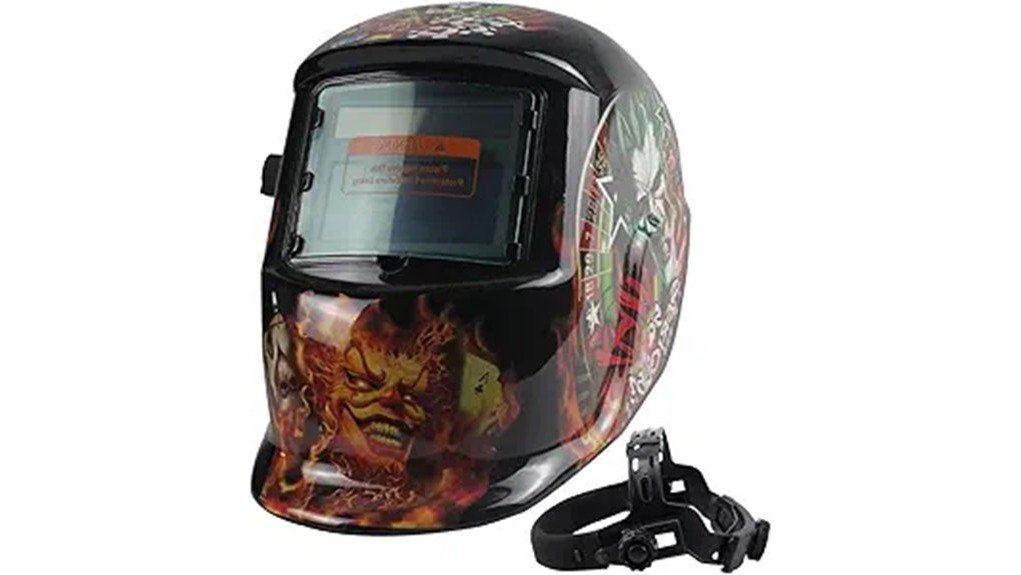
This auto darkening welding helmet 4/9-13 switches from its light state to a dark shade in 1/15000 second, per the listing. It lists a DIN 4 light state, a 9 to 13 dark range, adjustable sensitivity and delay, solar cells with a replaceable CR2032 battery, and a weight of 1.54 lb. This page explains what those specs mean, how to set the shade, and who should skip it.
Quick Verdict
Best For: Beginner and hobby welders doing MIG, TIG or stick work who want adjustable sensitivity and delay in a mid-weight helmet.
Bottom Line: The listed specs cover the basics well. Brand, certification and warranty are not verified here, so check the product label and the live listing before using it for regulated work.
| Specification | Detail (per the listing unless noted) |
|---|---|
| Product type | Auto-darkening welding helmet |
| Amazon ASIN | B0CDGTG3CT |
| Shade range | Light state DIN 4, dark range 9 to 13 (listed as 4/9-13) |
| Switching speed | 1/15000 second |
| Power | Solar cells plus a replaceable CR2032 lithium battery |
| Weight | 1.54 lb |
| Operating temperature | 14 F to 140 F |
| Adjustments | Sensitivity and delay; adjustable headgear |
| Headgear comfort | Sponge-wrapped forehead band for sweat absorption |
| Not verified | Brand, viewing area size, certification marks and warranty. Confirm on the live listing. |
Auto Darkening Welding Helmet 4/9-13: Features and Specs
The 4/9-13 label describes the lens. In the light state the filter sits at DIN 4 so you can see to line up the joint. When it detects the arc it darkens to a shade you choose between 9 and 13.
A switching time of 1/15000 second is listed. It describes how fast the lens darkens when the arc starts, and the faster it is, the less arc flash reaches your eyes.
Who Should Buy It?
- Beginners who want auto-darkening so they can position the torch with the helmet down.
- Hobby welders who switch between MIG, TIG and stick and need an adjustable dark shade.
- Users who want a replaceable battery backed up by solar cells.
Skip it if you need a verified certification for workplace use, a known brand with published parts support, or a lens made for plasma or laser work.
How to Set the Shade, Sensitivity and Delay
Pick the dark shade for your process and amperage, then confirm it against the chart in the manual. As a rough orientation, TIG often uses lighter dark shades in the 9 to 12 area, while MIG and stick commonly sit around 10 to 13. Treat these as starting points, not rules.
- Shade: start darker and step lighter only until the puddle is clear but comfortable.
- Sensitivity: raise it for low-amperage arcs that fail to trigger the lens, and lower it if bright shop lights or other welders set it off.
- Delay: a longer delay keeps the lens dark while the puddle cools after you stop. Use a shorter one for fast tack welds.
Test the lens with a short strike on scrap before starting a real weld.
Comfort, Fit and Weight
At 1.54 lb the helmet sits in the middle of the range. The listing mentions adjustable headgear with a sponge-wrapped forehead band, which helps with sweat and with keeping the helmet steady on your head.
Fit varies with head size and glasses. Adjust the headgear so the helmet sits level and does not press on your forehead, and test the view with your own glasses if you wear them.
Power, Temperature and Care
The solar cells assist the filter and a replaceable CR2032 battery provides backup power, so you can swap the battery instead of the helmet. The listing gives an operating range of 14 F to 140 F, so avoid leaving the helmet in a hot vehicle or in freezing storage.
Keep the sensors and lens clean and replace scratched cover lenses. If the lens flickers, lags or fails to darken, stop welding and replace the battery or the lens before you continue. A lens in its light state is not a grinding setting, so wear a face shield and safety glasses for grinding.
Pros and Limitations
Pros
- Adjustable dark shade from 9 to 13 per the listing.
- Sensitivity and delay controls for different arcs.
- Solar cells with a replaceable CR2032 battery.
- Sponge-wrapped forehead band and adjustable headgear.
Limitations
- Brand, certification marks and warranty are not verified here.
- Viewing area size is not stated on this page, so check the listing.
- At 1.54 lb it is heavier than some compact helmets.
- Not a grinding or plasma-cutting helmet.
Related guides: How an auto-darkening welding helmet works | Welding helmet shade guide | Best auto-darkening welding helmets
Frequently Asked Questions
What does 4/9-13 mean on a welding helmet?
It describes the lens: a light state of DIN 4 and an adjustable dark range of 9 to 13. You choose the dark shade for the process you are welding.
Can I use it for MIG, TIG and stick welding?
The 9 to 13 dark range is the kind of span used for these processes. Match the shade to your amperage using the manual chart, and test low-amperage TIG on scrap first.
How long does the battery last?
This page does not verify a battery life figure. The helmet uses solar cells with a replaceable CR2032 battery, so check the manual and replace the battery if the lens becomes slow or flickers.
Is it suitable for outdoor use?
The listing gives an operating range of 14 F to 140 F. Bright sunlight can trigger or confuse sensors, so adjust sensitivity and test the lens outdoors before you start.
What about warranty and returns?
Neither is verified here. Check the seller and Amazon return terms on the live listing before you order.
The Bottom Line
This auto darkening welding helmet 4/9-13 is a reasonable choice for hobby welders who want adjustable shade, sensitivity and delay with a replaceable battery. Skip it if you need a verified certification, a published warranty or a grinding or plasma-cutting lens. All figures come from the listing and have not been tested or independently verified.
Ready to Buy?
Check the current price and listing details before you decide.
{
“@context”: “https://schema.org”,
“@type”: “FAQPage”,
“mainEntity”: [
{
“@type”: “Question”,
“name”: “What does 4/9-13 mean on a welding helmet?”,
“acceptedAnswer”: {
“@type”: “Answer”,
“text”: “It describes the lens: a light state of DIN 4 and an adjustable dark range of 9 to 13. You choose the dark shade for the process you are welding.”
}
},
{
“@type”: “Question”,
“name”: “Can I use it for MIG, TIG and stick welding?”,
“acceptedAnswer”: {
“@type”: “Answer”,
“text”: “The 9 to 13 dark range is the kind of span used for these processes. Match the shade to your amperage using the manual chart, and test low-amperage TIG on scrap first.”
}
},
{
“@type”: “Question”,
“name”: “How long does the battery last?”,
“acceptedAnswer”: {
“@type”: “Answer”,
“text”: “This page does not verify a battery life figure. The helmet uses solar cells with a replaceable CR2032 battery, so check the manual and replace the battery if the lens becomes slow or flickers.”
}
},
{
“@type”: “Question”,
“name”: “Is it suitable for outdoor use?”,
“acceptedAnswer”: {
“@type”: “Answer”,
“text”: “The listing gives an operating range of 14 F to 140 F. Bright sunlight can trigger or confuse sensors, so adjust sensitivity and test the lens outdoors before you start.”
}
},
{
“@type”: “Question”,
“name”: “What about warranty and returns?”,
“acceptedAnswer”: {
“@type”: “Answer”,
“text”: “Neither is verified here. Check the seller and Amazon return terms on the live listing before you order.”
}
}
]
}