As an Amazon Associate, Garage Welding may earn from qualifying purchases. This does not change the price you pay.
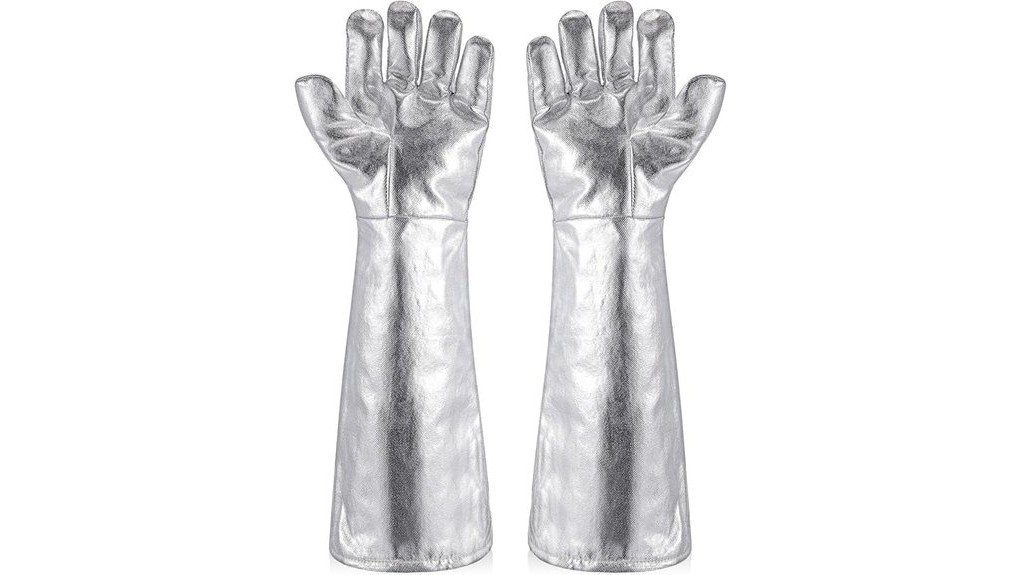
The Kingdder welding gloves are 55 cm (about 21.7 inch) aluminized heat-resistant gloves with a pre-curved fit and breathable lining. They are worth considering for handling hot work, forge and furnace tasks, and radiant heat. They are a poor substitute for a leather MIG, stick or TIG welding glove, so match them to the job before you buy.
This page is based on the seller’s Amazon listing and general welding-PPE practice, not hands-on testing.
Kingdder gloves at a glance
| Item | Per the listing |
|---|---|
| Length | 55 cm, covers hand and forearm |
| Outer material | Aluminized fabric that reflects radiant heat |
| Construction | Layered fabric with breathable lining |
| Fit | Pre-curved fingers |
| Contact heat | Quoted at about 572 to 662 degrees F for roughly 15 seconds |
| Uses listed | Welding, forging, furnace work, car repair, barbecuing |
The heat figures are the seller’s, so confirm any standard or rating on the current listing.
Check Current Price on Amazon →
What aluminized gloves are best at
Aluminized fabric reflects radiant heat, which makes it useful around furnaces, forges, kilns and hot work where the main threat is heat rather than molten spatter or sparks. The long cuff covers the forearm, and pre-curved fingers reduce hand fatigue when gripping tongs or tools.
- Good for: handling hot parts, forging, furnace tending, foundry-style tasks, BBQ and fire work.
- Not ideal for: precision TIG, or heavy stick welding where leather is the proven choice.
How to check these are right for your work
- Define the job. Radiant heat and brief hot contact suits aluminized gloves; welding spatter and UV usually calls for leather.
- Look for a rating. Check the listing for EN 12477 or another standard if you plan to weld in them.
- Check size. Use the sizing chart and measure your hand, since stiff gloves can be hard to adjust.
- Check the cuff. A 55 cm length helps keep sparks off the forearm, but sleeves should overlap the glove, not tuck inside it.
- Test dexterity. If you need to hold small parts or thin rod, try them before relying on them in a critical task.
Pros and limitations
Pros
- Reflective surface for radiant heat.
- Long cuff covers the forearm.
- Pre-curved fingers ease gripping.
Limitations
- A short contact-time rating means they are not for holding hot metal for long.
- Fabric gloves can be stiffer than leather and less suited to fine control.
- Not an automatic replacement for MIG, stick or TIG welding gloves.
Safety and care tips
No glove makes your hands fireproof. Release hot items promptly, keep gloves dry (wet gloves conduct heat and can cause steam burns), and inspect for cracked aluminum surfaces or burnt lining before each use.
Hand-clean with mild soap, dry them naturally, and store flat away from sunlight. If you also weld, keep a dedicated pair of leather welding gloves for the arc.
Alternatives and related guides
- For arc welding, see the Lincoln Electric welders gloves review.
- For TIG, see the John Tillman TIG welders gloves review.
- Compare the heat-resistant gloves review for more fabric options.
- Try the TecWeld 14 inch welding gloves for leather stick and MIG.
Frequently Asked Questions
Are Kingdder aluminized gloves real welding gloves?
They are marketed for welding, forging and furnace work, but aluminized heat-resistant gloves are mainly for radiant heat and short hot contact. For MIG, stick and TIG, most welders prefer leather gloves that carry a welding glove standard such as EN 12477, so check the listing for a rating.
How long can I touch hot objects with these gloves?
The listing quotes contact heat resistance of roughly 572 to 662 degrees F for only a short period, around 15 seconds. That is a brief-contact rating, not permission to hold hot metal for long. Release hot items quickly and let metal cool before handling.
Can I use these gloves for TIG welding?
TIG needs fine control for feeding filler and positioning the torch, so welders usually choose thin goatskin or deerskin gloves. Bulkier aluminized gloves may be too clumsy for precise TIG work, but could suit handling hot parts around the bench or a forge.
How do I care for aluminized gloves?
Wipe clean with a damp cloth and mild soap, avoid machine washing unless the maker says it is allowed, and dry away from heat. Store them flat in a dry place. Replace them if the reflective layer is cracked, burnt through, or the lining is torn.
Conclusion
These aluminized gloves make sense for hot-work handling and radiant heat, not as your only welding glove. Check the rating on the listing, and keep leather gloves for the arc.