As an Amazon Associate, Garage Welding may earn from qualifying purchases. This does not change the price you pay.
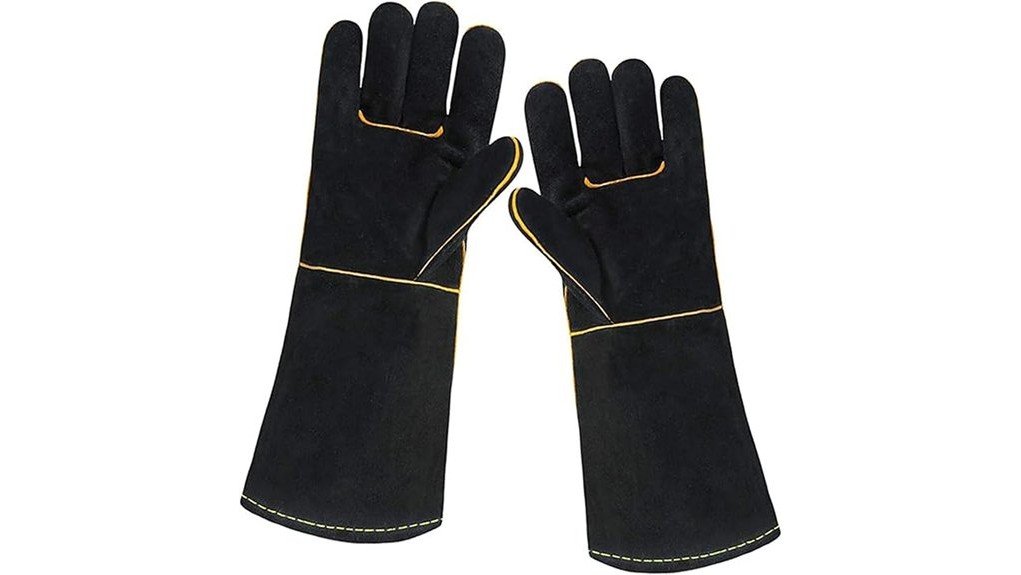
This heat resistant gloves review looks at a leather glove with Kevlar thread stitching that the Amazon listing rates for temperatures up to 500°F. It is worth considering for handling hot metal, fireplace tools or grill work. It is not a substitute for proper welding gloves when you are running a MIG, stick or TIG arc.
Heat Resistant Gloves at a Glance
| Item | Per the listing |
|---|---|
| Material | Fire-resistant leather with Kevlar thread |
| Stated heat rating | Up to 500°F (check the listing for details) |
| Construction | Reinforced palms, fireproof stitching, extended sleeve |
| Typical uses | Cooking and grilling, fireplace, gardening, hot-part handling |
| Sizing | Check the size chart on the listing |
Check Current Price on Amazon →
What These Gloves Are and Who They Suit
The listing describes leather construction with Kevlar thread, which matters because ordinary cotton or nylon thread can burn through long before the leather does. Reinforced palms and an extended sleeve add some protection for the wrist and forearm.
They suit shop and home users who occasionally pick up hot parts, tend a wood stove or fire pit, or want a general-purpose hot-work glove. If you weld every day, you will want gloves made for it. See our comparisons of Lincoln Electric welding gloves and Kingdder welding gloves.
Heat Resistant Gloves vs Welding Gloves
The two are often confused, and the difference affects safety.
- Heat resistant gloves are rated for contact or radiant heat. Kitchen silicone and fabric versions are not designed for sparks or slag.
- Welding gloves are made from thicker cowhide or split leather for MIG and stick, or thin goatskin or deerskin for TIG, and are lined for heat and spatter. Look for EN 12477 on European-rated pairs.
- No glove makes your hands fireproof. Heat passes through any material eventually, so limit contact time.
How to Check They Fit Your Job
- Match the task: hot-part handling and grilling are a good match; arc welding is better served by dedicated welding gloves.
- Read the rating wording. Is 500°F for brief contact, radiant heat or continuous use? If the listing does not say, assume brief contact.
- Measure your hand and use the size chart. A snug fit improves control over hot items.
- Check cuff length for the work. Longer sleeves protect forearms from splashes and sparks.
- Look for lining details. Some gloves are lined, some are not. Lined pairs feel warmer in summer but protect better.
Pros and Limitations
Pros
- Leather with Kevlar thread is a sensible combination for stitching durability.
- Reinforced palms and long sleeves help with grip and forearm coverage.
- One pair covers kitchen, fireplace and workshop duties.
Limitations
- Thicker leather reduces fingertip feel, so fine tasks like TIG work are harder.
- The listing does not clearly present them as arc-welding gloves, so do not rely on it for UV and spatter protection.
- Wet or damp leather conducts heat faster and can scald. Keep gloves dry.
Use and Care Tips
- Inspect before each use for thin spots, cracks, burn-through or loose stitching. Replace damaged gloves.
- Hand wipe and air dry away from heat. Avoid bleach and tumble drying.
- Store flat or hanging in a dry place; flexing stiff leather can crack it.
- Never grab hot work for longer than needed. Use tongs or pliers when you can.
Alternatives and Related Guides
- Duratech welding gloves for a glove designed for arc work.
- John Tillman TIG gloves if you need dexterity for TIG.
- Tecweld 14-inch gloves for a longer cuff.
Frequently Asked Questions
Are heat resistant gloves the same as welding gloves?
Not necessarily. Kitchen and BBQ gloves are built for radiant or contact heat, not molten spatter, UV or arc exposure. A leather glove marketed as heat resistant may suit light welding or hot-metal handling, but check whether the listing mentions welding, and use thicker dedicated welding gloves for MIG or stick.
Can I trust a 500°F rating?
Treat it as the seller’s figure, not a guarantee for every situation. Heat tolerance depends on contact time, glove thickness and whether the liner is dry. Short touches of hot items are very different from gripping a 500°F part for a minute. Replace gloves that feel hot through the palm.
How do I size heat resistant gloves?
Measure around your palm just below the knuckles, excluding the thumb, and compare the number with the size chart on the listing. Leather gloves need room to flex but should not bunch, since loose fingertips make it harder to grip hot work safely.
Can I wash leather and Kevlar-stitched gloves?
Most makers advise against machine washing. Brush off dirt, wipe with a damp cloth, and air dry away from direct heat so the leather does not stiffen or crack. Follow the care label that comes with your pair.
Verdict
These leather and Kevlar-stitched gloves look like a practical choice for hot-part handling and fireplace or grill use. Confirm the exact rating and sizing on the listing, and move up to dedicated welding gloves for arc work.