Disclosure: As an Amazon Associate, we earn from qualifying purchases. If you click a link on this page and make a purchase, we may receive a small commission at no extra cost to you.
Choosing welding gloves is not only about grabbing the thickest pair you can find. You need heat protection, sleeve coverage, and enough hand movement to hold tools safely. These leather welding gloves focus on durable 1.5mm cowhide leather, an insulated cotton lining, and a long sleeve design for extra coverage around sparks and hot material. This review helps you decide if they make sense for shop welding, garage work, grilling, and other high-heat tasks, or if you should choose a more specialized glove instead.
Quick Verdict
Rating: 8/10
Best For: DIY welders, garage users, and anyone who wants long leather gloves for heat, sparks, and hot material handling.
Bottom Line: These gloves are worth considering if you want 1.5mm cowhide leather, cotton insulation, Kevlar-thread stitching, and longer sleeve coverage in one simple pair. The main tradeoff is that the source article does not confirm certifications, exact cuff length, or a named brand, so buyers should check the current Amazon listing before ordering.
| Specification | Detail |
|---|---|
| Product type | Leather welding gloves |
| Material | 1.5mm thick cowhide leather |
| Lining | Insulated cotton lining |
| Stitching | Kevlar-thread stitching described in the source article |
| Heat resistance | Up to 250°C, according to the source article |
| Design | Long sleeve design for added forearm coverage |
| Size range | S, M, L, and XL |
| Best use | Welding, hot material handling, grilling, and other high-heat tasks where leather hand protection is appropriate |
| Safety note | Certifications are not confirmed in the source article. Match gloves to your welding process, heat level, and safety requirements. |
What Are These Leather Welding Gloves?
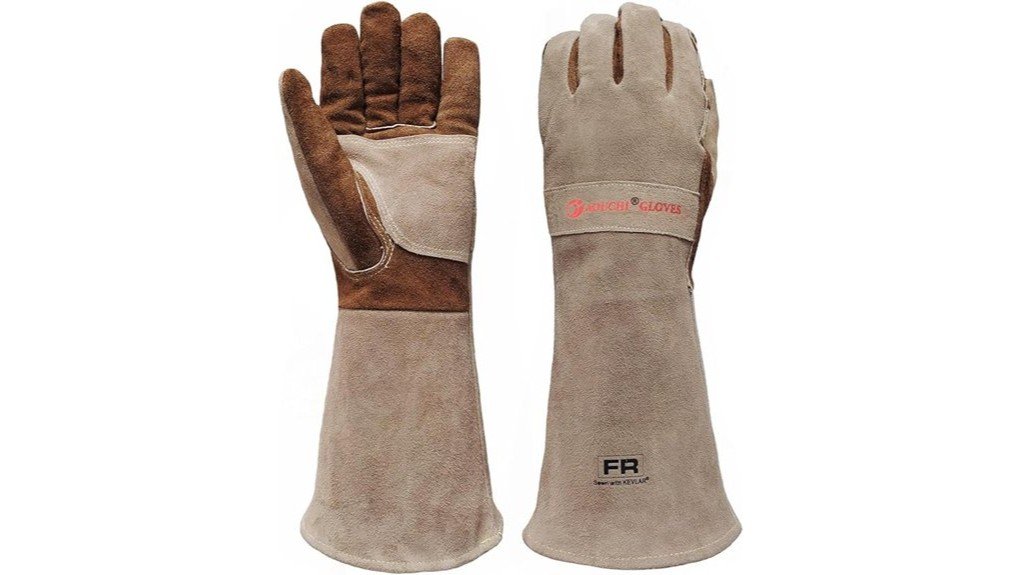
These are long leather work gloves made for heat, sparks, and abrasive shop conditions. The source article describes them as 1.5mm thick cowhide leather gloves with an insulated cotton lining and reinforced stitching.
The main appeal is simple: you get thick leather for durability, cotton insulation for comfort, and extra sleeve coverage to help protect your wrists and lower forearms. That makes them a practical choice for basic welding jobs, handling hot metal, and working around sparks.
They are not a precision TIG glove or a certified firefighting glove. They are better viewed as general leather welding gloves for buyers who want sturdy heat protection without needing a highly specialized glove for one narrow task.
Before You Buy: The source article does not verify a brand name, exact cuff length, safety certification, or warranty terms. Check the current Amazon listing and choose the correct size before placing your order.
Who Should Buy It?
Best For
- DIY welders who want thick cowhide gloves for spark and heat protection.
- Garage users who handle hot parts, metal, grills, or firewood tools.
- Buyers who want longer sleeve coverage instead of a short work glove cuff.
Skip If
- You need verified ANSI, EN, or process-specific welding glove certifications.
- You want very thin gloves for fine TIG control and fingertip feel.
- You need exact measurements before buying and the live listing does not provide them.
Material Composition and Durability
The key material is 1.5mm thick cowhide leather. Cowhide is commonly used in welding gloves because it offers a useful balance of toughness, abrasion resistance, and heat protection.
The thickness matters because welding gloves take abuse from rough metal, tool handles, sparks, and repeated bending. A 1.5mm leather shell should feel more protective than a thin general-purpose work glove, but it may also feel stiffer at first.
The article also mentions Kevlar-thread stitching. That is a valuable detail because seams are often a weak point on heat-exposed gloves. Strong stitching helps the glove hold together better when you grip tools, move hot parts, or use the gloves around sparks.
Heat Resistance and Comfort Features
The source article states that these gloves can handle temperatures up to 250°C. That rating makes them useful for high-heat tasks, but you should still avoid holding extremely hot metal longer than necessary.
The insulated cotton lining adds comfort between your hand and the leather shell. It can help reduce the harsh feel of thick leather during longer tasks and may make the gloves easier to wear during repeated use.
There is a tradeoff. More leather and more lining usually mean less fingertip feel. If your work requires delicate torch control, small filler rod movement, or detailed assembly, these gloves may feel bulkier than thinner welding gloves.
Pro Tip: Choose the smallest size that still lets your fingers move comfortably. A glove that is too loose can reduce grip control, while a glove that is too tight can make long work sessions uncomfortable.
Design, Protection, and Sizing Options
The long sleeve design is one of the most practical features. It gives more coverage than a short work glove and helps protect the wrist and lower forearm from sparks, light spatter, and contact with rough surfaces.
These gloves are listed in four sizes: S, M, L, and XL. That range gives you a better chance of finding a workable fit, but the source article does not include a hand measurement chart. For the best fit, compare your hand width and finger length with the live Amazon size guide if it is available.
A snug fit is useful because welding tasks require grip control. You want enough room to bend your fingers, but not so much extra leather that the glove twists around the handle of a torch, clamp, grinder, or hot pan.
How It Performs in Real Use
For Welding and Shop Work
For basic welding jobs, the cowhide shell, cotton lining, and long sleeve design give you a practical barrier against heat and sparks. These features make the gloves suitable for garage welding and general metal handling, especially when you need more protection than a thin work glove can offer.
For Handling Hot Materials
The stated heat resistance up to 250°C helps when you need to move warm parts, handle metal near a work area, or deal with tools that have heated up during use. You should still use care because heat can build through any glove during longer contact.
For Grilling and Outdoor Heat Tasks
The gloves can also make sense for grilling, fire pits, and other supervised outdoor heat tasks. The longer sleeve can help when reaching near hot grates, but these gloves should not replace purpose-built protective equipment for firefighting or extreme heat exposure.
For Long Work Sessions
The insulated cotton lining helps comfort during repeated use. If you wear gloves for long sessions, check for sweat buildup, stiffness, and hot spots in the fingers. Let the gloves dry fully before storing them.
How to Use and Maintain Them
Before first use, inspect the leather, stitching, lining, and cuff area. Do not use the gloves if you see holes, torn seams, exposed lining, or hardened leather that prevents safe grip.
For cleaning, brush off dry debris and wipe the leather with a soft cloth. Avoid soaking the gloves, machine washing them, or placing them near direct heat to dry. Too much moisture or heat can make leather stiff and shorten its life.
Store the gloves in a cool, dry place away from direct sunlight. If the leather starts to dry out, use a leather care product that is suitable for work gloves, then let the gloves dry fully before the next use.
Material Safety and Comfort
These gloves touch your skin, so comfort matters as much as heat protection. The cotton lining helps create a softer inner layer, but users with sensitive skin should stop wearing the gloves if they notice irritation.
Leather gloves are not meant to be used as electrical safety gloves unless they are specifically rated for that job. They also should not be used as a substitute for full welding PPE, including a welding helmet, proper clothing, eye protection, and safe work habits.
Always match your glove choice to the task. Thick leather is useful for heat and abrasion, while thinner gloves may be better for detail work. For professional welding, follow your shop safety rules and any equipment manufacturer guidance.
Pros and Cons
Pros
- 1.5mm cowhide leather gives useful durability for shop and welding tasks.
- Insulated cotton lining improves comfort during longer wear.
- Long sleeve design adds wrist and forearm coverage near sparks.
- Kevlar-thread stitching helps strengthen high-stress seam areas.
- Four size options make it easier to choose a more controlled fit.
Cons
- Brand, exact cuff length, and certification details are not verified in the source article.
- Thicker leather may feel bulky for detail work or fine TIG control.
- You need to confirm sizing on the current listing because no measurement chart was included in the source body.
Is It Worth the Price?
These gloves look like a strong value for the price if you need basic leather welding protection, longer sleeve coverage, and cotton-lined comfort. The article-supported features are practical rather than flashy, which is usually what matters most in a shop glove.
They are a smart buy for everyday use if your work includes welding practice, hot material handling, and garage tasks. The best value comes from the cowhide thickness, reinforced stitching, and sleeve coverage.
They are not the best fit if you need verified professional certifications, ultra-high dexterity, or exact product measurements before buying. In that case, compare them with a glove that lists full safety standards and a detailed size chart.
How It Compares to Alternatives
Compared with thinner goatskin TIG gloves, these cowhide gloves should offer more heat and abrasion protection, but less finger sensitivity. Compared with cheap short-cuff leather work gloves, the longer sleeve design gives better wrist and forearm coverage.
If you need extreme radiant heat protection, aluminized heat gloves may be worth comparing. If you want a balanced glove for garage welding, hot parts, and general shop use, these leather welding gloves make the most sense.
Frequently Asked Questions
Are these leather welding gloves good for beginners?
Yes, they can work well for beginners who need basic heat, spark, and abrasion protection. The long sleeve design and cotton lining make them more forgiving than thin short-cuff gloves for general shop use.
What size should you choose?
The source article lists S, M, L, and XL. Choose a size that lets you bend your fingers without extra loose leather around the fingertips or palm.
Can you use them for TIG welding?
You can use them for some welding tasks, but they may feel too bulky for fine TIG control. If fingertip feel is your top priority, compare them with thinner TIG-focused gloves.
How heat resistant are they?
The source article says the gloves can withstand temperatures up to 250°C. Even with that rating, avoid long contact with very hot metal because heat can transfer through the glove over time.
Can you use these gloves for grilling or baking?
They can be useful for grilling and other hot household tasks, as long as you use them carefully. They should not replace oven mitts or protective gear where the product instructions recommend something else.
How should you clean leather welding gloves?
Brush off dry debris and wipe the leather with a soft cloth. Do not soak them, machine wash them, or dry them with direct heat because that can damage the leather.
Are they suitable for left-handed users?
The source article describes them as suitable for either hand preference. Since they are gloves rather than a one-hand tool, left-handed users should mainly focus on size, grip, and comfort.
Who should skip these gloves?
Skip them if you need verified safety certifications, a detailed brand warranty, or very thin gloves for precision welding. Also compare other options if you need exact cuff length, glove weight, or a complete manufacturer spec sheet.
The Bottom Line
These leather welding gloves are a good fit if you want 1.5mm cowhide leather, cotton-lined comfort, long sleeve coverage, and reinforced stitching for general welding and hot material tasks. Skip them if you need verified certifications, exact measurements, or a thin glove for high-dexterity work.