Welding gloves collect grinding dust, soot, metal particles, sweat, and shop grime, but cleaning them the wrong way can damage the leather, liner, stitching, or protective finish. The safest method starts with the glove maker’s care instructions, because full-leather, lined, synthetic, and coated gloves do not all tolerate the same cleaning process.
For most leather welding gloves, remove loose debris with a soft brush and avoid soaking them. Use a damp-cloth spot clean only when the care label allows it, air-dry the gloves away from heat, and remove any damaged or combustible-contaminated pair from service.
Quick Answer
Brush loose dust and grit from welding gloves after use. Check the care label before adding water or cleaner, because many full-leather gloves should not be washed. If permitted, spot-clean lightly, air-dry away from heat, and replace gloves that are oily, burned, cracked, punctured, thin, or poorly stitched.
Key Takeaways
- Read the glove label or manufacturer instructions before using water, soap, disinfectant, or conditioner.
- Dry-brush leather gloves first. Do not soak or machine-wash them unless the manufacturer specifically permits it.
- Keep welding gloves dry and free from oil, grease, solvents, and other combustible contamination.
- Air-dry gloves naturally. Dryers, heaters, heat guns, open flames, and direct sun can harden or distort leather.
- Replace gloves when burns, holes, thinning, loose seams, stiff leather, or poor grip reduce protection or control.
At a Glance
| Time Required | About 5 to 15 minutes for brushing and permitted spot cleaning, plus natural drying time |
| Difficulty | Easy, but the correct method depends on the glove material and care label |
| Tools Needed | Soft-bristle brush, clean cloths, dry towels, and only a manufacturer-approved cleaner if allowed |
| Cost | Low when using supplies already in your shop; specialty products are optional and must be glove-maker approved |
What’s in This Article
- Clean Welding Gloves the Right Way
- Check the Care Label and Glove Material
- What You Need to Clean Welding Gloves
- Remove Dirt and Grinding Dust
- Dry Welding Gloves Without Damage
- Condition Welding Gloves for Flexibility
- Store Welding Gloves Between Jobs
- Spot Signs Your Gloves Are Wearing Out
- When to Replace Welding Gloves?
- Choose Durable Welding Gloves
- Care for Shared TIG Gloves
- Troubleshoot Common Glove-Care Problems
- Frequently Asked Questions
- Conclusion
Clean Welding Gloves the Right Way
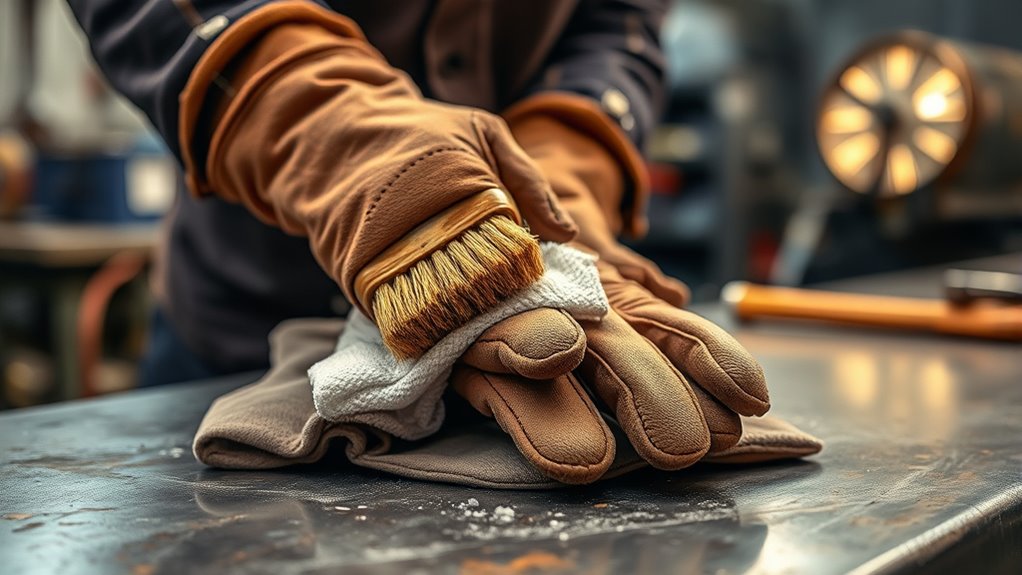
Before you clean welding gloves, inspect the label, material, liner, seams, and contamination. OSHA says PPE should be maintained in a clean and reliable condition, but that does not mean every protective glove can be washed the same way.
A glove maker may tell you not to wash full-leather gloves at all. For example, the Wells Lamont glove-care guide states that leather gloves should not be washed, while other materials have different instructions. Check the product label or the exact model’s care page before using water, soap, saddle soap, disinfectant, or leather conditioner.
Warning: Do not weld in gloves contaminated with oil, grease, solvent, fuel, or another combustible substance. Remove the pair from service and follow your shop’s disposal or decontamination procedure.
Step-by-Step Cleaning Process
- Read the care instructions. Identify whether the gloves are full leather, leather with a textile liner, coated, synthetic, or specifically marked washable.
- Inspect before cleaning. Look for holes, burns, thin spots, loose stitching, hardened areas, damaged cuffs, wet insulation, or embedded sharp particles.
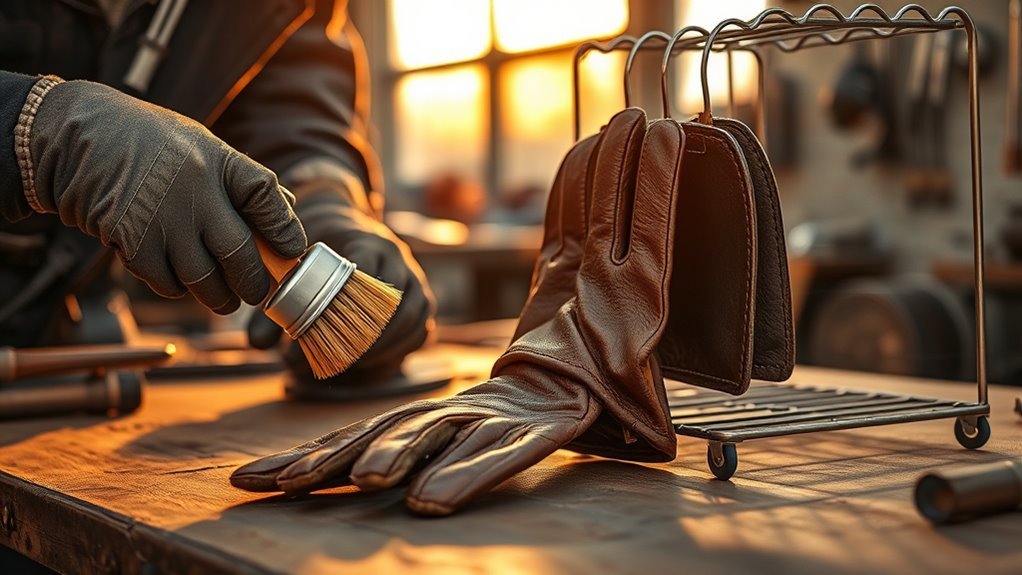
- Remove loose debris. Use a soft-bristle brush to sweep dust, slag, grit, and grinding debris away from the palms, fingers, cuffs, and seams.
- Spot-clean only if allowed. Lightly dampen a clean cloth with cool or lukewarm water. Add only the cleaner named or approved by the manufacturer, and test a hidden area first.
- Remove cleaner residue. Wipe with a second lightly damp cloth when the care instructions call for it. Do not saturate the leather or liner.
- Blot and reshape. Press the gloves between dry towels without wringing or twisting them.
- Air-dry and reinspect. Lay them flat in moving air, away from heat and direct sunlight. Use them again only when fully dry and still flexible, intact, and protective.
Pro Tip: Brush gloves over a waste container or outdoors, while wearing suitable eye and respiratory protection for the dust involved. Do not blow grinding dust into the shop with compressed air.
Check the Care Label and Glove Material
The material determines what you can safely do. Do not assume that advice for a fashion leather glove, an unlined work glove, or a synthetic mechanic glove also applies to heat-protective welding PPE.
Full-Leather Welding Gloves
Many full-leather welding gloves are intended for dry brushing and limited surface care rather than washing. Soaking can change the fit, harden the leather, affect dyes or finishes, and leave thick insulation damp. Follow the exact maker’s instruction for your model, including products such as the Kevlar-stitched leather welding gloves covered in this site’s review.
Lined and Insulated Gloves
A thick liner can hold moisture longer than the outside leather. Do not turn a bonded liner inside out, pull it loose, or use the gloves while the inside still feels damp. Persistent wetness, odor, bunching, or liner damage is a reason to check the maker’s guidance and consider replacement.
Synthetic, Coated, and Mixed-Material Gloves
Some non-leather or mixed-material gloves can be hand-washed or machine-washed, but only when the label says so. Follow the listed water temperature, detergent, cycle, drying method, and maximum number of washes. A washable rating for one model does not make all welding gloves washable.
What You Need to Clean Welding Gloves
Start with the fewest supplies possible. For routine care, you usually need a soft-bristle brush, clean lint-free cloths, and dry towels. Add cool or lukewarm water and a manufacturer-approved cleaner only when the glove instructions permit wet cleaning.
Keep a separate brush for PPE so you do not transfer oil, grease, metalworking fluid, chemicals, or sharp debris from dirty tools. Regular care can support the durability of cowhide leather, but no cleaner can restore burned or worn-through protection.
Products Worth Considering
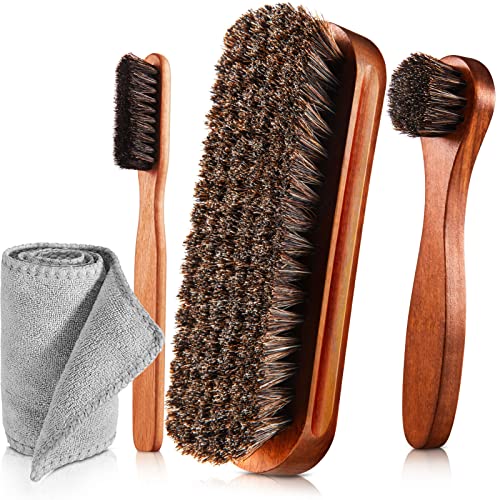
Shoes Shine Brush Set - There are 1 x large size shine brush, 1 x long handle horsehair brush, 1 x detailing shoe brush and 1 x microfiber buffing cloth
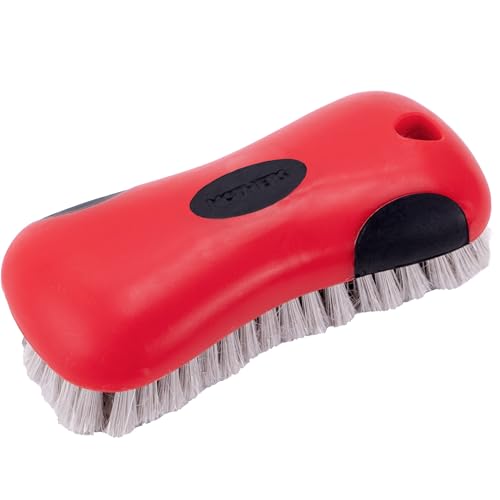
Soft bristles are triple flagged for a gentle feel

HIGH QUALITY - Premium horsehair brushes, crafted from natural European beech wood and effectively hard horsehair, ensure superior cleaning, polishing, and shine. They effectively address wear and fading, delivering a thorough polish and brilliant shine
Cleaning Supplies Needed
- Soft-bristle brush: removes dry dust, soot, and grit without aggressive scraping.
- Clean cloths: support permitted spot cleaning and residue removal.
- Dry towels: blot surface moisture without wringing the glove.
- Manufacturer-approved cleaner: use only when the product label allows it.
- Ventilated drying space: provides natural airflow away from ignition and heat sources.
Safe Cleaning Tools
Use smooth, clean tools that will not cut the glove or drive debris deeper into the seams. Avoid wire brushes, grinding wheels, stiff scrapers, pressure washers, compressed-air blasting, bleach, strong solvents, and household degreasers.
If a cleaner is permitted, test it on a small hidden area. Stop if the leather changes texture, loses color heavily, becomes tacky, or starts to separate. Never mix cleaners.
Remove Dirt and Grinding Dust
A quick brush-down after each job prevents abrasive debris from building up. Brush from the cuff toward the fingertips, then work around seams, thumb saddles, palm reinforcements, and folds where grit collects.
Inspect the brush and gloves for sharp wire fragments or metal splinters. If a sharp object is embedded where it can reach your hand or weaken the glove, retire the pair rather than digging into the protective layers.
Spot-Clean Small Marks Only When Allowed
For a washable or spot-cleanable model, use a lightly damp cloth and the least amount of approved cleaner needed. Do not soak the glove, fill it with water, or scrub one area until the leather thins. Remove residue as directed, blot with a towel, and air-dry fully.
This controlled approach helps protect materials such as the grain elkskin leather used in some welding gloves without treating every leather type as identical.
Handle Oil, Grease, Solvent, and Chemical Contamination
CCOHS advises keeping welding clothing clean and free of oils, greases, and combustible contaminants. OSHA hot-work guidance likewise calls for leather gloves or equivalent protection that is free from flammable or combustible materials.
Do not rely on a quick wipe to make a deeply contaminated leather glove safe for hot work. Isolate the gloves, follow your employer’s PPE and hazardous-material procedure, review the relevant safety data sheet when chemicals are involved, and replace the pair when safe decontamination cannot be confirmed.
Dry Welding Gloves Without Damage
Drying matters because damp gloves can lose comfort, grip, and insulating value. CCOHS notes that leather is a useful electrical insulator when kept dry. Never handle an electrode with a wet glove.
Air Dry Naturally
Blot surface moisture with a clean towel, restore the glove’s normal shape with your hands, and lay it flat in a ventilated area. Position the cuff so air can enter, but do not force objects into the glove or stretch the fingers.
Wait until the palms, fingers, seams, cuffs, and liner are fully dry before reuse or storage. If the gloves remain damp, smell sour, or develop a changed texture, follow the manufacturer’s advice or replace them.
Avoid Heat Sources
Keep welding gloves away from clothes dryers, radiators, space heaters, heat guns, hot workpieces, open flames, and direct sunlight. Rapid heating can harden, shrink, distort, or crack leather and can damage liners or adhesives.
Warning: Do not speed drying with a welding arc, torch, oven, clothes dryer, heater, or heat gun. Natural airflow is slower, but it avoids adding another heat hazard to already stressed PPE.
Careful drying helps gloves retain the heat-resistance features built into their original materials, but it cannot restore heat protection after scorching or structural damage.
Keep Shape Intact
Lay gloves flat instead of folding the cuffs, twisting the fingers, or placing heavy tools on top. Do not stuff them into a crowded bag while damp. Once dry, flex each finger gently and check that the liner has not shifted or bunched.
Condition Welding Gloves for Flexibility
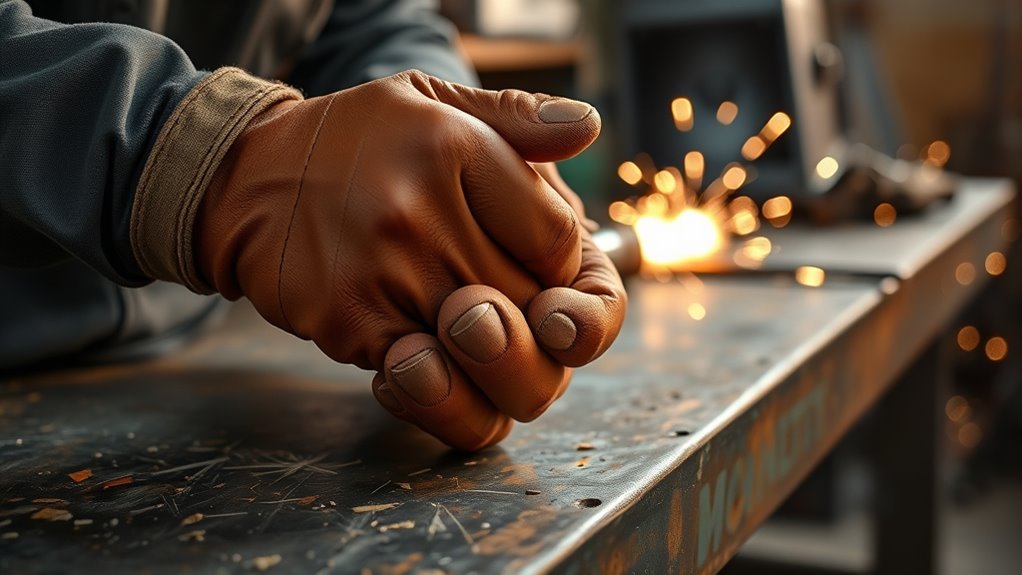
Do not automatically oil or condition welding gloves every few weeks. A conditioner that is safe for ordinary leather may not be approved for heat-protective PPE, and oily residue can attract debris or introduce combustible contamination.
Use a conditioner only when the glove manufacturer specifically allows it for that model. Apply the smallest directed amount to clean, fully dry gloves, keep it away from liners unless instructed otherwise, and remove excess residue before the gloves return to service.
Note: Conditioner can improve feel, but it cannot repair burned fibers, thin leather, failed stitching, damaged insulation, or lost heat protection.
Remember that welding gloves protect against heat, sparks, abrasion, and process-specific hazards. Replace a damaged pair instead of trying to restore it cosmetically.
Store Welding Gloves Between Jobs
Store clean, fully dry welding gloves in a cool, dry, ventilated place away from sunlight, sparks, chemicals, oil, grinding dust, and sharp tools. Lay them flat or place them in a breathable PPE compartment that protects their shape without trapping moisture.
Do not cram gloves beside cutting discs, drill bits, wire brushes, or oily hand tools. Separate storage also supports safer handling of sharp accessories and other shop equipment covered in these angle grinder safety guidelines.
- Keep each pair together so you can compare wear between the left and right glove.
- Label shared shop pairs by size and intended process.
- Rotate damp gloves out of service until they are completely dry.
- Keep spare gloves in clean packaging or a closed, dry PPE cabinet.
Spot Signs Your Gloves Are Wearing Out
Inspect gloves before every welding session and after heavy heat exposure. OSHA’s general PPE rule states that defective or damaged PPE must not be used.
Glove care works alongside safe tool handling. It does not replace correct guarding, work positioning, or practices that help prevent hazards such as angle grinder kickback.
Visible Wear and Tear
Check the palms, fingertips, thumb crotch, seams, cuffs, and areas that contact hot metal. Reject gloves with holes, open seams, loose or missing stitches, cuts, punctures, deep cracks, exposed liner, melted areas, or thin spots.
Heavy discoloration alone does not prove failure, but a singed surface, brittle patch, charred stitching, or changed texture after heat exposure needs close inspection and usually replacement.
Loss of Flexibility
Stiff leather can restrict finger movement and reduce tool control. Flex each finger gently and compare both gloves. If the leather cracks, the liner bunches, or you cannot hold the torch, filler rod, electrode holder, or workpiece securely, remove the gloves from service.
Reduced Heat Protection
Stop using a pair if heat reaches your hand faster than before, the insulation has flattened or shifted, the palm has thinned, or seams open near high-heat areas. Do not keep welding to “test” a questionable glove. Replace it before a small defect becomes a burn path.
A clean glove is not automatically a safe glove. Protection depends on the correct glove for the hazard, an intact structure, a proper fit, and compliance with the manufacturer’s use and care instructions.
When to Replace Welding Gloves?
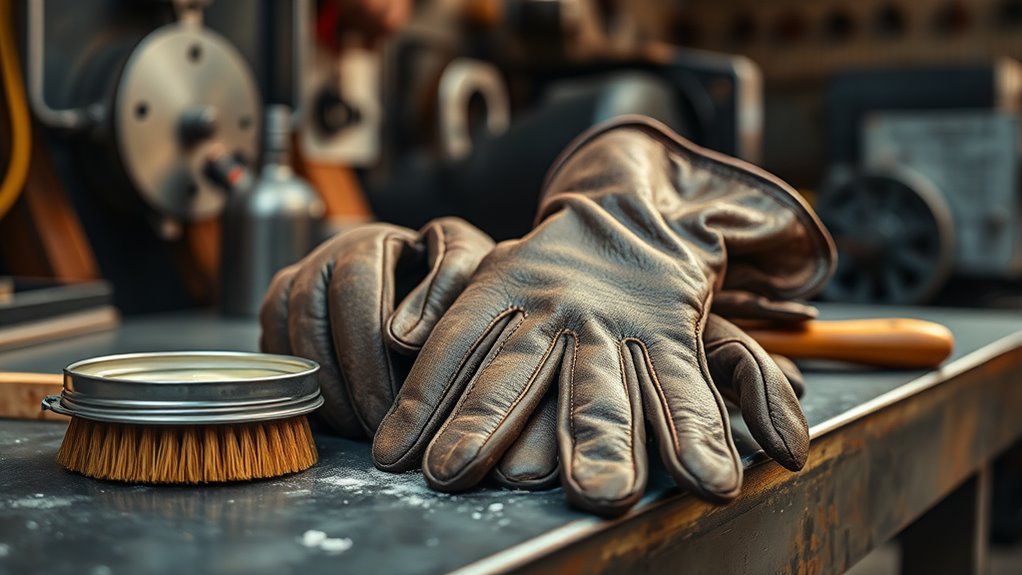
Welding gloves do not have one reliable replacement interval. Service life changes with the welding process, amperage, heat exposure, handling technique, material, glove construction, contamination, fit, and frequency of use. Inspect condition instead of relying on a “weeks” or “months” estimate.
Replace welding gloves immediately when you find:
- holes, cuts, punctures, burns, or exposed liner;
- loose stitching, split seams, or damaged cuffs;
- thin or hardened leather in the palm, fingers, or thumb area;
- oil, grease, solvent, fuel, or chemical contamination that cannot be safely removed under approved instructions;
- persistent dampness, damaged insulation, or a shifted liner;
- reduced grip, finger control, fit, or heat protection; or
- missing or unreadable identification when your workplace requires traceable rated PPE.
Also keep the hot-work area free from flammable materials. Clean PPE cannot compensate for combustible clutter near sparks, slag, or flame.
Choose Durable Welding Gloves
Select gloves for the actual welding process and hazard assessment, not only for leather thickness or price. OSHA requires appropriate hand protection for hazards that include thermal burns, cuts, punctures, abrasions, and harmful temperature extremes.
For TIG work, you may need more dexterity and tactile control. MIG and stick welding often call for more insulation and coverage. Plasma cutting can have different heat, spark, and cut hazards, so review guidance on whether you need welding-style gloves for a plasma cutter.
Products Worth Considering

Excellent Heat Protection:Made of from 1.2mm thick and 100% natural cowhide leather, these gloves provide reliable heat resistance up to 662°F , protecting your hands from hot steam, with enhanced heat insulation that resists burns even in extended use.
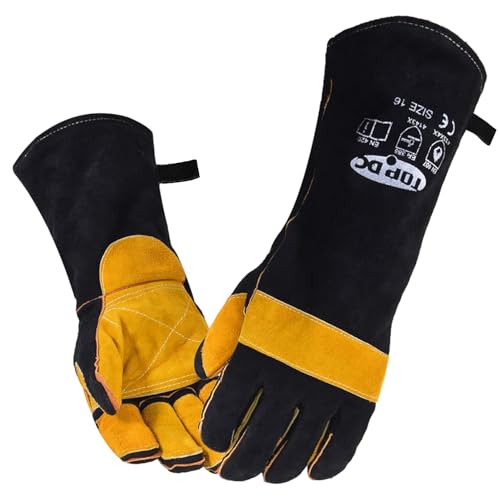
EXTREME HEAT RESISTANT PROTECTION: Reinforced Kevlar stitching, double leather reinforcement and high-strength sewing on the fingers, palms, elbows and backs. An aluminum foil layer in the palm adds insulation. A fully lined interior helps protect against heat, flames, spatter and sparks during welding tasks. Heat resistant up to 932°F (500°C)

Kontour Design for Enhanced Performance: Our gloves conform to the natural shape of your hand, providing optimal finger alignment and improved control during welding tasks
Check Fit, Construction, and Markings
- Fit: choose a size that covers the hand and wrist without excessive looseness or restricted movement.
- Cuff: use the length and style required to protect the wrist and forearm from the process.
- Construction: inspect reinforced palms, thumb areas, seams, liner attachment, and heat-resistant stitching.
- Ratings: compare only ratings relevant to your hazard assessment and market.
- Instructions: confirm cleaning, storage, limitations, and replacement guidance before purchase.
In the United States, ANSI/ISEA 105-2024 provides classifications for several hand-protection properties, but it is not a single “welding glove approval.” In the European system, the current harmonised list includes EN 12477 for protective gloves for welders, EN 388 for mechanical risks, and EN ISO 21420 for general glove requirements. Read the complete marking and product documentation rather than relying on one icon or number.
High-quality gloves made from flame-resistant materials still need correct storage, inspection, and process-specific selection.
Care for Shared TIG Gloves
Whenever practical, issue personal welding gloves in the correct size. Personal assignment improves fit consistency and makes it easier to track contamination, damage, and care history.
If gloves must be shared, create a written routine:
- Inspect the gloves before and after each user.
- Remove debris and clean only by the manufacturer-approved method.
- Do not soak leather gloves in disinfectant or apply bleach unless the glove maker specifically permits it.
- Allow the pair to dry fully before the next user.
- Store each pair in a labeled, breathable location by size and process.
- Wash and dry hands before putting gloves on and after taking them off.
- Retire any pair with burns, punctures, contamination, hardened leather, damaged seams, or a poor fit.
Note: A shop hygiene policy does not override the glove maker’s care instructions or your employer’s PPE program. When a safe cleaning method is uncertain, use a clean replacement pair.
Troubleshoot Common Glove-Care Problems
Gloves Feel Stiff After Drying
Do not force the fingers, soak the gloves again, or add household oil. Check the manufacturer’s instructions for an approved treatment. Replace the pair if stiffness causes cracking, poor fit, weak grip, or restricted movement.
The Liner Is Still Wet
Keep the gloves out of service and continue air-drying them in a ventilated area. Do not use direct heat and do not pull out a bonded liner. If moisture remains trapped or the liner bunches, smells, or separates, replace the gloves.
The Gloves Smell Bad
Odor often points to trapped moisture or contamination. Dry the gloves fully and follow the approved cleaning method. Do not mask odor with flammable sprays, solvents, or perfume. Persistent odor in a non-washable lined glove may justify replacement.
Grinding Dust Keeps Returning
Clean the storage area, brush, tool bag, and nearby PPE compartment so you do not transfer dust back to the gloves. Store welding gloves separately from grinding discs, wire wheels, and oily tools. Improve local dust control when buildup is heavy.
Frequently Asked Questions
How do you make welding gloves last longer?
Choose the correct glove for the welding process, brush off debris after use, keep the pair dry and free from combustible contamination, follow the exact care label, store it flat in a clean area, and replace it as soon as damage reduces protection or control.
How long should welding gloves last?
There is no universal lifespan. Heat level, welding process, glove material, fit, handling technique, contamination, and frequency of use all change service life. Inspect before each use and replace the gloves when their condition, fit, grip, or protective performance declines.
How often should you oil or condition welding gloves?
Do not use a fixed schedule. Apply conditioner only if the glove manufacturer approves a specific product and method. Never use household oil or leave greasy residue on gloves intended for hot work.
Can you wash welding gloves in a washing machine?
Only when the label for that exact glove allows machine washing. Many full-leather gloves should not be washed. Machine washing an unapproved pair can saturate the liner, distort the fit, harden leather, or damage stitching and finishes.
Can you use saddle soap on welding gloves?
Use saddle soap only if the glove maker permits it. Welding gloves are protective equipment, and a product intended for ordinary leather may affect the glove’s finish, feel, contamination level, or performance.
Can oily welding gloves be cleaned and reused?
Do not use oily or greasy gloves for hot work. Follow your employer’s PPE and hazardous-material procedure and the manufacturer’s decontamination instructions. Replace the pair when safe removal of the contamination cannot be confirmed.
What are the 5 C’s of welding?
There is no single OSHA, AWS, or universal industry standard called the “5 C’s of welding.” Training programs may create their own memory aids. For glove care, a useful checklist is: check the label, clear dry debris, control contamination, completely air-dry, and change damaged gloves.
Conclusion
Clean welding gloves safely by starting with the care label, not a generic leather-cleaning routine. Brush away dry debris, use moisture or cleaner only when approved, air-dry the gloves without direct heat, and store them in a clean, ventilated place.
Before the next job, inspect the palms, fingers, seams, cuffs, liner, fit, and contamination. Replace the pair when oil, grease, burns, holes, thin leather, loose stitching, stiffness, dampness, or reduced heat protection makes it unreliable.
Good care can extend useful life, but replacement is the correct fix when protective PPE is damaged.
Sources
- OSHA: Personal Protective Equipment — clean, reliable PPE and proper fit.
- OSHA 29 CFR 1910.132 — damaged or defective PPE must not be used.
- OSHA 29 CFR 1910.138 — selecting hand protection for thermal, cut, puncture, abrasion, and temperature hazards.
- CCOHS: Welding Personal Protective Equipment and Clothing — gauntlet leather gloves, dry leather, and avoiding oil or grease contamination.
- Wells Lamont Glove Care Guide — material-specific cleaning instructions, including the warning not to wash full-leather gloves.
- European Commission Implementing Decision (EU) 2026/1279 — current harmonised PPE standards list, including EN 12477, EN 388, and EN ISO 21420.