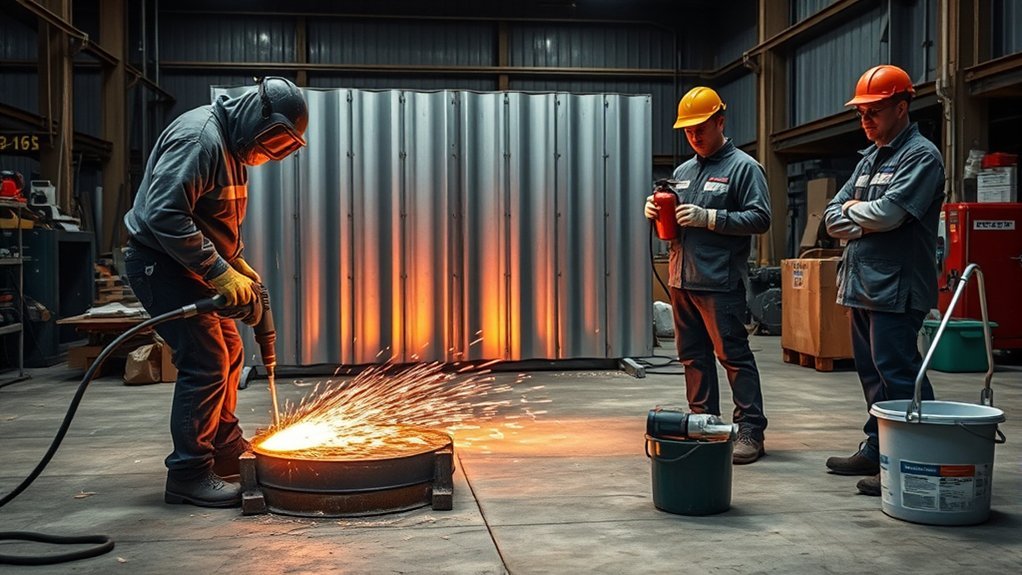
Angle grinders cut, grind, sand, and clean material quickly, but the same speed that makes them useful can also cause kickback, broken-wheel injuries, burns, harmful dust, hearing damage, or fire. Safe use begins before the trigger is pressed: identify the material, choose a compatible accessory, inspect the tool, control the work area, and put on the correct protective equipment.
Quick Answer
Use an angle grinder safely by matching the disc and guard to the tool and task, inspecting every part, securing the workpiece, and wearing eye, face, hearing, hand, and body protection. Hold the grinder with both hands, stay out of the wheel’s path, control sparks and dust, and stop immediately if the tool vibrates, binds, overheats, or sounds unusual.
Key Takeaways
- Use only a disc or accessory approved for the grinder’s size, arbor, maximum speed, guard, material, and intended operation.
- Wear impact-rated eye protection under a face shield, along with hearing protection, close-fitting gloves, protective clothing, and suitable footwear.
- Remove combustible materials, contain sparks, control harmful dust, secure the workpiece, and keep other people out of the hazard area.
- Use the side handle and a two-handed grip, let the tool reach full speed, and never twist or side-load a cutting wheel.
- Disconnect the cord or battery before changing accessories, adjusting the guard, clearing a jam, cleaning the tool, or inspecting a problem.
At a Glance
| Time Required | Allow several minutes for the pre-use inspection and work-area check before each cutting or grinding session. |
| Difficulty | Moderate. Safe control requires training, correct accessory selection, a stable stance, and practice on suitable scrap material. |
| Tools Needed | Compatible grinder, correct guard and side handle, approved disc or accessory, clamps, eye and face protection, hearing protection, gloves, protective clothing, suitable footwear, and task-specific dust or fire controls. |
| Cost | No added cost if you already own compatible PPE and accessories; otherwise the cost varies with the guard, disc, respiratory protection, spark containment, and other controls required for the job. |
What’s in This Article
- Identifying Common Risks When Using Angle Grinders
- What Safety Gear You Really Need
- Angle Grinder Pre-Use Safety Checklist
- Setting Up Your Work Area Safely
- Safe Operating Techniques for Angle Grinder Use
- Essential Features for Safe Angle Grinders
- How to Respond in an Emergency
- Frequently Asked Questions
- Conclusion
- Sources
Identifying Common Risks When Using Angle Grinders
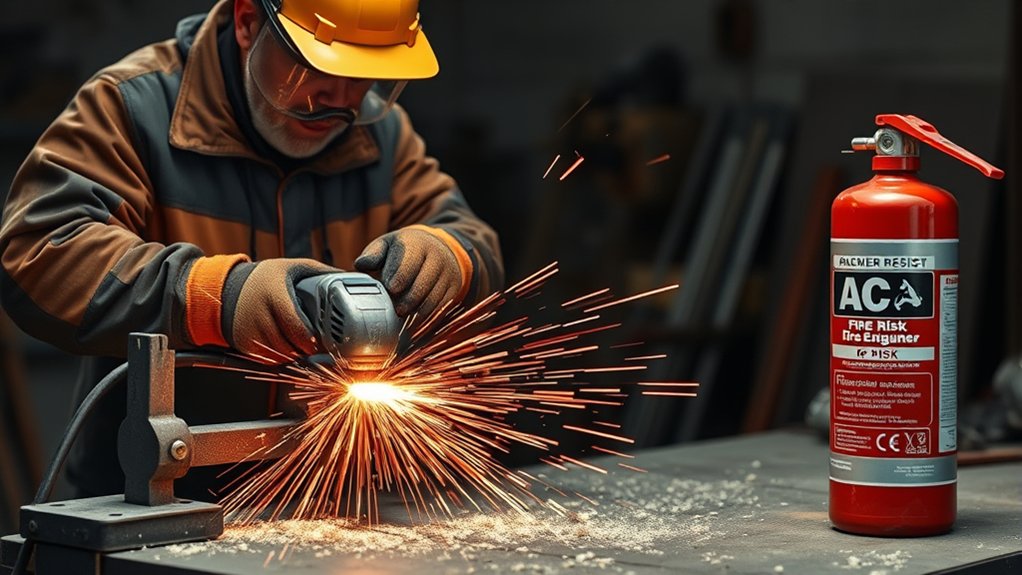
An angle grinder can expose you to flying fragments, sparks, sharp edges, hot metal, noise, vibration, electricity, harmful dust, and a fast-spinning accessory. The most serious incidents often involve a broken wheel, an unguarded tool, a trapped cutting disc, an unsecured workpiece, or an accessory that does not match the grinder.
Sparks, Fire, and Hot Material
Grinding sparks and hot metal particles can ignite paper, cardboard, sawdust, dry vegetation, solvents, fuel, gas, oily rags, insulation, and other combustible material. Sparks may bounce, roll into gaps, or remain hot after they leave your line of sight.
Direct the spark stream away from your body, power cords, batteries, gas cylinders, vehicles, windows, and combustible surfaces. Check both sides of thin walls, floors, panels, or workpieces because heat and sparks can pass through openings or ignite hidden material.
Kickback and Loss of Control
Kickback occurs when the rotating accessory is pinched, caught, or suddenly slowed. The grinder may then move rapidly in the opposite direction of the wheel at the pinch point. Common causes include twisting a cutting wheel, forcing the tool, cutting with a poorly supported workpiece, using the wrong accessory, or allowing the cut to close around the wheel.
Keep your body out of the wheel’s expected travel path. Use the side handle, maintain a balanced stance, and support the material so the cut stays open. Never restart a cutting wheel while it is trapped in the workpiece.
Wheel Breakage and Flying Debris
A cracked, chipped, contaminated, distorted, incorrectly mounted, or overspeed accessory can fail during use. Fragments may travel faster than you can react. A correctly fitted guard helps direct debris away from the operator, while impact-rated eye protection and a face shield protect against particles that escape the guard.
The OSHA guidance for portable power tools explains that abrasive-wheel tools need guards that cover and align with critical wheel-mounting components. Keep the guard installed and correctly positioned unless the tool and accessory manufacturer specifically approves another configuration.
The guard, correct accessory, secure workpiece, protective equipment, and two-handed grip work as one safety system. Removing any one layer increases the chance that a small mistake becomes a serious injury.
Dust, Fumes, Noise, and Vibration
Grinding metal can release fine particles and fumes from paint, plating, rust treatments, or surface contamination. Cutting or grinding concrete, mortar, brick, stone, granite, or engineered stone can create respirable crystalline silica. The CDC and NIOSH silica guidance identifies cutting and grinding as activities that can make silica-containing dust airborne.
Noise and vibration can also cause harm. Wear suitable hearing protection and limit exposure. In covered U.S. workplaces, noise measurements and exposure duration determine whether a hearing-conservation program or additional controls are required; see the OSHA occupational-noise guidance.
What Safety Gear You Really Need
Personal protective equipment is the final layer of protection, not a substitute for a guard, correct accessory, secure workpiece, ventilation, or a clean work area. Inspect every item before use and replace damaged equipment.
- Eye and face protection: Wear impact-rated safety glasses or goggles under a face shield. The face shield protects more of the face, while the glasses or goggles continue to protect the eyes from particles entering around the shield. OSHA requires appropriate eye or face protection in covered workplaces where flying particles create a hazard; see 29 CFR 1910.133.
- Hearing protection: Use properly fitted earplugs or earmuffs suitable for the measured or expected noise level.
- Hand protection: Wear close-fitting work gloves that protect against sharp edges and hot material without loose cuffs or excess fabric that can snag.
- Clothing: Cover your arms and legs with close-fitting, non-melting work clothing. Use flame-resistant clothing when the spark and heat exposure warrants it. Avoid loose sleeves and meltable synthetic fabric near the spark stream.
- Foot protection: Wear closed, sturdy footwear. Use safety-toe and puncture-resistant footwear when heavy stock, sharp scrap, or dropped tools create those hazards.
- Respiratory protection: Control dust at the source first. A respirator must be suitable for the contaminant, correctly fitted, and used under any workplace respiratory-protection requirements that apply.
Warning: Do not wear loose sleeves, loose gloves, jewelry, neck cords, hoodie strings, or unsecured long hair near a rotating wheel. Do not use ordinary prescription glasses as a substitute for impact-rated eye protection.
Products Worth Considering

COMPLETE PROTECTION — Pairing anti-fog and scratch-resistant goggles with a tough polycarbonate torch face shield, this unbeatable duo has you covered from splashes, dust, and debris. And they are built to resist high-speed impacts, even in extreme temperatures.

HIGH IMPACT FACE SHIELD - Sellstrom's Advantage Face Shield is ideal for various types of machinery, welding, cutting, grinding, woodworking, and other types of work that present potential hazards to the face

SUPERIOR PROTECTION — Experience all-around face protection thanks to the curved design of this faceshield. The visor of this face guard is ANSI Z87+ certified, and up to 2x thicker for increased durability. Plus, you can comfortably wear your grinding face shield over prescription glasses.
Angle Grinder Pre-Use Safety Checklist
Complete the following checks before connecting the battery or plugging in the grinder. If anything is damaged, incompatible, unidentified, or difficult to secure, stop and correct the problem before use.
Inspect the Grinder
- Read the grinder manual and the accessory label or instructions.
- Check the housing, switch, spindle lock, vents, side handle, guard, cord, plug, battery, and battery terminals.
- Confirm that the switch moves freely and returns or releases as designed.
- Make sure the side handle is tight and positioned for a controlled two-handed grip.
- Check that the guard is the correct type, firmly locked, and positioned between you and the wheel.
- Remove the tool from service if the cord is cut, the battery is damaged, the guard is bent, the spindle is loose, or the switch behaves unpredictably.
Match the Disc to the Grinder and Task
Check all compatibility markings before mounting an accessory. The accessory must match the grinder’s:
- Maximum wheel diameter
- Arbor or mounting system
- Maximum no-load speed
- Guard type and capacity
- Flange and locking-nut arrangement
- Rotation direction, when marked
- Material application
- Intended operation, such as cutting, grinding, sanding, brushing, or polishing
Never use an accessory with a maximum speed below the grinder’s rated no-load speed. Do not force an undersized arbor onto the spindle, enlarge an arbor hole, stack improvised washers, or substitute a flange that the manufacturer did not approve.
Inspect the accessory for cracks, chips, distortion, contamination, missing labels, improper storage, damaged mounting threads, or use-by markings that prohibit continued use. Bonded abrasive wheels should be stored dry and protected from impact. Use a wet-cutting method only when both the grinder and the accessory are specifically designed and approved for it.
Note: A cutting wheel and a grinding wheel are not interchangeable. Thin cutting wheels are intended for edge cutting and can break if they are twisted or used for side grinding. Follow the accessory label and the grinder manual.
Mount the Accessory Correctly
Disconnect the power source before mounting or removing an accessory. Clean the spindle and flanges, install each part in the correct orientation, seat the accessory without forcing it, and tighten the locking nut only as directed by the manufacturer. Spin the accessory by hand to check for interference with the guard.
Manufacturer requirements vary by grinder and accessory. Review the tool manual and a recognized manufacturer’s abrasive guidance, such as the DEWALT abrasive safety resources, before installing an unfamiliar wheel or attachment.
Setting Up Your Work Area Safely
A safe work area lowers the chance of fire, trips, electrical damage, dust exposure, and loss of control. Plan where the wheel, grinder, cord, sparks, debris, and freshly cut material will move before starting.
Clear Clutter and Obstacles
Create enough open space to stand with your feet apart and control the grinder with both hands. Remove scrap metal, cords, hoses, tools, packaging, and anything that could catch your foot or block an escape route.
Clamp the workpiece to a stable support. Do not hold a small workpiece in one hand while operating the grinder with the other. Support long or heavy material so it cannot drop, rotate, pinch the wheel, or close the cut as material is removed.
Control Sparks and Fire Hazards
Remove fuel, solvents, gas cylinders, aerosol cans, oily rags, paper, sawdust, dry vegetation, combustible insulation, and other flammable materials from the spark path. Use a suitable welding blanket, fire-resistant screen, or spark barrier when a nearby surface cannot be moved.
Keep the correct fire extinguisher accessible, maintain a clear exit, and inspect the area after the work stops. In a workplace, follow the employer’s hot-work procedure, permit requirements, fire-watch rules, and site-specific training.
Warning: Never grind, cut, or wire-brush a tank, drum, pipe, container, or enclosed space that may contain fuel, vapor, pressure, or an unknown residue. A container that looks empty may still explode or release toxic material.
Ensure Adequate Lighting
Good lighting helps you see the cut line, wheel position, clamps, sharp edges, and nearby hazards. Place the light so the spark stream cannot strike its lens, cord, plug, or battery pack. Avoid glare and deep shadows that hide the wheel’s contact point.
Clean dusty light fixtures before long jobs and use lighting that keeps both the immediate workpiece and the wider floor area visible.
| Lighting Type | Benefits |
|---|---|
| Natural Light | Helps you see the wider work area clearly |
| LED Work Lights | Provides bright task lighting with low heat output |
| Task Lighting | Focuses light on the cut or grinding area |
| Ambient Lighting | Keeps the floor, cords, clamps, and surrounding workspace visible |
Control Dust and Ventilation
Identify the workpiece and every coating before grinding. Paint, galvanized coatings, plating, sealants, adhesives, concrete, mortar, brick, stone, and engineered surfaces may release hazardous dust or fumes.
Use source controls such as a manufacturer-approved shroud and local exhaust vacuum. Approved wet methods may help control mineral dust, but never introduce water around an ordinary electric grinder or accessory that is not rated for wet use. Work outdoors or provide effective ventilation when appropriate, but do not rely on an open door or fan alone for a serious dust hazard.
Keep bystanders outside the dust and debris area. When respiratory protection is required at work, it must be selected for the hazard, fitted correctly, maintained, and used as part of the applicable respiratory-protection program.
Safe Operating Techniques for Angle Grinder Use
Starting the Grinder Safely
Before startup, confirm that the wheel is clear of the workpiece and nearby objects. Hold the main grip and side handle firmly, place the guard between your body and the accessory, and stand out of the wheel’s plane as much as the task allows.
Start the grinder without touching the material. Let it reach full speed and listen for scraping, clicking, rubbing, or uneven running. Stop immediately if the wheel wobbles, the guard is struck, or vibration is stronger than expected.
After mounting a new accessory, follow the manufacturer’s test-run procedure in a controlled area with the guard installed and other people kept away.
Maintain a Two-Handed Grip and Stable Stance
Use both hands and keep a firm, balanced stance. Do not operate from a ladder, unstable platform, or position that forces you to overreach. Arrange the cord or hose behind the tool and away from the wheel.
Apply light, steady pressure and let the accessory work at its designed speed. Excess force can overheat the tool, slow the wheel, damage the accessory, increase kickback, and produce a poor finish.
Use the Correct Angle and Wheel Surface
For grinding, use the working angle stated by the wheel and grinder manufacturer. A shallow, controlled angle is common for many depressed-center grinding wheels, but the accessory label controls. Do not grind on a wheel surface that is not designed to contact the material.
For cutting, keep the wheel straight in the cut. Do not twist, bend, lever, or push sideways on a thin cutting wheel. Make a straight pass and support the workpiece so the kerf does not close on the wheel.
Pro Tip: Before a long cut or grind, make a brief, controlled contact on suitable scrap or an inconspicuous area. Confirm the spark direction, wheel behavior, surface result, and your ability to hold a stable position.
Prevent Angle Grinder Kickback
- Use the correct accessory and guard for the operation.
- Keep the side handle installed and hold the grinder with both hands.
- Support the workpiece so it cannot move or pinch the wheel.
- Keep your body out of the likely kickback path.
- Do not force the wheel or bury it too deeply in one pass.
- Do not twist a cutting wheel while it is in the cut.
- Use extra care near corners, edges, and openings that can catch an accessory.
- If the wheel binds, release the switch, hold the grinder still, and wait for a complete stop before removing it.
- Do not restart the grinder while a cutting wheel remains inside the kerf.
Protect Cords, Batteries, and Electrical Parts
For a corded grinder, inspect the plug and cord, use a properly rated extension cord when needed, and keep all electrical parts away from sparks, sharp edges, heat, oil, standing water, and the rotating accessory. Use ground-fault protection where required or appropriate for the location.
For a cordless grinder, inspect the battery for cracks, swelling, heat damage, loose terminals, or fluid leakage. Do not use a damaged battery. Keep sparks and hot metal away from the battery pack and charger, and use only batteries and chargers approved for the tool.
Disconnect the cord or remove the battery before changing an accessory, adjusting the guard, clearing debris, checking a fault, transporting the tool, or leaving it unattended.
Shut Down, Clean, and Store the Grinder Safely
Release the switch and hold the grinder securely until the accessory stops completely. Never set a rotating grinder on a bench or floor. Do not touch the wheel, workpiece, sparks, or freshly cut edge until they have cooled.
Disconnect the power source before cleaning. Remove surface dust with the method approved in the manual, keep ventilation openings clear, and avoid directing compressed air toward yourself or other people. Do not open the housing unless you are qualified and the manufacturer permits user service.
Store the grinder, guard, flanges, wrench, and accessories in a dry location where they cannot be struck, crushed, contaminated, or exposed to extreme heat. Store abrasive wheels according to their manufacturer’s instructions.
Essential Features for Safe Angle Grinders
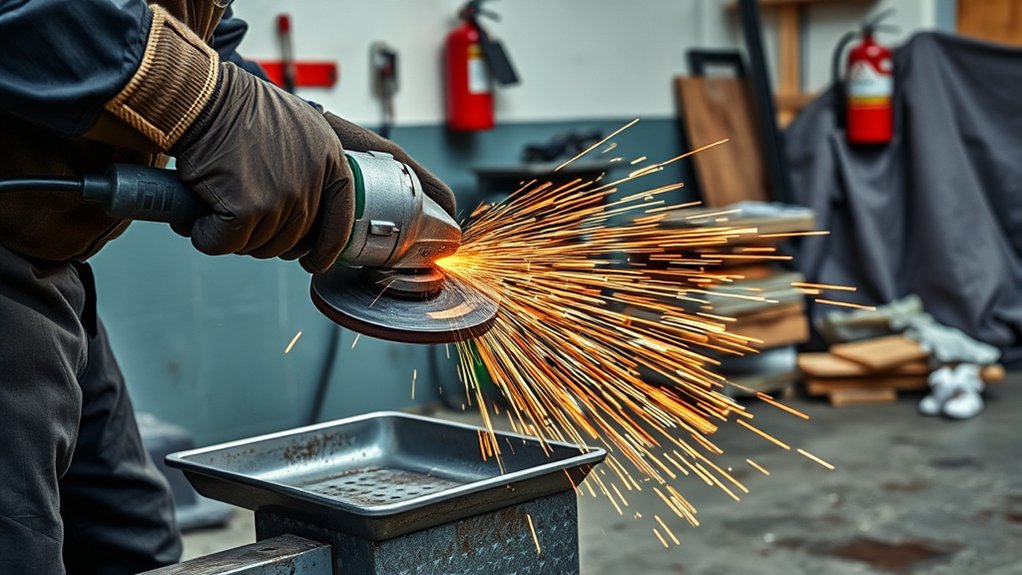
Safety features cannot correct an incompatible wheel or unsafe technique, but they can reduce the consequences of a bind, overload, power interruption, or loss of grip. Choose features that match the work and understand how they operate before relying on them.
- Adjustable, tool-free guard: Makes it easier to position the guard between the wheel and operator without removing it.
- Side handle: Improves leverage and control during startup, cutting, grinding, and wheel coast-down.
- Dead-man or paddle switch: Stops power when the switch is released, depending on the model.
- Kickback control: May detect a sudden wheel bind and reduce or interrupt power.
- Electronic brake: Can shorten wheel coast-down time after the switch is released.
- Restart protection: Helps prevent automatic startup after power is restored.
- Overload protection: May reduce or interrupt power when the motor is heavily loaded.
- Soft start: Reduces the sudden torque felt when the grinder starts.
- Dust shroud compatibility: Supports source control when grinding materials that produce hazardous dust.
Feature names and behavior vary by manufacturer. Test switches and controls only as directed in the manual, and never use an electronic safety feature as a reason to remove the guard, side handle, or protective equipment.
Products Worth Considering

LIGHTWEIGHT MINI ANGLE GRINDER FOR ONE-HAND OPERATION – Designed with a compact body weighing only about 1kg, this cordless angle grinder is easier to control than traditional 4.5-inch grinders. Ideal for overhead work, tight spaces, home repairs, automotive projects, and DIY tasks with reduced hand fatigue.

Premium metal construction for durability: Our angle grinder stand holder is made of high-quality metal material, ensuring strong hardness and long-lasting durability

Tool-free Guard Adjustment - No tools are needed to adjust the safety guard position
How to Respond in an Emergency
Release the switch and disconnect the grinder from power only when you can do so without entering an electrical, fire, or moving-equipment hazard. Keep other people away and call emergency services for severe bleeding, an embedded object, major eye injury, electric shock, breathing difficulty, a serious burn, loss of consciousness, suspected fracture, or an uncontrolled fire.
Severe Bleeding or Deep Cuts
Apply firm, direct pressure with clean gauze or cloth. Add more material over a soaked dressing rather than repeatedly removing it. Do not probe the wound or pull out an embedded wheel fragment. Call emergency services for heavy bleeding, a deep wound, loss of feeling, or an injury involving the hand, face, joint, tendon, or major blood vessel.
Eye Injury
Do not rub the eye or try to remove an embedded object. Do not press on the eyeball. Loosely protect the injured eye and get urgent medical care. For loose surface dust, gently rinse with clean water, but seek prompt care if pain, blurred vision, light sensitivity, bleeding, or a foreign-body sensation continues. MedlinePlus provides additional guidance for eye emergencies.
Thermal Burns
For a small, minor thermal burn, cool the area with cool running water and cover it loosely with a clean dressing. Do not use ice, grease, or an adhesive dressing directly on the burn. Seek medical care for deep burns, electrical burns, large burns, facial burns, circumferential burns, breathing symptoms, or burns involving the hands, feet, joints, or genitals. See the American Burn Association burn first-aid guidance.
Electric Shock
Do not touch a person who may still be connected to electrical power. Shut off the power at the source when it is safe to do so and call emergency services. Electrical injuries can cause internal harm even when the skin injury looks small.
Fire
Warn everyone nearby, call emergency services, and leave by a clear exit if the fire is spreading, producing heavy smoke, involving a gas cylinder or battery, or blocking your escape. Use a fire extinguisher only if the fire is small, you have the correct extinguisher, you are trained to use it, and you can keep an exit behind you.
Note: Keep a stocked first-aid kit, suitable fire extinguisher, charged phone, and clear exit near the work area. Anyone permitted to use the grinder should know how to disconnect it and summon help.
Safety Disclaimer: This article provides general information and does not replace hands-on training, the grinder and accessory manuals, a workplace hazard assessment, medical advice, or applicable safety rules. Follow the manufacturer’s instructions and all local, state, federal, employer, and jobsite requirements before using an angle grinder.
Frequently Asked Questions
What types of materials should I avoid grinding?
Do not grind sealed containers, pressurized parts, unknown coatings, combustible material, or any surface that may release an unidentified toxic substance. Wood, plastic, masonry, and coated metal require accessories and controls approved for that exact material. Never improvise with a circular-saw blade, toothed blade, or attachment that the grinder manufacturer does not permit.
How often should angle grinder maintenance be performed?
Inspect the grinder before every use and clean it after dusty work. Follow the manufacturer’s service schedule and any workplace inspection program. Heavy use, concrete dust, damaged cords, bearing noise, excess brush sparking, weak brakes, overheating, or unusual vibration may require earlier professional service.
Can I use an angle grinder indoors safely?
Indoor use may be possible when sparks, fire, dust, fumes, noise, and bystander exposure are controlled. Remove combustibles, use a suitable spark barrier, provide source-capture ventilation, protect nearby surfaces, and keep the correct extinguisher available. Do not grind in an occupied area or near flammable vapor.
What are the signs of a malfunctioning angle grinder?
Stop using the grinder if you notice unusual noise, heavy vibration, overheating, a burning smell, weak power, a sticking switch, damaged insulation, loose parts, a failing brake, or abnormal sparking from the housing. Also stop if the wheel wobbles, rubs the guard, binds, cracks, or wears unevenly.
Are there specific regulations for angle grinder use in my area?
Yes. Workplace requirements vary by country, state, industry, material, and jobsite. U.S. employers may need to follow OSHA rules for guarding, PPE, noise, respiratory hazards, electrical safety, and hot work. Home users should still follow the tool and accessory manuals, local fire rules, and any permit requirements.
Should I remove the guard for tight spaces?
Do not remove the guard simply to reach a tight space. Reposition the workpiece, use a smaller grinder with its correct guard, or select another tool designed for the access problem. The guard helps protect against sparks, accidental contact, and fragments from accessory failure.
Can I use a cutting wheel for grinding?
No, not unless the accessory is specifically marked and approved for both operations. A thin cutting wheel is normally designed for edge loading, not side pressure. Side grinding can crack or break it. Use a grinding wheel or combination wheel approved for the required operation.
What should I do if the grinder starts vibrating?
Release the switch, hold the tool securely until the wheel stops, and disconnect the power source. Check the accessory for damage, contamination, incorrect mounting, loose flanges, guard contact, and compatibility. Do not continue until the cause is corrected. Have the grinder serviced if vibration remains after installing a known-good compatible accessory.
Conclusion
Angle grinder safety depends on preparation, compatibility, and control. Identify the material, inspect the grinder, match the accessory and guard, secure the workpiece, control sparks and dust, and wear suitable protection before starting. During use, keep both hands on the tool, stay out of the wheel’s path, avoid forcing or twisting the accessory, and stop at the first sign of binding, vibration, damage, or overheating. Careful habits protect you before, during, and after every cut or grind.
Sources
- OSHA — Safe Use of Portable and Hand-Held Power Tools — portable abrasive-wheel guarding, inspection, and general power-tool safety.
- OSHA — 29 CFR 1910.133 Eye and Face Protection — workplace protection from flying-particle eye and face hazards.
- OSHA — Occupational Noise Exposure — hearing hazards, exposure assessment, and hearing-conservation requirements.
- CDC/NIOSH — Silica and Worker Health — silica-containing materials and dust-generating cutting and grinding activities.
- DEWALT — Abrasive Safety — manufacturer guidance for abrasive-wheel selection, mounting, storage, and safe use.
- American Burn Association — Burn First Aid — immediate care for minor thermal burns and signs that require medical attention.