Disclosure: As an Amazon Associate, we earn from qualifying purchases. If you click a link on this page and make a purchase, we may receive a small commission at no extra cost to you.
Getting consistent pressure on roofing seams can be difficult when one roller is too wide for corners and another is too narrow for long overlaps. The CHMING Combo Seam Rollers address that problem by pairing a 45mm silicone seam roller with a much narrower 6mm brass detail penny roller. The combination is most useful when you regularly move between broad membrane seams and small detail areas. It is a practical setup, but you still need to use the correct welding, tape, or adhesive procedure specified for your roofing membrane.
Quick Verdict
Rating: 8/10
Best For: Roofing installers and DIY users who need both a standard silicone seam roller and a narrow detail roller.
Bottom Line: This combo gives you two useful roller sizes for broad seams and detail work without requiring two separate purchases. Its main limitation is that correct pressure alone cannot compensate for incorrect membrane preparation, welding temperature, adhesive use, or seam procedure.
Key Specifications
| Specification | Detail |
|---|---|
| Brand | CHMING |
| Product Type | Roofing seam roller combo |
| Design | Two separate hand rollers for broad seams and detail work |
| Silicone Roller | 45mm wide, approximately 1-7/16 in. diameter × 1-3/4 in. wide |
| Detail Roller | 6mm brass penny roller, approximately 1.18 in. diameter × 0.24 in. wide |
| Roller Materials | Silicone and brass |
| Silicone Roller Design | High-temperature-resistant silicone with double-bearing construction |
| Common Applications | PVC and TPO roofing seams, membrane detail work, PVC waterproof membrane, tarpaulin and similar sheet-material applications |
| Amazon ASIN | B09M66QFF1 |
What Is the CHMING Combo Seam Roller?
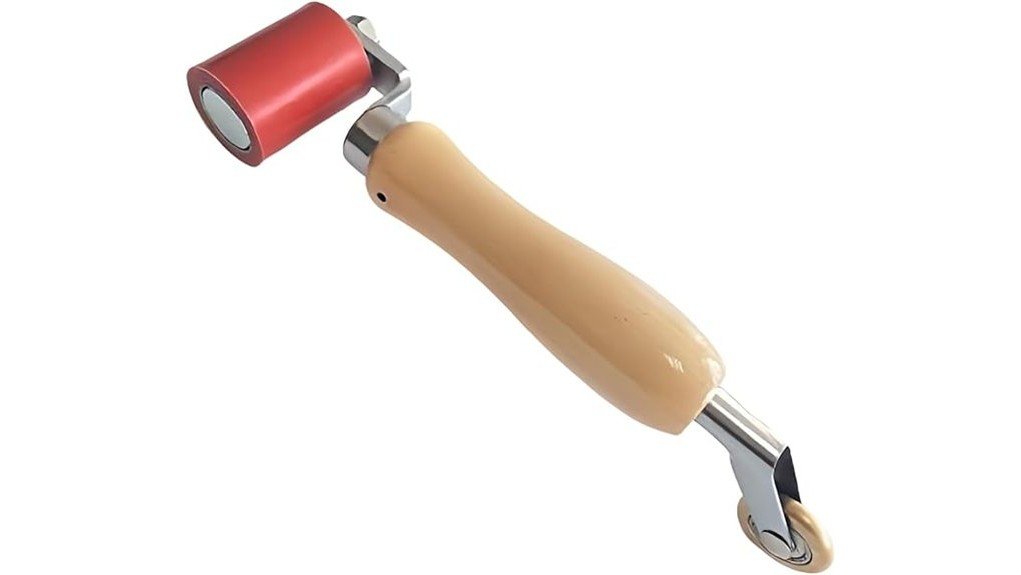
The CHMING set combines two different hand rollers rather than placing two wheels on one tool. You get a 45mm silicone seam roller for wider contact areas and a 6mm brass detail penny roller for areas where a broad roller cannot apply pressure accurately.
The larger silicone roller is designed for heat-related seam work and uses a double-bearing design intended to keep its rolling action stable. The narrow brass roller concentrates pressure across a much smaller contact area, making it better suited to detail work around edges, tight transitions, and other confined sections.
This arrangement makes the set most relevant to installers working with roofing membranes and other compatible sheet materials. You should still follow the membrane manufacturer’s instructions because the roller presses the material after the required preparation or heating step. The roller itself does not create a properly welded or bonded seam.
Who Should Buy It?
Best For
- Roofing installers who regularly work on both wide seams and narrow detail areas.
- Users working with compatible PVC or TPO membrane systems that require hand rolling during seam work.
- DIY users who need both a standard silicone roller and a small detail roller in one purchase.
Skip If
- You only need a large roller for long, flat seams and have no use for a 6mm detail roller.
- Your roofing system specifies a different roller material, width, or installation procedure.
- You expect the roller to correct poor surface preparation, incorrect welding, or failed adhesive work.
Before You Buy: Do not treat PVC, TPO, and EPDM as identical seam systems. PVC and TPO are commonly associated with hot-air welding, while EPDM installations may use membrane-specific tapes or adhesives. Follow the instructions for the exact roofing system you are installing or repairing.
45mm Silicone Roller for Broad Seams
The larger roller is the part you are likely to use most often across wider overlap areas. Its approximately 1-3/4-inch working width gives you substantially more contact area than the 6mm penny roller, so it is better suited to applying pressure across a normal seam rather than concentrating pressure in one small spot.
The silicone material is designed to tolerate the elevated temperatures associated with compatible hot-air membrane work. That matters because an ordinary roller material may not be appropriate around recently heated thermoplastic roofing. The double-bearing construction also supports smoother rotation while you maintain pressure.
You still need consistent technique. Pushing harder does not automatically make a better weld. Your surface condition, welding speed, temperature, material specification, and timing all affect the finished seam.
6mm Brass Detail Penny Roller
The 6mm brass detail roller serves a different purpose. Its narrow contact surface can reach areas where the 45mm roller is too wide or awkward. That can be useful around small transitions, edges, detail sections, and areas where you need more controlled placement of pressure.
Because the brass wheel focuses force onto a narrower strip, you should use controlled pressure rather than assuming more force is always better. The membrane or seam system should determine the correct technique.
Having the two rollers together is the main selling point of this package. A broad silicone roller handles the routine work, while the brass roller reduces the need to improvise when you reach a confined detail.
How It Performs in Real Use
For PVC and TPO Seam Work
During compatible hot-air seam work, the 45mm silicone roller gives you a useful width for pressing heated overlap areas after the hot-air tool has prepared the membrane. A steady rolling motion helps apply pressure across the contact area without requiring you to work a tiny roller across the entire seam.
For Detail Areas
The 6mm brass roller becomes more useful when the main roller cannot reach the exact section you need. Its narrow profile gives you more control along small edges and detail points instead of forcing the larger roller into a tight area.
For EPDM and Tape-Based Work
The combo may also be useful for applying pressure to compatible EPDM seam tapes or other pressure-sensitive roofing materials. Do not assume that a process used for PVC or TPO should also be used on EPDM. Follow the tape, adhesive, primer, and membrane instructions for your specific system.
For Occasional Repair Work
For a DIY repair, buying the two sizes together can be convenient if the job includes both open seam areas and detailed corners. However, the rollers are only part of the process. Correct preparation and the roofing manufacturer’s required materials remain essential.
How to Use It Correctly
Start by confirming the installation or repair method for your exact membrane. Clean and prepare the working area according to the roofing-system instructions. For hot-air-welded thermoplastic materials, use the specified welding procedure before applying roller pressure. For adhesive or tape systems, follow the required primer, adhesive, flashing, or tape process instead.
Use the 45mm silicone roller where you have enough room to make full contact across the seam. Keep the roller aligned and apply steady pressure rather than rocking it from side to side. Move to the 6mm brass roller when you reach a narrow detail area that the larger roller cannot contact correctly.
Pro Tip: Before starting a long seam, test your roller position and hand movement on a small appropriate section. A comfortable angle makes it easier to maintain consistent pressure without letting the roller drift off the seam.
Build Quality and Materials
The set uses two different roller materials because each serves a different job. The wider wheel is silicone, which is suited to heat-related applications, while the detail wheel is brass for a smaller, firmer contact point.
The silicone roller is also described with a double-bearing design. For frequent work, smooth rotation matters because a roller that drags or binds can make pressure less consistent and can make a long seam more tiring to complete.
This is still a hand tool, so inspect it periodically. A damaged, contaminated, loose, or poorly rotating wheel can affect how evenly you press the material.
Cleaning and Maintenance
Inspect both rollers after each job and remove compatible residue before it hardens on the working surfaces. Avoid aggressive cleaning methods that could damage the silicone wheel or contaminate the roller before the next roofing job.
Also check that the rollers turn freely and that the wheel surfaces are not damaged. Store the tools dry and protected from dirt, sharp objects, and unnecessary heat when they are not being used.
If a wheel becomes damaged or develops a problem that affects rolling action, do not assume that individual replacement components are available. Replacement-part availability was not confirmed for this specific CHMING set.
Compatibility and Safety
A seam roller is only one part of a roofing installation system. Different membranes can require different welding temperatures, primers, tapes, adhesives, pressure techniques, and inspection procedures. Always follow the instructions supplied by the membrane, adhesive, or welding-equipment manufacturer.
Keep your hands clear of hot-air nozzles and recently heated material. The silicone roller being designed for high-temperature work does not mean the handle, surrounding materials, or your hands are protected from heat.
If you are repairing a commercial roof, warranty-covered roof, or critical waterproofing detail, confirm the approved installation procedure before making changes. Using an unapproved tool or process can cause a repair to fail even when the seam looks acceptable from the surface.
Pros and Cons
Pros
- Includes both a 45mm silicone roller and a 6mm brass detail roller.
- Wide silicone wheel is useful for normal seam areas.
- Narrow brass roller can reach detail sections the larger roller cannot.
- Silicone wheel is designed for high-temperature seam applications.
- Double-bearing construction supports smooth rolling action.
Cons
- The correct technique varies by PVC, TPO, EPDM, tape, and adhesive system.
- Replacement-wheel availability for this specific set is not confirmed.
- A two-roller kit may be unnecessary if your work only requires one standard roller size.
Is It Worth the Price?
The strongest value argument for this CHMING set is that you get two substantially different roller sizes in one package. That can make it a smart buy when your roofing work regularly moves between broad seam sections and narrow detail points.
Its value is less compelling if you only need a standard silicone roller. In that case, a single professional-grade roller may be the simpler purchase. The combo makes the most sense when you know the small brass penny roller will actually be useful on your jobs.
Because online prices and seller terms can change, compare the current product details, seller information, and return conditions before buying rather than judging the set by an old quoted price.
How It Compares to Alternatives
If you want a single professional-brand silicone roller rather than a two-tool combo, the Everhard MR05020 is a comparable 1-3/4-inch-wide silicone seam roller. Everhard also offers several other seam-roller widths and configurations for professional roofing work.
Bon Tool also offers a 1-3/4-inch silicone seam roller and wider roofing roller choices. The CHMING package makes more sense when you specifically want both a standard-width silicone roller and a narrow brass detail roller together instead of building your setup from separate tools.
Frequently Asked Questions
What comes with the CHMING Combo Seam Rollers?
The set combines a 45mm silicone seam roller with a 6mm brass detail penny roller. They serve different jobs, with the larger wheel covering wider seam areas and the narrow wheel handling detail work.
Can you use this roller on PVC and TPO roofing?
Yes, PVC and TPO roofing are listed applications for the combo. Use the roller as part of the correct membrane-specific welding process and follow the roofing manufacturer’s temperature and seam instructions.
Can you use it with EPDM roofing?
The product is marketed for EPDM-related roofing work, but you should not assume the same hot-air process used for thermoplastic membranes applies. EPDM systems may rely on specific primers, adhesives, or seam tapes, so follow your membrane-system instructions.
What is the 6mm brass roller for?
The 6mm brass penny roller provides a narrow contact point for detail areas where the 45mm roller is too wide. It is particularly useful when you need controlled pressure on a small section rather than across the full width of a normal seam.
Is the silicone roller heat resistant?
Yes. The silicone wheel is described as high-temperature resistant and intended for compatible hot-air seam applications. You should still keep your hands and other tool components clear of the hot-air nozzle and heated membrane.
How should you clean the rollers?
Remove compatible residue after use and keep the roller surfaces free of debris before the next job. Avoid cleaning methods or chemicals that could damage the silicone or interfere with the membrane system you will work on next.
Can the silicone or brass roller be replaced separately?
Separate replacement components were not confirmed for this specific CHMING combo. If one wheel becomes damaged, check the current seller or manufacturer information before assuming an individual replacement is available.
The Bottom Line
The CHMING Combo Seam Rollers are worth considering when you need a 45mm silicone roller for wider roofing seams plus a 6mm brass penny roller for detail work. The two-size setup is its biggest advantage, while its main limitation is that proper results still depend on using the correct procedure for your specific membrane, welding, tape, or adhesive system.
If you only need one standard seam roller, a dedicated professional model may be a better fit. If you regularly need both broad and narrow rolling surfaces, this combo offers a practical way to keep both tools available.