Disclosure: As an Amazon Associate, we earn from qualifying purchases. If you click a link on this page and make a purchase, we may receive a small commission at no extra cost to you.
Plastic repairs can get messy fast if your tool cannot hold steady heat or direct airflow where you need it. The Hot Air Plastic Welder 1600W is built for shaping, bending, and welding thermoplastic materials such as PVC, PE, and PP. Its main strengths are the wide 40°C to 650°C temperature range, lightweight handheld design, and included nozzle set. The tradeoff is that the source article does not confirm a brand name, certification details, or exact seller warranty terms, so you should check the Amazon listing details before buying.
Quick Verdict
Rating: 8/10
Best For: DIY plastic repair, tarp repair, bumper repair, pool liner work, and basic thermoplastic welding practice.
Bottom Line: The Hot Air Plastic Welder 1600W is worth considering if you need adjustable heat, several nozzle options, and a compact tool for PVC, PE, and PP repairs. It is less ideal if you need a fully verified professional brand, digital temperature display, or confirmed certification details.
Key Takeaways
- The Hot Air Plastic Welder 1600W has an adjustable temperature range from 40°C to 650°C for different thermoplastic welding tasks.
- It weighs about 2.2 pounds and measures about 32 cm long, which makes it easier to control during handheld work.
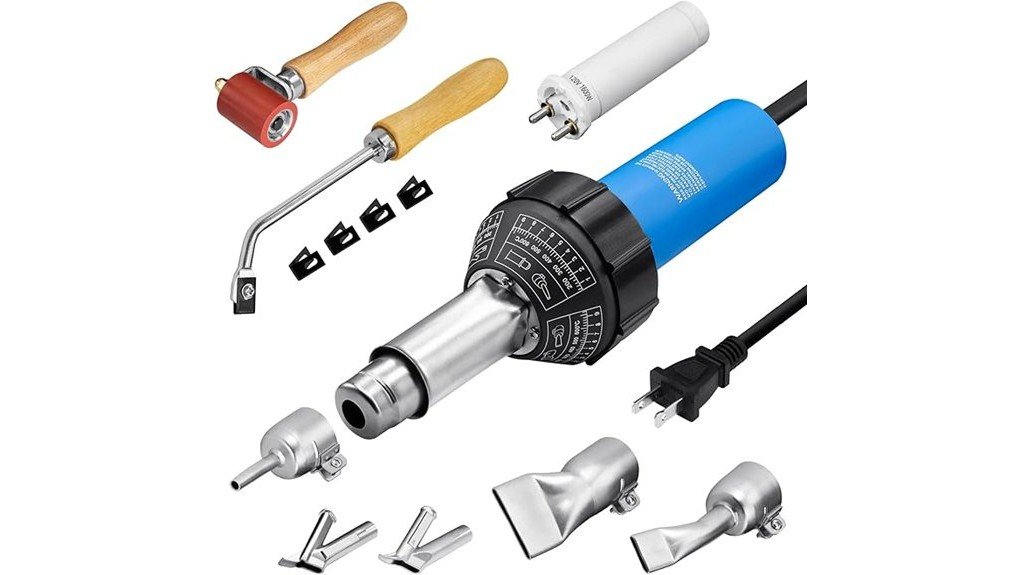
- The kit includes multiple nozzles, including 20 mm narrow flat, 40 mm wide flat, 5.2 mm round, and triangle speed welding tips.
- The automatic cooling system helps reduce overheating risk during use, but you still need to follow safe hot-work practices.
- It is best suited for PVC, PE, and PP repairs, including tarpaulins, car bumpers, TPO roof seams, and pool liners.
| Specification | Detail |
|---|---|
| Product name | Hot Air Plastic Welder 1600W |
| Product type | Handheld hot-air plastic welding tool |
| Power | 1600W |
| Temperature range | 40°C to 650°C |
| Temperature control | 9-level temperature control knob |
| Controls | One-key start/stop switch |
| Weight | Approximately 2.2 pounds |
| Length | Approximately 32 cm |
| Handle material | Heat-resistant plastic handle |
| Power cord | Approximately 2 meters |
| Included accessories | 20 mm narrow flat nozzle, 40 mm wide flat nozzle, 5.2 mm round nozzle, triangle speed welding tip, 40 mm silicone roller, and replacement heating element |
| Compatible materials | PVC, PE, and PP thermoplastics |
| Best use | Tarpaulin repair, bumper repair, TPO roof seam sealing, pool liner repair, and thermoplastic bonding |
| Warranty note | The source article notes a typical one-year warranty, but you should confirm current seller terms before purchase. |
What Is the Hot Air Plastic Welder 1600W?
The Hot Air Plastic Welder 1600W is a handheld tool that uses heated airflow to soften and bond compatible thermoplastic materials. It is made for jobs where glue, tape, or mechanical fasteners may not create a clean or durable repair.
The tool is aimed at DIY users, repair shops, roofers, and hobbyists who work with PVC, PE, and PP. The adjustable 40°C to 650°C range gives you room to use lower heat for cautious practice and higher heat for tougher welding jobs, depending on the material and filler rod you use.
Its value comes from the included nozzles and roller. You can use wider nozzles for larger seams, narrower nozzles for controlled airflow, and the silicone roller to press softened material into a smoother bond.
Who Should Buy It?
Best For
- You need a compact hot-air tool for PVC, PE, or PP repairs.
- You want multiple nozzles for different seam widths and repair shapes.
- You repair tarps, car bumpers, pool liners, or TPO roof seams.
Skip If
- You need a verified professional brand with confirmed certifications.
- You prefer a digital temperature display instead of a 9-level knob.
- You are working on structural or safety-critical repairs that require a trained technician.
Before You Buy: Confirm that your repair material is actually PVC, PE, or PP before ordering. Hot-air plastic welding depends on material compatibility, and the wrong filler rod or heat setting can create a weak bond.
Overview of the Hot Air Plastic Welder
The Hot Air Plastic Welder 1600W gives you a practical way to shape, bend, and weld thermoplastic materials without using an open flame. Its handheld size makes it easier to guide along seams, corners, edges, and patches.
At about 2.2 pounds, it is light enough for longer repair sessions, though you may still want breaks during large tarp or roof seam work. The 32 cm body length gives you enough reach while keeping the tool manageable in tight repair areas.
The tool is most useful when you need direct heat and controlled airflow. For example, you can use the narrow nozzle for smaller repair lines and the wider flat nozzle for broader seam work.
Key Features and Specifications
Adjustable Heat Range
The 40°C to 650°C range is the most important feature. Lower heat gives you more control while testing scrap material, while higher heat helps when the plastic needs more energy to soften and bond.
The 9-level temperature knob is simple to use, but it is not as precise as a digital temperature display. For best results, start low, test on scrap, and increase heat only when the plastic is not bonding well.
Handheld Design and Controls
The one-key start/stop switch keeps operation simple. This matters when you need to pause between passes, reposition a patch, or switch from heating to rolling a seam.
The heat-resistant plastic handle helps protect your grip area during use. Even so, this is still a hot-work tool, so you should keep your hands away from the nozzle and let the unit cool before changing accessories.
Automatic Cooling System
The automatic cooling system helps reduce overheating risk during longer jobs. This is useful for large tarpaulin seams or repeated repair passes where heat can build up in the tool body.
Cooling support does not replace safe use. Keep the air intake clear, avoid covering the tool while it is hot, and follow the seller instructions for cooldown time.
Included Accessories and Their Uses
The included accessories make this kit more flexible than a basic heat gun. You get nozzle options for different airflow patterns, plus a silicone roller for pressing softened material into place.
- 20 mm narrow flat nozzle: Best for controlled seams, smaller patches, and tighter repair areas.
- 40 mm wide flat nozzle: Better for larger seams where you need broader heat coverage.
- 5.2 mm round nozzle: Useful for focused airflow and more detailed plastic welding work.
- Triangle speed welding tip: Helps speed up straight seam welding when used with compatible filler material.
- 40 mm silicone roller: Presses heated material down to improve seam contact and reduce uneven spots.
- Replacement heating element: Adds service value if the original element wears out over time.
Performance and Usability
In day-to-day use, this welder is best for buyers who need controlled heat more than advanced electronics. The knob-style temperature control is easy to understand, and the lightweight body helps when you need to guide the nozzle along a seam.
The wide heat range gives the tool more flexibility than a single-temperature heat gun. You can use it for careful shaping, bending, seam work, and repair bonding, as long as the plastic type is compatible.
The main limitation is precision. Because the article supports a 9-level knob rather than a digital display, you may need trial and error to find the right setting for each material.
Applications and Material Compatibility
The Hot Air Plastic Welder 1600W is designed for thermoplastics such as PVC, PE, and PP. These materials soften under heat and can be bonded when the base material and filler material match correctly.
Useful projects include truck tarpaulin repairs, car bumper work, TPO roof seam sealing, pool liner repair, and general plastic bonding. It can also help with shaping and bending compatible plastics when you need cleaner control than a standard heat gun.
This tool is not a universal fix for every plastic. Some plastics do not weld well, and painted, dirty, cracked, or oil-contaminated surfaces can weaken the repair.
How It Performs in Real Use
For Tarp and Cover Repair
For tarpaulins and covers, the wide flat nozzle helps heat a broader seam, while the silicone roller helps press the softened patch into place. This setup is useful when you need a cleaner repair than tape can provide.
For Car Bumper Repair
For bumper repairs, the narrow nozzle can help you direct heat into smaller cracks or edges. You still need to confirm the bumper plastic type and use a compatible filler material for a stronger repair.
For Roof and Pool Liner Seams
For TPO roof seams or pool liner repairs, steady speed and even pressure matter. The 40 mm nozzle and roller can help with seam coverage, but waterproof results depend on proper prep, compatible material, and correct technique.
For Learning Plastic Welding
For beginners, the low weight and simple controls make the tool easier to practice with. Start on scrap plastic before touching the actual repair area, because overheating can distort the plastic or create a weak seam.
How to Use It Correctly
Clean the repair area before heating it. Dirt, grease, paint, and loose plastic can stop the softened material from bonding evenly.
Choose the nozzle based on the job. Use the narrow nozzle for tight seams and detail work, the wide nozzle for larger patches, and the roller when you need to press the seam while it is still warm.
Move the nozzle steadily instead of holding it in one spot. Holding too long can scorch, warp, or thin the plastic.
Pro Tip: Practice on a scrap piece of the same plastic first. Once you find the lowest heat setting that softens the material without scorching it, use that setting as your starting point for the real repair.
Compatibility and Safety
This tool uses high heat, so you should treat it like any other hot-work tool. Work in a well-ventilated area, keep flammable materials away, and wear appropriate eye and hand protection.
Do not use the welder near fuel, solvents, vapors, or dust that could ignite. If you are repairing a vehicle part, remove the part when possible and keep heat away from wiring, sensors, paint, upholstery, and fuel-related components.
Plastic fumes can vary by material, so follow the product instructions and the safety guidance for the plastic you are welding. For workplace or commercial use, follow your shop safety rules and get professional guidance when required.
Pros and Cons
Pros
- 1600W power supports a wide range of thermoplastic repair tasks.
- 40°C to 650°C heat range gives you room to adjust for different materials.
- Multiple included nozzles improve airflow control for narrow and wide seams.
- About 2.2 pounds, so it is easier to handle than many bulky repair tools.
- Included roller and replacement heating element add practical kit value.
Cons
- Brand, certifications, and exact warranty terms are not confirmed in the source article.
- Knob control may require trial and error compared with a digital display.
- Not suitable for every plastic or for safety-critical repairs without proper skill.
Is It Worth the Price?
The Hot Air Plastic Welder 1600W looks like a strong value for the price if you want a practical repair kit rather than a bare heat gun. The included nozzles, roller, and replacement heating element make it more useful for plastic welding tasks right out of the box.
You get the most value from it if you repair tarps, liners, bumpers, or other compatible thermoplastics often enough to need more control than tape or adhesive can offer. It is not the best fit if you need a verified premium-brand tool with digital temperature readout and documented commercial certifications.
How It Compares to Alternatives
Compared with a basic heat gun, this tool is better suited for plastic welding because it includes welding-focused nozzles and a silicone roller. A general heat gun may work for simple heating or bending, but it usually gives you less control over seam work.
Compared with premium professional hot-air welders, this model focuses more on value and included accessories. Professional units may offer tighter temperature control, stronger documentation, and more service support, while this one makes more sense for DIY and light repair use.
Frequently Asked Questions
Can this welder be used for outdoor projects?
Yes, it can be used for outdoor repairs such as tarpaulins, pool liners, and TPO roof seams when conditions are safe. Avoid rain, standing water, strong wind, and flammable materials around the work area.
How long is the power cord?
The source article lists the power cord at approximately 2 meters. That gives you decent reach for bench work, but larger outdoor jobs may still require a properly rated extension cord.
Is the Hot Air Plastic Welder 1600W safe for beginners?
It is beginner-friendly in the sense that it has simple controls, a heat-resistant handle, and an automatic cooling system. Beginners should still practice on scrap plastic, start at lower heat, and wear proper protection.
What plastics can it weld?
The article supports use with PVC, PE, and PP thermoplastics. For the strongest repair, match the filler rod to the base plastic and confirm the material before welding.
Can it repair a car bumper?
Yes, the article lists car bumper repair as a supported use case. You should confirm the bumper material first and avoid heating painted surfaces, sensors, wiring, or nearby trim.
What is the warranty period?
The source article says the welder typically comes with a one-year warranty. Since warranty terms can vary by seller, confirm the current Amazon listing and seller policy before purchase.
Can you buy extra nozzles separately?
Additional nozzles are often available for hot-air plastic welders, but fit can vary. Check nozzle diameter, connector style, and compatibility with this exact model before buying replacements.
The Bottom Line
The Hot Air Plastic Welder 1600W is a smart buy for DIY users and light repair work when you need adjustable heat, several nozzle choices, and compatibility with PVC, PE, and PP. Skip it if you need a fully verified professional brand, digital controls, or a tool for safety-critical repairs that require expert work.