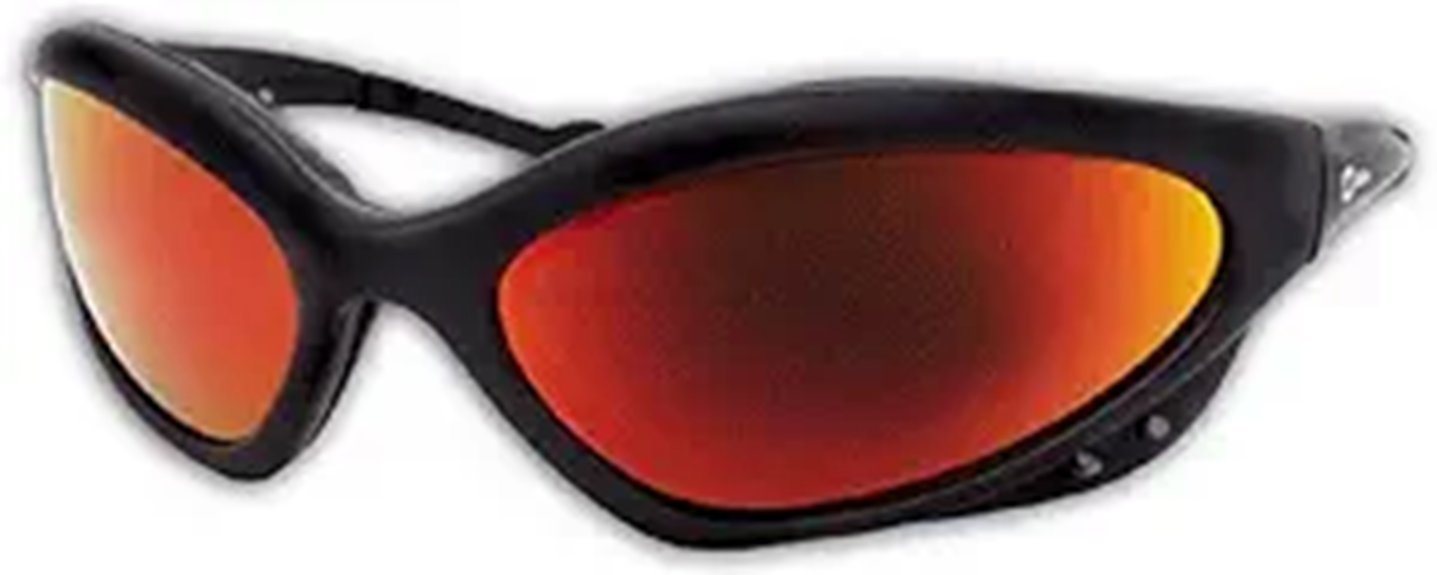
The Miller shade 5.0 safety glasses are wraparound polycarbonate glasses with a shade 5 lens, meant for light-duty jobs where you need a tint but not a welding-helmet filter. They are worth considering for torch brazing, soldering and some gas cutting, or as a lighter backup near other people’s work. Do not use them for stick, MIG or TIG arc welding. Shade 5 is far too light for an arc.
This review is based on the Amazon listing and Miller’s published product details, not hands-on testing. Miller has sold several similar shade 5 glasses, so confirm the exact model on the listing.
Miller shade 5.0 safety glasses at a glance
| Item | Detail |
|---|---|
| Product | Miller welding safety glasses, shade 5.0 lens |
| Frame (per listing) | Polycarbonate, wraparound, foam lined |
| Lens | Shade 5 tint with a scratch-resistant coating (per listing) |
| Safety standard | ANSI Z87.1 per the listing, check the markings on the frame |
| Weight (per listing) | Very light, the 0.01 oz figure in the listing looks like a data error |
| Not for | Arc welding (stick, MIG, TIG) |
Check current price on Amazon →
What these glasses are and who they suit
These are safety glasses with a tinted lens, not welding goggles or a helmet. A foam lining along the brow and a wraparound frame help keep dust and stray light from the sides. Miller sells similar shade 5 glasses and describes them for tasks like plasma cutting.
On the common eye-protection charts, shade 4 to 6 covers light to medium gas welding and cutting, soldering and brazing work uses lighter shades, and arc welding needs around shade 10 or darker. So shade 5 is a gas torch or light-cutting shade. Plasma cutting at low current may also use a light shade, but many plasma cutters run at levels that call for a darker lens, so check the chart for your amperage.
- Suits: torch brazing, soldering with a bright flame, light oxy-fuel cutting or heating, and wearing as a backup near a work area.
- Does not suit: any arc welding, high-amp plasma cutting, or laser work.
How to check they are right for your job
- Confirm the process. Compare your task with a filter shade chart for oxy-fuel cutting, brazing or plasma. If the chart says shade 8 or darker, these glasses are too light.
- Check markings. Look for Z87 and lens shade markings on the frame and lens. A listing claim is not enough.
- Try the fit. The frame is described as universal and wraparound. Make sure it seals comfortably around your face and works with a respirator if you use one.
- Consider over-glasses needs. If you wear prescription glasses, test whether a standard frame is comfortable. Some wearers prefer over-the-glasses styles.
For arc work see a proper helmet such as the Miller Classic Series helmet.
Check current price on Amazon →
Pros and limitations
Pros
- Light and compact compared with goggles or a helmet.
- Polycarbonate lenses are impact resistant and the listing mentions ANSI Z87.1.
- Foam lining and a wraparound frame help block side light and dust.
Limitations
- Shade 5 is too light to look at an arc, so these cannot protect you from welding arc radiation.
- A single fixed shade only covers a narrow set of tasks.
- Safety glasses leave the rest of your face uncovered, so add a face shield for grinding and spatter.
- A UV percentage claim on the listing is not a substitute for a shade number and standard marking.
Safe use and care
Never use shade 5 glasses to look at an arc. Arc flash can burn the eyes within seconds, and the damage can appear hours later. For arc welding use a helmet with a filter of about shade 10 to 13, and check the chart for your amperage.
Wipe lenses with a soft cloth and mild soap, store them in a case, and replace them when scratched, since scratches scatter light and reduce impact strength. Wear a face shield or helmet with a clear lens for grinding.
Alternatives and related guides
- Hobart oxy-acetylene goggles for a goggle-style option for gas work.
- Auto-darkening welding goggles if you want a goggle for arc work.
- Miller Classic Series helmet for arc welding protection.
- Shade 12 welding glass lens to see what an arc-welding shade looks like.
Frequently Asked Questions
Can I use shade 5 safety glasses for arc welding?
No. Arc welding needs a much darker filter, commonly around shade 10 to 13 depending on current and process. Shade 5 lets far too much light and UV through. Use a welding helmet or hood for any stick, MIG or TIG work.
What is shade 5 good for?
Shade 5 is a light tint used for tasks like some oxy-fuel cutting, gas welding and brazing, and as a backup tint in other bright-flame jobs. Always check a filter shade chart for your exact process and current.
Are these glasses ANSI Z87.1 rated?
The listing says they meet ANSI Z87.1, and Miller’s similar models are listed that way too. Confirm the Z87 marking on the frame and lenses of the pair you receive, since markings are the proof of the rating.
Can I wear these over prescription glasses?
The listing describes a universal-size wraparound frame, but it does not clearly say that it fits over prescription glasses. Try them with your glasses, or look for a dedicated over-the-glasses style if comfort is poor.
Conclusion
The Miller shade 5.0 safety glasses are a light-tint option for brazing, gas work and some light cutting. They are not an arc welding filter, so match the shade to your process and wear proper protection for anything brighter.
Check current price on Amazon →