Disclosure: As an Amazon Associate, we earn from qualifying purchases. If you click a link on this page and make a purchase, we may receive a small commission at no extra cost to you.
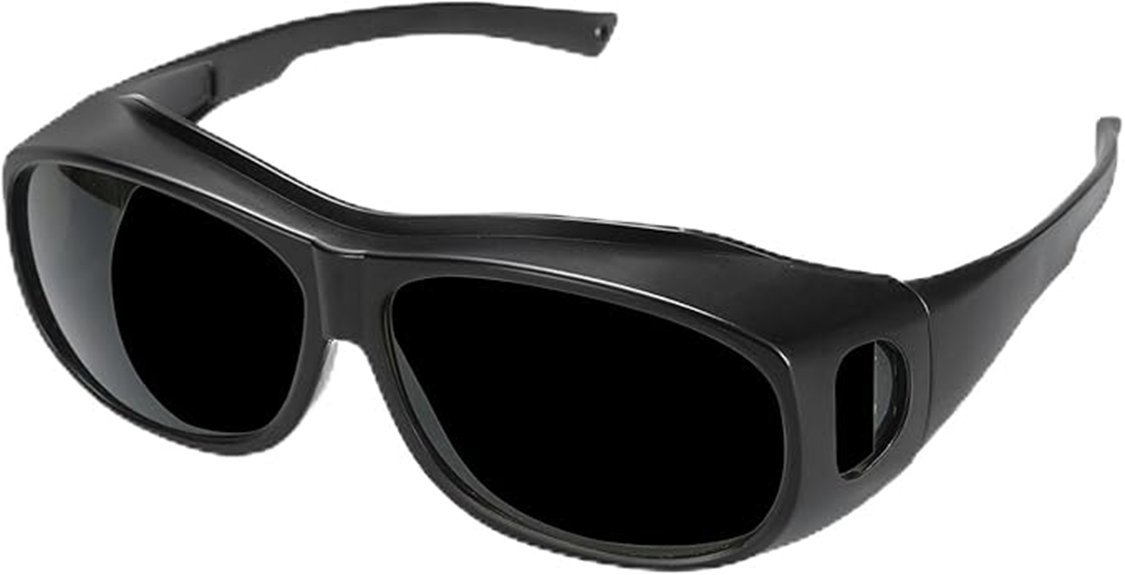
Choosing welding eyewear is not simply about picking the darkest lens you can find. You need a filter shade, fit, and protection level that match the work you actually perform. The HARFINGTON Welding Safety Glasses IR Shade 10 PPE use lightweight polycarbonate construction, a wrap-around frame, and a fixed Shade 10 lens, but they are not automatically the right protection for every welding process. This review explains their verified specifications, practical strengths, important safety limits, and who should consider them.
Quick Verdict
Rating: 8/10
Best For: Buyers who specifically need lightweight fixed Shade 10 protective eyewear and understand how to match welding PPE to their process.
Bottom Line: At 44 g, these glasses offer a light wrap-around design with polycarbonate lenses and useful resistance to glare, scratches, impact, splashes, and dust. The main limitation is that Shade 10 is task-specific, and these glasses should not be treated as a universal replacement for appropriate welding helmet or face protection.
| Specification | Detail |
|---|---|
| Brand | HARFINGTON |
| Product | Welding Safety Glasses IR PPE |
| Linked Variant | Shade 10, Black |
| Dimensions | 150 × 160 × 52 mm / 6 × 6.3 × 2 in |
| Weight | 44 g |
| Lens Material | Polycarbonate |
| Frame Material | Plastic |
| Lens Color | Gray |
| Design | Wrap-around curved frame |
| Lens Properties | Anti-glare, impact-resistant and scratch-resistant surface claims |
| Environmental Protection | Designed to help protect against splashes and dust |
| Certification | Listing states CE certified |
| Package Quantity | 1 |
| Listed Uses | Welding, grinding, polishing, wind and dust protection |
| Important Limitation | Not suitable for diving or traffic driving |
Key Takeaways
- The linked HARFINGTON glasses are the Black Shade 10 variant, not an unspecified general-purpose welding lens.
- They weigh 44 g and use a lightweight polycarbonate lens with a plastic wrap-around frame.
- The curved design is intended to give you better peripheral coverage than a flat-front lens.
- The strengthened lens surface is advertised as anti-glare, impact resistant, scratch resistant, and protective against splashes and dust.
- Shade 10 is appropriate only when it matches your welding process and operating conditions. A darker shade is not automatically safer for every job.
- The glasses should not be assumed to replace welding helmets, hand shields, or other face protection required for a particular welding operation.
What Are the HARFINGTON Welding Safety Glasses?
The HARFINGTON Welding Safety Glasses are fixed-shade protective eyewear intended for work around strong light, welding, grinding, polishing, splashes, and airborne debris. The specific Amazon link in this review points to the Shade 10, Black version.
Instead of an auto-darkening lens, you get a permanently tinted polycarbonate lens. That simpler construction keeps the glasses light at 44 g and removes batteries, electronics, and adjustment controls from the design.
The frame curves around your face to improve peripheral coverage. This can be useful when you need to see equipment and movement beside you, although the actual fit will still depend on your face shape.
Who Should Buy It?
Best For
- You specifically need a fixed Shade 10 filter for a compatible task.
- You prefer lightweight wrap-around eyewear instead of bulky goggles.
- You want polycarbonate lenses with basic glare, scratch, impact, splash, and dust protection features.
Skip If
- You need an auto-darkening helmet or full face protection for arc welding.
- Your job requires a specific safety certification that you cannot verify on the product marking.
- You need clear safety glasses for general grinding or workshop tasks where Shade 10 would be too dark.
Before You Buy: Do not choose Shade 10 only because it sounds more protective. The correct filter shade depends on the welding process, amperage, electrode size, and other conditions. Also verify whether your work requires a welding helmet, face shield, ANSI-marked eye protection, or other PPE in addition to these glasses.
Key Features of HARFINGTON Welding Safety Glasses You Should Know
Shade 10 Fixed Lens
The linked ASIN is a Shade 10 model. That is an important buying detail because HARFINGTON sells several shade options in this product family.
A fixed Shade 10 lens can make sense for welding conditions that call for that filter level, but it is not adjustable. If your work moves between processes or amperage ranges that require different shades, an adjustable or auto-darkening solution may be more practical.
Polycarbonate Lens and Plastic Frame
Both the main material and lens material are listed as polycarbonate, while the frame is plastic. Polycarbonate keeps the glasses lighter than many glass-lens designs and is commonly chosen for protective eyewear because it can tolerate impact better than ordinary glass.
HARFINGTON describes the lens surface as strengthened, with anti-glare, impact-resistant, and scratch-resistant properties. The listing also states that the glasses can help protect against splashing material and dust.
Wrap-Around Curved Design
The arc-shaped frame wraps farther around the sides of your face than a basic flat lens. The purpose is to widen your peripheral field of vision and reduce open side areas.
That design can make the glasses feel less restrictive when you are watching your work area. Still, wrap-around construction does not guarantee a sealed fit, so you should check for unwanted gaps once the glasses are on your face.
44 g Lightweight Construction
At 44 g, the glasses are light enough that they should add relatively little weight to your PPE setup. This is more accurate than the original 0.2 oz claim, which did not match the verified listing.
The low weight can be helpful during longer jobs, especially if you are also wearing a helmet or other head protection. Comfort still depends on nose pressure, temple fit, and your face shape.
Compatibility and Safety
Protective welding eyewear must match the hazard, not simply the product label. Shade requirements change according to the process, arc current, electrode size, and other operating conditions. Some welding operations use Shade 10, while others require lighter or darker protection.
For arc welding, you should also consider face and skin exposure. Appropriate helmets or hand shields are commonly used to protect the eyes and face from radiant energy, heat, sparks, and impact. Safety glasses or goggles may be worn as additional eye protection rather than as a universal replacement for a welding helmet.
The HARFINGTON listing states that these glasses are CE certified. However, the visible listing information does not establish an ANSI Z87.1 certification. If you need eyewear for an employer-regulated environment, verify the required markings and documentation before use.
The manufacturer listing also states that this model is not suitable for diving or traffic driving. Shade 10 lenses are very dark and should not be treated like ordinary sunglasses.
Pro Tip: Check the shade requirement for your exact process before ordering. If you regularly move between welding setups, fixed Shade 10 eyewear may be less convenient than equipment that lets you change shade levels.
How to Use HARFINGTON Welding Glasses for Best Results
Start by checking that the glasses sit securely around your eyes without large gaps at the sides. A loose fit can reduce protection from debris and allow unwanted light around the lens area.
Before beginning work, inspect the lenses for deep scratches, cracks, deformation, or other damage. Any defect that reduces visibility or protection is a reason to stop using the eyewear until it is replaced.
Keep the lenses clean. HARFINGTON specifically recommends frequent cleaning so you maintain a clear field of vision. Dirt, metal dust, oil, and fingerprints can make an already dark Shade 10 lens harder to see through.
Finally, confirm that Shade 10 is suitable for the work you are about to perform. Do not assume one shade covers every welding, cutting, brazing, grinding, or polishing task.
How It Performs in Real Use
For Welding Work
The fixed Shade 10 lens is the defining feature. When Shade 10 matches the process and operating range, the dark filter can reduce the intense visible light reaching your eyes while the wrap-around shape gives you side visibility.
The limitation is flexibility. You cannot lighten or darken the lens as working conditions change, so you need to confirm suitability before each job.
Under a Welding Helmet
The 44 g weight and glasses-style frame make this model easier to combine with other PPE than a bulky second helmet-style device. That can be useful when filtered eyewear is part of a larger protection setup.
You still need to check physical clearance with your helmet. Temple arms, padding, or headgear may create pressure points depending on the combination you use.
For Grinding and Polishing
HARFINGTON lists grinding and polishing among the intended applications, and the polycarbonate lens has anti-impact and scratch-resistant claims. The wrap-around shape can also reduce direct exposure to dust and debris from the sides.
However, Shade 10 is very dark. For grinding tasks that do not involve the same radiant-light hazard, you may get better visibility from appropriately rated clear or lighter protective eyewear.
For Long Work Sessions
The low 44 g weight is one of the model’s strongest practical advantages. Less eyewear weight can reduce the feeling of bulk during longer sessions.
Comfort is still personal. Because the listing does not advertise extensive fit adjustment, buyers with very narrow or very wide faces should pay attention to how the frame contacts the nose and temples.
Maintaining Your HARFINGTON Welding Glasses for Longevity
Clean the lens surface frequently so dust and residue do not interfere with visibility. The product information states that the polycarbonate material is easy to clean and can be washed directly.
Use a clean, soft cloth when wiping the lenses. Avoid grinding dry metal dust across the surface because even scratch-resistant coatings can be damaged by abrasive debris.
Store the glasses where tools, grinding discs, metal parts, or other hard objects cannot rub against the lenses. A protective eyewear case can help prevent accidental scratches when the glasses are in a toolbox or work bag.
Inspect the frame and lenses before use. Replace damaged protective eyewear rather than relying on a cracked frame, heavily scratched lens, or loose-fitting pair.
Pros and Cons
Pros
- Verified Shade 10 fixed-lens option for compatible welding conditions.
- Light 44 g construction adds little bulk to your PPE setup.
- Polycarbonate lens with anti-glare, impact-resistant, and scratch-resistant claims.
- Wrap-around curved frame improves peripheral coverage.
- Designed to help protect against splashes and dust in workshop environments.
Cons
- Fixed Shade 10 is too dark or otherwise unsuitable for some tasks.
- The visible listing does not establish ANSI Z87.1 certification.
- These glasses should not be treated as universal replacement protection for a welding helmet or face shield.
Is It Worth the Price?
The HARFINGTON model belongs to the simpler fixed-shade protective eyewear category rather than the premium auto-darkening helmet category. You are mainly paying for a lightweight Shade 10 lens, wrap-around coverage, polycarbonate construction, and a compact glasses-style design.
It offers stronger value when you already know that Shade 10 suits your intended task and you want a light pair of filtered glasses as part of the correct PPE setup. It offers less value if you need adjustable shade levels, prescription-lens compatibility, a sealed goggle, or full face protection.
Because the suitability of welding eyewear depends heavily on the job, checking the exact product markings and your required safety standard is more important than choosing by price alone.
How It Compares to Alternatives
HARFINGTON offers other shade levels in the same protective-eyewear family, including lighter and darker options. A Shade 8 model may suit different operating conditions, while Shade 11 or Shade 12 may be appropriate where a darker filter is required. These are not automatic upgrades or downgrades because correct shade selection depends on the work.
An auto-darkening welding helmet is a more suitable comparison if you frequently switch between setup, positioning, and active welding. It offers more face coverage and can make changing light conditions easier to manage, but it is also larger, heavier, and more complex than these simple fixed-shade glasses.
Frequently Asked Questions
Are these HARFINGTON glasses really Shade 10?
Yes. The Amazon ASIN linked in this review, B0DH27SVMV, is the Black Shade 10 variant. HARFINGTON also sells other shade levels, so check the selected option before ordering.
Can HARFINGTON Shade 10 glasses replace a welding helmet?
Do not assume they can. Arc-welding hazards can require protection for your eyes and face, and appropriate helmets or hand shields may be required in addition to protective eyewear. Match your PPE to the process and applicable safety requirements.
How do I know whether Shade 10 is right for my welding job?
Shade selection depends on the welding process, amperage, electrode size, and other operating conditions. Check the applicable welding shade guidance for your exact setup instead of choosing solely by the shade number.
How much do the HARFINGTON welding glasses weigh?
The linked Shade 10 model is listed at 44 g. That lightweight construction is useful when you need to wear the glasses for longer periods or combine them with other protective equipment.
What are the lenses made from?
The lenses are polycarbonate, and the frame is listed as plastic. The lens surface is described as anti-glare, impact resistant, and scratch resistant, with protection against splashes and dust.
Can I wear these glasses over prescription glasses?
The verified product information does not state that this model is designed as over-the-glasses eyewear. If you depend on prescription lenses, confirm physical compatibility before buying or use protective eyewear specifically designed for prescription-glasses users.
How should I clean the lenses?
HARFINGTON recommends cleaning the surface frequently to maintain a clear field of vision. Remove loose abrasive dust before wiping and use a clean, soft cloth so you do not unnecessarily scratch the lens.
Can I use these Shade 10 glasses for driving?
No. The product listing specifically says the glasses are not suitable for traffic driving or diving. Use them only for appropriate protective applications where their filter shade and other features match the task.
The Bottom Line
The HARFINGTON Welding Safety Glasses IR Shade 10 PPE are worth considering if you specifically need a lightweight 44 g fixed Shade 10 lens with wrap-around polycarbonate construction. Skip them if you need adjustable shading, verified ANSI Z87.1 markings, prescription-over-glasses compatibility, or a product that replaces full welding face protection.
Their strongest qualities are low weight, simple construction, peripheral coverage, and a reinforced polycarbonate lens. Their biggest limitation is also their defining feature: Shade 10 is task-specific, so you need to confirm it is correct for your welding conditions before use.
Ready to Buy?
Check the latest price, selected Shade 10 variant, and product details before you decide.