Disclosure: As an Amazon Associate, we earn from qualifying purchases. If you click a link on this page and make a purchase, we may receive a small commission at no extra cost to you.
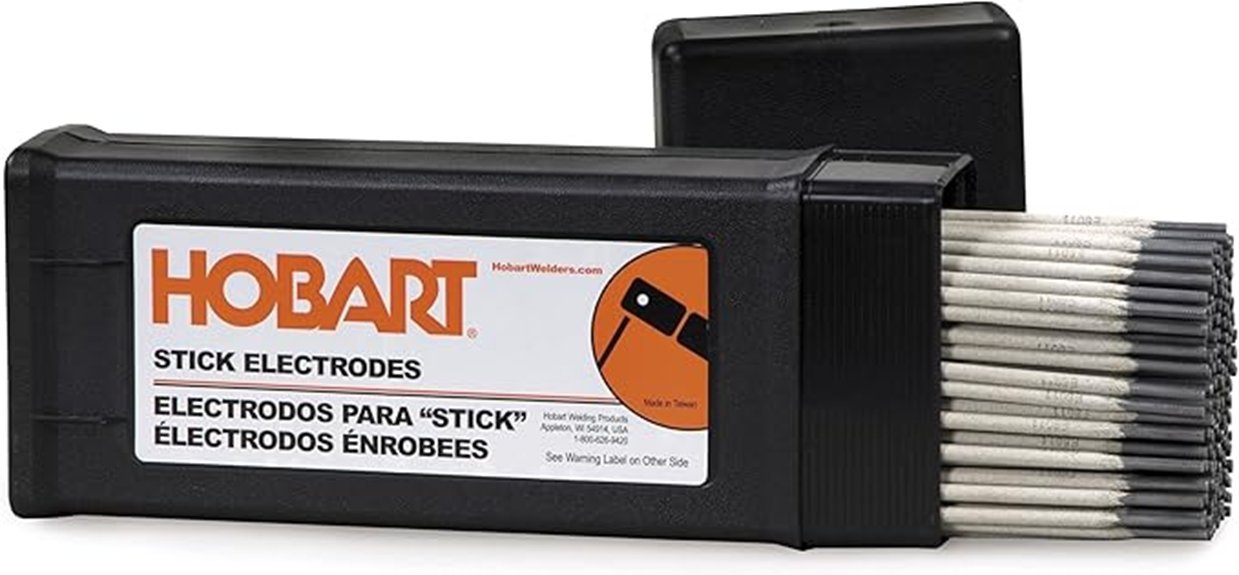
Choosing a 7018 rod is not only about tensile strength. You also need the right diameter, power-source compatibility, steel type, and moisture control for the work in front of you. The Hobart 770481 7018 Stick Electrode is a 5/32-inch, 10-lb low-hydrogen option rated at 70,000 PSI and designed for all-position welding on low, medium, and high-carbon steels. Its biggest strengths are versatility and out-of-position capability, while its main limitation is clear: Hobart does not recommend this specific rod for low-voltage AC welders.
Quick Verdict
Rating: 8.6/10
Best For: Welders who need a 5/32-inch low-hydrogen E7018 rod for carbon steel, including vertical, overhead, tacking, and other out-of-position work.
Bottom Line: The Hobart 770481 gives you 70,000 PSI tensile strength, all-position capability, and AC or DCEP operation in a 10-lb package. It is a strong choice when your machine and procedure suit 5/32-inch E7018, but buyers using low-voltage AC equipment should choose a different electrode.
| Specification | Detail |
|---|---|
| Brand | Hobart |
| Model | 770481 |
| Product type | Low-hydrogen E7018 stick electrode |
| Diameter | 5/32 inch |
| Package size | 10 lb |
| Tensile strength | 70,000 PSI |
| Welding positions | All positions |
| Steel compatibility | Low, medium, and high-carbon steels |
| Polarity | AC or DCEP (reverse polarity) |
| Best use | Out-of-position welding, tacking, and carbon-steel fabrication where E7018 is appropriate |
| Important limitation | Not recommended for low-voltage AC welders |
| Listing variation note | The Amazon listing also shows a 5/32-inch 5-lb size option; model 770481 is the 10-lb version reviewed here. |
Key Takeaways
- The Hobart 770481 is a 5/32-inch E7018 low-hydrogen stick electrode sold in a 10-lb package.
- Its 70,000 PSI tensile strength and all-position classification make it suitable for demanding carbon-steel welding when your procedure calls for E7018.
- You can run this specific product on AC or DCEP (reverse polarity).
- Hobart specifically says it is not recommended for low-voltage AC welders, so machine compatibility should be checked before purchase.
- Because it is a low-hydrogen electrode, dry storage and correct handling matter, especially after the package has been opened.
What Is the Hobart 770481 7018 Stick Electrode?
The Hobart 770481 is a shielded metal arc welding electrode in the E7018 family. The manufacturer describes it as a low-hydrogen electrode for low, medium, and high-carbon steels, with a 5/32-inch diameter and a 10-lb package size.
The E7018 classification tells you why this rod is widely used for stronger carbon-steel work. The “70” indicates 70,000 PSI tensile strength, while the “1” indicates all-position capability. For you as a buyer, the practical point is simple: this is not a light-duty specialty rod limited to flat welding. It is designed to work in flat, horizontal, vertical, and overhead positions when your machine settings, joint preparation, and welding procedure are correct.
This specific Hobart model runs on AC or DCEP. That makes it useful with many stick-welding power sources, but you should not assume every AC machine is suitable. Hobart explicitly excludes low-voltage AC welders from its recommendation.
Before You Buy: Confirm that your welder can properly run a 5/32-inch E7018 electrode and that you are not relying on a low-voltage AC machine. Also confirm that E7018 is appropriate for your base metal and welding procedure.
What the E7018 Design Means for You
One of the main reasons to choose an E7018 rod is its low-hydrogen design. Limiting hydrogen in the weld deposit can help reduce one contributor to hydrogen-assisted cracking when the electrode is selected and handled correctly. That benefit matters most when you are working on steels and applications where weld integrity is more important than simply getting metal to stick together.
The 5/32-inch diameter is also an important buying detail. It is a substantial rod size intended for work where your power source has the output and duty cycle to support it. If you use a small hobby welder, do not buy based only on the E7018 name. Check your machine manual for supported electrode diameter and polarity first.
The 10-lb package gives you more consumable material than a small practice pack. That can make sense for repeated fabrication, repair, or shop work, but low-hydrogen rods reward good storage habits. Buying more than you can store properly can reduce the value of a larger package.
Who Should Buy It?
Best For
- You need an all-position E7018 rod for carbon-steel fabrication, repair, or tacking.
- Your welder supports 5/32-inch electrodes and AC or DCEP operation.
- You want a 10-lb package for repeated shop or project use and can keep low-hydrogen electrodes dry.
Skip If
- You have a low-voltage AC welder.
- You need an electrode specifically intended for stainless steel or another non-carbon-steel application.
- Your machine or welding procedure calls for a smaller diameter or a different electrode classification.
How It Performs in Real Use
For Out-of-Position Welding
Hobart identifies the 770481 as an all-position electrode and specifically calls it suitable for out-of-position welding. That is useful when a joint cannot be rotated into a comfortable flat position. You still need the correct technique and settings, but the rod itself is not restricted to flat work.
For Tacking
The manufacturer also lists tacking as a suitable use. The 70,000 PSI tensile-strength classification makes this more than a light-duty convenience rod, although tack quality still depends on joint fit-up, clean contact, correct current, and the requirements of the final weld procedure.
For General Carbon-Steel Fabrication
The product is intended for low, medium, and high-carbon steels. That gives you broad carbon-steel coverage compared with a rod designed around a narrower material category. It does not mean one electrode is automatically correct for every grade, thickness, critical structure, or code-governed job, so match the filler metal to the job specification.
For Small or Low-Output Welders
This is where the 770481 can be the wrong purchase. Hobart says it is not recommended for low-voltage AC welders, and the 5/32-inch diameter may be outside the supported range of some compact machines. Check the welder manual before ordering rather than assuming that “AC compatible” means “works on every AC welder.”
Best Applications for the Hobart 7018 Stick Electrode
The strongest use case is carbon-steel work that benefits from an all-position, low-hydrogen E7018 electrode. That can include fabrication, repair, tacking, and joints that require vertical or overhead welding, provided your welding procedure allows this electrode and diameter.
The rod also makes sense when DCEP is your preferred setup. Hobart lists DCEP as a supported polarity, along with AC. If you are choosing between rod types, first decide what your base metal, machine, joint condition, and welding procedure require, then choose the electrode classification.
The Hobart 770481 combines a 5/32-inch diameter, 70,000 PSI tensile-strength classification, all-position use, and AC or DCEP compatibility in a 10-lb E7018 package.
Power Source Compatibility and Setup
For this exact model, the supported current choices are AC and DCEP (reverse polarity). Do not carry over a polarity recommendation from another E7018 brand or another Hobart model without checking the package and your machine manual.
Before striking an arc, confirm electrode diameter support, polarity, work-lead connection, and the current range recommended by your welder or the electrode packaging. The product listing does not provide a universal amperage setting, and the right setting depends on the machine, joint, position, and technique.
Pro Tip: Before buying a 10-lb box, check your welder manual for 5/32-inch E7018 support. This simple step can prevent you from ending up with a rod that your machine cannot run well.
Storage and Moisture Control
Low-hydrogen electrodes need more careful storage than many casual-use rods. Once the package is opened, exposure to atmospheric moisture can work against the low-hydrogen benefit you bought the electrode for. Keep the package closed when possible and follow Hobart’s storage instructions and any job-specific welding procedure.
For code-governed fabrication, storage and reconditioning rules can be strict. Do not guess at oven temperatures or exposure times. Follow the electrode packaging, the applicable welding procedure specification, and the governing code for the job.
Welding Safety and Handling
Stick welding produces intense arc radiation, sparks, hot slag, fumes, and electrical hazards. Use proper welding PPE, including suitable eye and face protection, safety glasses, welding gloves, protective clothing, and appropriate footwear. Keep the work area clear of flammables and provide adequate ventilation.
Also follow the safety instructions for your welder, electrode packaging, base metal, and workplace. If you are welding on a code-controlled structure or an unfamiliar steel grade, use the specified procedure and qualified guidance rather than treating electrode strength alone as proof of suitability.
Pros and Cons
Pros
- 70,000 PSI tensile-strength classification for demanding carbon-steel work.
- All-position capability, including vertical and overhead applications.
- Low-hydrogen E7018 design.
- Runs on AC or DCEP, giving you useful power-source flexibility.
- 10-lb package suits repeated fabrication, repair, and practice when storage is managed correctly.
Cons
- Not recommended for low-voltage AC welders.
- The 5/32-inch size may not suit smaller or lower-output machines.
- Low-hydrogen electrodes require careful storage after opening, so a 10-lb package may be excessive for occasional use.
Is It Worth the Price?
The Hobart 770481 makes the most sense when you actually need its combination of E7018 low-hydrogen characteristics, 5/32-inch diameter, all-position use, and 10-lb package size. For regular carbon-steel fabrication or practice with a compatible machine, that combination can offer strong value because you are buying a widely useful electrode classification rather than a narrow specialty rod.
It is less attractive for occasional users who only need a small amount of rod or cannot maintain proper dry storage. It is also not the best fit if your welder is low-voltage AC or does not support this diameter. Since online pricing changes, compare the current offer and package size rather than judging value from an old listed price.
How It Compares to Alternatives
If your work involves dirty, rusty, or painted carbon steel, a Hobart E6011 may be worth comparing because that electrode type is designed for deeper penetration and less-than-perfect surface conditions. If you want a general-purpose carbon-steel rod with light-to-medium penetration and broader current options, Hobart E6013 is another category to compare.
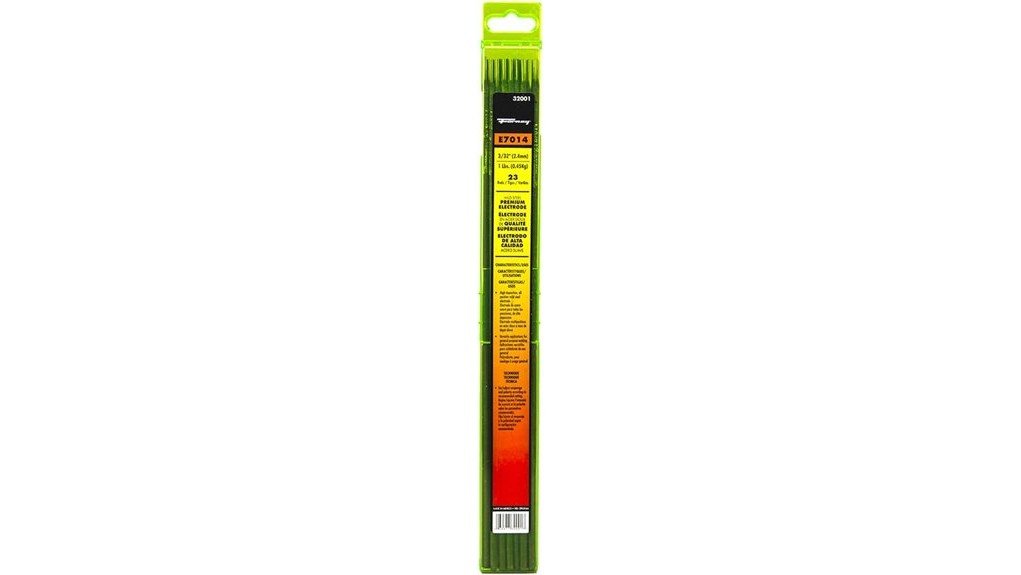
Hobart E7014 is closer in tensile-strength class at 70,000 PSI and is aimed at higher deposition with faster travel and lighter penetration. The 770481 E7018 remains the better fit when your priority is a low-hydrogen, all-position electrode and your procedure specifically calls for E7018 characteristics.
Frequently Asked Questions
Is the Hobart 770481 suitable for beginners?
It can be used by a beginner who has a compatible stick welder and is learning correct E7018 technique. The 5/32-inch diameter is not ideal for every small machine, so check your welder’s supported electrode sizes before buying.
Can I run this electrode on AC?
Yes. Hobart lists AC and DCEP (reverse polarity) for model 770481. However, the manufacturer specifically says it is not recommended for low-voltage AC welders.
What metals is the Hobart 770481 made to weld?
The product is intended for low, medium, and high-carbon steels. It is not presented as a stainless-steel filler metal, so use an electrode classification specified for stainless work when that is the material you need to weld.
Is it good for vertical and overhead welding?
Yes. E7018’s “1” position designator indicates all-position use, and Hobart specifically describes this rod as suitable for out-of-position welding. Your technique and settings still need to match the position and joint.
How should I store Hobart 7018 electrodes after opening?
Keep low-hydrogen electrodes dry and follow Hobart’s storage instructions on the package or official guidance. For code work, follow the welding procedure and governing storage rules rather than using a guessed temperature or exposure time.
Does the 10-lb package contain a fixed number of rods?
The verified listing identifies the package by weight, not by a guaranteed rod count. Buy it as a 10-lb package and do not assume a fixed piece count unless the seller or packaging states one.
Who should skip the Hobart 770481?
Skip it if your machine is a low-voltage AC welder, cannot support a 5/32-inch electrode, or your job calls for another filler-metal classification. It is also a poor match if you only need a small quantity and cannot store the remaining low-hydrogen rods correctly.
What is the shelf life of this 7018 electrode?
The verified product listing does not state a fixed shelf-life period. Storage condition is the more important concern, especially after opening, because low-hydrogen electrodes need protection from atmospheric moisture.
The Bottom Line
The Hobart 770481 is a strong choice if you need a 5/32-inch, 10-lb E7018 electrode for carbon steel and your welder supports AC or DCEP operation. Its main strengths are 70,000 PSI tensile strength, low-hydrogen design, and all-position capability, while its biggest limitation is incompatibility with low-voltage AC welders.
Buy it when those specs match your machine and welding procedure. Skip it when you need a smaller rod, another filler-metal classification, or a product that is suitable for low-voltage AC equipment.