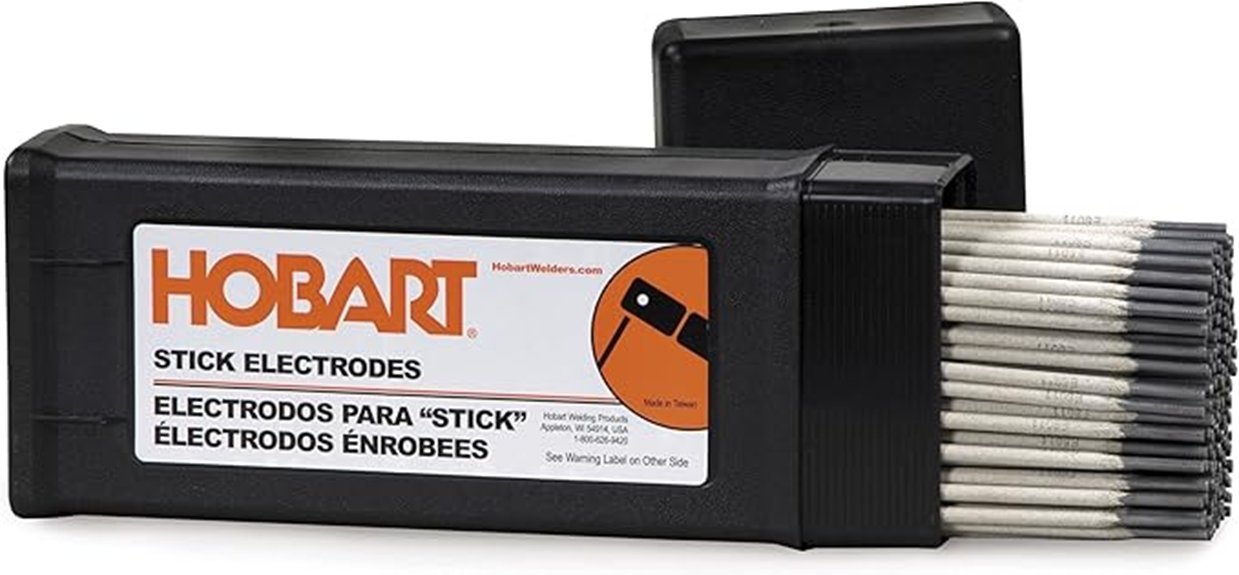
The Hobart 770476 7018 Stick is a low-hydrogen electrode designed for welding low, medium, and high-carbon steels. It boasts a tensile strength of 70,000 PSI and provides excellent penetration. Users appreciate its smooth arc stability and versatility across various positions, making it suitable for structural welding and heavy machinery repairs. However, its slightly higher price and availability may be a consideration. Understanding its features and applications can further enhance your welding projects.
Key Takeaways
- The Hobart 7018 Stick features a low-hydrogen electrode, ideal for welding low, medium, and high-carbon steels with strong, clean welds.
- It has a tensile strength of 70,000 PSI, providing robust performance for various welding applications.
- Customers appreciate its smooth arc stability, earning it a 4.5/5 stars rating in 411 reviews.
- This electrode excels in structural welding and is particularly effective in out-of-position welding and tacking.
- While generally well-received, some users note the price and availability as areas for improvement.
What Is the Hobart 770476 7018 Stick and Its Key Features?
The Hobart 770476 7018 Stick is a highly regarded low-hydrogen electrode designed for welding low, medium, and high-carbon steels across all positions.
With a tensile strength of 70,000 PSI, this Hobart electrode excels in out-of-position welding and tacking. It is compatible with AC or DCEP (reverse) polarity, though not recommended for low-voltage AC welders.
Weighing 10.25 pounds and measuring 14.5 x 4.2 x 2.2 inches, it offers a powder-coated finish for enhanced durability.
The welding performance of the Hobart 7018 Stick guarantees reliable results, promoting a sense of empowerment for welders seeking to master their craft.
What Customer Feedback Exists for the Hobart 7018 Stick?
Customer feedback on the Hobart 7018 Stick reflects a generally positive reception, particularly emphasizing its reliability and performance in various welding applications. Users appreciate its product durability and effectiveness across different welding positions. The following table summarizes key customer experiences:
| Rating | Positive Comments | Areas for Improvement |
|---|---|---|
| 4.5/5 stars | Excellent penetration | Slightly higher price |
| 411 reviews | Smooth arc stability | Availability issues |
| Best Seller | Versatile for materials | Needs clearer instructions |
What Are the Best Applications for the Hobart 7018 Stick?
Welding professionals and enthusiasts alike find the Hobart 7018 Stick to be particularly well-suited for a variety of applications, especially when working with low, medium, and high-carbon steels.
Its low-hydrogen composition enhances strength and ductility, making it ideal for structural welding, fabricating frames, and repairing heavy machinery.
Employing the best welding techniques guarantees excellent results, while consistent electrode maintenance, such as proper storage and handling, prolongs usability.
This stick excels in out-of-position welding and tacking, providing versatility for various projects.
What Specs Should You Know About the Hobart 7018 Stick?
When considering the Hobart 7018 Stick, it is important to understand its specifications, as these details highlight the stick’s performance and compatibility across various welding tasks.
Understanding the specifications of the Hobart 7018 Stick is crucial for maximizing its welding performance and versatility.
Key specs include:
- Tensile Strength: 70,000 PSI guarantees robust welding performance.
- Electrode Type: Low-hydrogen, ideal for all positions on low, medium, and high-carbon steels.
- Polarity Compatibility: Operates on AC or DCEP, expanding its usability.
These stick properties contribute to effective out-of-position welding and tacking, making it a versatile choice for welders seeking freedom in their craft.
Understanding these specifications can empower users to maximize their welding potential.
How to Choose the Right Hobart 7018 Stick Electrode?
Selecting the appropriate Hobart 7018 Stick Electrode can considerably enhance the quality and efficiency of a welding project. When choosing, consider the specific electrode types available and their compatibility with various welding techniques.
The Hobart 7018 excels in low, medium, and high-carbon steels, making it a versatile choice. Its low-hydrogen formulation is ideal for out-of-position welding, ensuring strong, clean welds. Additionally, it operates efficiently on AC or DCEP polarity.
For best results, assess the thickness of the materials being welded and match them with the electrode diameter, such as 3/32 inches, to achieve the desired tensile strength of 70,000 PSI.
Frequently Asked Questions
Can I Use the Hobart 7018 Stick for Aluminum Welding?
The Hobart 7018 stick is not suitable for aluminum welding due to its electrode compatibility limitations. Its formulation is designed for steel, consequently making it ineffective for non-ferrous metals like aluminum, which require specialized electrodes.
What Is the Shelf Life of the Hobart 7018 Stick?
The shelf life of the Hobart 7018 stick is maximized with proper electrode storage, ideally in a dry, controlled environment. This practice guarantees peak performance, liberating the user from concerns over electrode efficacy during welding tasks.
Does the Hobart 7018 Stick Produce a Lot of Spatter?
“Practice makes perfect.” The Hobart 7018 stick offers excellent spatter control when used with proper welding techniques, allowing welders to achieve clean, precise results while minimizing cleanup efforts, thereby liberating their welding experience.
Is It Safe to Use Indoors?
Using the electrode indoors can be safe if proper ventilation is guaranteed. Adopting essential safety precautions, such as using exhaust fans and protective gear, promotes a liberated environment where welding activities can be conducted responsibly.
What Protective Gear Is Recommended When Using This Electrode?
When using this electrode, proper welding safety dictates wearing protective equipment such as gloves, helmets, and aprons. The right gear not only shields against sparks but also liberates the welder to focus on their craft confidently.